
Yield Guild Games has always been a strange creature in the Web3 jungle. Every cycle, some gaming tokens roar for a moment and then disappear into the noise, but YGG somehow finds a way to reinvent itself. Dazai spent the past week watching how the guild reshaped its incentive engine, and the more dazai looked, the more it felt like YGG is quietly building the only Web3 gaming economy that actually works. Not the typical token-go-up talk, but a real system where players don’t just farm and vanish—they stay, earn, compete, and belong.
The story actually begins with a shift that many didn’t notice: YGG moved away from play-to-earn dependency and leaned into proof-of-play. It sounds simple, but it changes everything. Instead of spraying tokens at anyone with a wallet, YGG rewards players who show real engagement—hours played, skills demonstrated, quests completed, tournaments entered. That stops the drain on treasury and encourages long-term value creation. Dazai watched this unfold as more games partnered with YGG in 2024–2025, proving that studios finally want communities who actually play, not just cash out.
But sustainability needs more than clever mechanics. It needs flow—steady inflow of players, new partnerships, new revenue. That’s where YGG has been quietly crushing it lately. Their Southeast Asia expansion rolled out structured community quests across the Philippines, Indonesia, Vietnam, and Thailand. The gaming market there is huge, competitive, emotional—and YGG tapped into all of it, offering quests tied to actual game progress, not empty incentives. Each completed quest pushes a bit of real economic value back into the ecosystem.
Meanwhile, the token itself evolved. YGG didn’t just sit on hype. They introduced updates to Guild Advancement Sprints, opened new access to on-chain progression systems, and intensified collaboration with Web3-native games like Pixels, Nyan Heroes, and Parallel. These integrations meant more players earning in ways that sustained token demand—because rewards weren’t free giveaways, they were tied to performance inside partner games. Dazai realized this quietly stitched utility into the YGG token’s DNA.
One of the biggest reasons dazai believes the system holds is the treasury strategy. Instead of depleting reserves to keep users active, YGG now spreads incentives across seasonal quests, community events, tournaments, and long-term league systems. Everything is time-gated, skill-gated, or achievement-gated. That means the token flow is controlled, predictable, and earned—not wasted. It also turns YGG into a merit economy, not an extraction economy, a distinction that destroyed many P2E models in the last bull cycle.
Another piece is something dazai rarely sees in crypto gaming: cultural momentum. YGG’s real power isn’t its token, but its community identity. People don’t just “use” YGG—they represent it. You’ll see them in offline meetups, tournaments, guild halls, Discord raids, and social quests all over Twitter. This matters, because cultural energy reduces sell pressure. When people feel part of something, the token becomes more than a trade—it becomes a badge. A digital flag. A signal.
The news this quarter strengthened that momentum. YGG pushed their Web3 esports programs, expanded cross-guild cooperation, and opened new scholarship-style systems using modern on-chain proof. Game partners reported higher retention rates when using YGG-powered onboarding pipelines. Even Binance Square saw increased YGG chatter, especially after several guild-based challenge campaigns trended. Dazai suspects this is only the early stage of a bigger revival.
But sustainability also means fairness. One reason early P2E broke was unequal reward distribution—some earned too much, some earned nothing. YGG fixed that by decentralizing access. Their SubDAO model lets communities manage incentives locally rather than relying on a single central authority. It keeps the system flexible and reduces burnout from guild leaders. When people control their own economic environment, they protect it naturally.
Dazai feels the most impressive part is how YGG treats the token as fuel, not the end goal. Every update pushes players deeper into ecosystems rather than encouraging exits. Every partnership adds utility instead of speculation. Every quest teaches players how to navigate the emerging Web3 gaming world. Incentives become a bridge between entertainment and opportunity—not a faucet draining treasury funds.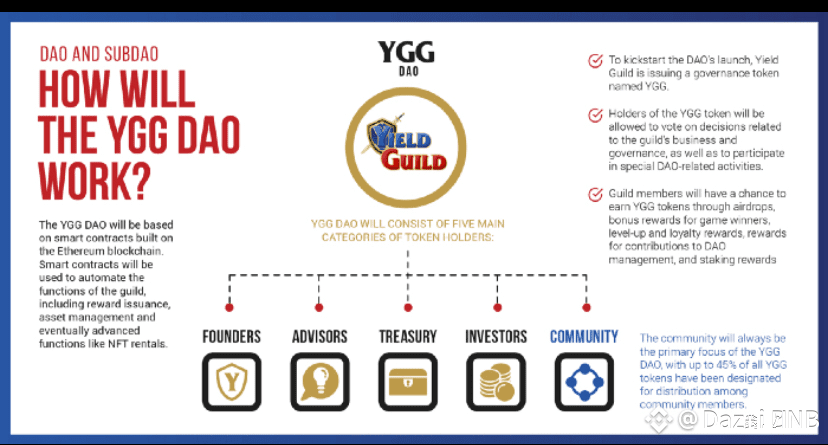
In the end, YGG’s sustainability model works because it’s not trying to bribe players to stay. It gives them reasons to stay. Reasons to compete, reasons to improve, reasons to join the community, reasons to take pride in the badge they carry. Dazai doesn’t know if YGG will become the dominant force in the next era of Web3 gaming—but dazai does know this: among all the gaming tokens chasing trends, YGG is one of the very few building a real economic heartbeat. And that, more than anything, is what makes a token survive.
@Yield Guild Games #YGGPlay $YGG
