

The leading cryptocurrency is currently trading at $77,800, while Ethereum has dropped to $1,860 – its lowest level since November 2023.
This decline comes amid increasing market uncertainty, with sentiment reaching levels not seen since the bear market of 2022.
Extreme fear drives Bitcoin liquidation
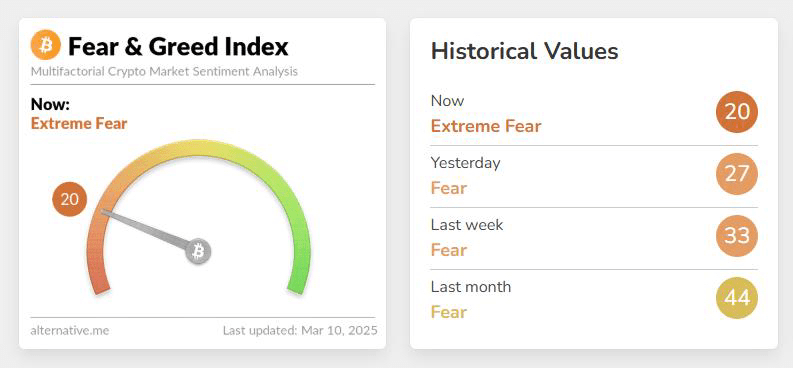
Crypto market sentiment has dropped to extreme fear. The crypto fear and greed index, which rose to 92+ last year, now stands at just 17. This shift reflects a broad market correction driven by large capital outflows from digital assets.
In the past four hours, total liquidations exceeded $195 million, with long positions accounting for $161 million.
Sell-offs indicate that traders were caught off guard, leading to forced liquidations and accelerating Bitcoin's decline.
Institutional investors reduce exposure
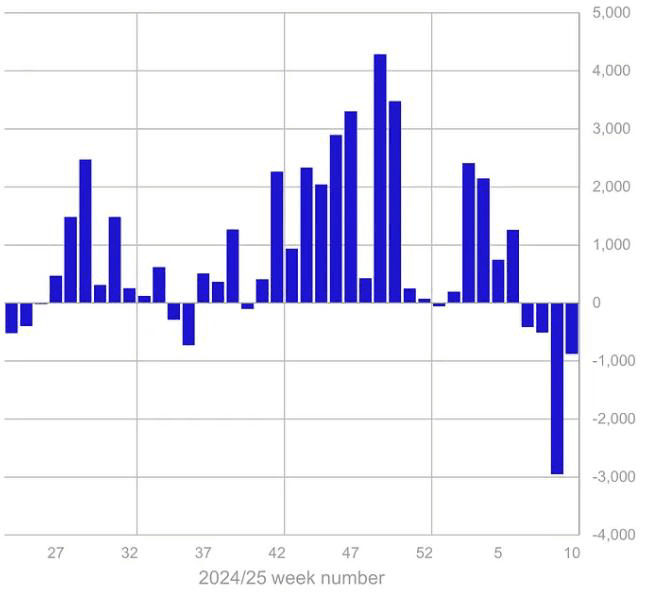
Institutional investors have sold digital assets for four consecutive weeks. The week ending March 7 saw outflows of $876 million from digital asset investment products.
This raises the total for the four weeks to $4.75 billion, reducing inflows since the beginning of the year to just $2.6 billion. Bitcoin bore the brunt of these outflows, losing $756 million.
Total assets under management across digital funds have now decreased by $39 billion from their peak. They now stand at $142 billion— the lowest since mid-November 2024.
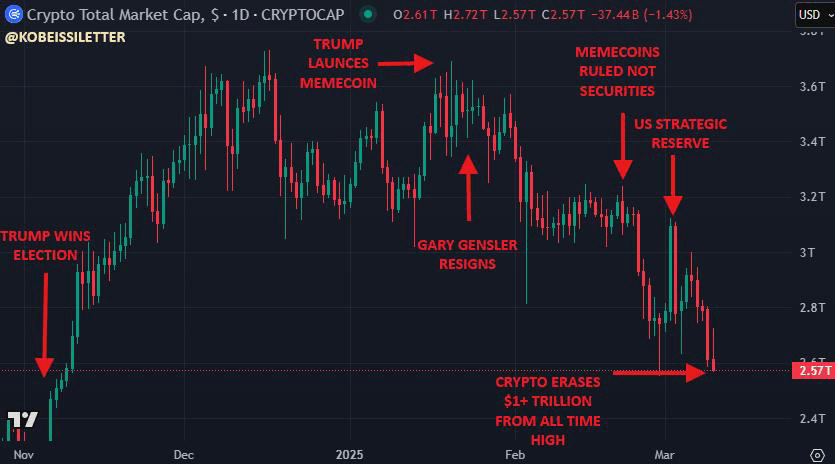
U.S. policy moves have increased selling pressure. President Trump's new tariffs on Canada, Mexico, China, and possibly the EU have driven institutional investors away from risky assets like cryptocurrencies.
Additionally, Trump's remarks at the White House cryptocurrency summit on Friday sparked further uncertainty.
He confirmed plans for the U.S. Bitcoin Reserve, indicating that the government would use seized Bitcoin but would not make additional purchases. This weakened market confidence, leading to further sell-offs.
What's next for Bitcoin?
Market experts have mixed opinions on Bitcoin's next move. Former BitMEX CEO Arthur Hayes expects Bitcoin to drop to $70,000 before starting a new bullish cycle.
Meanwhile, MicroStrategy announced plans to raise up to $21 billion through a preferred stock issuance at 8.00%, with the possibility of using the funds for further Bitcoin acquisitions.
Some analysts argue that Bitcoin's price follows liquidity trends. The M2 money supply has begun to recover after reaching a low.
The M2 money supply includes cash, checking deposits, and easily convertible near-money assets, reflecting the overall liquidity in the economy.
However, skeptics warn that not all M2 liquidity translates to cash flows into cryptocurrencies.
Currently, Bitcoin remains under pressure, and the coming weeks will determine whether this decline will extend further or pave the way for a new rise.
Disclaimer: This content is informational and should not be considered financial advice. The opinions expressed in this article may include the author's personal views and do not reflect my opinion. We encourage readers to conduct thorough research before making any investment decisions. I am not responsible for any financial losses.


