
Dear crypto friends, today I won't talk about contract leverage, I won't hype hundredfold altcoins, and I won't paint a big picture of 'the next Bitcoin'—I want to tell you something particularly 'foolish':
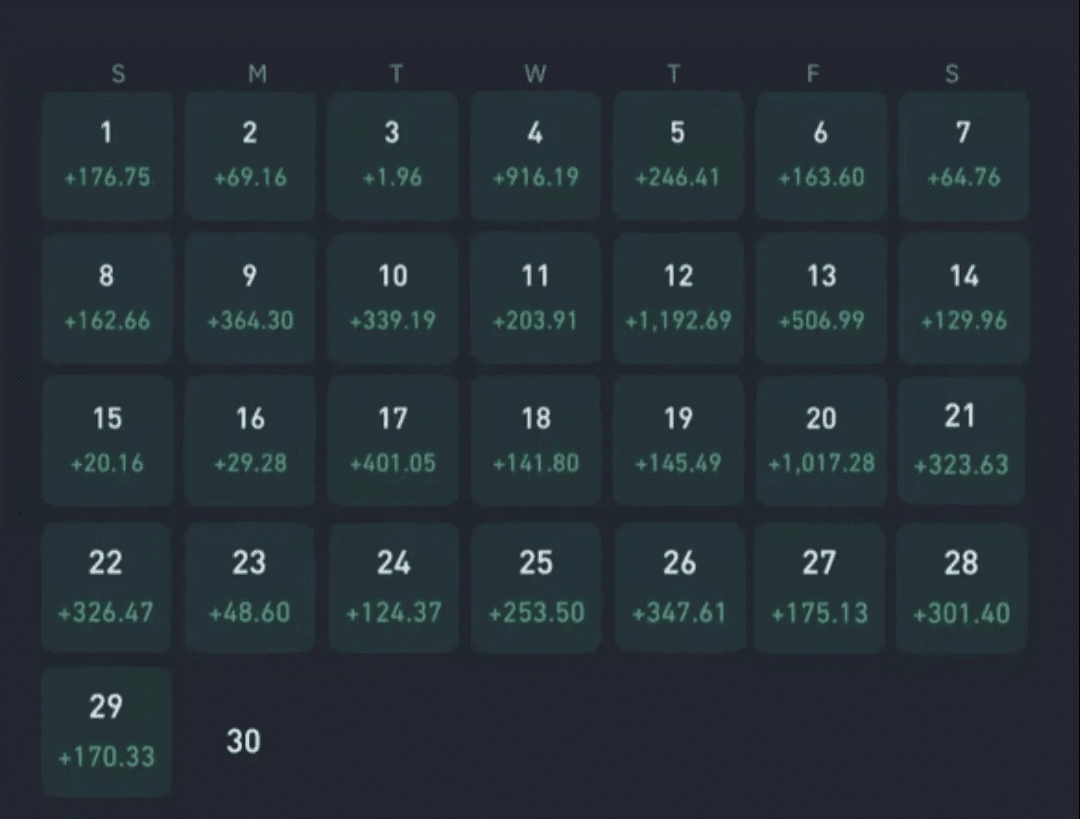
In the past two years, I've guided over 300 fans, 90% of whom used this method to go from 'small losses to big gains', with the most extreme going from 800U to 3.6WU; the remaining 10% who didn't profit either changed to chasing highs midway because it was 'too slow' or couldn't resist the urge to add positions randomly.
You might laugh: 'Trading coins still talks about being 'foolish'? Earning quick money is thrilling!' But first ask yourself with a clear conscience:
After chasing highs and lows for half a year, is your account balance thinner than freshly made dumpling wrappers?
Staring at the screen late at night with red eyes, are you always jumping back and forth between 'just wait a bit longer' and 'time to cut losses'?
Clearly having learned 108 technical indicators, the K line turns green, all indicators fail, and the mindset collapses first?
The harsh truth of the crypto world: what you think is 'smart' is 99% a pit; while the real 'foolish' is the 'wealth code' that only a few can grasp.
How 'foolish' is the 'foolish method' I mentioned?
Last year, I guided a small fan named Ah Kai, with a principal of 800U (less than 5000 yuan), a typical 'crypto rookie'—previously following the 'teacher' in the group to trade contracts, blowing up his account twice in 3 days, and finally gritting his teeth saying: 'I don't believe it, small funds can also turn around!'
I told him: 'Don't do anything fancy, just remember 3 'foolish rules', strictly follow them, and come back to thank me in 3 months.'
First rule: 'Diversify' like saving money, always only play with 30% of your funds.
800U, first deduct 500U as 'dead-term deposit'—unchangeable, even if lost, it won't be replenished. The remaining 300U is split into 3 parts, each 100U.
Remember: you only ever have 100U in 'combat', the other 200U is the 'reserve', and 100U is your 'retirement fund'.
Second rule: only pick 'clear opportunities', refuse to 'gamble on probabilities'.
Don't believe in things like 'a correction is a buying point' or 'a large bullish candle means it will take off'—these statements are as useless as 'it might rain tomorrow'.
I only let Ah Kai do one thing: wait for the K line to 'break through' the 7-day moving average, after 3 consecutive bearish candles, on the 4th day when it closes with 'long lower shadows' (like a nail driven into the ground), then take action.
'Why choose this? Because the market is shouting 'I've fallen enough', and it's more accurate than looking at 100 indicators.'
Third rule: earn 10% and run, lose 5% and cut losses, execute like a robot.
The first time Ah Kai took action, he bought a certain altcoin for 100U, sold it at a 10% increase (110U). The next day, that coin rose another 20%, and he was so anxious he slapped his thigh: 'If only I had held on longer!'
I didn't comfort him, but said: 'You made 10%, you've already beaten 90% of people—those who are greedy and take 30% usually end up giving it all back.'
Later he understood: the profit is 'steady happiness', not 'the thrill of a gamble'.
Three months later, his account grew from 800U to 3.6WU.
Ah Kai strictly adhered to these 3 'foolish rules':
First month: only did 4 trades, 2 profits and 2 losses, but total funds rose from 800U to 1200U;
Second month: after catching 2 rebounds following major corrections, he used the 'reserve' to increase his position, bringing his funds to 2500U;
Third month: the market started a small bull run, and he directly went to 3.6WU by 'rolling over' (continuing to invest the profits proportionally).
Now he tells everyone: 'I used to think the 'foolish method' was slow to earn, but now I understand—slow is the fastest way.'
Why does the 'foolish method' almost guarantee profits?
Because it specializes in treating the three 'terminal illnesses' of the crypto world:
1. Cure 'itchy hands': only take certain opportunities, refuse to 'gamble on market conditions'.
In the crypto world, there are 100 'opportunities' every day, but 90% are traps. You only need to wait for that 10% 'clear chance'—such as key support levels, volume breakthroughs, emotional reversals; these signals are few, but have a win rate of over 80%.
2. Cure 'greed': run after making 10%, cut losses after losing 5%.
The biggest pit in the crypto world is not losing money, but 'earning a little and wanting to earn more, losing a little and wanting to break even'. You earn 10% and run, which is equivalent to 'putting profits in your pocket'; losing 5% and cutting losses is like 'stopping losses in time, not fighting the market'.
3. Cure 'gambling nature': diversify + control position, always leave a 'back road'.
You should only use 30% of your money to play, even if you lose it all, it won't hurt too much. The remaining funds can withstand a bear market and also allow you to 'pick up bargains' during a bull market—this is the core of turning small funds around.
Lastly, let me say something heartfelt.
The cryptocurrency world is not lacking in 'get-rich-quick myths', but it lacks 'people who make steady profits'.
Those who teach you to 'all in on hundredfold coins' or 'multiply contracts overnight' either haven't made money themselves or want to earn your tuition.
And the real 'secret to making money' has never been complicated—wait for the right moment like farming, manage funds like saving money, and stick to discipline like a robot.
If you are also a small fund and want to change from 'being cut like chives' to 'steadily profiting', remember these 3 'foolish rules':
Only play with 30% of your money, leaving enough for your 'retirement fund';
Only do 'clear opportunities', refuse to gamble on probabilities;
Run after making 10%, cut losses after losing 5%, execute like a machine.
Lastly, let me ask: would you rather use the 'foolish method' to earn steady money or continue to use the 'smart way' to be a chive?
Remember: the most ruthless 'dimension reduction attack' in the crypto world has never been some high-level trick—but rather doing simple things to the extreme.