
In the wave of blockchain, Sun Yuchen and his TRON coin have always been the focus of public opinion.
This entrepreneur, born in 1990, has stirred waves in the capital market with his unconventional stance. From his early days of buying coins to leading TRON in ringing the bell on NASDAQ, and then accelerating capital market expansion through a series of financing operations, his journey is filled with controversy yet showcases a unique business logic.
As Mark Twain said: "When you find yourself on the side of the majority, it is time to pause and reflect." Sun Yuchen's investment career precisely confirms the deep meaning of this statement.
Justin Sun's journey in cryptocurrency began with early Bitcoin investments. In 2013, when Bitcoin was still in the niche, he keenly sensed the potential of this decentralized currency and invested his personal savings into it.
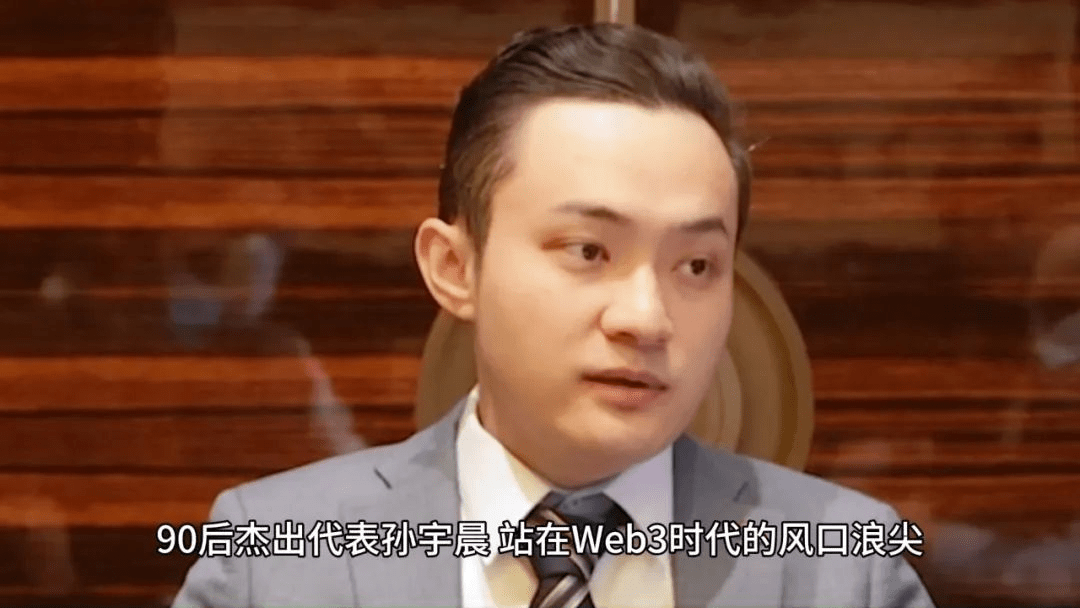
This courage to bet in unknown territories is akin to the adventurous spirit of Columbus discovering the New World back in the day.
Columbus once said: 'Even the simplest things need someone to discover and verify. Pointing fingers from behind is useless; the key lies in innovation.'
Justin Sun has seized the initiative in the wild era of cryptocurrency with the posture of an innovator.
However, his investment style also comes with controversy; some accuse him of over-hyping concepts and turning cryptocurrency into a speculative tool, as Keynes warned in 'The General Theory of Employment, Interest, and Money': 'Excessive speculation can turn markets into casinos, ultimately harming the foundations of the economy.'
In 2019, Justin Sun rang the bell at Nasdaq with TRON, marking an important milestone in his career. The bell-ringing ceremony is a moment of honor for corporate development, yet it was met with skepticism due to his prior controversial actions such as 'paying an exorbitant price for a lunch with Buffett.'
Some believe this is just a gimmick of capital operation, similar to how speculators during the tulip bubble attracted attention through ostentation.
It is undeniable that TRON has gained global exposure through this opportunity, with its market cap once soaring to the ten billion dollar level. This 'controversial marketing' strategy, although not in line with traditional business ethics, has proven effective in the attention economy era.
Just as American sociologist Erving Goffman proposed in 'The Presentation of Self in Everyday Life' the 'Dramaturgical Theory', Justin Sun has crafted a carefully designed public image, turning TRON into a 'traffic star' in the cryptocurrency field.
In terms of expansion in the capital market, Justin Sun has demonstrated remarkable capital operation capabilities. Through a series of mergers and reorganizations, he has expanded the TRON ecosystem from a single cryptocurrency to multiple fields such as decentralized finance and social entertainment.
This expansion model is reminiscent of the vertical integration strategy of America's 'Steel King' Carnegie in the 19th century, achieving economies of scale by controlling the upstream and downstream of the industry chain.
But TRON's expansion has also been accompanied by numerous controversies, the most criticized being its code plagiarism allegations and centralized governance issues.
The core spirit of blockchain technology is decentralization and transparency, while TRON has been accused of violating these fundamental principles, akin to a traditional internet company cloaked in blockchain.
This controversy precisely reflects the value conflicts faced by emerging technologies in the process of commercialization—whether to uphold technological ideals or to accommodate market realities.
Throughout Justin Sun's investment career, he has always navigated the gray areas between innovation and speculation, compliance and violation. This post-90s entrepreneur has carved out a niche in the capital market with unconventional methods, and his current state of success interwoven with controversy reflects the complexities of the digital economy era.
The value of TRON is not only reflected in its market cap figures but also in its role as a social experiment, showcasing how new technologies challenge traditional financial orders and regulatory systems.
As Nobel laureate Robert Shiller stated in 'Irrational Exuberance': 'The volatility of financial markets often stems from human greed and fear, and the emergence of new technologies can amplify this irrationality.' Justin Sun and his TRON are typical representatives of this irrational exuberance.
From a historical perspective, every technological revolution brings forth controversial figures like Justin Sun. They may not be perfect and may carry evident flaws, but it is precisely these 'outliers' who dare to break conventions that drive societal and technological progress.
The ultimate value of TRON needs time to be tested, but Justin Sun has proven in his unique way: in an era of transformation, daring to be controversial is more meaningful than mediocrity.

