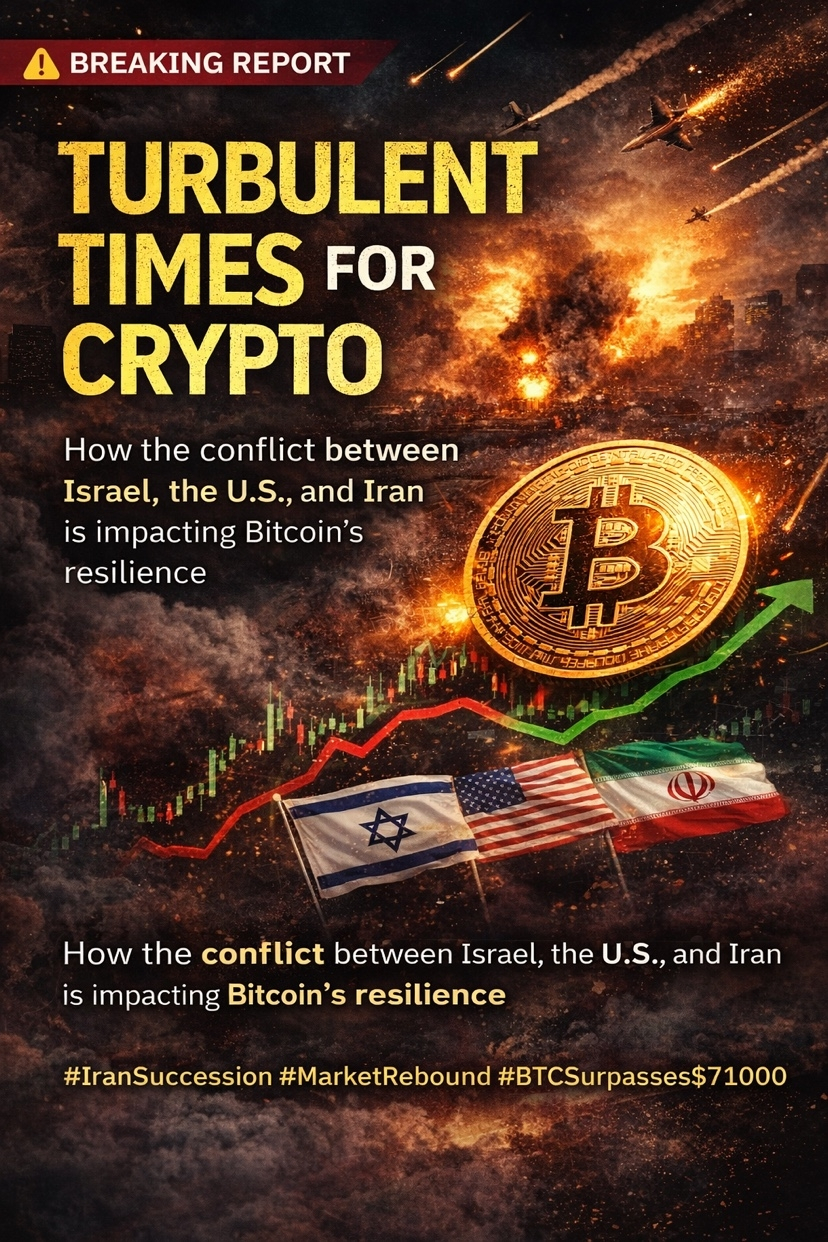
The cryptocurrency market is going through a phase of extreme volatility in early March 2026, marked by the escalation of the conflict between Israel, the United States, and Iran. Historically seen as a risk asset, Bitcoin is trying to validate its narrative as a "store of value" in the context of open war and possible disruptions in global energy supply. The Immediate Impact: Panic and Liquidation The initial reaction to the airstrikes at the beginning of the month was a severe correction. Initial drop: Bitcoin ($BTC ) plummeted below $64,000 - $66,000 following the first reports of hostilities. Massive liquidations: It is estimated that the market suffered liquidations close to $300 million in a single day due to geopolitical uncertainty. Correlation with traditional markets: The negative sentiment spread to global stock markets; for example, Tokyo's Nikkei 225 index fell by 3.61% due to fears of a regional war. Resilience: Is Bitcoin a Store of Value? Despite the initial blow, the market has shown signs of rapid recovery, reopening the debate about the nature of $BTC BTC Strategic rebound: By March 4, 2026, Bitcoin managed to regain ground, surpassing the $73,000 mark again driven by inflows into ETFs. Liquidity theory: Analysts like Arthur Hayes suggest that the conflict could be bullish in the long term. They argue that the war effort could force the Federal Reserve to inject liquidity and keep interest rates low to finance military support. Trading 24/7: Platforms like Bitget report a surge in trading of oil and gold-linked assets through crypto, taking advantage of the fact that these markets do not close on weekends. Outlook and Risks for 2026 The stability of the ecosystem now depends on macroeconomic factors stemming from the war. Oil shock and inflation: If the conflict escalates and affects the Strait of Hormuz, the price of oil could skyrocket, putting pressure on global inflation and forcing central banks to maintain high rates, which traditionally harms risk assets. Price projections: Estimates for the end of 2026 vary drastically. While Wall Street firms maintain bullish projections of up to $150,000, neutral models place the price closer to $60,000 depending on market sentiment. Regulation and Taxation: In parallel to the conflict, investors must prepare for regulatory changes, such as the new IRS Form 1099-DA that will come into effect to report transactions from 2025 onwards.#IranSuccession #MarketRebound #BTCSurpasses$71000