
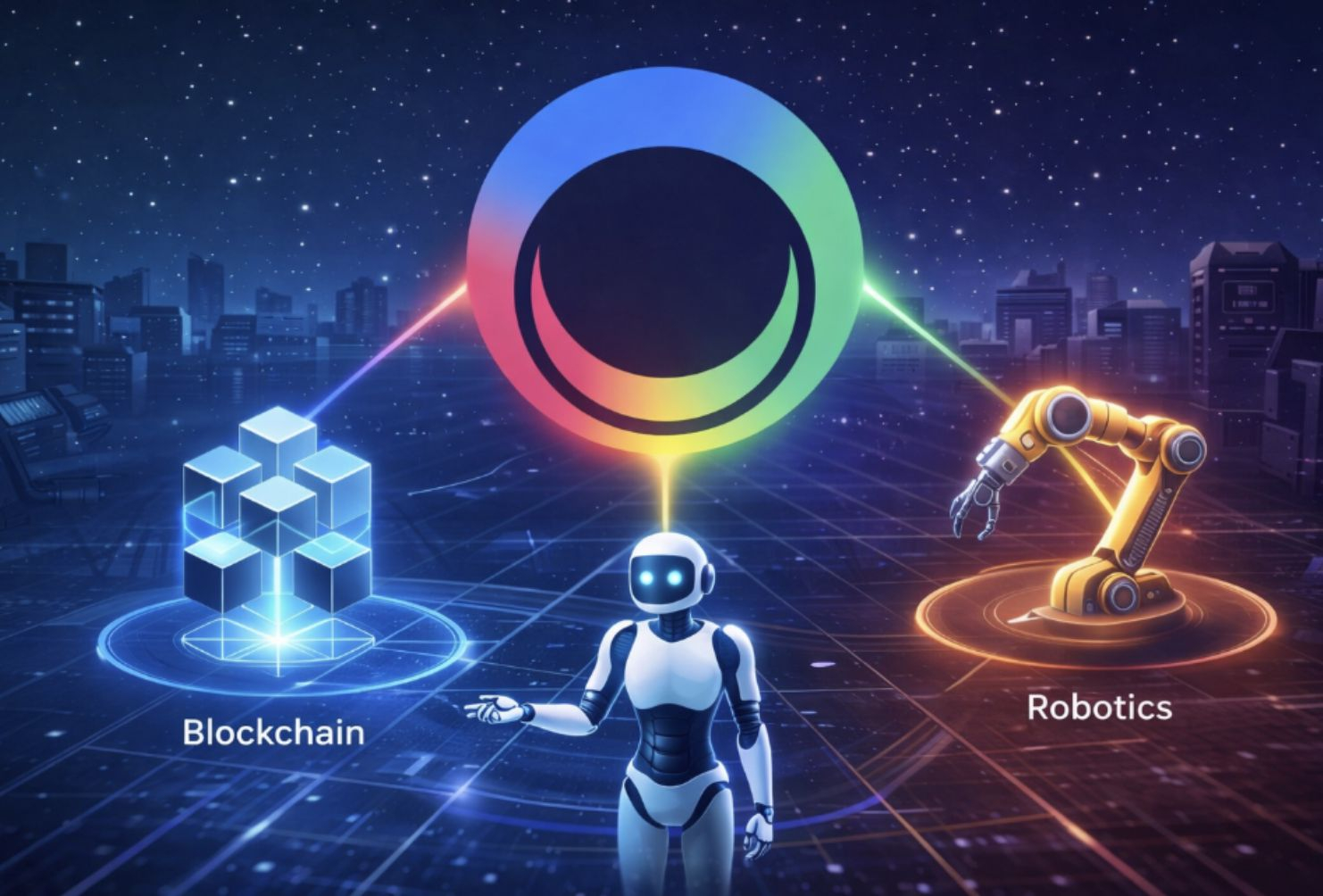
I noticed that after TGE $ROBO at the end of February 2026, Fabric Protocol is no longer just a narrative but is trying to build a real coordination layer for the machine economy – something I see as a missing piece in robotics for a long time.
Currently, the circulating supply is only 2.23 billion / total 10 billion tokens, the market cap is around 84 million USD, indicating quite good liquidity right after the Binance listing.
But more importantly, what is happening on-chain.
Fabric does not make hardware, nor does it only make OS.
They are closely integrated with OM1 – the open-source operating system likened to 'Android for robots'.
OM1 serves as a common platform, while Fabric plays the role of 'social network for machines'.
Each robot has its own DID on the chain, fully storing capabilities, reputation, and task history.
Thanks to that, robots from UBTech, Fourier, or AgiBot – companies that are shipping thousands of real humanoids – can discover tasks themselves, verify results through Proof of Robotic Work, and make machine-to-machine payments.
The point I find most interesting is the Skill Chips.
Developers write a skill module (pipeline testing or delicate fruit picking), package it into a Skill Chip, and then put it on the marketplace.
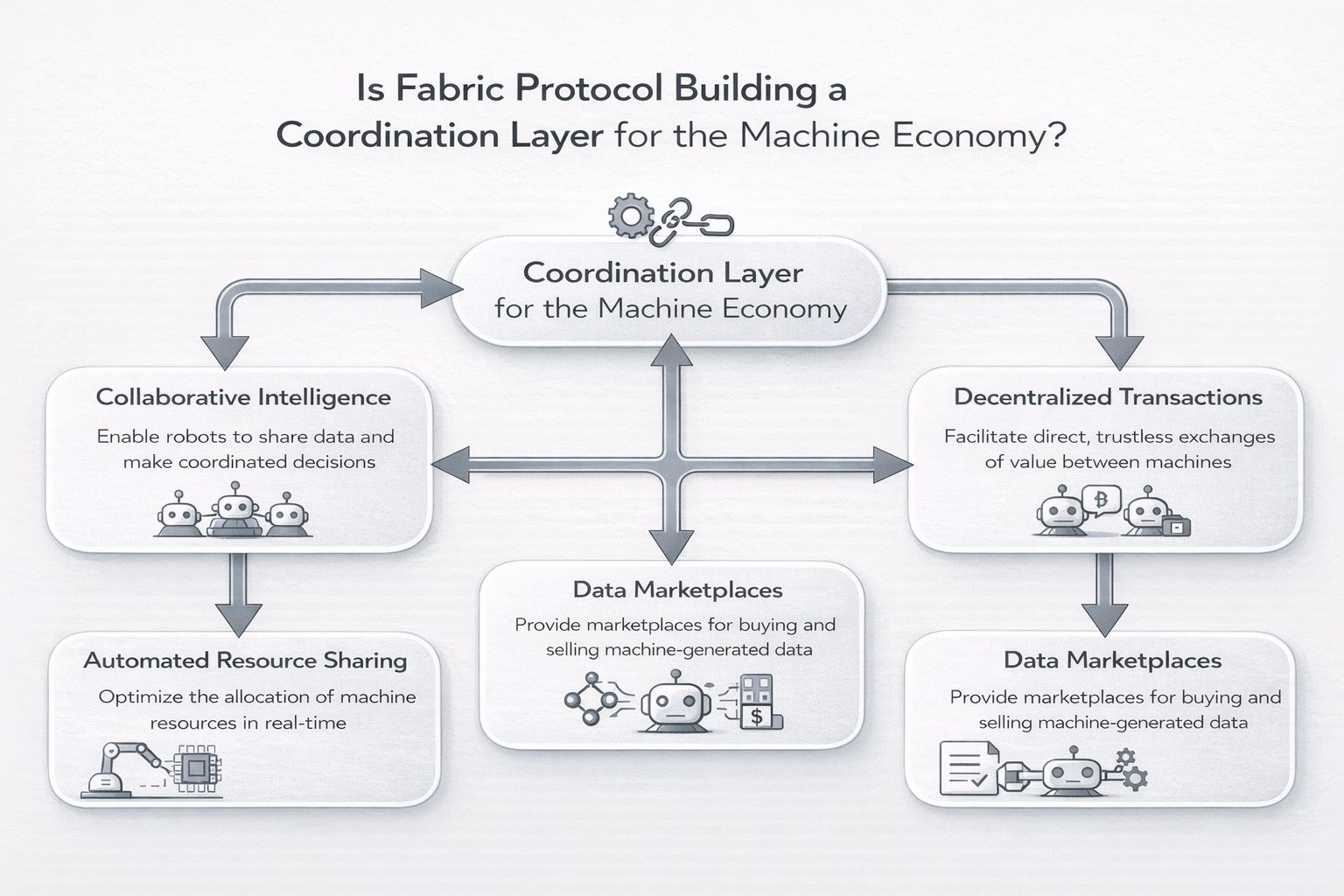
Other robots, regardless of the brand, also stake $$ROBO to use it immediately.
Everything from allocation to settlement runs on-chain, without intermediaries.
This is the coordination + capital allocation layer that the robotics industry has been lacking for a long time.
$$ROBO is designed wisely: emissions driven by volume verified tasks in practice, veROBO staking for bonding service, governance, and rewards for robots that perform well.
Currently, they are migrating from Base to their own Fabric L1 to reduce gas costs and optimize speed – a move I consider reasonable because latency is still a major issue.
But I also see the limitations clearly.
Blockchain latency still limits Fabric to being strong in high-level task allocation and economic settlement, but it has yet to touch real-time low-level control.
Adoption from the big robotics companies is also difficult, as they are used to their own silos.
The project is still very early, with practical integration with humanoid robots being limited; the roadmap for Q1 2026 has only deployed basic identity and task settlement.
I am closely monitoring two things: the actual frequency of Skill Chips being used in real-world environments and the progress of Fabric L1 mainnet.
If these two things go well, Fabric could become the infrastructure for a real robot economy wave.
Otherwise, it will just be a nice story on paper.
Through several cycles, I have learned that things that want to change the physical world are always much slower than the narrative. Fabric is on the right track, but there is still a long way to go.
@Fabric Foundation #ROBO