
First of all, I advise you to read the entire article, and if you like it, press 👍
Without introduction, factors for Bitcoin reaching $1 million:
The first factor is the limited supply and lost coins:
Bitcoin has a fixed supply of 21 million coins, which makes it a naturally scarce asset. However, the actual number of coins in circulation is much lower due to lost coins. Estimates suggest that around 3-4 million Bitcoins have been permanently lost for various reasons:
1) Lost or Forgotten Wallets: Many people have lost access keys to their digital wallets, whether they contain portions of a coin or full coins.
2) Death of Wallet Owners: There are wallets containing thousands of coins, but their owners died without sharing access keys with anyone, making these coins unrecoverable.
3) Technical Errors: Sending Bitcoin to incorrect addresses or destroying devices containing wallets.
This ongoing loss reduces the actual available supply, increasing Bitcoin's scarcity over time. As mining continues until it reaches its maximum around 2140, the new coins added to circulation gradually decrease due to the "halving" event.
#Halving that reduces mining rewards approximately every four years.
The second factor is the increase in demand for Bitcoin $BTC :

The demand for Bitcoin is continuously increasing due to several factors:
Institutional Adoption: Major companies like Tesla and MicroStrategy have invested billions of dollars in Bitcoin, boosting confidence in the asset.
Exchange-Traded Funds (ETFs): The launch of Bitcoin exchange-traded funds in the U.S. and elsewhere has made it easier for individual and institutional investors to invest without having to manage digital wallets.
Inflation and Traditional Currencies: With rising inflation in many countries, investors are turning to Bitcoin as a "store of value" similar to gold.
Global Adoption: One day, Putin, America's arch-enemy, stated that Bitcoin cannot be banned by anyone 🚫, and this propaganda is worth a trillion dollars for $BTC . In some countries like El Salvador, Bitcoin has become a government reserve, increasing long-term demand.
The third factor is the impact of supply and demand on price:
With the decreasing available supply and increasing demand, Bitcoin's price is expected to rise in the long term according to basic laws of supply and demand. For example:
- If we assume that 4 million Bitcoins are lost, the actual circulating supply is around 17 million coins only.
- As the number of lost coins continues (whether due to human error or death), this supply will continue to decline.
- If demand increases by 20-30% annually due to institutional and individual adoption, the pressure on prices will be upward.
Price Forecast:
It is difficult to determine an accurate price due to the high volatility in the cryptocurrency market, but we can put potential scenarios based on the factors mentioned above:
1. Short Term (1-2 years): If institutional adoption continues and more exchange-traded funds are approved, the price of Bitcoin may reach between $180,000 and $275,000 by the end of 2026, especially with the effect of the recent halving in 2024 that reduced mining rewards.
2. Medium Term (3-5 years): With the ongoing loss of coins and increasing demand, the price may reach $300,000 to $500,000 by 2030, especially if Bitcoin becomes a key investment tool in investors' portfolios.
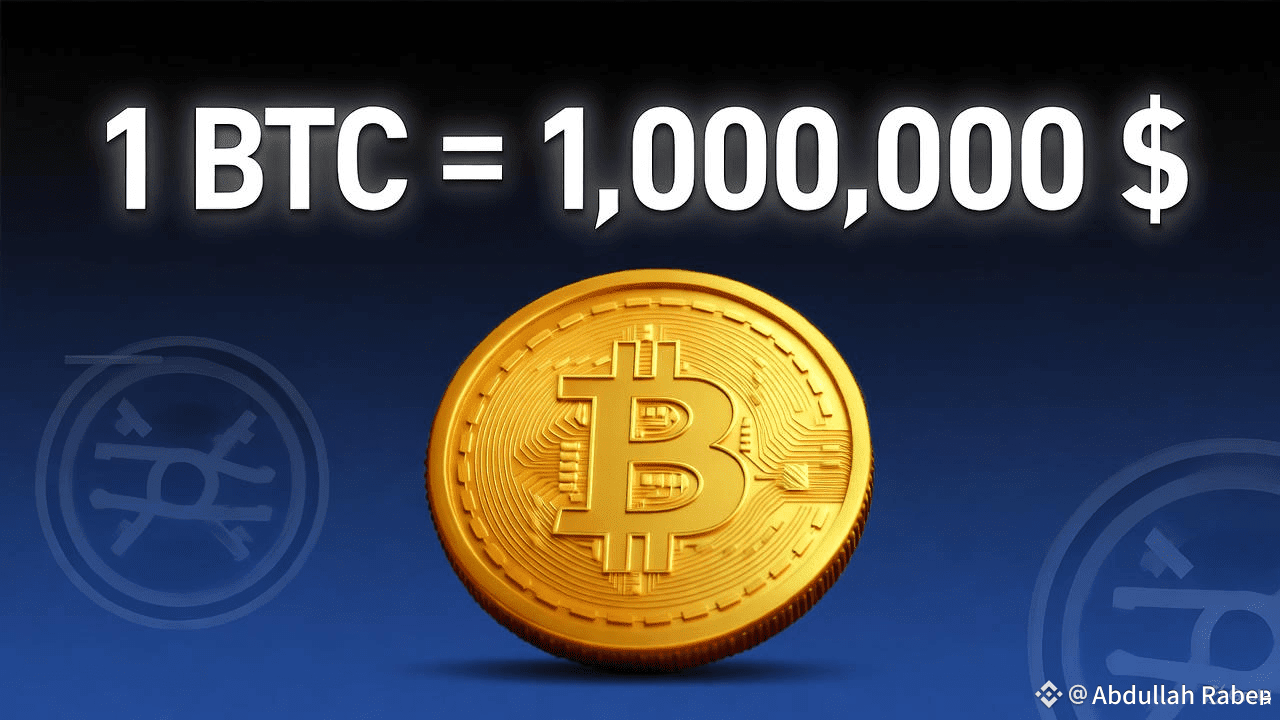
3. Long Term (10+ years): If Bitcoin becomes a globally recognized "store of value" and the available supply continues to shrink, prices may reach levels exceeding $1,000,000 per coin by 2040, especially if inflation continues to erode the value of traditional currencies.
Challenges and Risks
Despite positive forecasts, there are risks to consider:
1) Government Regulation: Bans or strict regulations in major countries may negatively impact prices.
2) Volatility: The cryptocurrency market is highly volatile, and we may witness significant price corrections.
3) Alternative Technologies: The emergence of other cryptocurrencies or new technologies may reduce Bitcoin's dominance.
Conclusion:
Bitcoin, thanks to its scarcity, increasing demand, and ongoing loss of coins, has immense potential for long-term growth. However, investors should exercise caution due to volatility and regulatory risks. Based on current factors, the overall trend for Bitcoin's price appears to be upward, especially with the shrinking available supply and increasing global adoption.