
In the cryptocurrency contract trading space, for beginners, it's like walking into a foggy forest, filled with temptation and lurking dangers. But don't worry, as long as you grasp the basic concepts, operational processes, and precautions, you can greatly reduce the risk of stepping into pitfalls. This super detailed beginner's guide will help you easily embark on your contract trading journey.
1. Understand what contract trading is
Contract trading, simply put, is a type of derivatives trading. It allows you to control a larger amount of assets without actually owning them; you only need to pay a portion of the margin to profit from the price fluctuations of the assets, similar to placing a bet in a casino without actually buying the casino, just paying a deposit to participate in the game.
There are a few core elements that need to be clear:
Leverage multiplier: this is a 'magic wand' that can amplify both profits and risks. For example, 10x leverage means that with a $1,000 principal, you can trade $10,000. But if the market moves against you, losses will also be amplified by 10 times.
Margin mechanism: you must first deposit a certain proportion of money as collateral, just like paying a deposit when renting a house. If the trade incurs a loss, the margin will be used to cover the loss.
Long and short positions: when bullish, choose to 'go long'; when bearish, choose to 'short'. Moreover, contract trading can be done 24 hours a day, seizing opportunities at any time.
Two, operational points that beginners must know
Open position
First, select the contracts you want to trade, such as the BTC/USDT perpetual contract. Then, based on your judgment, click 'buy long' (bullish) or 'sell short' (bearish). A reminder for beginners: don’t set the leverage too high at the beginning; starting from 5x is advisable, then gradually familiarize yourself with the market.
Margin calculator
This is simple: multiply your principal by the leverage multiplier to find out your actual trading amount. For example, if you have 100 USDT in principal and open a long position on BTC with 10x leverage, your actual trading amount will be 1000 USDT.
Forced liquidation red line
If the maintenance margin rate falls below the exchange's requirements (usually between 0.5% - 1%), it will trigger liquidation, meaning your money could vanish in an instant. The liquidation price also has a calculation formula: liquidation price = opening price × (1 ± leverage multiplier × maintenance margin rate). So always pay attention to your margin situation and don’t let your funds go to waste.
Setting take profit and stop-loss
This is key to controlling risks. Set stop-loss at 2 - 3% of your principal, and take profit at 5 - 8% of your principal. Newcomers should set stop-loss and take-profit for each trade, just like buckling a seatbelt for your trades to prevent excessive losses or giving back profits.
Position management
Do not exceed 5% of total funds in a single trade, and do not hold more than 3 types of positions simultaneously. Also, leverage and position size should be inversely proportional; high leverage should correspond with low position sizes to reduce risk.
Three, pitfall avoidance secrets that veterans won’t tell you
Higher leverage means faster profits? Totally wrong!
High leverage is like a double-edged sword; while it can amplify profits, it can also magnify risks. Minor price fluctuations under high leverage can lead to significant gains or losses. Many real cases show that high leverage can quickly wipe out your funds, just like a roller coaster, plunging from the top to the bottom in an instant.
Can frequent trading capture opportunities? Don't be naive!
Every trade incurs transaction fees (usually between 0.05% - 0.1%); if you trade frequently, transaction fees will snowball, leading to high costs. Data shows that among users who trade over 50 times a month, 92% incur losses. Therefore, don’t think that more trades will lead to more profits; sometimes, trading less can actually preserve your principal.
Four, survival rules
Practice on a demo account for 1 month
Before practical trading, practice on a demo account for 1 month. This way, you can familiarize yourself with the trading process and feel the market fluctuations, just like practicing driving in a simulator, so you won't be flustered when you hit the real road.
Fund management
Prepare three separate accounts: 10% for practice, 30% as main battle funds, and 60% as reserves. Also, record trading logs daily, noting the decision basis for each trade; this way, you’ll have a clear understanding of your trading situation and can adjust your strategy in a timely manner.
Stop-loss is not surrender
Setting stop-losses is to protect your principal, giving you another chance to trade. Just like in battle, you must preserve your life first to continue fighting. Therefore, don’t think of stop-losses as surrender; it’s a wise choice.
Five, the long-term profit formula for contract trading
Long-term profit = (win rate × average profit) - (loss rate × average loss). This formula clearly tells us that to achieve long-term profit, we must improve our win rate, increase average profits, while reducing loss rates and average losses.
Six, goals for the novice stage
In the novice stage, keep monthly losses within 5%. Achieving this for three consecutive months means you've truly entered the door of contract trading. It's like learning to walk: first walk steadily, then learn to run.
Seven, the essence of contract trading
Contract trading is a zero-sum game; your profits depend on your win rate and risk-reward ratio. Professional traders usually have a win rate of only 55% - 60%, so don’t think you can win every time; learn to accept losses and draw lessons from them.
Eight, the correct mindset for contract trading
Treat contract trading as a probability game, not a quick way to get rich. Practice with small capital to feel market fluctuations and pressures, just like swimming in a small river; first, build your skills before surfing in the ocean.
Nine, the risks of contract trading
The market is highly volatile, and risks are high; this is a feature of contract trading. Under high leverage, even minor price fluctuations can lead to capital going to zero, just like walking on the edge of a cliff; one misstep can lead to a fall. Therefore, you must always stay vigilant and manage risks well.
Ten, the discipline of contract trading
Learn trading knowledge and practice light position operations. Chasing highs and lows increases costs and leads to losses, just like in the stock market; ultimately, you often get trapped. Good position management and risk control are essential for survival in the market.
Eleven, advanced skills for contract trading
Technical analysis
Learn about naked candlesticks, Bollinger Bands, moving averages, and other technical indicators. These indicators are like compasses that help you judge market trends and entry/exit points. However, technical analysis is not omnipotent; it should be combined with other factors for a comprehensive judgment.
Fund management
Don’t go all-in; diversify your investments. Just like not putting all your eggs in one basket, you should spread your funds across different varieties and trades to reduce risk.
Emotional management
Stay calm and avoid blind operations. When the market fluctuates, it's easy to lose emotional control and make wrong decisions. Therefore, learn to manage your emotions and command your trades like a calm general.
Twelve, common traps in contract trading
Heavy leverage, ignoring risks
This is one of the most dangerous traps; many people lose everything because of greed by putting all their funds into one trade, and once they incur a loss, they are left with nothing.
Frequent trading, chasing highs and lows
Frequent trading increases transaction costs; chasing highs and lows can lead to buying at high prices and selling at low prices, resulting in significant losses.
No stop-loss, harboring luck
Some people think the market will pull back, so they don’t set stop-losses, resulting in ever-increasing losses that become irreparable in the end.
Thirteen, notes on contract trading
Only choose highly liquid cryptocurrencies with substantial intrinsic value
Such cryptocurrencies are actively traded, price fluctuations are relatively stable, and risks are lower.
Prioritize spot trading; when trading contracts, remember not to exceed 3x leverage.
Spot trading has relatively lower risks and is suitable for beginners. If you want to do contract trading, don’t set the leverage too high; within 3 times is relatively safe.
Do not believe in any chaotic projects like wealth management or mining
Many of these projects are scams and can leave you with nothing.
Choose Binance as your exchange to avoid third-party recommendations
Binance is a well-known exchange with relatively high security. Don’t easily trust third-party recommended exchanges, as they may carry risks.
Fourteen, long-term goals for contract trading
Preserve your principal to have a chance to make money. After each trade, reflect and summarize, adjusting your strategy. Long-term compounding with 3x leverage can yield considerable returns over time. It's like rolling a snowball; as long as the snowball is big enough and rolls for long enough, the returns will be astonishing.
Fifteen, practical experience in contract trading
Invest small amounts in batches, $100 each, with 20X leverage. If you lose it all, reflect and summarize, rest for 1-2 days, adjust your mindset, and continue. After making money, withdraw in batches to ensure fund safety. Maintain risk awareness; don’t engage with what you don’t understand, and don’t invest in uncertainties.
Sixteen, psychological preparation for contract trading
Market fluctuations can happen at any time; there are many opportunities but also high risks. Making money requires patience and discipline; becoming rich quickly is unrealistic. Prepare mentally for losses, but don’t give up; learn from failures and keep growing.
Seventeen, final advice for contract trading
Step out of fantasy and accept reality. Contract trading is not a shortcut to overnight wealth but a long-term practice. Keep learning and improving to remain undefeated in the market. Trading is a lonely path; no one truly hopes you make money, so you must rely on your own efforts.
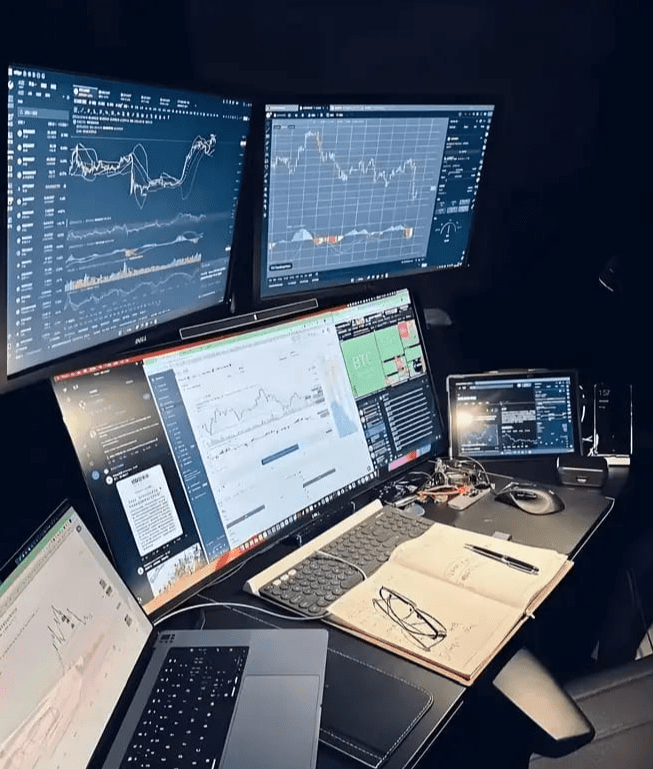
Must-read for contract trading: revealing robust strategies and core logic of doubling
In crypto contract trading, 'choose good coins and good people' is the core premise of a prudent approach. As a leverage trader, leverage amplifies volatility, so the primary consideration for trading is not volatility but certainty.
- In an uptrend, go long on strong cryptocurrencies; in a downtrend, short weak cryptocurrencies. For example, at the beginning of a new quarter, if EOS and ETH are the strongest, during a pullback, they are the first choice to go long; in a downturn, even if mainstream coins may decline more than Bitcoin later, prioritizing shorts on Bitcoin can significantly reduce the risk of violent pullbacks.
For most short-term traders, it is often difficult to hold out until the ideal exit point and they tend to lack mastery over position control, averaging down in fluctuations, etc. Therefore, a good entry price is crucial. After making a profit, it is advisable to first secure some gains and set a stop-loss at the break-even price — this is also a principle that needs to be repeatedly emphasized in practice.
The essence of contract trading strategies
1. Clarify the main trend: only enter along the main trend and never act against it.
2. Entry points for trend-following trades:
- New breakout points in trends;
- Breakout point in a sideways market;
- Retracement point in an uptrend or rebound point in a downtrend.
3. Adhere to trend positions: positions that align with the trend can yield substantial profits; do not exit prematurely.
4. Pyramid-style position increase: if the opening aligns with the major trend and the paper profit has validated the judgment, you can gradually increase your position at the aforementioned entry points.
5. Position holding and exiting: maintain your position until the trend reverses before exiting.
6. Timely stop-loss: if the market trend is opposite to your position, immediately stop-loss and exit.
Core qualities and principles
Besides strategy, remember: discipline, discipline, and more discipline!
The essence of trading is to accumulate wealth gradually and let compounding take over. Once you profit above your cost, avoid losses; when you have profits, make sure to secure some to prevent working for nothing. In short, 'be bold to take profits when you earn, and don’t lose the original price on the remainder.'
A price action chart can teach you the correct way to trade cryptocurrencies: don't blindly chase candlestick signals! Build a high-win-rate price action trading system in 5 steps
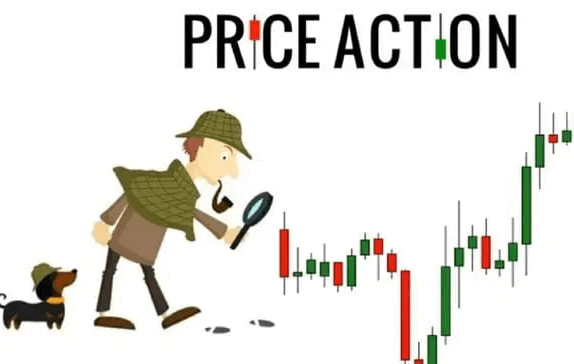
A price action pattern or 'signal' is not just waiting for your favorite candlestick shape to appear and blindly placing an order.
An effective signal should be a multi-step decision-making process, integrating all factors to form a reasonable trading thought process.
You can think of it as a qualification review process — first analyze the market environment, identify key areas to trade, and then wait for signals to appear.
Step #1: Conduct technical analysis and confirm the valid market structure
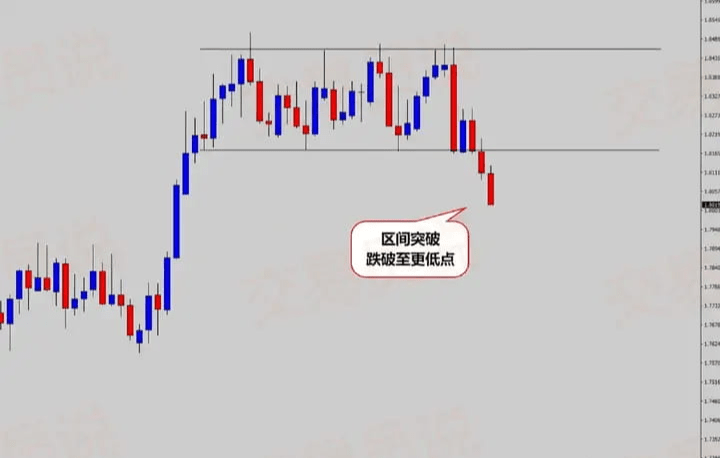
This step is crucial. Do we meet the trading conditions? What does the market structure look like?
If there is no reasonable market background and structure, we cannot continue trading.
Here is an example of a range-bound market; recently, it has broken below the lower bound of the range, and our ideal operation is to look for bearish signals to trade in the direction of the trend.
Step #2: Lock in the positions where you expect trading signals to appear
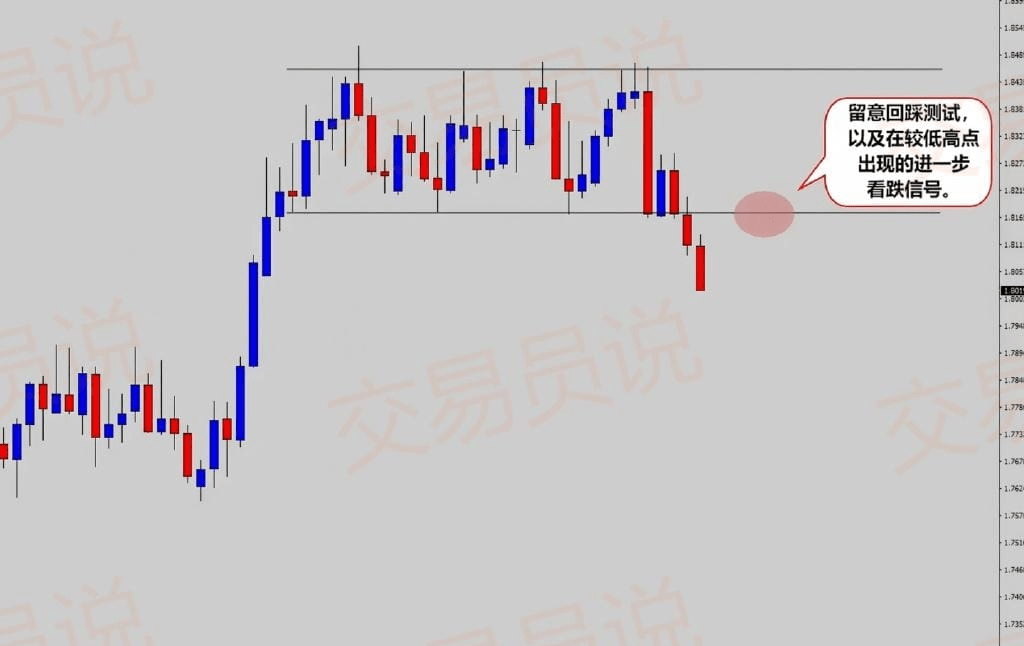
Once a directional preference is established, we return to technical analysis to mark the most likely price action signal locations.
Step #3: Wait for the expected signal to appear
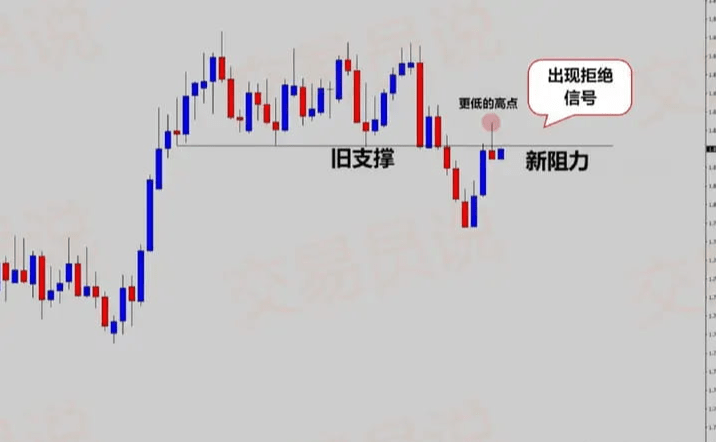
If a signal (like a certain candlestick pattern) appears at our predicted location (or nearby), this is a compelling basis for entry.
Step #4: Check the profit potential of the trade — focus on resistance levels in price movements
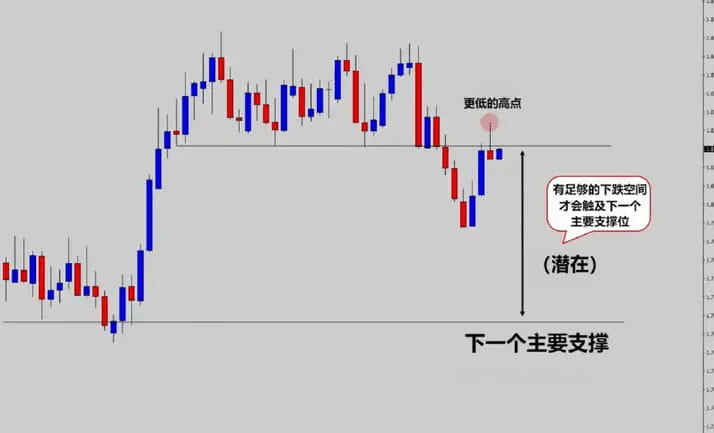
Ensure the potential gains of the trade far exceed your risk exposure.
Confirm there is sufficient profit margin (price has enough room to run) until the next important structure.
Step #5: Place orders, let go, and reap — the relaxed strategy for forex traders
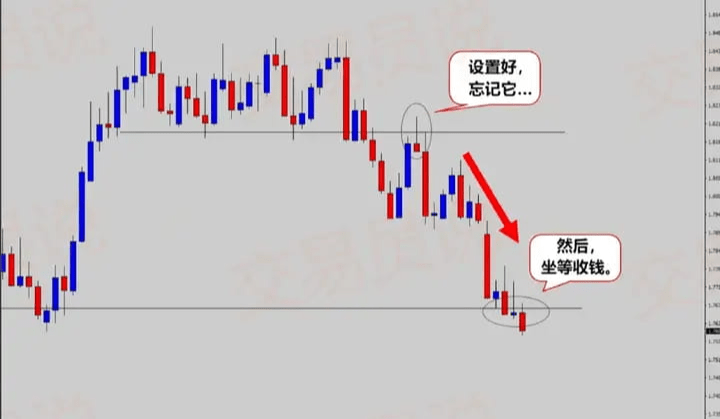
Once you assess the trade, set your entry, stop-loss, and target price levels.
The best practice is to let the trade run naturally until it hits the stop-loss or target price. The less human intervention, the better the outcome!
This is the method to filter out ineffective signals. If any step in the process fails, this trade is likely not worth doing.
Only when all conditions are met can you form a high-probability trading pattern that you can trust.
The value and logic of trading come from:
◎ Start from the basics
◎ Keep your thinking simple and logical
◎ Follow market structure
◎ Be patient
Rarely mentioned obscure charts
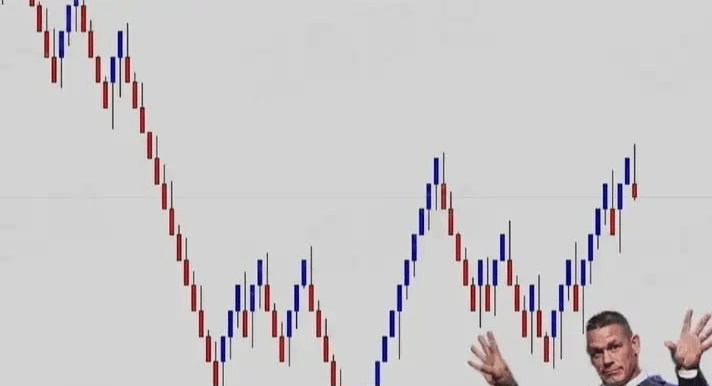
The chart formats available in the market go beyond classic candlestick charts (though most people are most familiar with them). Price action traders can utilize these different chart forms to observe the market from various angles.
These other price action charts can actually help you discover opportunities that traditional candlestick charts might miss.
This is an area I am currently researching in depth, and preliminary results look very promising.
Now, let's first look at the classic candlestick chart and compare it with some other available chart formats.
Customized candlestick charts show unique price movements
Most traders believe that the New York session close chart is the only one worthy of attention, but the fact is that the New York close chart is merely a reference point for analysis.
I’m not saying the New York close chart is bad; it’s very good, and I use it every day. But have you ever considered using the London opening time as a reference point for cross-analysis?
Let’s compare the New York close chart with the London open chart…
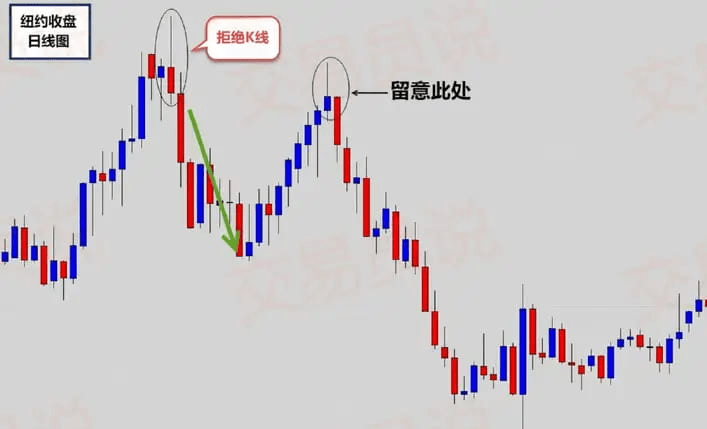
From the London session opening chart, we can see a strong sell signal, while this signal is not as clear on the New York close chart.
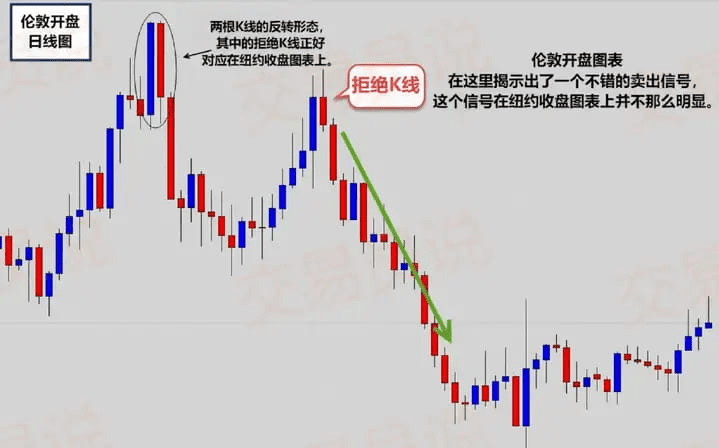
But this doesn’t mean the New York close chart lacks value; we can also see a clear major sell signal on the New York close chart, while this signal is not as evident on the London open chart.
Also attach a New York opening chart for reference…
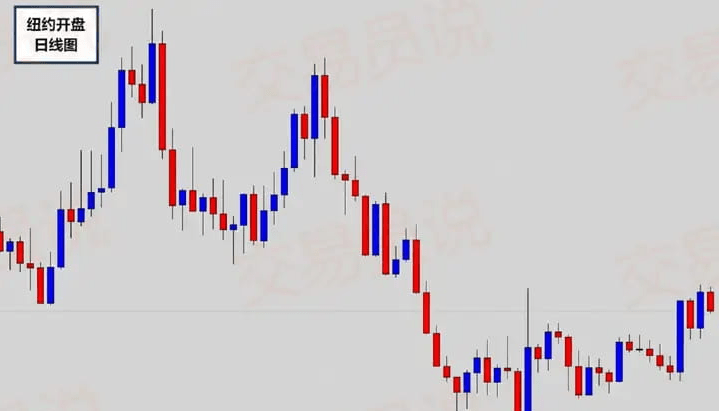
There are no particularly obvious signals here, but this just shows that on the same currency pair, we can have three different time perspectives, greatly changing the chart's performance.
This is known as the 'gold mining' strategy, filtering through different time perspectives to find price action 'gold mines' that others have not discovered.
You can actually adjust the chart time in 23 different ways, even generating charts for each Greenwich Mean Time (GMT) hour, but I think keeping it simple and focusing on 'key moments', such as New York close, London open, and New York open, is a more reasonable starting point.
This opens a unique analysis door for price action traders!
Summary
Price action trading is not operated in isolation based on a single variable, but rather considers market environment, price structure, expected signal locations, and profit potential comprehensively.
Additionally, by adjusting the opening and closing times of candlesticks, we can obtain different versions of candlestick charts. By switching the time perspective to key moments in the market (like the London open), we can 'see' patterns that are not easily discernible on standard charts.
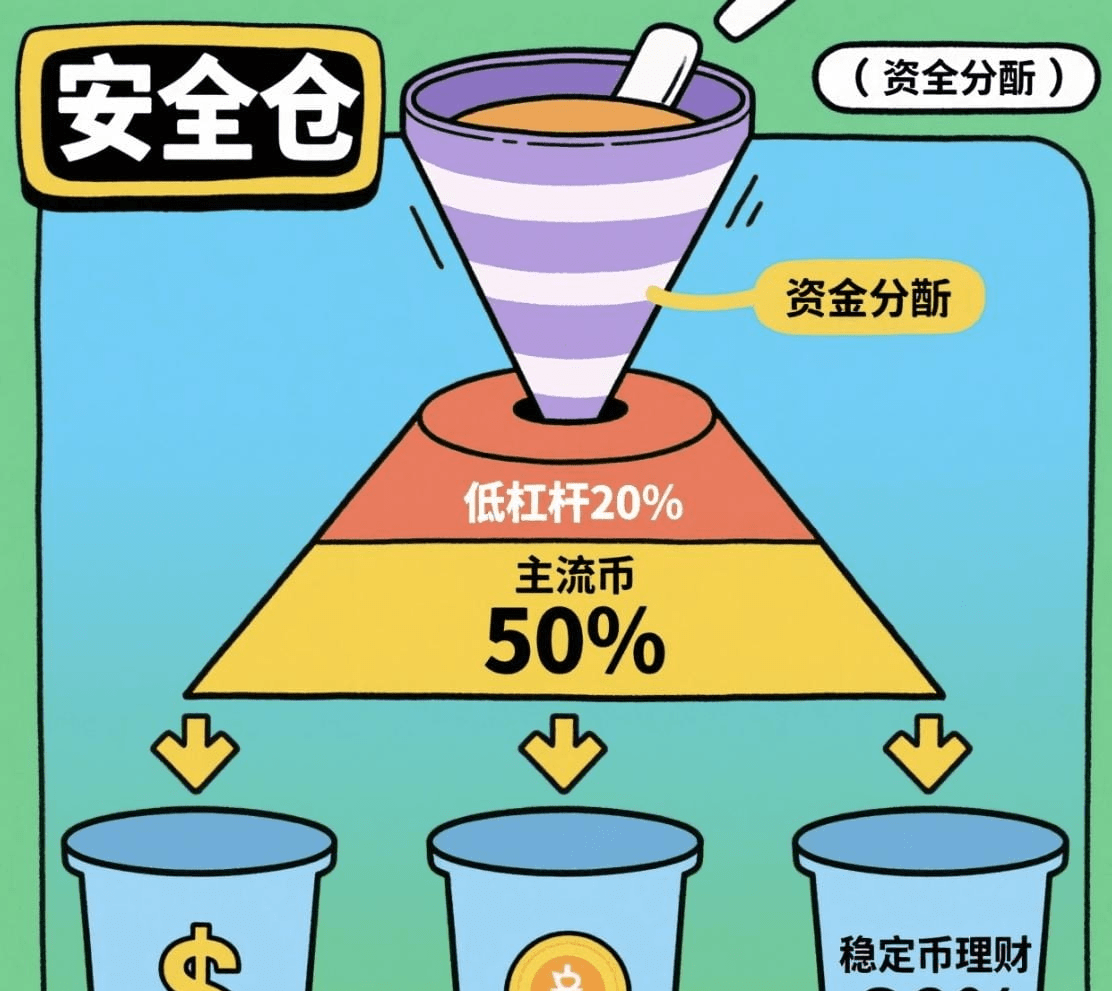
Secrets of position management in crypto contracts: don’t let all-in bets ruin you!
Do you often encounter such frustrating situations: as soon as you open a long position, the market seems to have eyes and drops; as soon as you open a short position, the price rockets up directly, liquidating you? Or can’t help but go all-in, and when the market fluctuates slightly, your mindset crumbles?
In fact, many times what you lack is not trading skills but crucial position management! Today I will share 4 extremely practical position management methods for crypto contracts, especially suitable for newcomers and investors with unstable mindsets. If you find it useful, remember to like, bookmark, and study slowly!
Fixed proportion method — the 'safety lock' for beginners
The core logic of this method is simple: allocate your margin according to a fixed proportion, resolutely avoid going all-in, and always leave yourself some backup funds, whether for averaging down or counter-trading, to remain stable.
Take the 'half-position rule' as an example; this is one of the easiest to grasp. You only need to use half of your margin to open a position and keep the other half reserved to cope with sudden market fluctuations. For example, if you have $10,000 in your account, you can use up to $5,000 to open a position. Even if the market drops, you still have funds to add to your position, lowering your cost; even if the worst happens and you get liquidated, you won't lose everything and your account won't hit zero.
Pyramid position increasing method — the 'money-making tool' for trending markets
This method is a powerful tool in trending markets, with the core logic being that you only increase your position after securing profits, and the amount of increase should be progressively smaller, like a pyramid, wide at the base and narrow at the top.
The correct approach is this: first open a position using 50% of your funds, and when the price rises by 10%, add 30% more to the position; if it rises another 10%, then add 20% more. This way, your holding cost will always be lower than the market price, and profits will snowball.
A special reminder: never pyramid your positions! Some retail investors like to start with small positions to test the waters, and after losing, they not only don't retract but instead increase their positions, thinking they can recoup previous losses. This practice is a sure way to self-sabotage and is one of the main reasons for retail liquidation!
Martingale strategy (use with caution! High-risk warning) — a 'double-edged sword' of high risk and high reward
The core logic of the Martingale strategy is to double your position after each loss, thinking that as long as there is a market pullback, you can recoup all previous losses.
However, everyone must be cautious; the Martingale strategy is a ticking time bomb in a one-sided market, highly prone to forced liquidation! It is only suitable for ranging markets, and a stop-loss must be set.
I have an improved plan, which is to limit the maximum number of consecutive openings. For example, you can only double your position up to 5 times, and also set a total stop-loss line; once the losses reach this line, decisively stop-loss and do not continue to increase the position.
Kelly formula — a 'precision instrument' for scientifically calculating position size
The Kelly formula is a great tool; it can scientifically calculate the optimal position size for each trade based on win rate and odds, helping you achieve long-term compound growth.
The formula is: f = (bp - q) / b. Here, f represents the position ratio, b represents the odds, p represents the win rate, and q = 1 - p is the loss rate.
For example, if your win rate is 60% and the odds are 1.5:1, then f = (1.5×0.6 - 0.4) / 1.5 = 33.3%. This means that for this trade, you can open at most 33% of your position.
Essential risk control principles for contract trading — the life-saving 'golden rules'
In addition to the above position management methods, there are some risk control principles that must be followed; these are crucial for survival!
Individual losses should not exceed 2% of total funds: each trade's loss should be kept within 2% of total funds, so even if you incur several consecutive losses, it won't significantly impact your capital.
Never go all-in on leverage: Leverage is like a double-edged sword; if used wisely, it can fill your pockets, but if misused, it can lead you to zero instantly. So, never execute a full-leverage operation in a moment of impulsiveness.
Must set stop-loss! Must set stop-loss! Must set stop-loss! : Important things are worth repeating three times! Stop-loss is your 'airbag' in trading; when the market moves against your expectations, it can help you stop losses in time and prevent further losses.
Regular withdrawals: in the crypto space, only when you withdraw money to your own wallet can you truly consider it earned. Therefore, regular withdrawals are a good habit; don’t let the profits you’ve earned fly away again.
Summary
Position management is like a trader's bulletproof vest; surviving in the crypto battlefield full of risks and opportunities is more important than how much money you make! Only by managing positions well and controlling risks can you survive and earn your share of wealth in this market.
Have a good trading mindset; during a drop, don’t let your blood pressure soar, and during a rise, don’t lose your composure; securing profits is key.
Follow fewer crypto enthusiasts and welcome like-minded individuals in the crypto space to discuss together~


