
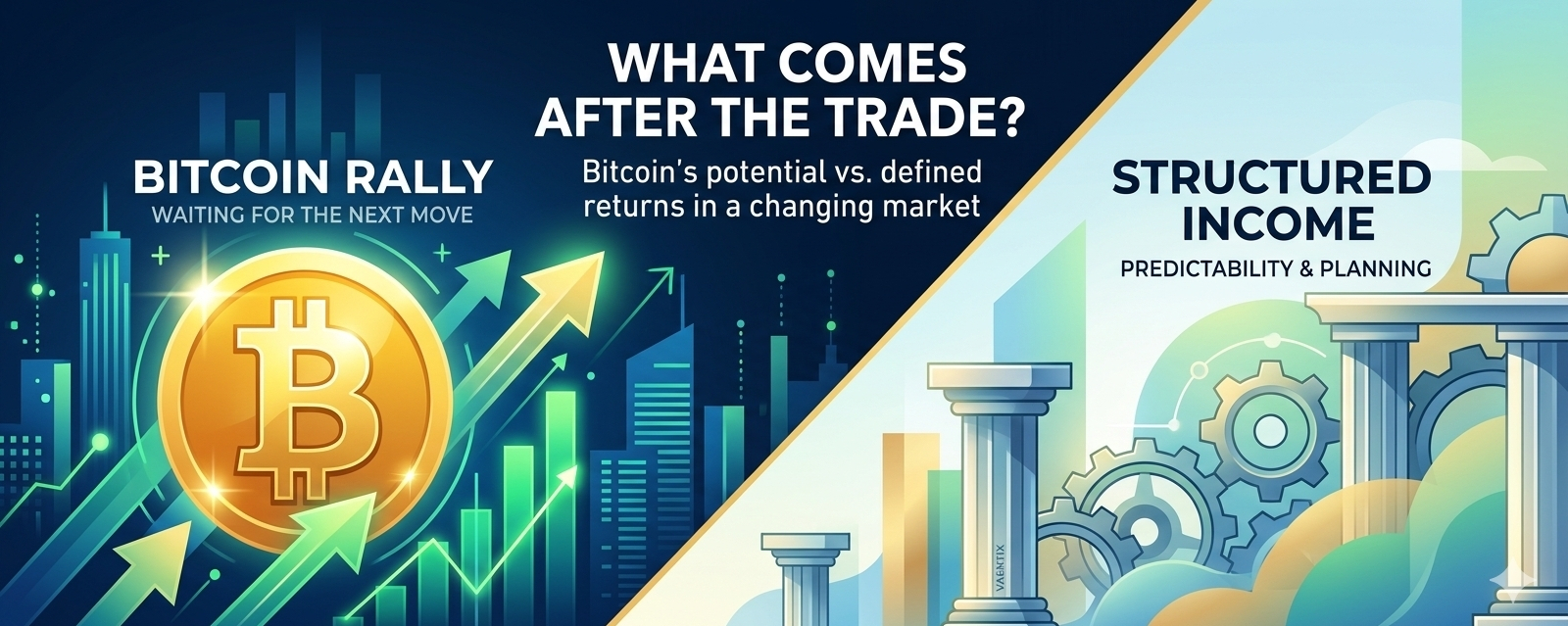
Bitcoin is back in the conversation again, and this time the energy around it feels stronger than just another short-lived market bounce. A friendlier risk-on mood across global markets has given BTC another push, while steady demand from U.S. spot Bitcoin ETFs has kept adding support to the move. For a lot of investors, that is enough to renew the usual optimism. The chart looks better, the narrative looks stronger, and the familiar question starts coming back into focus: how much higher can Bitcoin go from here?
But beneath that excitement, a different question is quietly becoming more important. It is not only about where Bitcoin can go next. It is also about what investors are actually getting while they wait. That is where the conversation starts to shift. Price appreciation is one kind of reward, but it is not the same as income. Bitcoin has always been powerful as an exposure asset. It offers liquidity, scarcity, and long-term upside potential for people who believe in the broader digital asset thesis. What it does not offer is clarity. There is no fixed return, no scheduled payout, and no easy way to map what your capital will produce over a set period of time. In other words, Bitcoin can be exciting, but it is still largely a waiting game.
That gap is exactly why products built around structure and predictability are starting to attract more attention. Platforms like Varntix are positioning themselves around a very different kind of value proposition. Instead of asking people to simply hold through volatility and hope the market eventually does the work, they are presenting a model built on defined terms, visible timelines, and more predictable outcomes. That appeal is not really about hype. It is about planning. For investors who are tired of watching price swing up and down without knowing what their money is doing in the meantime, that kind of setup can feel much easier to understand.
The flexible savings side of that model speaks to accessibility. It gives users a way to keep capital moving without locking everything away for long periods, which matters in a market that can change direction quickly. Longer-term fixed APY plans take that idea even further by creating a more disciplined structure around returns. Instead of depending on market sentiment or the next breakout candle, the user knows the term, understands the framework, and can think about capital in a much more organized way. That is a very different experience from staring at a Bitcoin chart and hoping the next leg higher arrives before the market mood changes again.
That does not mean Bitcoin and fixed-income style products are competing on the exact same terms. They solve different problems. Bitcoin is for the investor who wants asymmetric upside, exposure to a monetary alternative, or simply the most recognized asset in crypto. A structured income product is for the investor who values predictability, timing, and a cleaner way to think about returns. The contrast is what makes this discussion interesting. One is built around potential. The other is built around visibility.
And that is probably why the comparison is becoming more relevant now. When markets are strong, people chase upside. When uncertainty returns, they start looking for something they can model. Right now, both instincts are alive at the same time. Bitcoin continues to draw institutional interest, but more investors are also starting to pay attention to products that feel easier to explain, easier to plan around, and easier to fit into a broader financial strategy.
So the real debate is no longer just about whether Bitcoin can continue climbing. It is about what kind of investor experience feels more useful in practice. Some will always prefer the upside of BTC, and that is understandable. Others may decide that predictable income, scheduled payouts, and clearer structure are more valuable than waiting for the next major rally. That is the shift happening underneath the surface of the market.
Bitcoin still represents the possibility of outsized gains. Structured income products are trying to represent something different: a more defined path. In a market where uncertainty never really disappears, that difference may matter more than the next headline move.