
Why does an ordinary person withdrawing 40,000 yuan get treated by the bank as a 'potential criminal'?
You go to the bank to withdraw your own money, and the teller keeps asking what the money is for, even checking your previous transaction records. If you don't cooperate, they'll report you to the police—can you accept that?
After watching this incident, I can only say: this isn't anti-fraud; it's using the banner of 'anti-fraud' to treat customers as suspects!
To withdraw 40,000 yuan, do you have to explain the 'purpose of the funds'? The lawyer was reported to the police by the bank!
On November 3, lawyer Zhou Xiaoyun went to the China Construction Bank Shandong Dongying branch to withdraw 40,000 yuan in cash from his own account. The teller's first words were not 'Hello,' but rather, 'Please explain the purpose of the funds, or we cannot process this.'
Not only that, the teller also insisted on checking his previous transaction records. After the individual refused to disclose personal usage, the bank simply called the police.
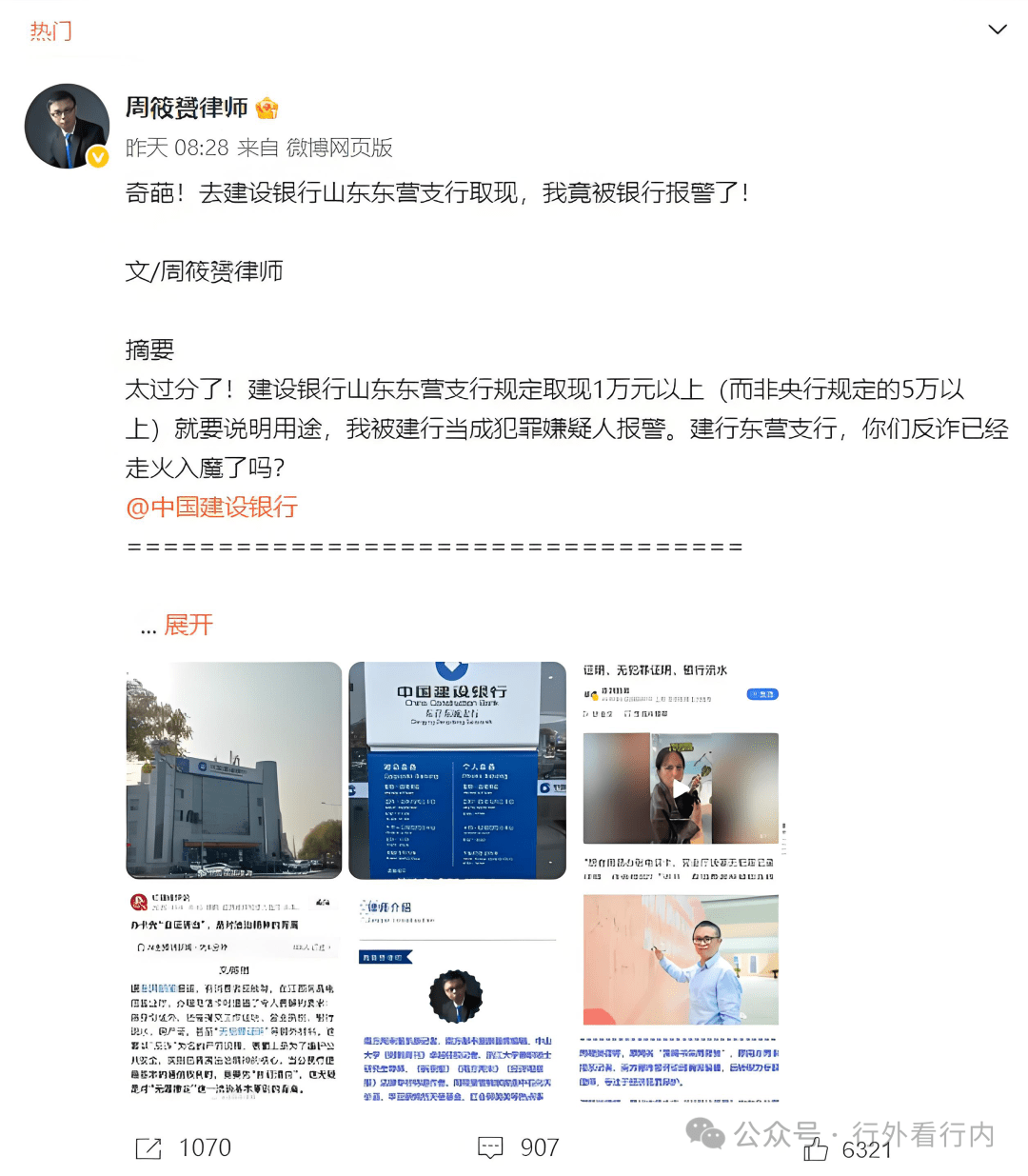
You heard it right, a person making a legal withdrawal was 'reported' by the bank on the spot.
This is not an extreme case, but rather the 'anti-fraud verification' step in the bank's operational process. Yet the bank and the anti-fraud center are actually 'passing the buck' to each other, both claiming this is a 'request from the other party'!
They say it's 'to prevent scams', yet they make the customer prove their innocence?
Afterwards, the Dongying branch of China Construction Bank responded: According to the anti-fraud center's requirements, withdrawals over 20,000 yuan at the counter and over 5,000 yuan from ATMs must explain the purpose; otherwise, the funds will not be released.
Some tellers even bluntly said: 'There is no option in the system for "no need to explain the purpose"; if you want to withdraw, you must prove your innocence.'
This logic is very much like treating customers as suspects by default.
'Can you prove you are not being scammed?'
'You must first state the purpose, only then will we trust you are not a scammer.'
The lawyer angrily retorted: 'I'm withdrawing my own money, not a criminal; why should I have to prove my innocence?'
The bank management is the one that needs to be rectified.
Afterwards, the Dongying branch of China Construction Bank once sent someone to contact a lawyer, hoping to 'apologize privately', but the individual refused to accept it. He publicly posted online, pointing out:
'It's not the front desk staff's fault; the mistake lies with the bank management that established this entire set of regulations!'
Indeed, tellers are merely executors, and such processes have clearly deviated significantly from the original intention of financial services.
It's certainly not wrong to be wary of customers being scammed, but you can't use this as an excuse to limit withdrawals, interfere with privacy, or even threaten to call the police!
'Anti-fraud' cannot become an excuse to harm ordinary people.
Now, many banks' 'anti-fraud verification' processes have become a 'set of obstacles for ordinary people':
To withdraw 20,000 requires a written explanation.
To withdraw 30,000 requires checking transaction records.
To withdraw 50,000 requires seeing a supervisor.
To withdraw 100,000 requires recording + calling the police.
You think anti-fraud is helping you; in fact, it assumes you are a scammer or a victim, insisting you 'explain clearly' before letting you use your own money.
The Dongying anti-fraud center also responded: 'The review of the use of funds is the bank's own issue and has nothing to do with us.'
In short, it thoroughly pushed back against the 'shifting blame anti-fraud' approach.
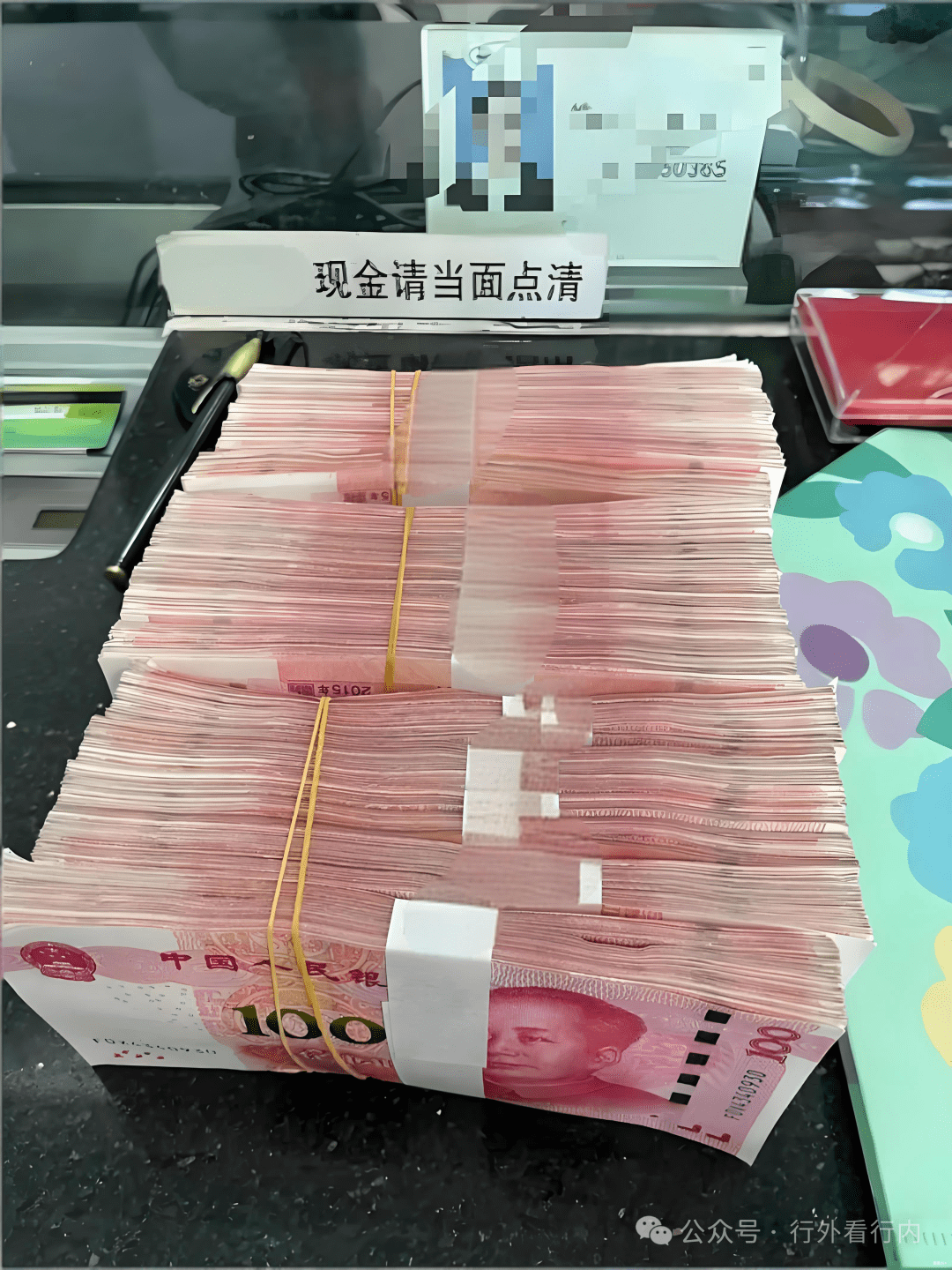
This regulation violates the spirit of the central bank.
According to relevant regulations from the People's Bank of China:
Depositors have the right to freely manage their account funds, unless it involves criminal investigations or court freezes; banks have no right to obstruct.
This means that banks cannot arbitrarily interfere with customers' normal deposit and withdrawal activities, nor can they impose restrictions or require explanations for purposes.
The so-called practice of 'recording withdrawals over 10,000 yuan' by China Construction Bank has no legal basis; it is merely an internal process. And internal processes cannot override the law.
As a peer, I must say a few fair words:
I have worked in banks for over a decade, watching 'anti-fraud' turn into 'inwardly competitive anti-fraud'.
The starting point is good, but the execution has become 'process intimidation':
Customers wanting to make transfers must be interrogated;
Customers wanting to withdraw money must be registered;
When a customer asks for their balance, they must be 'kept under observation'...
This is not risk control; this is treating customers as 'suspects'.
You can remind, but you cannot force.
You can indicate risks, but you cannot deprive rights.
Written at the end: Don't let the system kidnap humanity.
Anti-fraud should be to protect the people, not to intimidate them.
Anti-fraud should also have boundaries and should not become a pretext for bank 'laziness in governance'.
A normal society should be:
When someone tries to scam you, the bank can help block it; it's not that you withdraw money and are treated as a criminal by the bank.
Don't let anti-fraud become another form of 'abuse of power'.
I hope every bank, especially the management, will seriously consider this issue.


