The content of the article does not constitute trading advice, investment carries risks, and caution is required when entering the market!
Bitcoin has lost all its gains from last year
Yuan spaceship 2 hours ago 22972
Follow
Article introduction
This year, Bitcoin, which has been shining brightly, has fallen from its historical high, and after breaching the $100,000 threshold, market confidence is undergoing its most severe test.
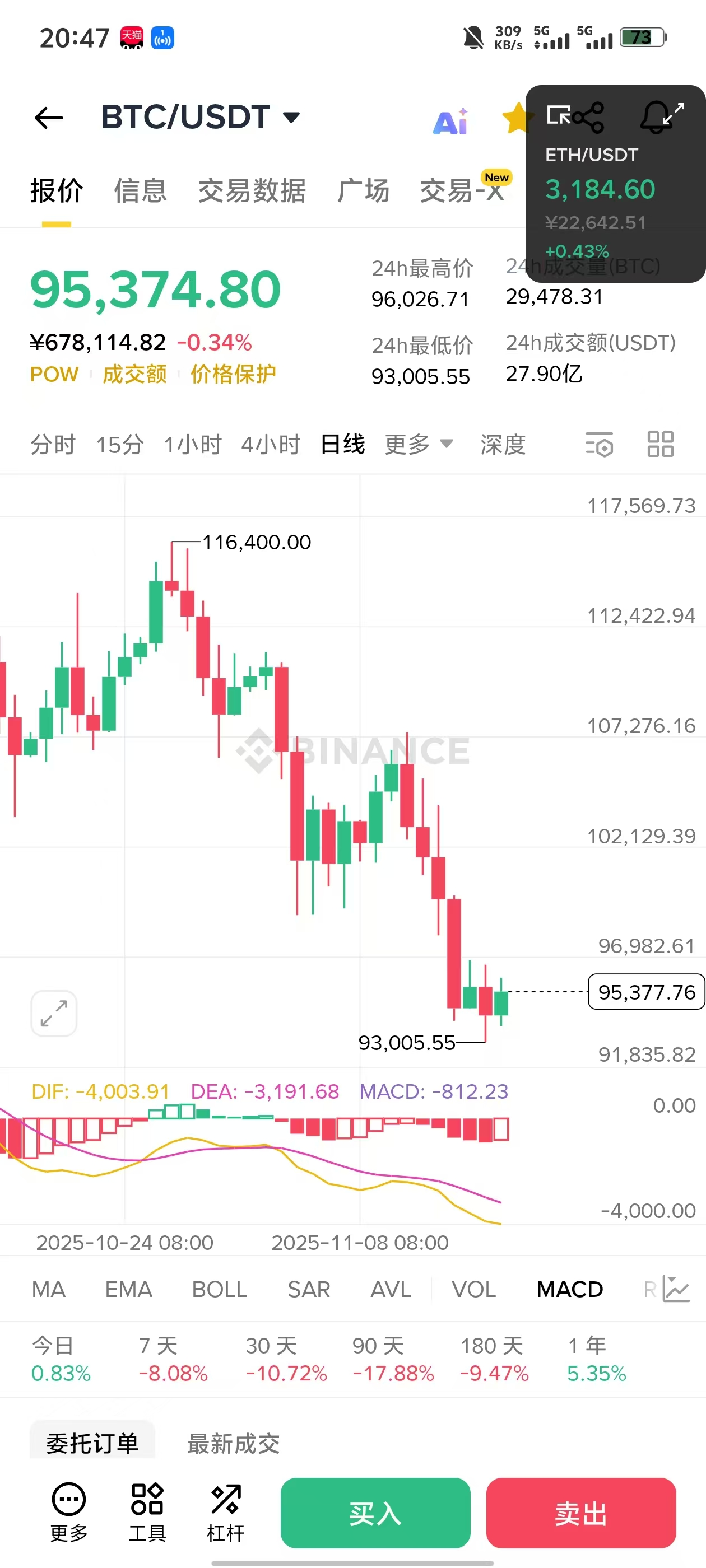
On November 17, the cryptocurrency market once again faced a fierce sell-off. Bitcoin plummeted nearly $1000 in the early hours, dropping to around $93000, marking a new low since May 8.
This price is below Bitcoin's closing price at the end of 2024 ($93714.04), meaning that this year's annual gain of over 30% has been entirely wiped out.
Just a month ago, Bitcoin had set a historical high of $126,251 on October 6. However, the market changed dramatically afterward, with Bitcoin dropping over 20% from its peak, officially entering a traditional bear market.
In this sudden cold wave, nearly 100,000 investors encountered liquidations within 24 hours, with the total amount of liquidation reaching $251 million.
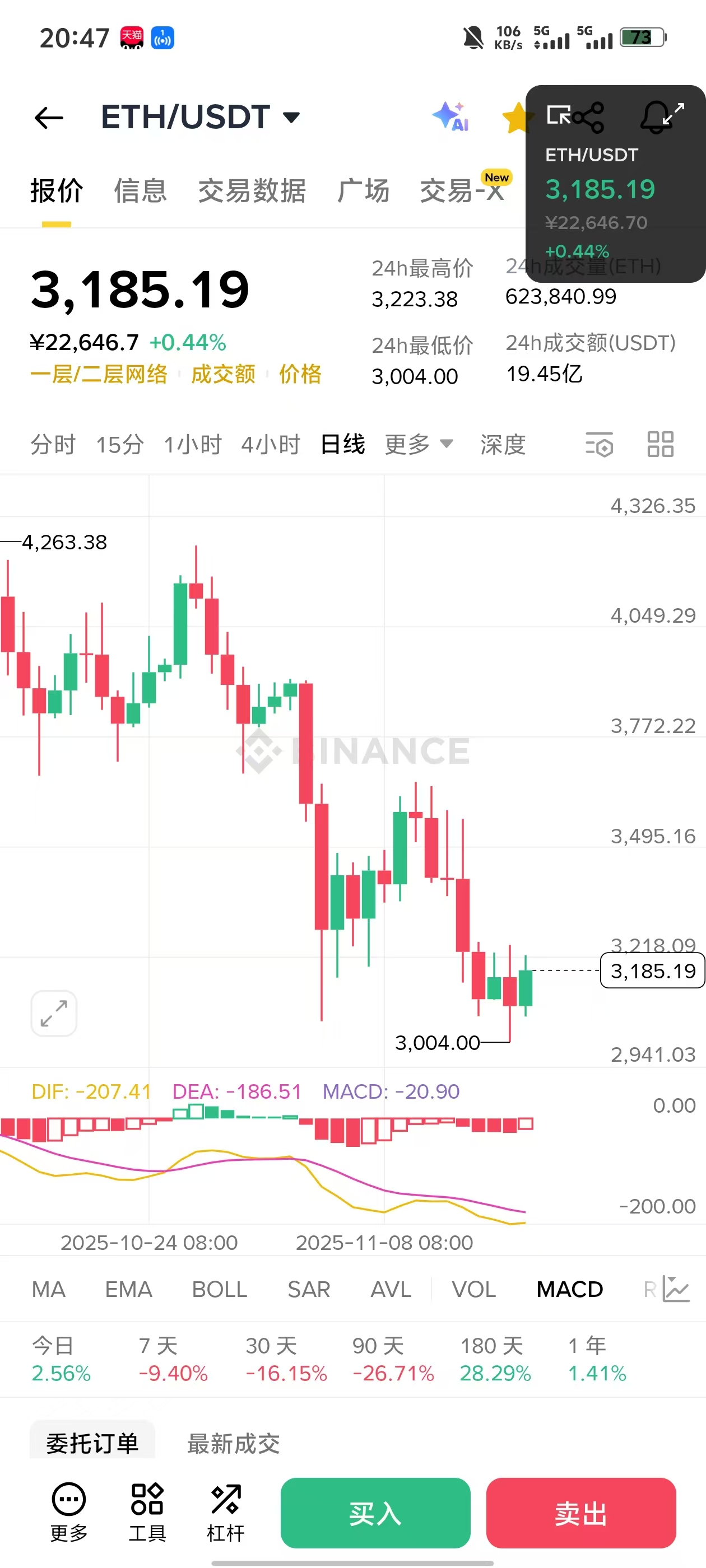
The second largest cryptocurrency, Ethereum, also did not escape, briefly approaching the key psychological level of $3000.
The total market capitalization of the entire crypto market has evaporated by over $450 billion since the beginning of October, and if calculated from the peak, the total market capitalization loss has exceeded $1 trillion.
The market is generally showing a downward trend. Aside from Bitcoin and Ethereum, mainstream cryptocurrencies such as Solana, Dogecoin, and XRP have all declined simultaneously, with altcoins experiencing even more significant drops; an index tracking the last 50 of the top 100 digital assets, the MarketVector index, has fallen about 60% this year.
This round of decline is the result of multiple overlapping factors, with the withdrawal of leverage and institutional capital being the core driving forces.
Coinglass data shows that during the sell-off on November 5, the entire crypto market experienced over $2 billion in liquidations, with nearly 500,000 people liquidated. Additionally, on October 11, the market faced the largest forced liquidation event in history, with major global exchanges liquidating over $19 billion in crypto assets.
What is even more concerning is that the institutional capital that once drove Bitcoin to record highs is quietly withdrawing. Data shows that 10 Bitcoin spot ETFs saw a net outflow of over $1.3 billion in November, with BlackRock's IBIT seeing a single-day outflow of $400 million, and Ethereum spot ETFs also seeing nearly $400 million in outflows.
"Bitcoin is facing dual pressures from spot selling and corporate hedging," noted Jake Ostrovskis, head of over-the-counter trading at Wintermute. "When the unique narrative of cryptocurrencies weakens, their correlation with traditional assets increases, which is a driving factor in the current market conditions."
The behavior patterns of long-term holders have also changed significantly. CryptoQuant data shows that in the past month, long-term holders of Bitcoin have cumulatively sold over 320,000 BTC.
The price of Bitcoin is primarily determined by two factors: 'scarcity' and 'dollar liquidity.' The immediate trigger for the current decline is the contraction of dollar liquidity. Recently, U.S. interbank rates (SOFR) have risen temporarily, indicating signs of a cash crunch in the financial markets, with rising borrowing costs leading to tight capital chains for investment institutions, prompting them to sell off risk assets like Bitcoin.
At the same time, the global trade tensions caused by the Trump administration's tariff policies have also cast a shadow over economic growth prospects. These macro factors together constitute a perfect storm against risk assets, and cryptocurrencies, as one of the most volatile asset classes, naturally bear the brunt.
Aside from macro factors, the trust crisis faced by the cryptocurrency market itself is further exacerbating the downward trend.
In October 2025, the U.S. Department of Justice successfully confiscated 127,000 Bitcoins held by a Cambodian fraud group, valued at approximately $15 billion, setting a record for the scale of crypto asset confiscation globally. This event directly shattered the myth of absolute security of crypto assets, as the private keys, once seen as ultimate protection, were cracked by law enforcement agencies.
The safety that crypto assets claim is being seriously questioned, directly undermining their foundational value. If the market generally believes that the trading security of crypto assets has been lost, the possibility of the industry entering a prolonged bear market cannot be ruled out.
The volatility in the stablecoin market has also intensified the instability of the market. During the significant drop on October 11, the stablecoin USDE briefly depegged; during the crash on November 5, the decentralized stablecoin project Stream Finance's dollar stablecoin XUSD fell from $1 to around $0.26, losing over 77% in just a few hours.
There are significant disagreements among analysts regarding the future direction of the market.
10X Research analyst Markus Thielen stated that $100,000 is not only a round number but also the liquidating line for a large number of leveraged positions. Bitcoin has fallen nearly 20% from its historical high, and its technical pattern is approaching the threshold of a 'technical bear market.' The institution predicts that the next key support level for Bitcoin is around $93,000; if it fails to hold, further declines may occur.
Bearish views suggest that the market may face a deeper correction. Market analyst Damian Chmiel predicts that if Bitcoin prices remain below $100,000, it could trigger a sharper sell-off, with the next target being the low of approximately $74,000 reached in April, indicating about a 30% potential downside from current levels.
However, not all market observers are so pessimistic. Bitwise Chief Investment Officer Matt Hougan believes that the current market conditions are closer to a bottom rather than the start of a new long-term bear market.
Historical data shows that Bitcoin typically follows a pattern of three rises followed by one fall, meaning that three years of growth are often followed by a year of decline. Investors should view this process rationally, as periodic declines are a necessary part of Bitcoin's maturation into a more mature market.