
Ethereum is building a highly unified and collaborative chain ecosystem.
Last night, the Ethereum Foundation's official blog revealed that the Ethereum accounts and chain abstraction team have proposed the 'Ethereum Interop Layer (EIL)' plan, aiming to merge all Layer 2 (L2) networks into a single and unified Ethereum chain at the user perception level, making cross-L2 transactions as seamless as single-chain transactions, while maintaining minimal trust and a decentralized foundation.
The concepts related to the interoperability layer were first proposed in late August this year and are currently in the testing and development stage.
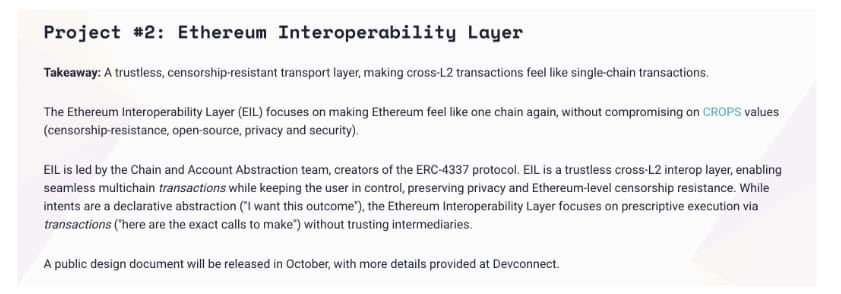
Before this, Ethereum had achieved scalability through Rollup technology, significantly reducing transaction costs and providing ample block space, marking the gradual realization of its vision as a global computing platform. However, the development of things often has two sides, and this technological evolution has also brought about unexpected side effects, the most prominent of which is the fragmentation of user experience.
The prosperity and difficulties of L2.
The current L2 ecosystem presents a rather complex situation, like scattered islands, with each chain having its own independent Gas model, cross-chain bridge system, and even wallet system. When users transfer assets between networks like Arbitrum, Base, and Scroll, they need to manually select chains, confirm cross-chain paths, and trust third-party liquidity providers. This operational complexity undoubtedly contradicts Ethereum's original promise of a 'seamless, trustless' experience.
From the perspective of user experience, the consequences of this fragmented experience are quite severe. The originally smooth advantage of Ethereum's experience has been significantly weakened, replaced by the complex operations brought by multiple independent 'mini-Ethereums'. Users need to manage not just simple and direct transaction behaviors, but face a multitude of L2s. This not only brings operational friction and cognitive burden but also carries additional trust assumption risks, such as reliance on bridges, relayers, sorters, etc., while also invisibly increasing censorship risks.
Although some solutions attempting to unify L2 user experience emerged before the proposal of the Ethereum Interoperability Layer (EIL), regrettably, most of these solutions deviated from Ethereum's core values. For instance, some solutions weakened censorship resistance by introducing intermediaries for transactions; others compromised security by entrusting funds to third parties, and the logic running on third-party servers undermined transparency and the open-source spirit. Therefore, the accumulation of these contradictory phenomena has given rise to a fundamental demand: to rebuild a single-chain-like user experience while retaining the scalability advantages of L2.
So, how does the Ethereum Interoperability Layer (EIL) resolve this contradiction?
The philosophical foundation of EIL: a paradigm of trustless interoperability.
The Ethereum Interoperability Layer (EIL) will be a key breakthrough in resolving this contradiction, with its core positioning as a secure and efficient communication protocol rather than a financial tool.
The design logic of EIL is to make Ethereum's Rollup transactions resemble single-chain transactions, allowing users to complete cross-chain transactions with a single signature, all without introducing new trust assumptions. Its design philosophy is rooted in two core principles: ERC-4337 account abstraction and trustless declarations.
ERC-4337 account abstraction empowers users to initiate cross-chain operations directly from their wallets without relying on relayers or solvers by standardizing account logic.
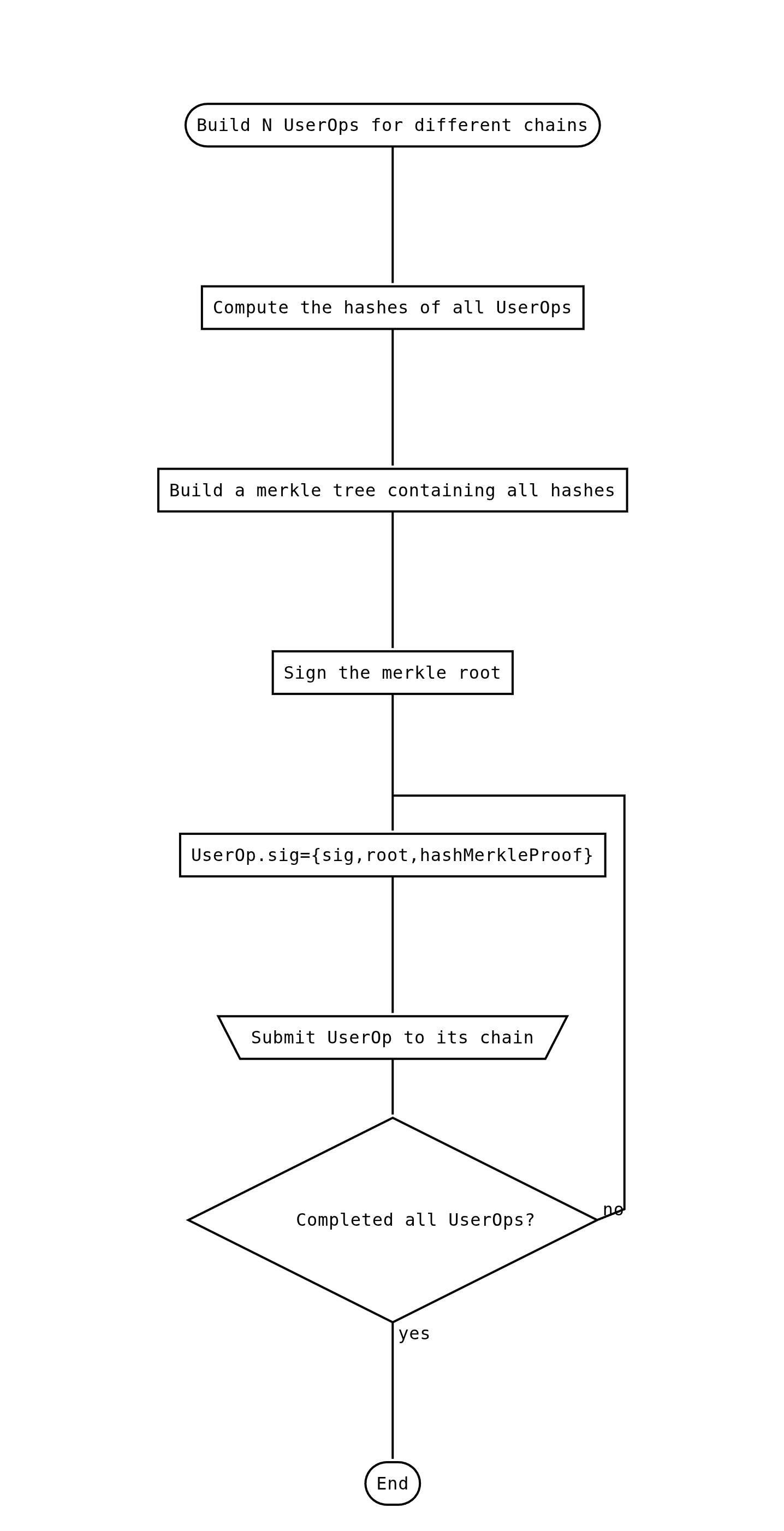
The specific operating principle is: in EIL, users use ERC-4337 accounts, whose logic is optimized for multi-chain use scenarios. The wallet generates multiple different UserOps, and then authorizes a single signature for the Merkle root of all these UserOps. The verification part of each on-chain account requires (i) a UserOp, (ii) a Merkle branch proving it belongs to a certain Merkle tree, and (iii) a signature for the root of that Merkle tree.
The main advantage of this approach is that it can support hardware wallets, which typically do not support the simultaneous generation of N signatures (the wallet only requires a single click from the user to complete the signature).
On this basis, the design of EIL strictly adheres to trustless declarations. EIL puts critical logic on-chain and integrates it into user wallets, ensuring that all operations are executed in a verifiable on-chain environment. For example, when users mint cross-chain NFTs, the wallet automatically merges multi-chain balances and transparently handles Gas fees without the need to entrust funds to liquidity providers.
This design comprehensively guarantees Ethereum's four core values: self-custody (users have complete control over assets), censorship resistance (no intermediaries or centralized nodes can block transactions), privacy (smart contracts replace intermediaries, eliminating the need to disclose users' IP addresses or intentions to relayers or solvers), and verifiability (all logic is open source and auditable).
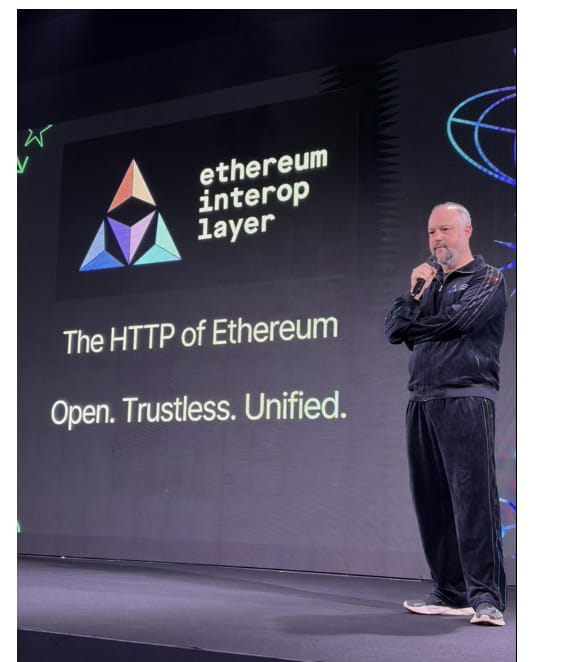
As emphasized by the Ethereum Foundation, from a technical architecture perspective, EIL is equivalent to Ethereum's 'HTTP protocol'. Just as HTTP unified the early internet server access experience, EIL aims to make wallets the universal window for users entering the multi-chain ecosystem, ultimately realizing the vision of 'multiple L2 layers, one Ethereum'.
At the same time, for users, this is a revolution from 'chain management' to 'chain awareness'.
The implementation of EIL will fundamentally change the way users interact with multi-chain ecosystems, primarily reflected in three key aspects: cross-chain transfers, cross-chain minting, and cross-chain exchanges. Users can operate with one click, without needing to select cross-chain paths, pay extra fees, or perform other operations as in traditional models. The core of this experience lies in the design of 'wallet as a portal', where the complexity of cross-chain operations is completely encapsulated.
Ultimately, the introduction of EIL will also trigger cascading effects within the Ethereum ecosystem:
The evolution of wallets and DApps: Wallet providers no longer need to develop custom integrations for each new chain, as EIL's standardized interface makes multi-chain support a default feature. Developers can focus on user experience innovation rather than redundant construction of cross-chain infrastructure.
Rapid access to Rollup: When a new network joins the ecosystem, EIL's compatibility design allows it to seamlessly integrate into existing wallet systems, accelerating technological iteration and user growth.
Consolidation of the trust model: EIL eliminates dependence on off-chain operators, upgrading cross-chain interoperability from a 'centralized exchange model' to a 'decentralized exchange model'. User assets are always held by smart contracts, eliminating counterparty risk, while reinforcing Ethereum's commitment as a 'world computer'.
It is worth mentioning that the emergence of EIL will have a huge impact on the existing market landscape, eliminating the demand for existing intermediaries such as relayers and solvers. As users tend to choose wallet services, this will inevitably lead to a decline in projects that resolve or relay L2 transactions, with their transaction volumes potentially decreasing by over 80%, or even directly destroying related fields, thus forcing these intermediaries to quickly adapt and transform, or face extinction.
Overall, the significance of the Ethereum Interoperability Layer (EIL) concept far exceeds mere technical aspects. It represents a return to Ethereum's original intent: a global, open, seamless, and trustless computing platform. When wallets become universal portals, and cross-chain operations are as simple as single-chain transactions, Ethereum's 'network era' will truly arrive.#ETH巨鲸增持


