
I am 35 years old this year, I started trading cryptocurrencies at 24, and by 2023-2024 my funds reached 8 figures. Now, when I go out, I must stay in a high-end hotel costing around 2000 yuan, and my suitcase and hat might have cryptocurrency symbols. It's much more comfortable than what the older generation did in industry or what the post-80s did in e-commerce.
I have hardly ever experienced a business where I had to argue with others; I have fewer worries.
The biggest point in trading cryptocurrencies is having a good mindset; technology is secondary.
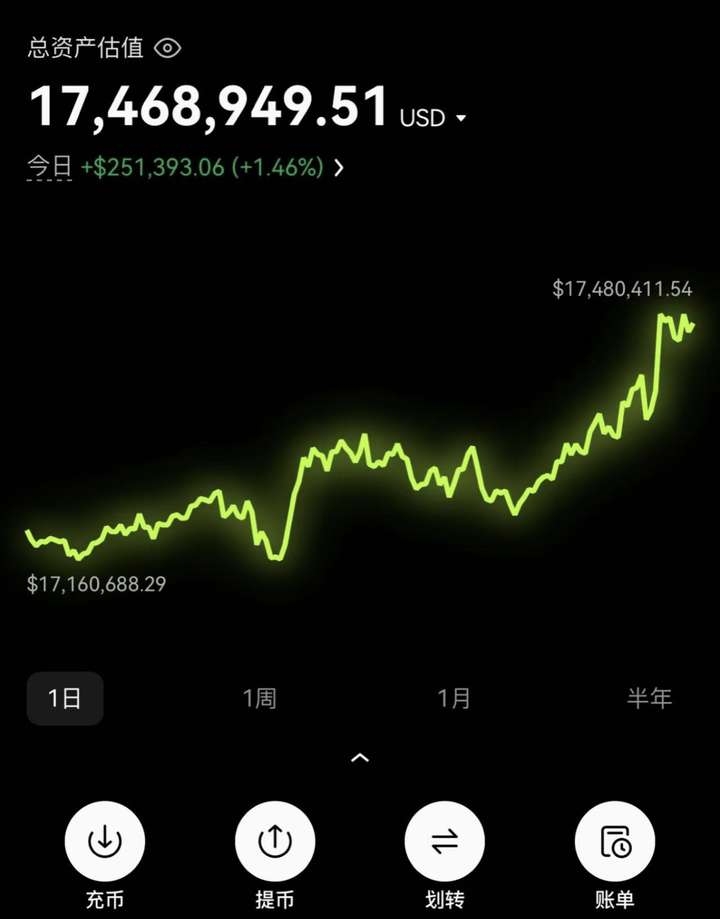
In addition to solid technology, I strictly follow these 8 iron rules of trading:
The first point: controlling position size is more important than anything else. You think you died in the market, but in fact, you died from your position size. A full position in the opposite direction, no matter how good the strategy, is useless.
Second rule: Do not operate emotionally. Trading is not about releasing emotions, not because 'it is too weak, so I want to short', nor because 'I feel it’s going to rebound'. Any order without logical and systematic support is just giving away money.
Third rule: Do not hesitate in setting stop losses. Many people perish in 'let me watch a little longer', resulting in a direct plunge into hell. A mature trader does not avoid making mistakes but knows to acknowledge them immediately.
Fourth rule: Trade familiar markets; do not trade cryptocurrencies you do not understand. If you do not understand, do not touch; if others shout about it, do not chase; do not chase high after a sharp rise.
Fifth rule: Set a clear trading system and execute it decisively. This includes entry logic, profit-taking and stop-loss rules, and position adjustment standards. Execution is more important than the strategy itself.
Sixth rule: Acknowledge that you are an ordinary person; do not fantasize about getting rich overnight. The truly successful are not the ones who double their money every day, but those who steadily outperform 90% of people. It’s not about who earns faster, but about who lives longer.
Seventh rule: Trading is not everything in life; allow emotional space. Do not bind all your emotions to gains and losses, or you will easily shift from 'losing money' to 'losing control'.
The last point is also the most important: if you want to make big money, first learn not to lose money. This is a market that goes against human nature. If you want to take money from others, you must be calm, rational, and patient enough.
Are there any friends like me, who relied heavily on moving averages when they first started trading? Seeing the price test the moving average multiple times and rebound, they thought it would be the same this time, rushed to enter, but the result often went contrary to expectations, and the price went straight towards the loss direction, leading to a stop loss exit.
Today, I will reveal the 4 truths behind moving averages, all based on practical experiences and pitfalls encountered. Understanding these will directly elevate your win rate when trading with moving averages.
01 There are no 'universal moving average parameters'; use 20, 50, and 200 moving averages according to the trend.
As long as you have learned technical analysis, you have probably heard of the 'myth' of the 200 moving average—many people regard it as a standard, thinking it is the most effective moving average. As long as the price retraces to the 200 moving average, it will definitely rebound immediately.
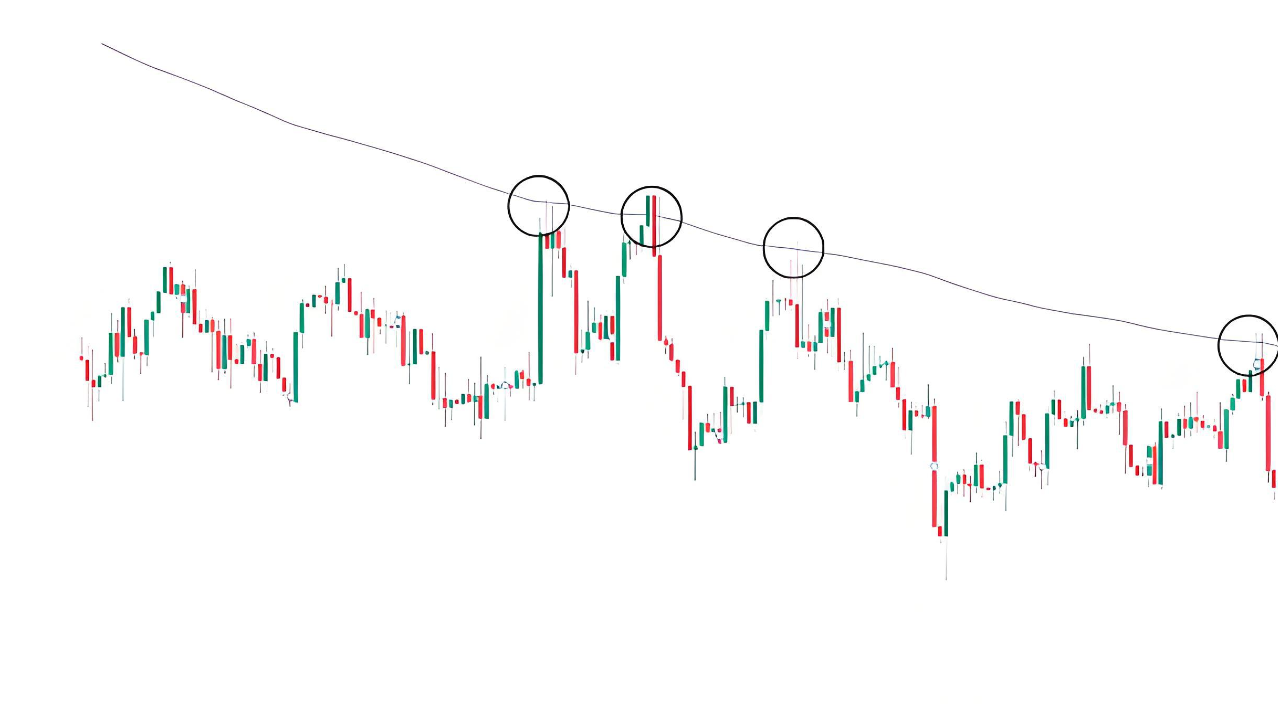
But I want to tell you, this is a misconception!
There is no 'best' moving average parameter; the core is to adjust according to market trends. Different trend strengths require different moving averages. I have summarized the most practical combinations in practice for everyone:
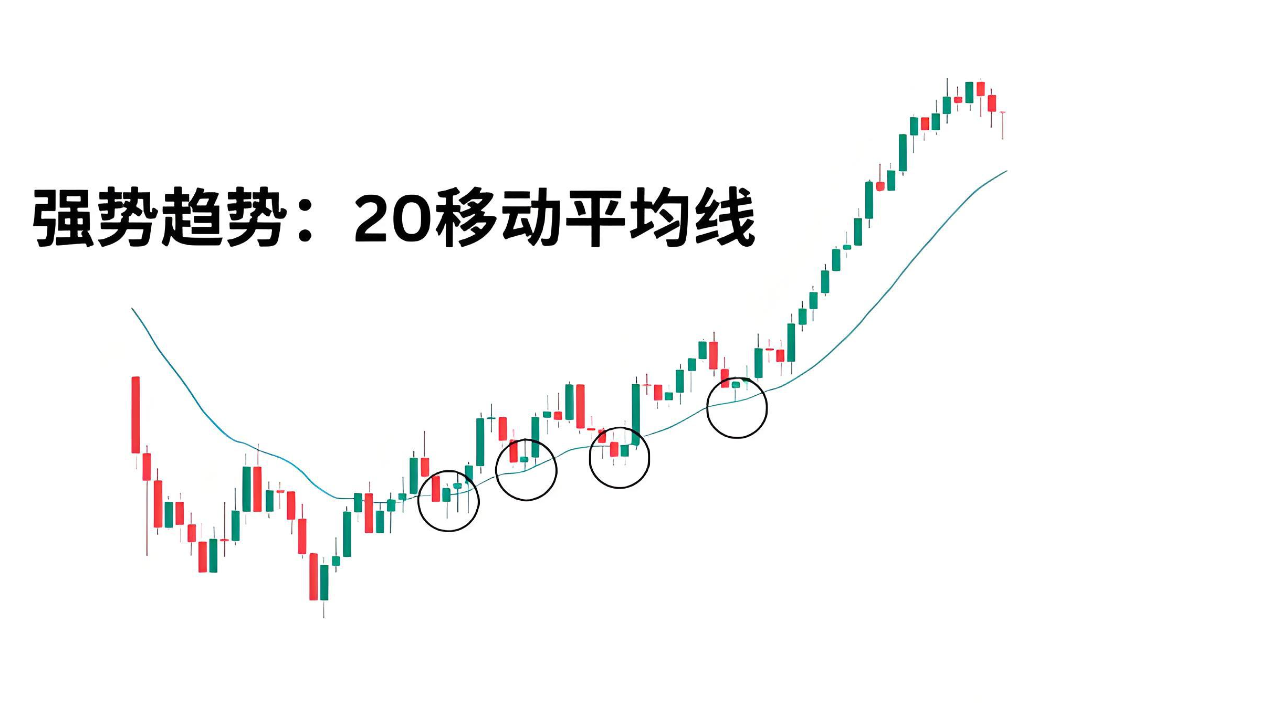
1. Strong upward/downward trends: use the 20 moving average. For example, if the price is in a strong upward trend, you will find that every time the price touches the 20 moving average, it continues to rise. The 20 moving average can accurately follow the rhythm of a strong trend, helping you catch the main rally.
2. Healthy upward trend (deep retracement): use the 50 moving average. If the trend is healthy but has a large retracement, using the 20 moving average becomes useless—the price will oscillate around the 20 moving average and does not 'respect' it at all.
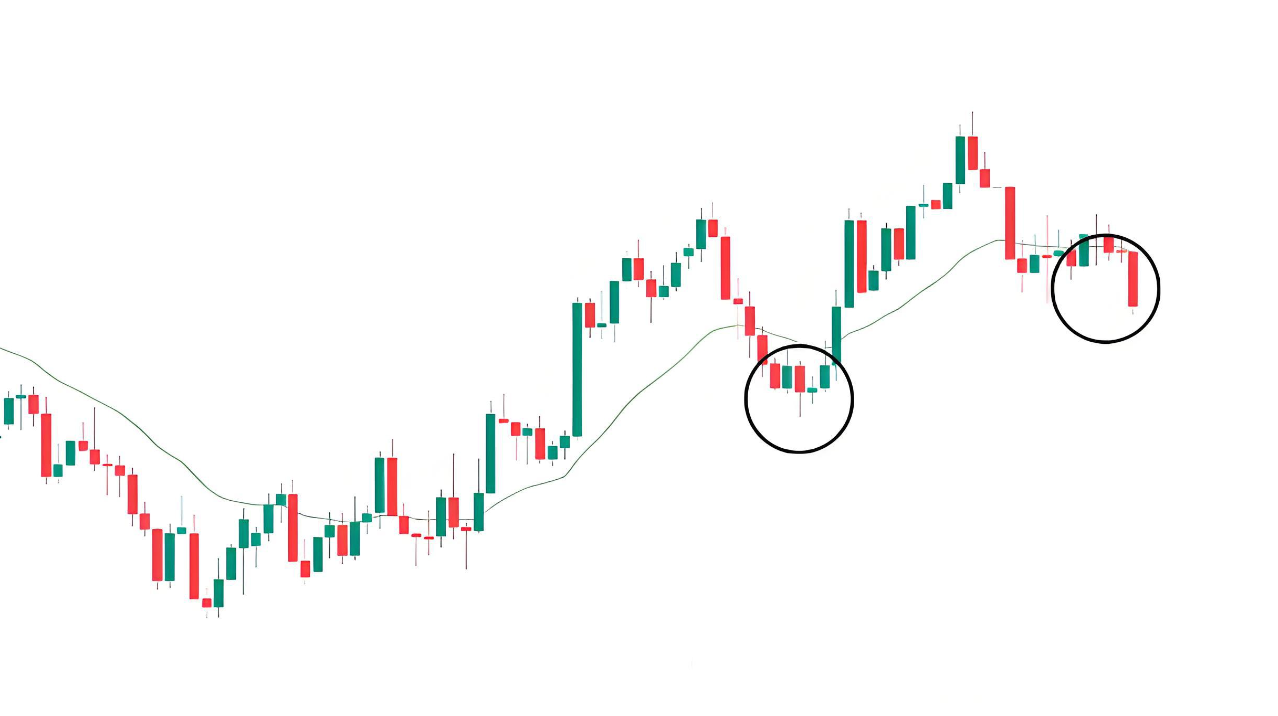
At this point, switching to the 50 moving average is appropriate, as it can better identify trends and find entry points.
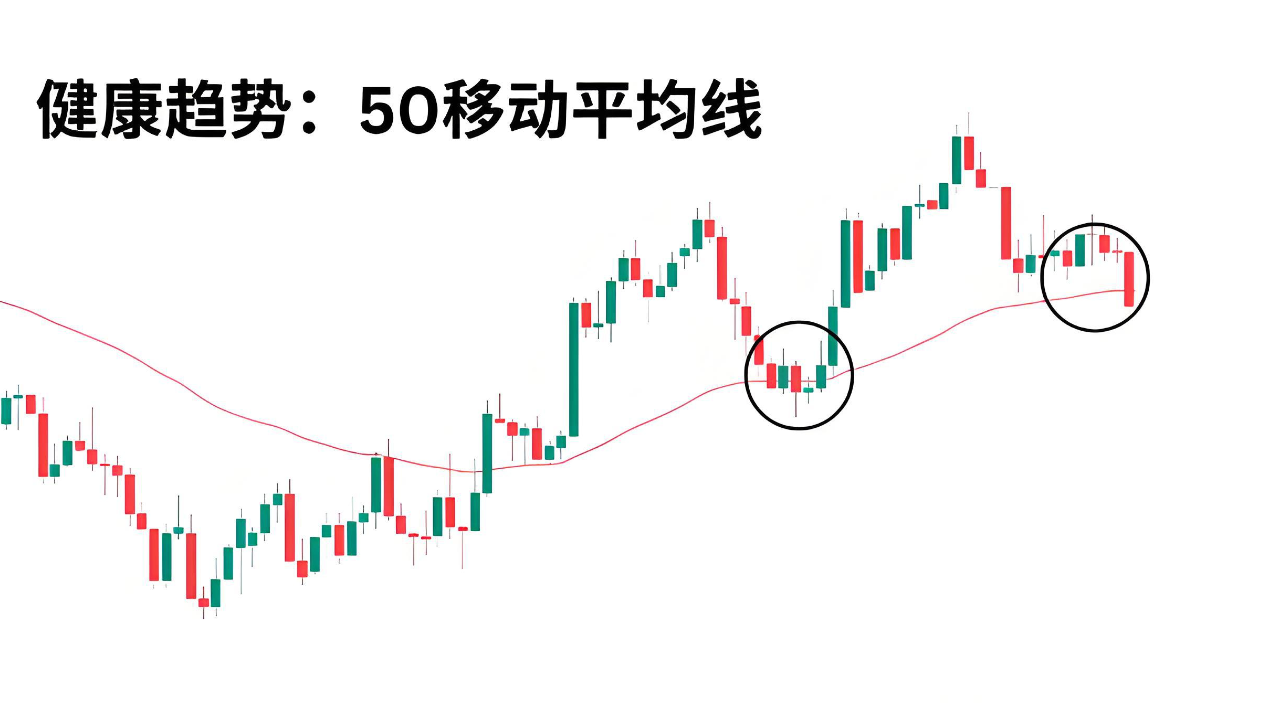
3. Weak trend (slow rise and fall): use the 200 moving average. If the price movement is relatively slow, whether it is a slow rise or a slow fall, the reference significance of the 200 moving average is considerable. Moreover, the core function of the 200 moving average is to judge the overall trend: if the price is above the 200 moving average, it indicates an overall upward trend; if it drops below the 200 moving average, the trend is likely to reverse to downward.
To summarize: do not stubbornly stick to one moving average parameter; use 20 for strong trends, 50 for healthy trends, and 200 for weak trends. Following the trend selection can unleash the effectiveness of moving averages.
02 Moving average crossovers are not 'certain signals for up or down', and must be filtered with the major trend.
Many beginners have a misconception: as long as they see a moving average crossover, such as the 50 moving average crossing above the 200 moving average, they think the price will strongly surge.
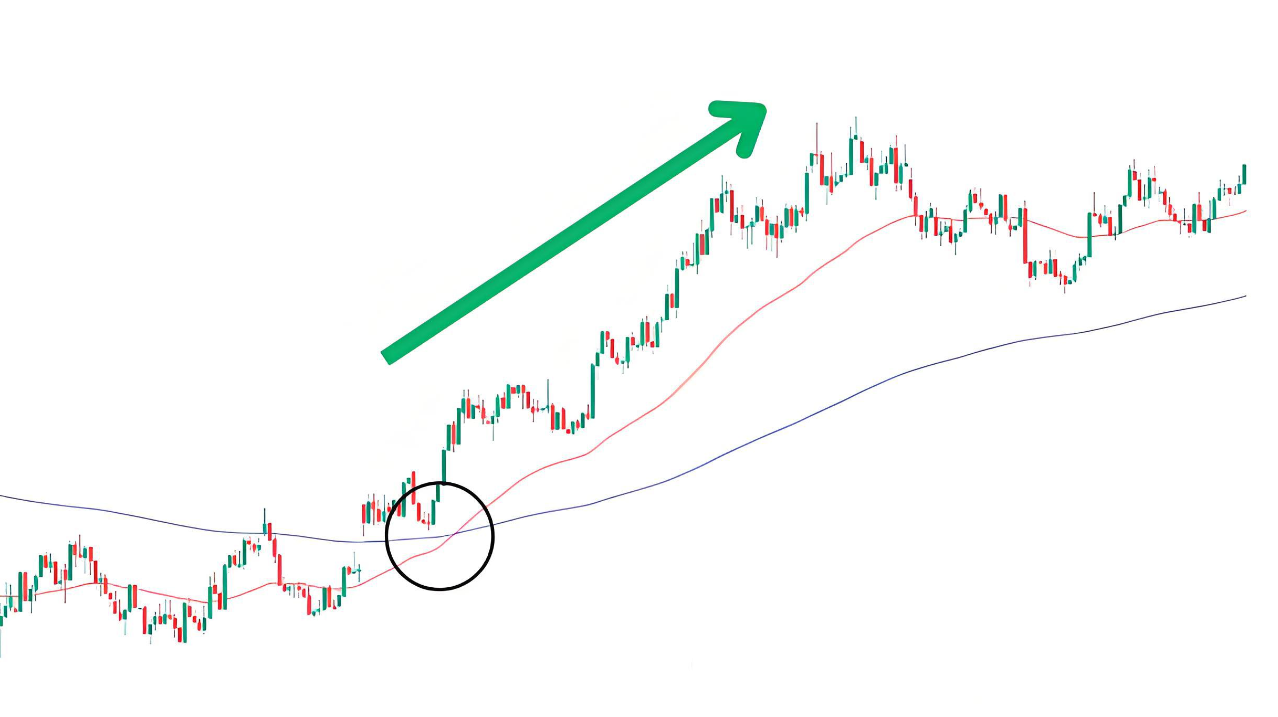
But in practice, you will find that moving average crossovers appear very frequently, and most of the time they are invalid signals. Blindly entering will only lead to repeated stop losses.
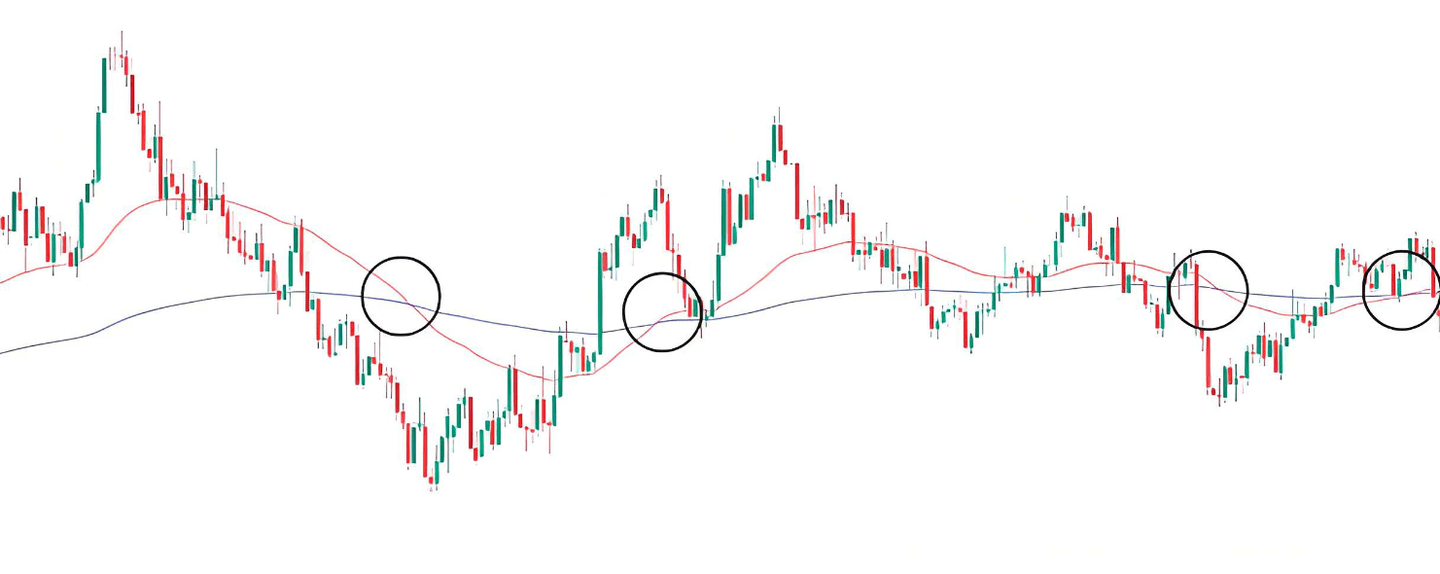
To improve the win rate of moving average crossovers, the key is one: use longer-term moving averages to judge the overall trend, and then use shorter-term moving averages to find entry points.
For example: we use the crossover of the 20 and 50 moving averages to find opportunities.
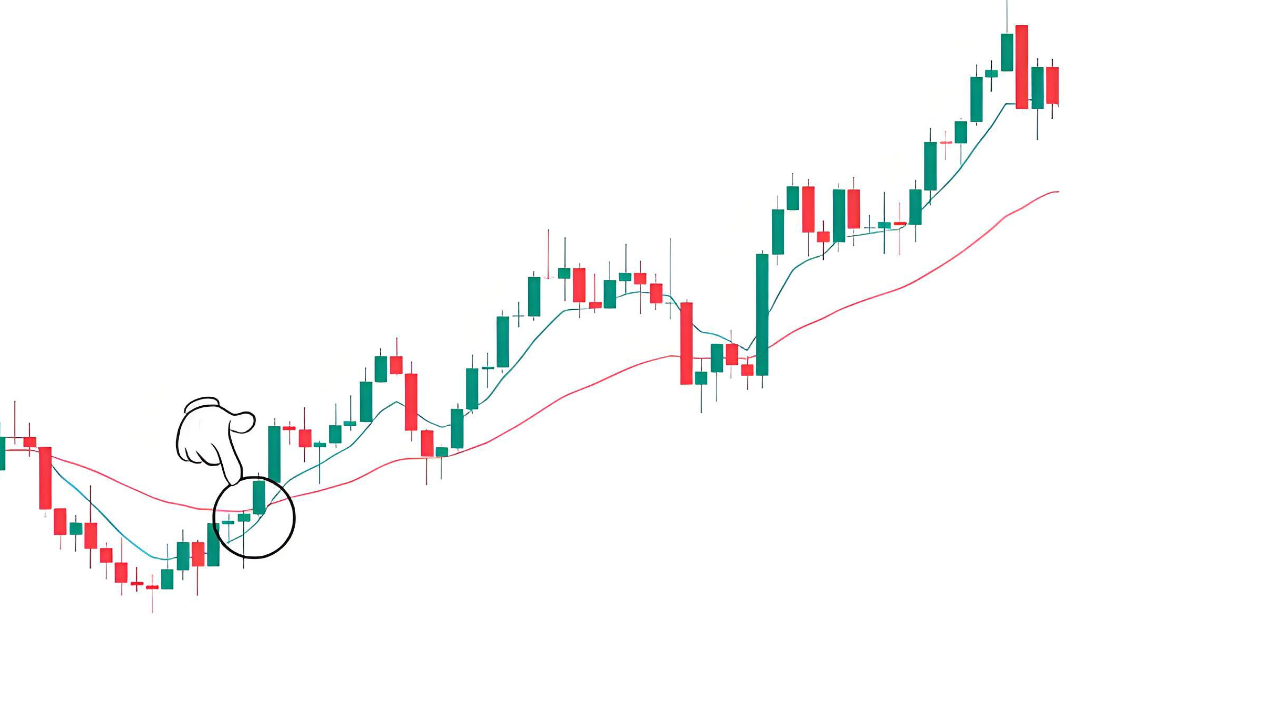
When the 20 moving average crosses above the 50 moving average, showing a bullish signal, do not rush to enter; first check the 200 moving average.
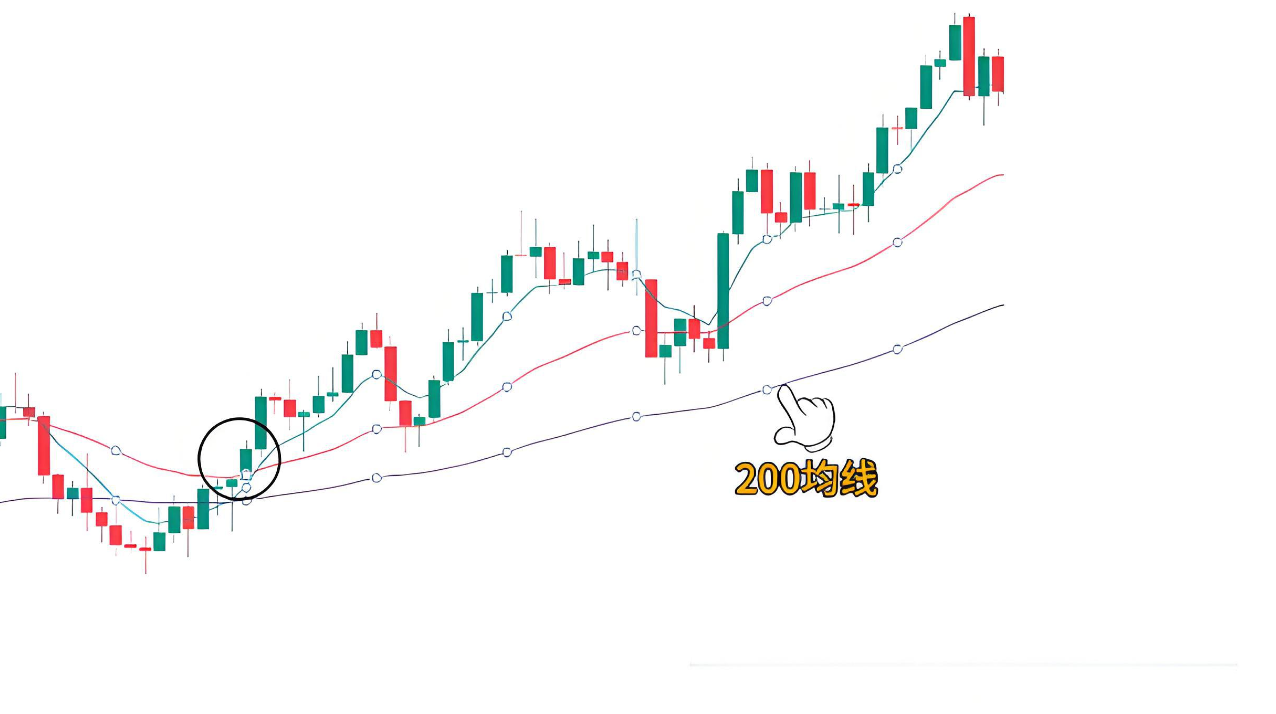
If the price is above the 200 moving average, it indicates an overall upward trend. In this case, going long has a much higher win rate and profit quality; if the price is below the 200 moving average, even if there is a 20 crossing above the 50 signal, it is likely a rebound trap.
Moreover, moving average crossovers can also help us determine the trading direction. For example, on a larger time frame chart, the 50 moving average crosses below the 200 moving average.
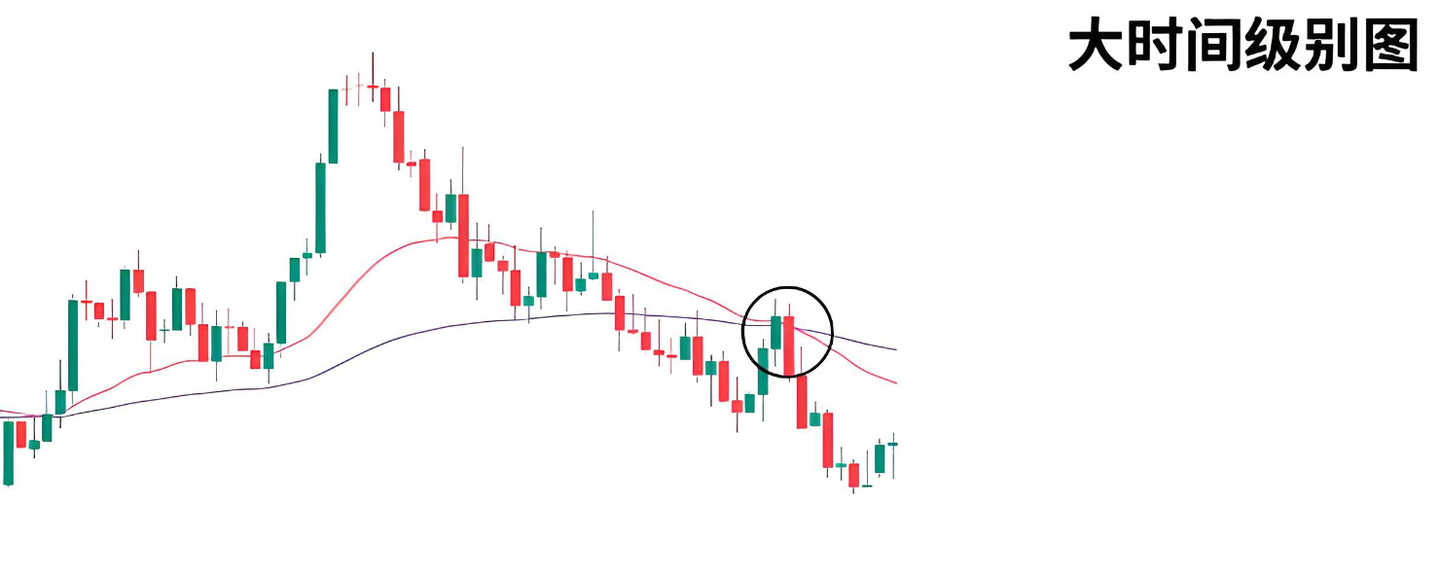
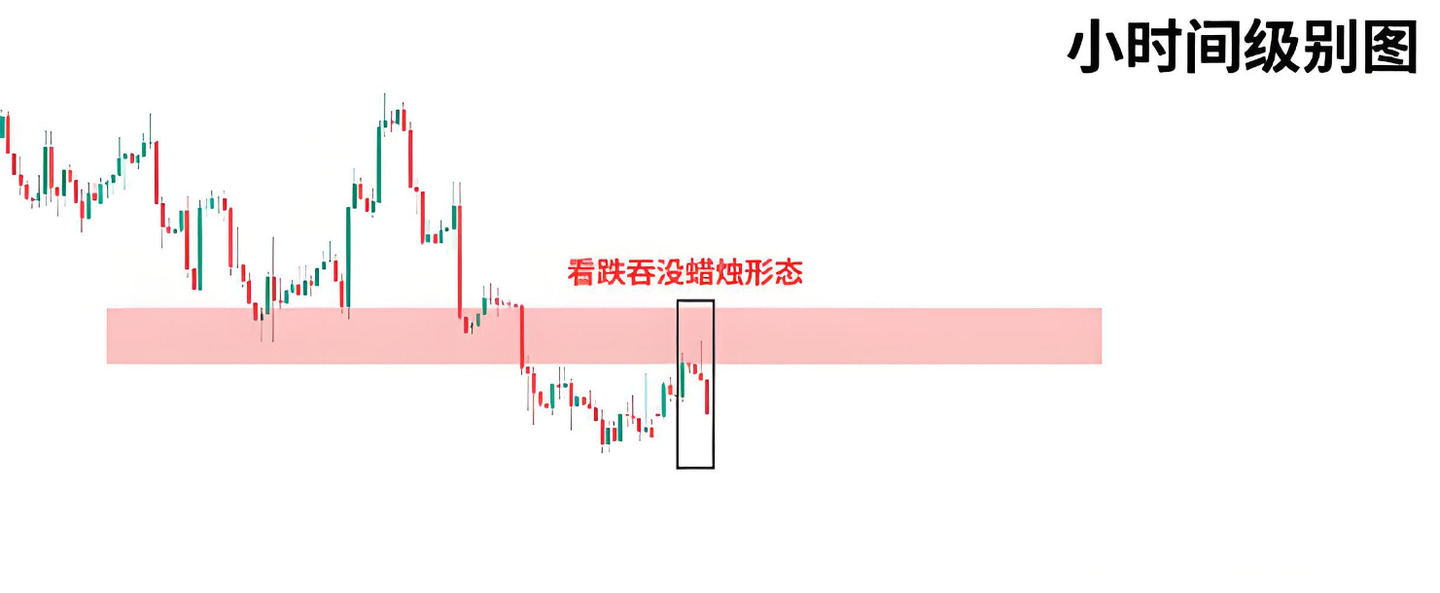
Indicating an overall downward trend, we only look for short opportunities. Next, go to a smaller time frame chart and see if the price forms a 'higher high, lower low' downward structure. Wait for the price to retrace to the resistance level, then combine it with bearish candlestick patterns; at this time, shorting becomes very reliable.
03 Prices will not 'precisely bounce off the moving average'; treat moving averages as 'zones'.
In a healthy upward trend, the price operates above the moving average, and many people will think, 'the price will bounce whenever it reaches the 50 moving average', so they will wait for the price to precisely hit the line before entering. But the truth is, the market will not be that precise!
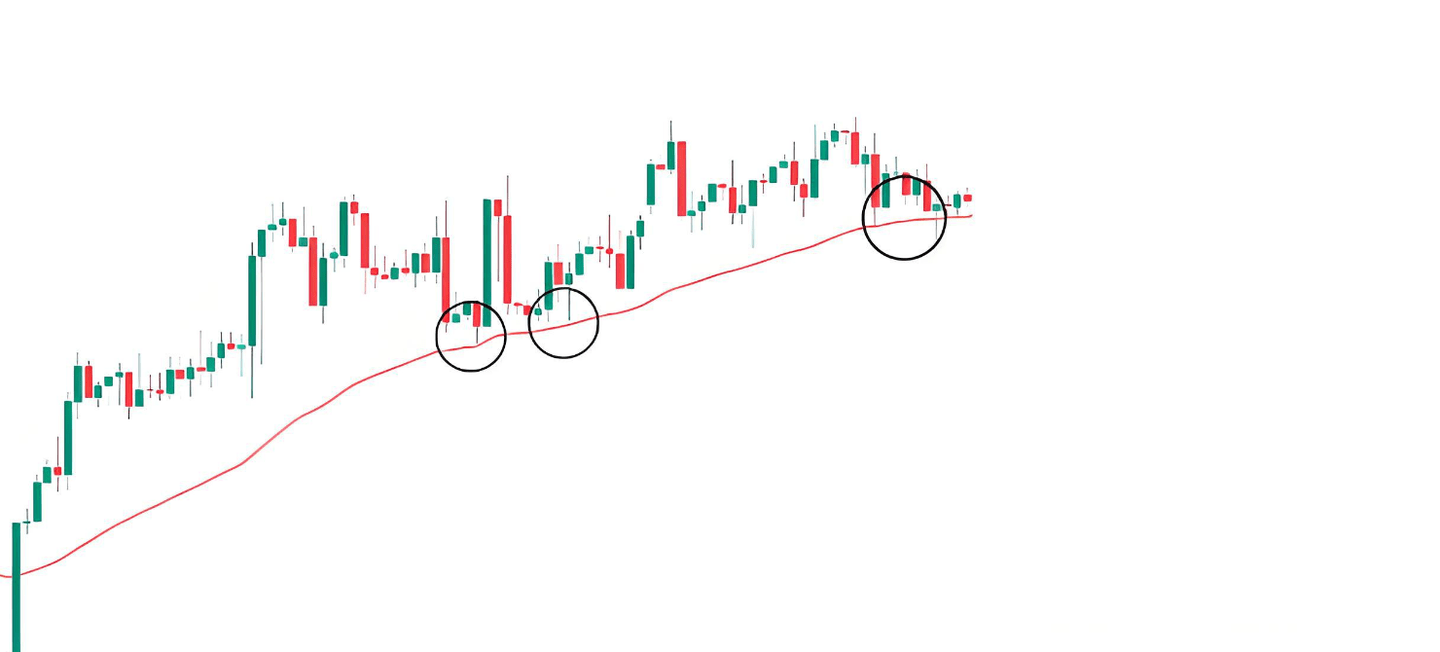
The price movement when touching the moving average is mostly one of these two situations: either it slightly dips below the moving average before rising, or it almost reaches the moving average before directly rising. If you must wait for a precise hit, you will miss many profit opportunities, and even because the entry point is too harsh, the trade will deform.
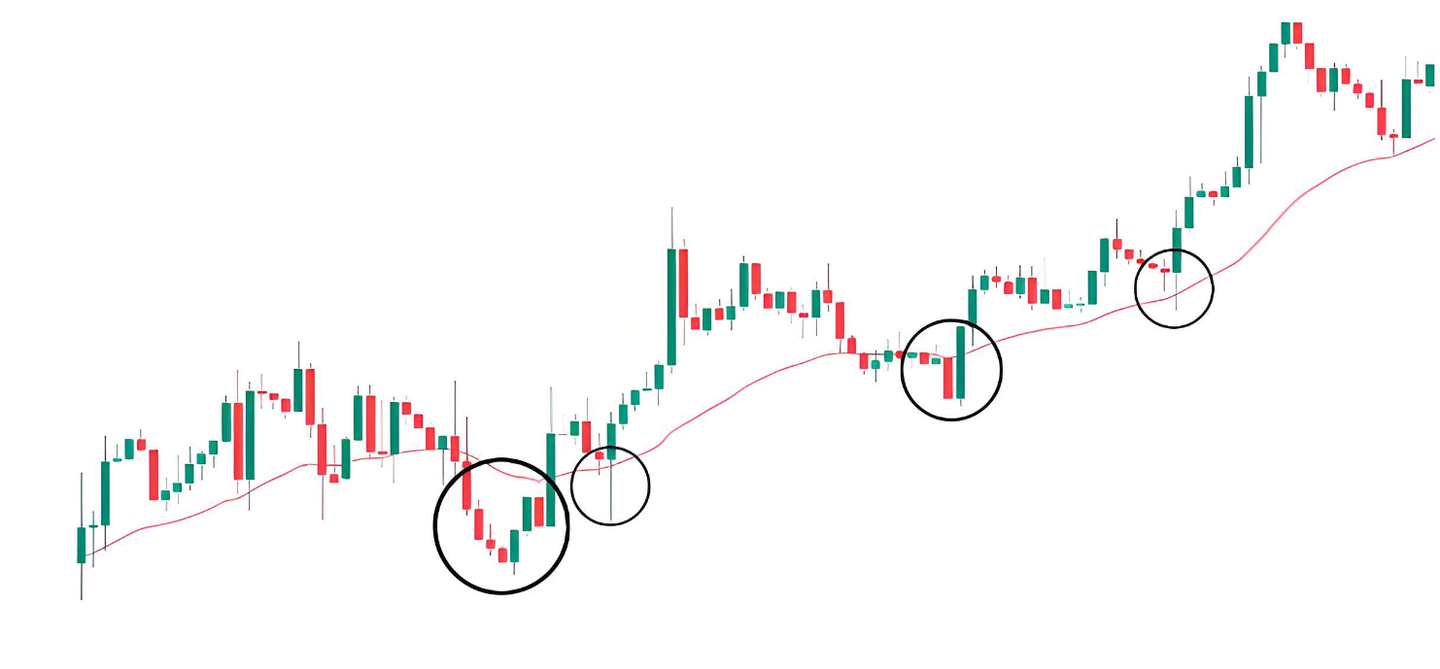
The correct approach is to treat moving averages as a 'zone', rather than a single line. As long as the price approaches this zone, whether it slightly dips below or doesn’t quite reach, a rebound is still possible. Correspondingly, when setting stop losses with moving averages, leave a reasonable distance; don’t set it too tight.
For example, if you want to wait for the price to reach the 50 moving average area, and then wait for a bullish engulfing pattern before going long, you must consider that the price might drop below the moving average before rising.
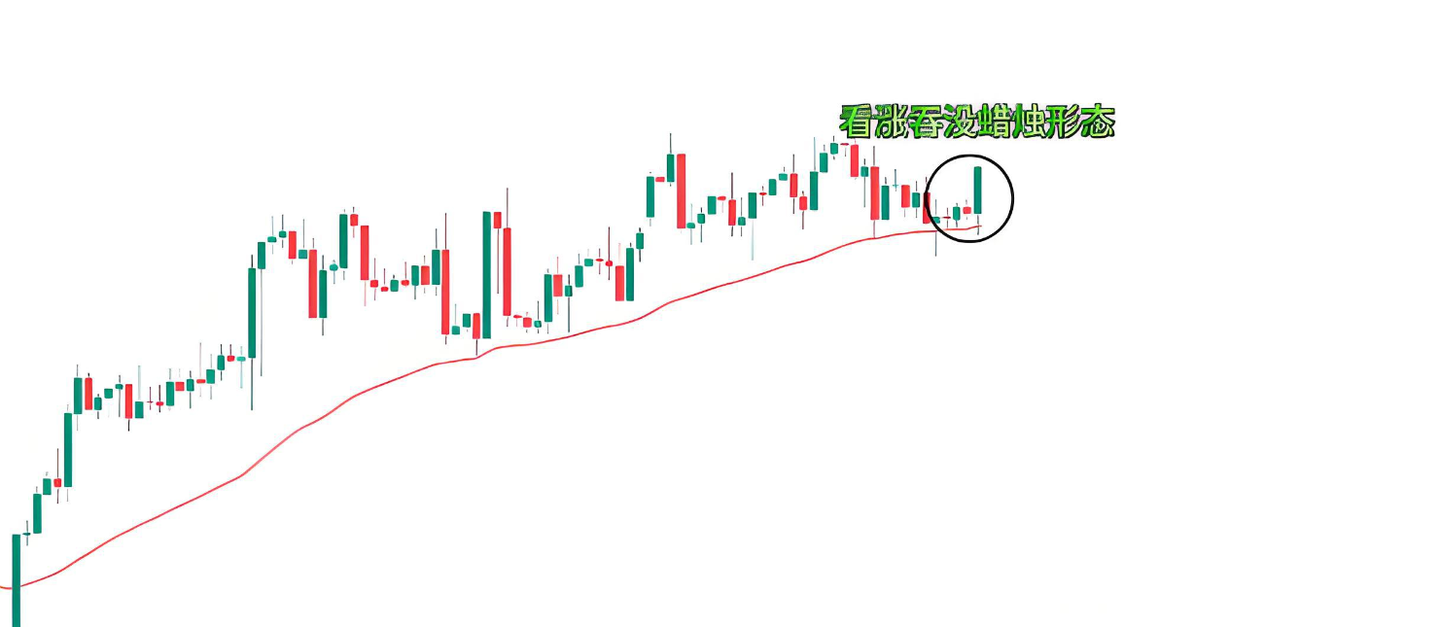
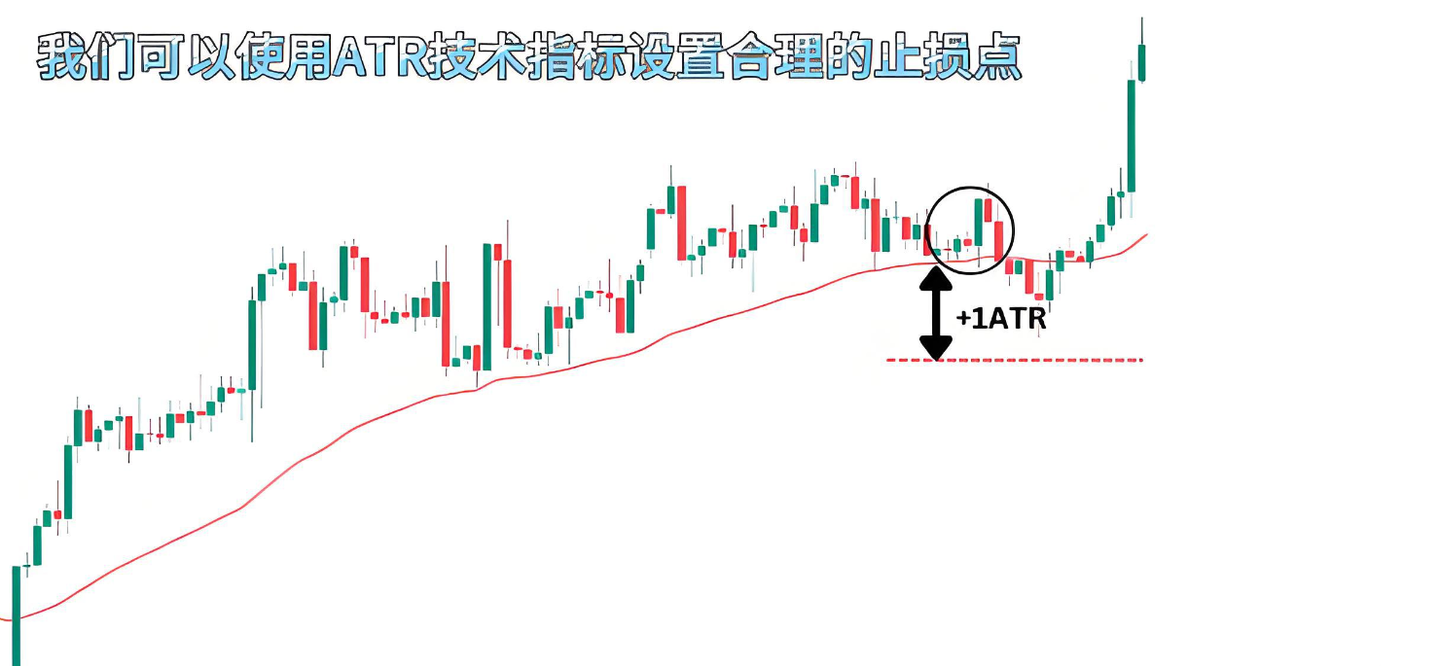
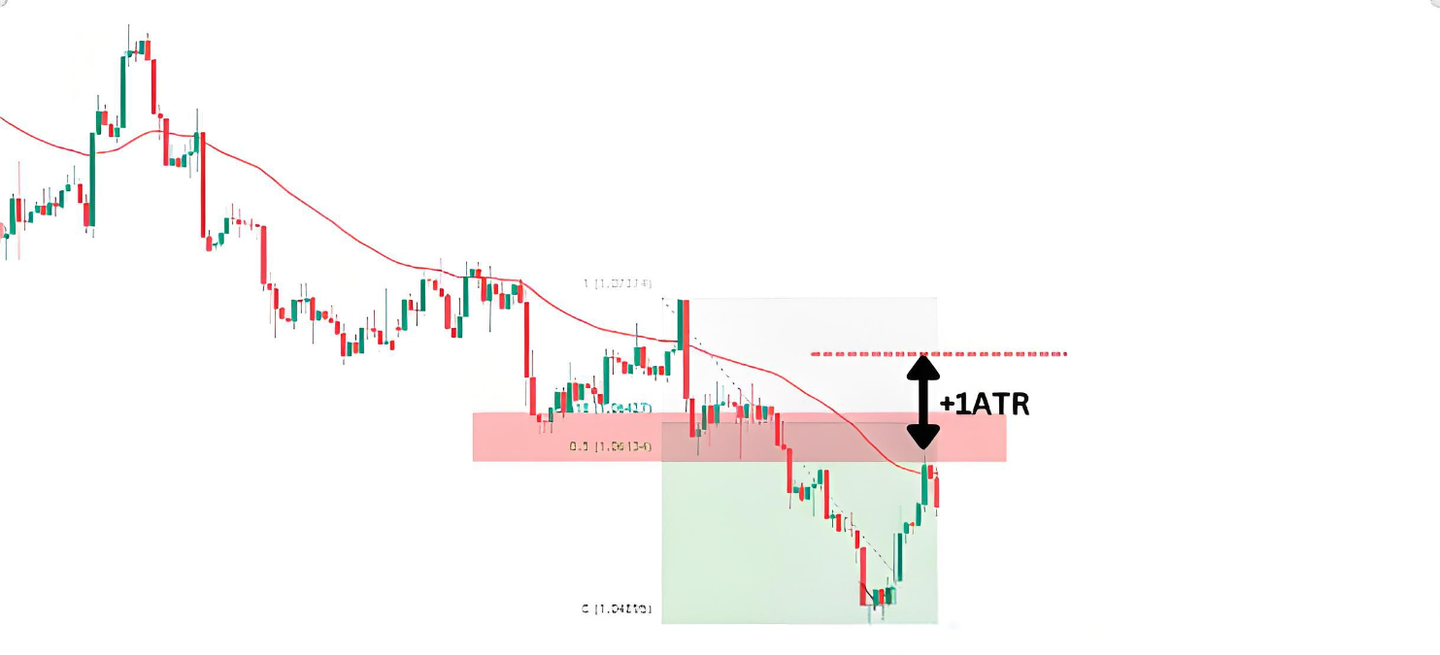
At this point, don’t set your stop loss at the 50 moving average; it should be placed at a certain distance below the moving average. As for how far is appropriate, I recommend using the ATR indicator—it can calculate a reasonable stop-loss distance based on actual price fluctuations, avoiding being stopped out by small fluctuations.
04 Do not overestimate the win rate of moving averages. Trading solely on moving averages will definitely lead to losses; use multiple tools for resonance.
The final truth must be remembered: never rely solely on moving averages for trading! I have seen too many beginners who learned some moving average knowledge and used it as the sole basis for entry. For example, in a downtrend, they see the price reach the 50 moving average and go short. But the win rate of such single analysis is extremely low, and it is impossible to achieve stable profits in the long run.
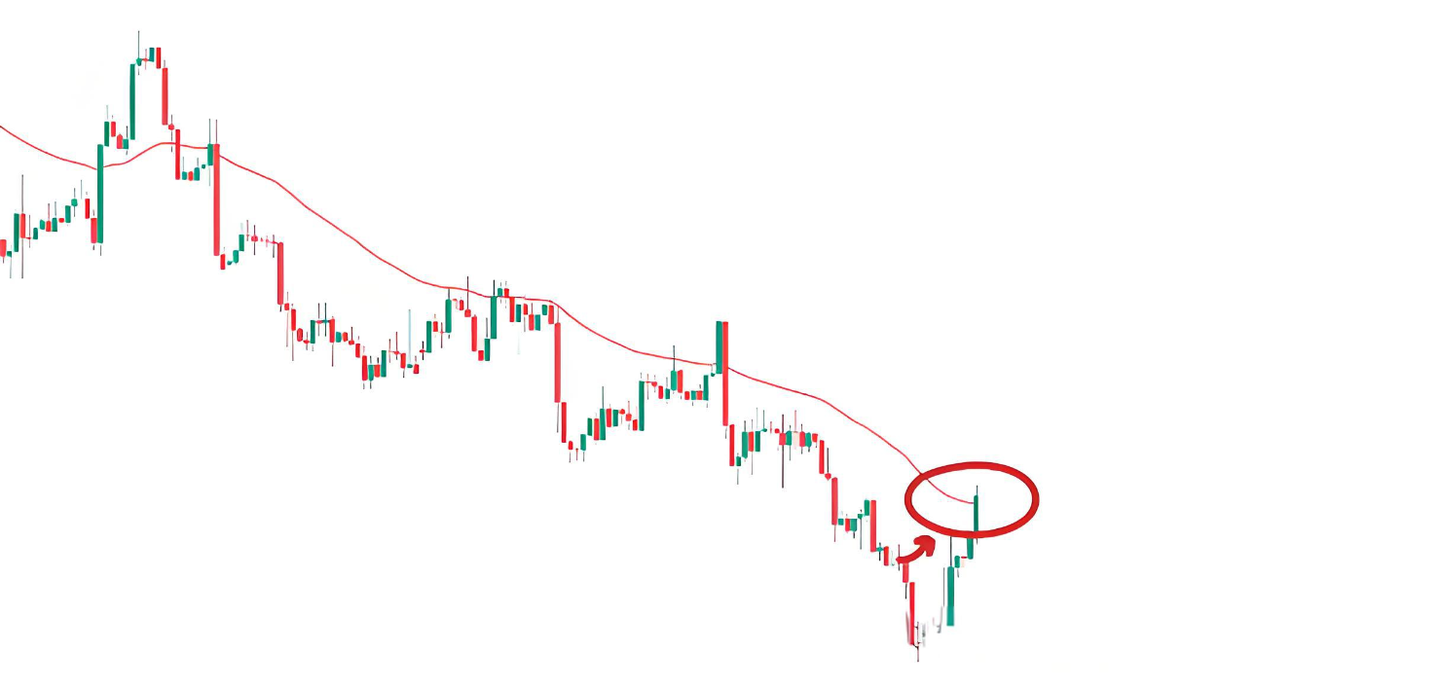
The core function of moving averages is to 'assist in judging trends', not as a 'standalone decision-making tool'. To improve your win rate, you must pair them with other technical tools to form multi-dimensional resonance. I will share a commonly used combination in practice: trend structure + moving averages + Fibonacci + candlestick patterns, breaking it down step by step for you.
1. First determine the trend: Look at the price structure; has it formed a 'higher high, lower low' downward pattern, while the price is below the 50 moving average? Only when both factors are met can you confirm it is a downward trend, and only short at this time.
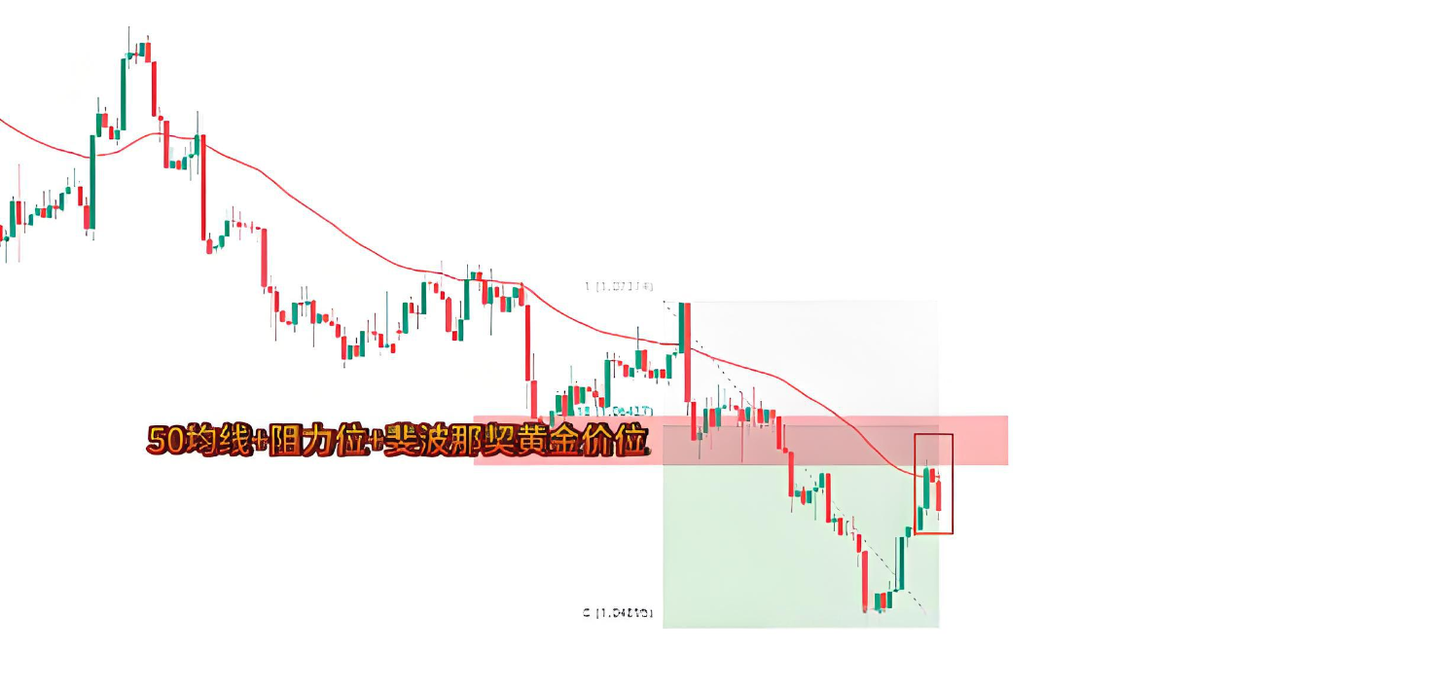
2. Find key price levels: Wait for the price to retrace to the 50 moving average, and see that this position is exactly the golden ratio of the Fibonacci retracement, and also a previous resistance level. With three tools overlapping, the effectiveness of this key price level is very high.
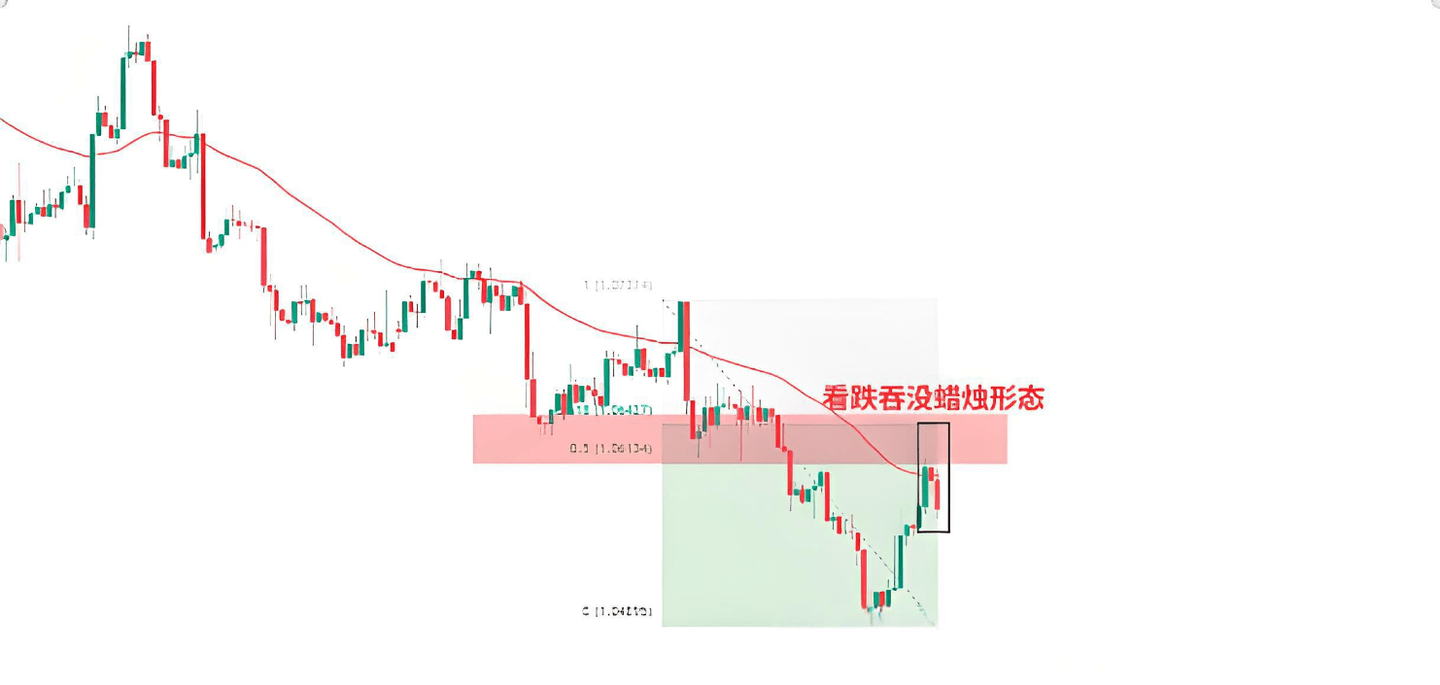
3. Wait for entry signals: When the price appears at this key level showing a bearish engulfing pattern—where the bearish candle completely covers the previous bullish candle, it indicates strong bearish momentum and the key level is valid.
4. Set stop losses: place the stop loss above the key price level, plus 1 ATR value. The logic is simple: if the price breaks through this key price level, it indicates that our judgment of the downward trend is wrong, so quickly stop loss and exit to preserve capital.
Final summary.
In fact, there is nothing wrong with moving averages themselves; many people misuse them because they are trapped by misconceptions like 'universal parameters', 'precise line trading', and 'single signals'. Remember these 4 core principles:
1. Choose moving average parameters based on the trend: strong 20, healthy 50, weak 200.
2. Moving average crossovers should be filtered with the major trend; do not enter blindly.
3. Treat moving averages as zones, leaving enough volatility space for stop losses.
4. Use multiple tools for resonance; do not rely solely on moving averages.
Trading is not about rote memorization of indicators, but about flexibly applying market rules after understanding them. Apply these truths in practice, gradually adjust and optimize, and you will find that trading with moving averages can also be very stable.
This is the trading experience that Yan An shared with you today. Oftentimes, you lose many money-making opportunities due to your doubts. If you are not bold enough to try, to interact, and to understand, how will you know the pros and cons? You can only know how to move forward after taking the first step. A cup of warm tea, a piece of advice, I am both a teacher and a good conversational friend to you.
Meeting is fate, knowing each other is destiny. I firmly believe that those destined to meet will eventually recognize each other, while those who miss each other are destined. The journey of investment is very long, and temporary gains and losses are just the tip of the iceberg along the way. Remember, even the wisest can have their moments of error, and even the foolish can have their moments of success. Regardless of emotions, time will not stop for you. Set aside your worries and stand up again to move forward.
The martial arts secrets have been shared with you all; whether you can become famous in the world depends on yourselves.
These methods must be saved by everyone. Many people find them useful, and if you think they are helpful, you can share them with more people around you who trade cryptocurrencies. Follow me to learn more valuable insights in the crypto space. After experiencing the rain, I am willing to hold an umbrella for the retail investors! Follow me, and let’s walk hand in hand on the path of cryptocurrency!