
#美联储重启降息步伐
📅 Key Time Point Analysis
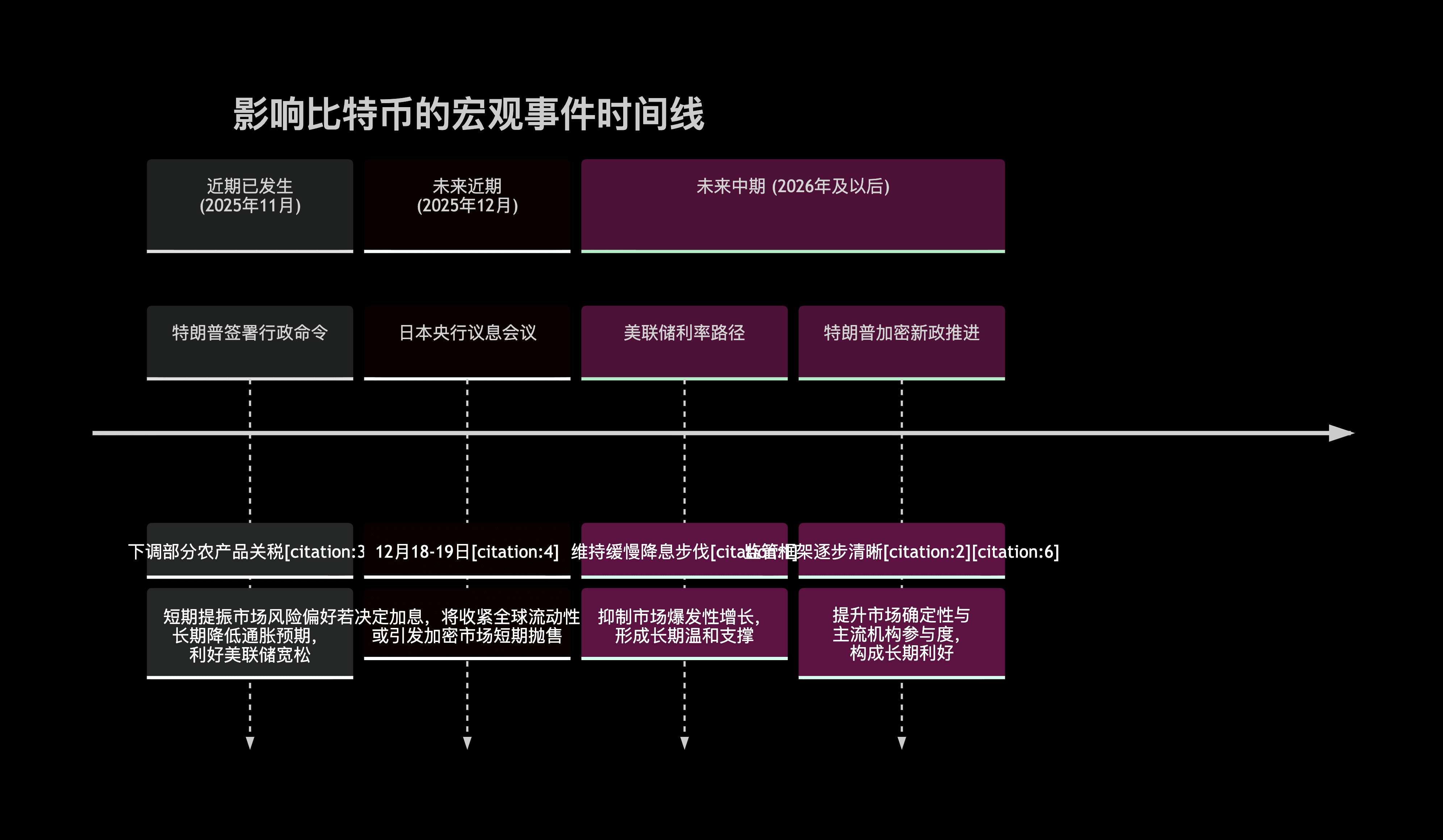
Based on the above events, the market will face different dominant logics in the short and medium term:
1. Short term (next 1-2 months): Bank of Japan interest rate hikes and liquidity challenges**
This is the most clear and critical risk point in recent times. The Bank of Japan is likely to decide on interest rate hikes at the meeting on **December 18-19**. This action will end the long-standing era of 'yen carry trades'—where investors borrow low-cost yen to purchase high-yield risk assets like Bitcoin. Once Japan raises interest rates:
Liquidity tightening: Global cheap yen funds will flow back, directly withdrawing liquidity from the cryptocurrency market.
Short-term selling pressure: To repay yen loans, investors may be forced to liquidate crypto assets, triggering market sell-offs.
Historical reference: In early December 2025, rising expectations for Japan's interest rate hikes led to Bitcoin prices falling from $92,000 to around $86,000, indicating that the market is highly sensitive to this.
2. Medium term (end of 2025 to 2026): Ongoing competition between bullish and bearish factors

After the immediate impact of Japan's interest rate hike, the market will reassess the long-term effects of the following factors:
The Federal Reserve's 'gentle' easing: The latest dot plot forecasts show that the Federal Reserve's interest rate cuts will be slow (expected twice in 2025, and once each in 2026 and 2027). This means that liquidity will not be a 'flood', but rather provide gentle support to the market, making it difficult to independently drive a super bull market.
The 'double-edged sword' effect of Trump's new policies:
Long-term benefits: The clarity of the crypto regulatory framework (such as the effective stablecoin legislation and allowing pension funds to invest in crypto assets) enhances market certainty and attracts traditional financial institutions, which is fundamentally beneficial.
Short-term uncertainty: It takes time for policies to be formulated, implemented, and to generate actual capital inflows. Initially, the market may focus more on the uncertainties brought about by the details of policy execution.
The inflation impact of tariff policies: Trump's policy to reduce agricultural tariffs aims to lower food inflation. If this effectively alleviates overall inflation pressure, it may give the Federal Reserve more space to maintain or accelerate interest rate cuts, potentially benefiting risk assets (including Bitcoin).
💎 Summary and response ideas
Overall, Bitcoin faces **liquidity tightening risks due to Japan's interest rate hike** in the short term (December), and prices may be under pressure and fluctuate or pull back. In the medium to long term (2026), attention should be paid to the competition between **'gentle' liquidity support from the U.S.** and **structural benefits brought by new crypto policies**, which is more likely to create a stable rather than fervent 'rational prosperity' market.
Therefore, in terms of operations, you can focus on the **final decision of the Bank of Japan in mid to late December** and its immediate impact on the market. Before this, maintaining relative caution and avoiding excessive leverage may be a more prudent choice. For medium to long-term investors, any deep market correction triggered by macroeconomic risks could present an opportunity for gradual positioning.
