
Chainlink is also in the game! The LINK spot ETF debut was explosive, is institutional money starting to pour in?
On December 3rd, after Grayscale successfully launched its product on the exchange, #Chainlink also officially secured a ticket for the U.S. spot ETF. For a 'non-mainstream large-cap' blockchain project, this debut not only marks a formal entry into the mainstream financial world but has also sparked considerable discussion in the crypto community.
The first day of trading was calm, but the capital inflow was quite impressive.
Speaking of trading volume, the first-day performance of #LINK didn't really 'blow up' like Solana or XRP. On the day Solana ETF launched, it achieved a trading volume of 56 million dollars, XRP had 33 million dollars, while LINK's report card showed only 13 million dollars.
Sounds a bit mild? But what really stands out is its capital inflow.
Grayscale's spot LINK ETF attracted $42 million on its first day, which is even more "impressive" than its trading volume. Bloomberg's well-known ETF analyst Eric Balchunas commented on this number, saying: "Another rapidly popular ETF." In summary: trading is calm, but capital is hot.
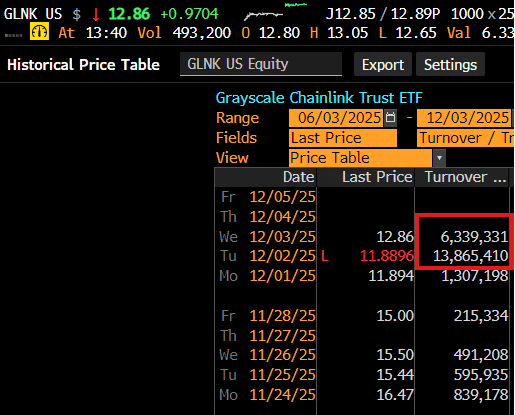
Another analyst, James Seyffart, also added that, while the volume is not explosive, "strong, solid, and better than expected" is still how it is evaluated. He even believes that this validates one thing—long-tail assets can completely carve out a path in the ETF market.
In other words: institutions are not only looking at BTC, ETH, and SOL; these "marginal core assets" are also starting to attract attention.
After institutions moved, the futures market also became restless.
With the ETF launch, LINK's futures open interest surged from $194 million to around $240 million. This growth rate is very noticeable, indicating that market traders' enthusiasm has been ignited.
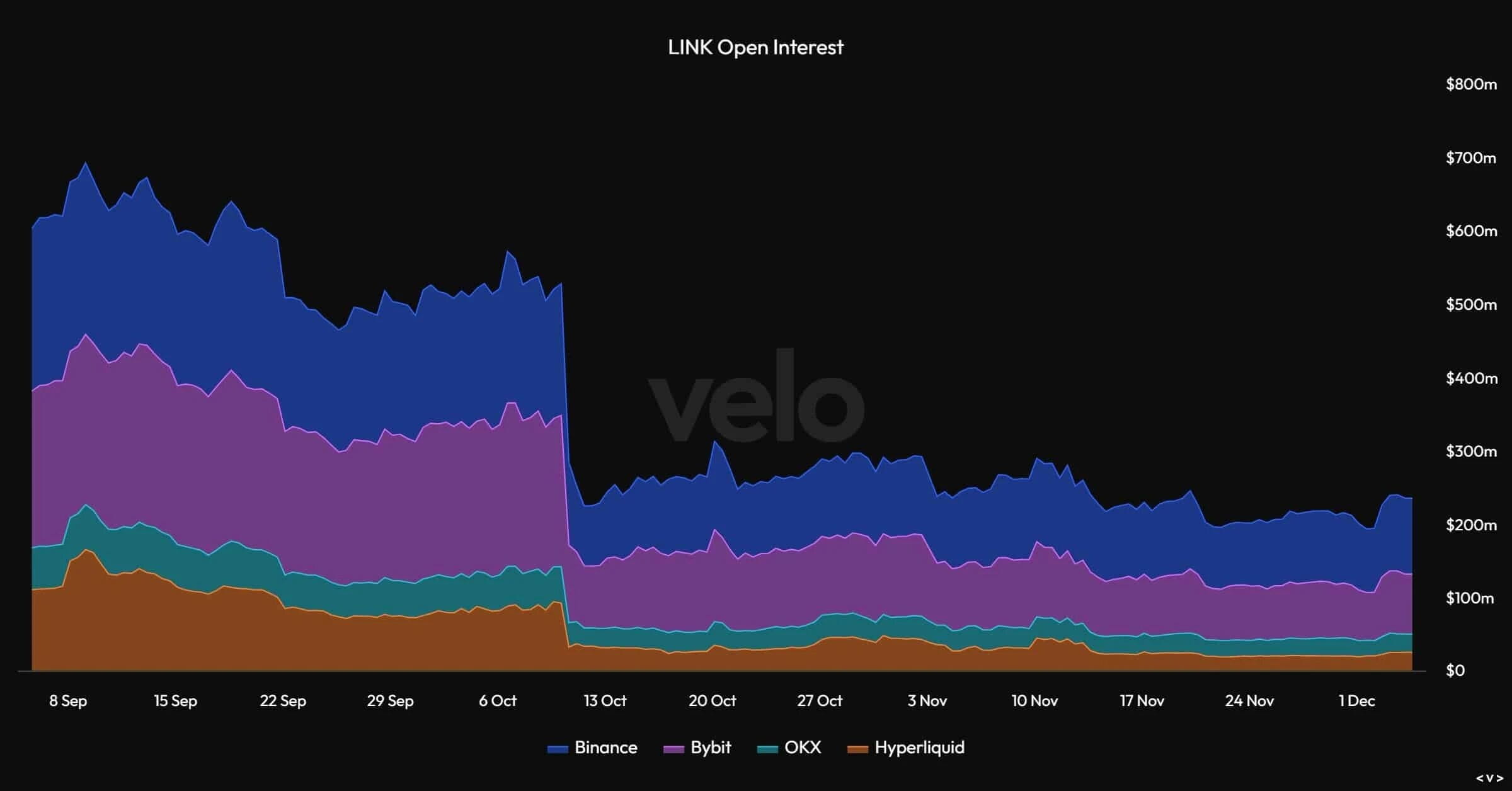
Short-term speculation, trend trading, and institutional hedging have all surged in. This market structure of "futures heating up first" often indicates that future volatility will become more frequent, but it also means that sentiment is generally bullish.
Prices have risen, but there is still some distance from the previous highs.
In terms of price, LINK has seen a nice rebound driven by ETF news.
Rallied from around $12 to $15.
Weekly increase exceeds 20%.
At the time of writing, it has fallen back to about $14.4.
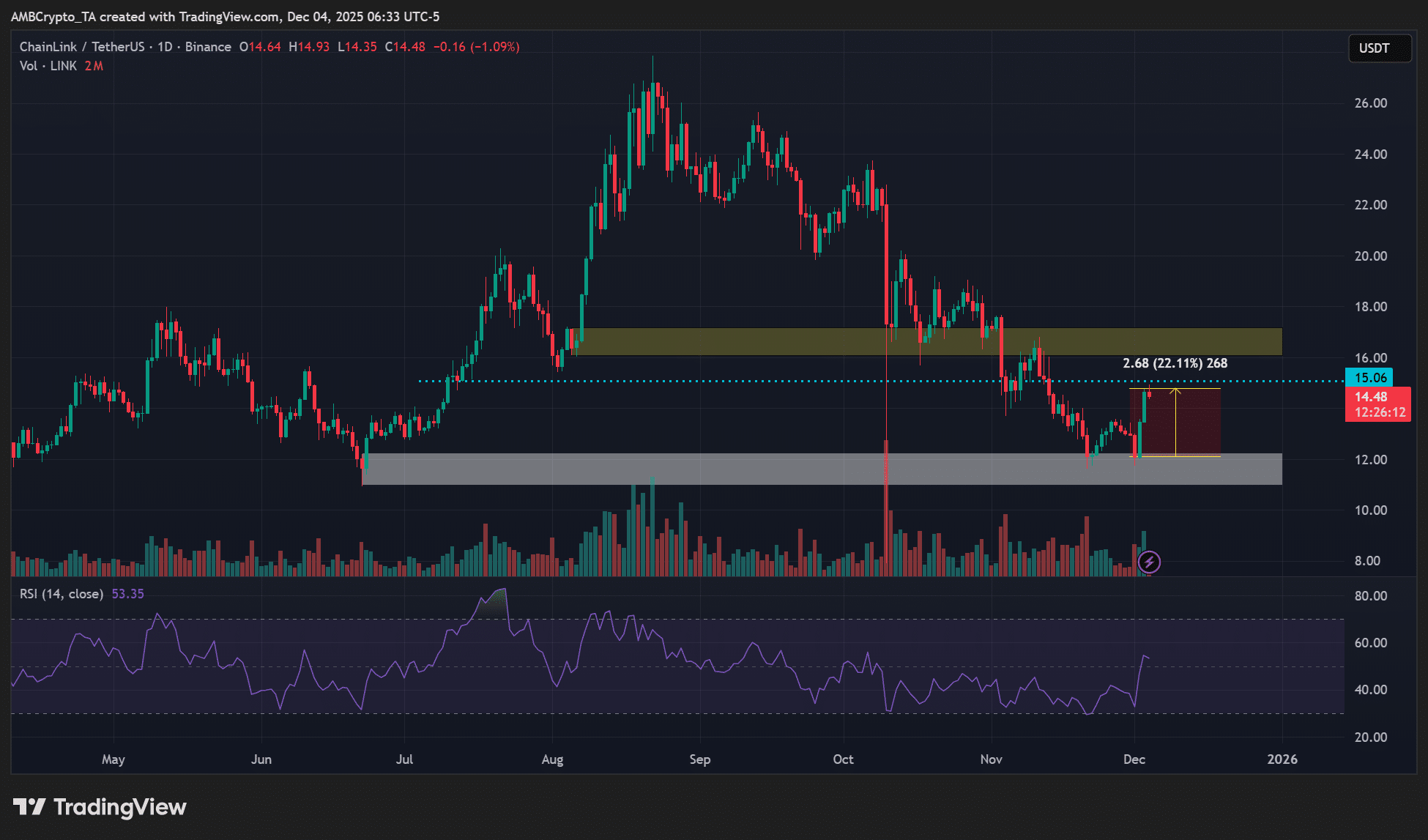
Overall, it is still nearly 47% below the previous high of $27. To return to its peak, the market still needs more momentum.
Currently, the resistance levels for bulls are mainly at $15 and $16, where there has been significant historical trading. Especially around $16, data shows that over 53 million LINK were bought at this price. If these positions decide to take profits here, the pressure will be very apparent.
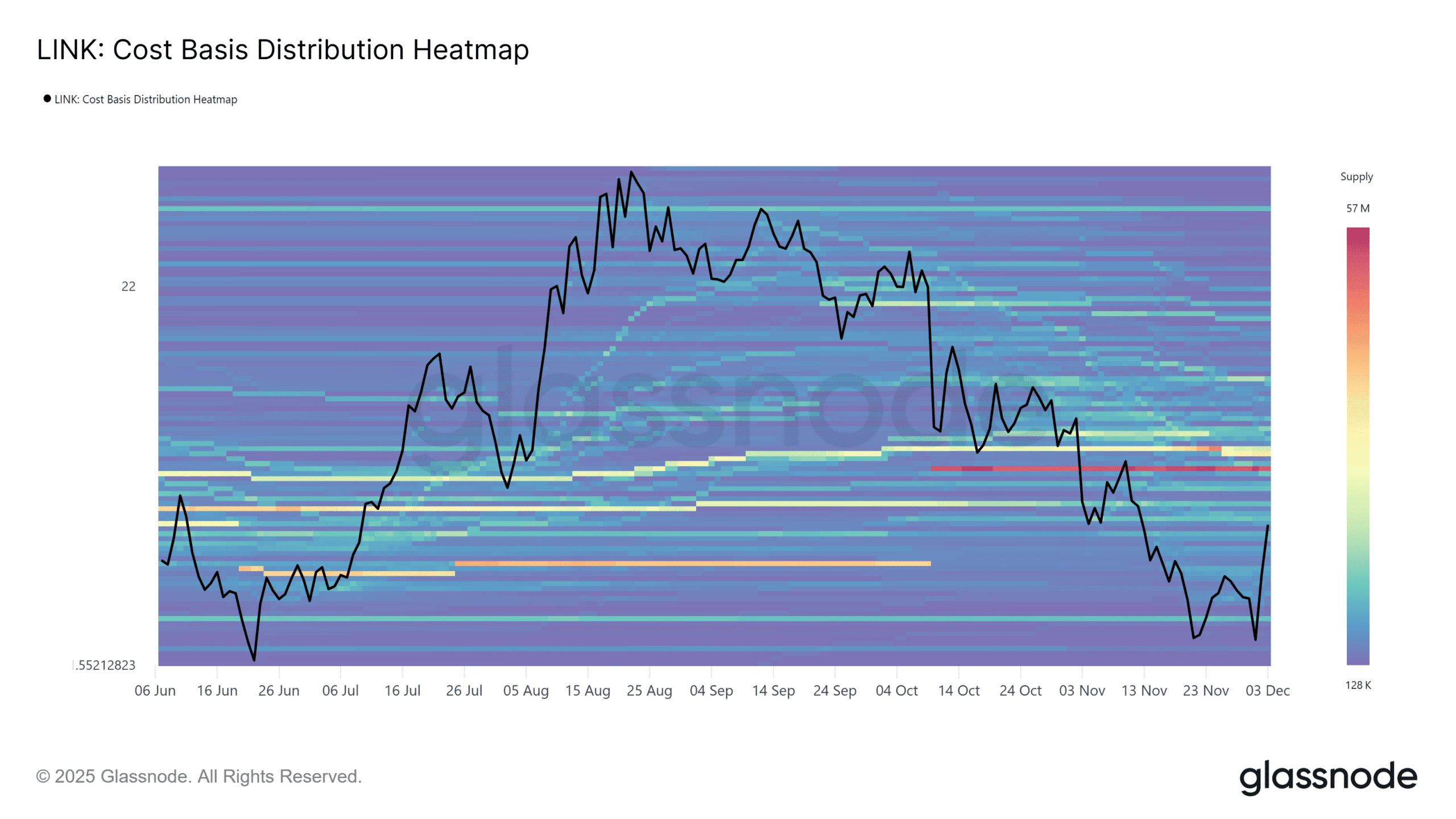
Can't break through? Then it will consolidate. If it breaks? Then the $20 door will be ajar.
Why can LINK attract institutions? The real reason is right here.
To understand why LINK is suitable for ETFs, we must review its "fundamental story."
As one of the earliest projects in the oracle field, Chainlink has always been the number one player in decentralized data supply. It not only provides price data for various chains, but also launched the cross-chain communication protocol CCIP in 2023, expanding its business scope to inter-chain communication.
As "tokenized assets" are increasingly favored, the positioning of Chainlink suddenly becomes more critical. Because whether it is on-chain bonds, on-chain funds, or on-chain stocks, all require secure data sources and cross-chain capabilities.
Some users even commented: "LINK is one of the few assets in this space that truly has product-market fit."
No wonder institutions are willing to position themselves in advance.

What will LINK do next? There is only one key point: $16.
From the current situation, LINK's ETF debut has indeed brought a new round of enthusiasm to the market, and has made institutional interest clearer.
But if we want to further confirm the mid-term trend, the market will still focus on one key price level: $16.
Only by effectively holding this position can the market have a chance to convert the new wave of funds into sustained upward momentum, and the halo effect brought by the ETF can continue.

In conclusion: LINK's ETF is just the beginning.
This debut of LINK's spot ETF has been viewed by many analysts as a signal—institutions are extending their reach towards a wider range of altcoins.
From capital inflow, futures activity, fundamental trends to cooperative ecosystems, LINK's narrative is indeed gradually strengthening.
The short-term market may still be pressured by $16, but in the long term, its chip structure, institutional demand, and fundamental expansion make it increasingly hard to ignore this once "invisible oracle."#加密市场观察


