You may have encountered a situation like this:
In on-chain transfers, why do some chains arrive in seconds while others take several minutes or even longer?
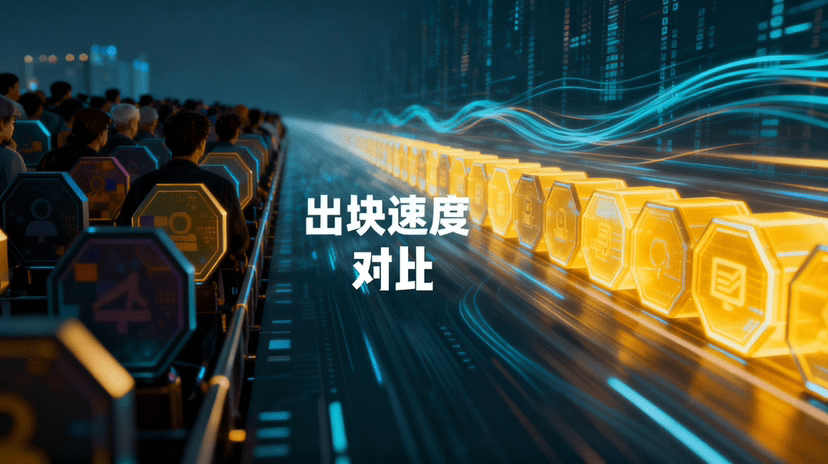
In fact, this is closely related to the blockchain's 'block generation speed.'
⸻
Blockchain Review
•Block = A page of an account book
•Miner/Node = The person who helps everyone keep accounts
•Block generation = Writing action
Every transaction must be written into a block, this step is crucial—it determines whether the transaction is truly completed and recognized by the entire network.
⸻
Transaction success ≠ Truly completed
When you initiate a transaction (for example, transferring 10 tokens to a friend):
1. Submit the transaction from your wallet
2. Nodes first verify whether the transaction is valid (is the balance sufficient?)
At this point, the transaction is only in a 'pending status' and is not considered complete. If it is not written into a block, the transaction may be discarded or tampered with.
Written into a block = Transaction confirmed by the entire network and permanently recorded
• Block generation → Transaction is packaged and validated
• Global ledger update → Transaction permanently recorded
• If not written into a block, the transaction is not considered truly complete
💡 Analogy to banks:
• Fill in transfer information → Submit transaction
• Bank queues handling → Node validation
• Transfer completed → Transaction completed and immutable
⸻
🤷♀️🤷🤷♂️
So why are some chains slow?
Slow block generation speed → Transaction queues → Feels like the transaction is slow
Fast block generation speed → Transactions are almost instantaneous
Block generation speed mainly depends on the design of the chain, not the current transaction volume:
• Block generation time: generates a block every few seconds
• Block capacity: How many transactions each block can hold
The current high transaction volume only makes you more aware of the 'queuing' phenomenon; what truly determines speed is the chain design.
⸻
🤷♀️🤷🤷♂️
So why not design it to be super fast from the beginning?
Blockchain design must balance between speed / security / decentralization (Blockchain Trilemma):
• Super fast → May sacrifice security or decentralization
• Steady → May sacrifice speed
In summary: Fast chains are not necessarily better; they simply trade risk for experience speed.
⸻
Summary (Final Version) 👩🏫
• Written into a block = Transaction truly completed: confirmed by the entire network, permanently recorded
• Block generation speed determines transaction waiting time: slow chains queue longer, fast chains complete in a few seconds
• Block generation speed is determined by chain design: speed, security, and decentralization cannot all be maximized simultaneously
⸻
Forward this to your friend who always complains, 'Why is my transaction so slow?'
🧐 Tomorrow we will discuss:
How to determine whether a blockchain is truly excellent? Three simplest entry indicators.