For the past 30 years, the world has been playing a huge capital game: borrowing yen from Japan at almost zero cost, converting it into dollars, and investing in U.S. stocks, Bitcoin, global real estate, and anything else that can appreciate. Japanese bonds can be said to be the source of global hidden wealth, and the scale of these yen arbitrage transactions is astonishing. Although no one knows the exact figures, some institutions estimate it to be over ten trillion dollars, equivalent to nearly one hundred trillion yuan flowing globally, all relying on the leverage of borrowing yen. This money has pushed up the prices of the Nasdaq, Bitcoin, gold, and all global assets.
As of December 8th, here are the core messages regarding Japan's interest rate hike:
Market pricing shows that the probability of Japan raising interest rates is extremely high, reaching 80% - 90%. The next monetary policy meeting of the Bank of Japan is scheduled for December 18-19, and it is very likely that a decision on whether to raise rates will be made then.
On December 1st, Bank of Japan Governor Kazuo Ueda clearly stated that he would weigh the pros and cons of raising the policy interest rate at the December meeting and then make a decision as appropriate. The market took this as the clearest signal of a rate hike. Domestic inflation in Japan has consistently exceeded the 2% target, and in the spring of 2025, wage growth has even surpassed 5%, laying the foundation for sustainable inflation. Although the third-quarter GDP was revised down to an annualized contraction of 2.3%, economists feel this is only temporary and will not affect the rate hike decision.
The market generally expects Japan to raise interest rates by 25 basis points, with the policy rate potentially increasing from the current 0.5% to 0.75%.
The impact of Japan's interest rate hike on the crypto market does not directly act on fundamentals but transmits through a macro-financial chain, with the core being the unwinding of yen carry trades.
Expectations of a rate hike have already strengthened the yen's exchange rate, with USD/JPY decreasing from around 157.9 to below 155. Japanese government bond yields have also been pushed higher, indicating that the cost of borrowing yen is starting to increase.
For many years, global investors have been accustomed to borrowing yen at nearly zero-cost interest rates and then investing in high-yield risk assets like Bitcoin and U.S. tech stocks. Now that the yen has become more expensive and financing costs have increased, these transactions are no longer profitable and may even incur losses. Investors can only sell off positions in crypto assets, exchanging them back for yen to repay loans. This has drained liquidity from the market, creating selling pressure.
The rise in yields on Japanese government bonds and other safe assets will change the risk-return profile for global investors. Some funds may withdraw from the volatile crypto market and shift to safer assets like Japanese government bonds, leading to an overall decrease in market risk appetite.
Based on historical experience and the current situation, the market's reaction may be phased:
As long as clear signals or rumors regarding interest rate hikes emerge, the market may start to fluctuate. For instance, after Kazuo Ueda's speech on December 1st, Bitcoin's price fell significantly within a few hours. Retail investors should pay attention to officials' remarks and economic data before the December meeting.
If the rate hike is indeed implemented, the market may see a rebound due to the exhaustion of negative news, or it may continue to adjust out of concern for the future path of rate hikes.
The scale of yen carry trades has already been shrinking, with some analyses suggesting a 30% reduction from peak levels, which may structurally weaken the liquidity flowing to the crypto market through this channel. However, the appreciation of the yen may also lower the cost for Japanese investors to purchase dollar-denominated crypto assets, potentially driving funds to buy Bitcoin and other 'supra-sovereign assets' to hedge against macro uncertainties.
Yen exchange rate (USD/JPY): A sustained strengthening of the yen is a key signal for unwinding carry trades. Japanese government bond yields: Changes in particularly the 2-year and 10-year yields can reflect the market's pricing of interest rate policies. Market volatility during Asian trading hours: Unwinding carry trades often triggers sharp fluctuations during relatively low liquidity Asian sessions.
It is advisable to be cautious of short-term volatility: around key event nodes, market volatility may spike sharply, so everyone should manage their positions and leverage well. Pay attention to liquidity changes: observe the bid-ask spreads and large orders on exchanges to feel the changes in market depth. Distinguish between short-term shocks and long-term trends: normalizing Japan's monetary policy is a long-term process, which should be viewed separately from the short-term liquidity shocks to the crypto market and the medium to long-term narrative of crypto assets.
In summary, the Bank of Japan's interest rate hike has become one of the most significant macro variables affecting global markets, including the crypto market. It mainly operates by tightening global yen liquidity, which will increase market volatility in the short term and may alter parts of the funding structure in the medium to long term.
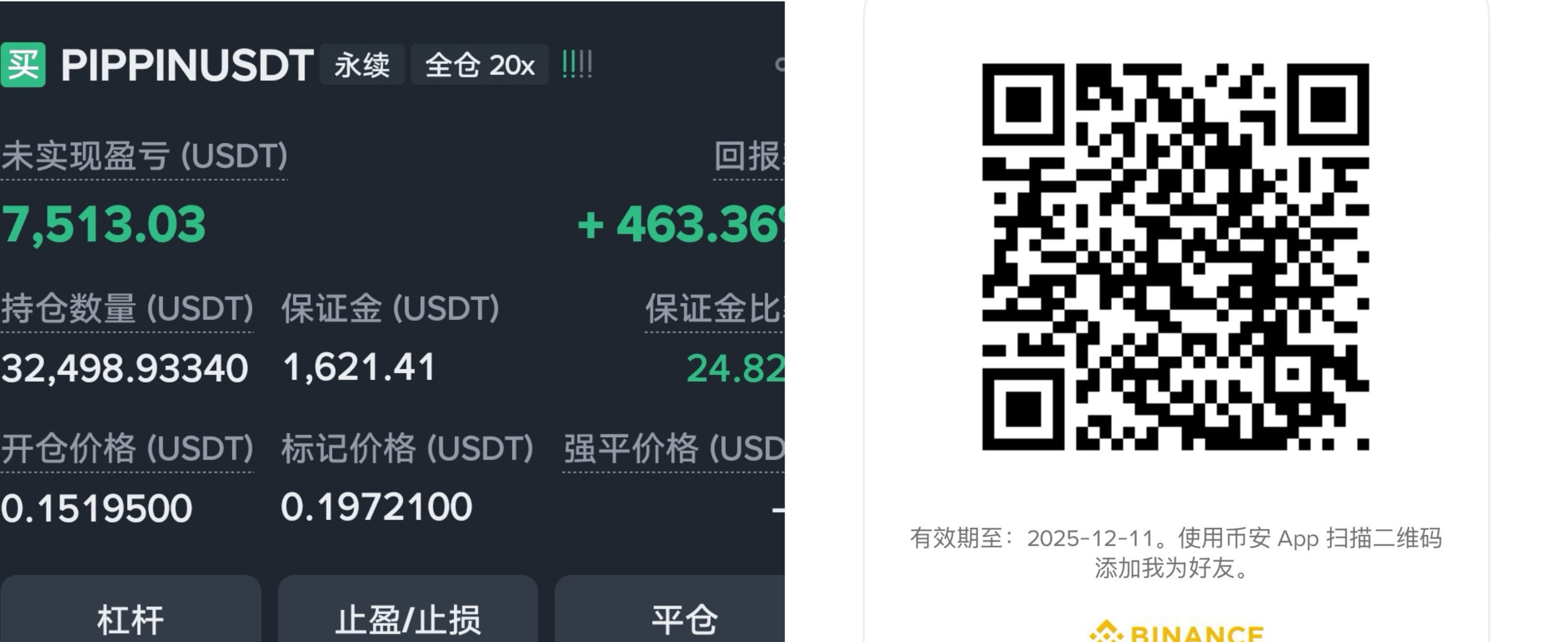
Take a look at the PIPPI long position brought by the influencers in the last two days, it also made a small profit of dozens of points. Following Sister Xu, everyone can make money every day. Those who want to follow the same operation, just scan the QR code below; the chat room is waiting for you, and opportunities wait for no one!