

Exploring Foundations, Identities, and Directions of Project Journeys in the Web3 Era

The journey of Falcon Finance is beginning to show that this project is not just a part of the current wave of crypto innovation, but also a reflection of the changing ways in which society interacts with the concept of digital finance. In an increasingly connected world moving towards a data-driven economy, the presence of platforms like Falcon Finance is becoming relevant as they bring a more humanistic approach to blockchain technology. It's not just about fast transactions and automated systems, but also about how technology can serve as a facilitator for more personal financial experiences.
In the community, conversations about Falcon Finance are slowly evolving. It hasn't exploded suddenly like many projects that rely on hype, but is growing through consistent curiosity. This pattern often signals that the audience does not see Falcon Finance merely as a short-term speculation. There is a group that has started to treat it as a foundation for the future, a project worth following because its direction and structure show potential to last longer than fleeting trends.
What is interesting about how Falcon Finance builds its ecosystem is how this project attempts to reduce complexity while maintaining the functional elements of blockchain. In some other DeFi platforms, users are often confused by technical processes, complicated instructions, and non-intuitive interfaces. Falcon Finance tries to do the opposite. It does not eliminate complexity but simplifies access. This approach creates a more inclusive space for users new to the crypto world as well as for those who have been involved for a long time.
Over time, a shift in mindset begins to be seen. Many people who initially entered the crypto world only for profit are starting to understand utility aspects. In this way, Falcon Finance becomes more than just a financial instrument. It transforms into a space for learning, experimenting, and applying financial concepts that are more open than traditional systems. This paradigm shift does not happen instantly but gradually follows the rhythm of technology adoption.
Looking at the increasingly competitive market dynamics, Falcon Finance is on a path that demands consistency, strategy, and mature intuition. Many projects collapse not due to a lack of technology but because they fail to maintain relevance amidst change. So far, Falcon Finance remains in an adaptive position to industry trends. This factor sets it apart because relevance is not merely about going with the flow, but understanding the direction of evolution and positioning oneself before a major momentum arises.
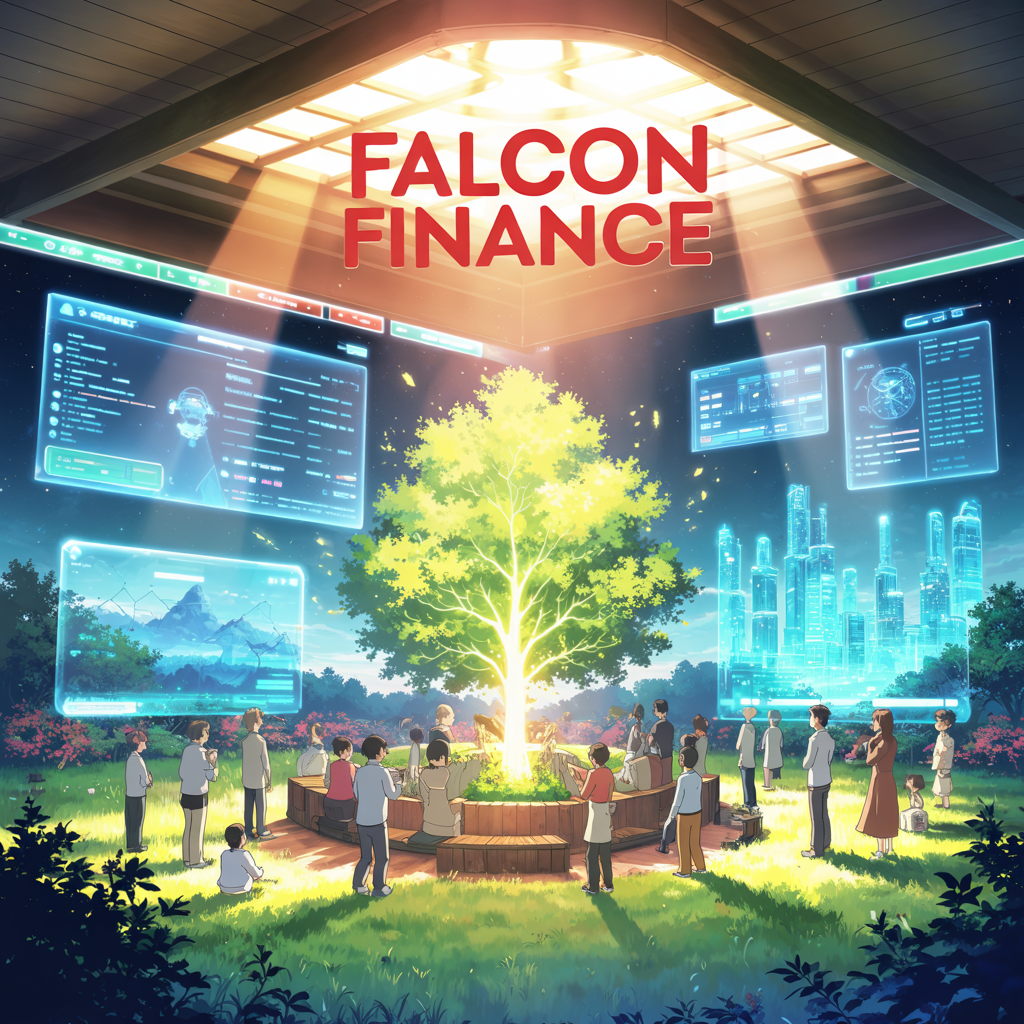
On the other hand, there is hope that Falcon Finance will grow into one of the platforms capable of bridging the next era in Web3. Not just as a financial service provider, but as an ecosystem that encourages community development, collaboration among users, and innovation based on real experiences. When a project reaches a stage where the community is not just users but also participants, its long-term value will be much stronger.
Ultimately, Falcon Finance's journey is no longer just about what is being developed but about how this project is interpreted by the public. Its identity is not built in a single moment but in a series of consistent decisions, a clear direction, and the ability to listen to the community's voice.
Conclusion
Falcon Finance is in an important momentum. Its phase is no longer just about introducing itself but is beginning to shape a character and larger goals. This project has the opportunity to become one of the important pillars in the Web3 ecosystem if it can maintain consistency, relevance, and strong relationships with the community. Time will test it, but so far its development direction shows a promising foundation worth following.

