

Hello, I am Jiang Nan. Long time no see.
If you have known me for a while, you should remember my Bitcoin trading story during this bull market:
From 2021 to 2022, with regular investments + multiple bottom buys, the average cost of Bitcoin is about $19,000;
This year, around $110,000, I chose to liquidate all my holdings;
During this cycle, I have steadily achieved nearly 6 times the return.
Many people say this is luck; but for me, it is more about a respect and understanding of cycles.
Because I am very clear:
The fluctuations in the market are not luck, but the result of cyclical patterns + liquidity-driven factors.
Why do I judge that next year is likely to be a bear market?
This bull market started in 2021 and has lasted almost four years now.
This is the longest bull market in history, without exception.
After a bull market, there must be a correction, and now I see several key signals:
1. The bull market has lasted too long, and the market has overdrawn the gains for the next two years.
Prices lead, logic follows; this is a typical characteristic of the 'post-cycle' period.
2. Institutions, ETFs, narratives are all saturated in the top range.
Institutions do not always only buy and never sell; when incremental growth slows down, it is the top.
3. The liquidity in 2025 may not necessarily remain loose.
The benefits brought by interest rate cuts and the stop of balance sheet reduction are being digested by the market in advance.
4. In terms of price structure, BTC has already entered the tail end of high-level fluctuations.
At this stage, a slight macro variable can trigger a large-scale pullback.
So I have been publicly saying:
Next year, there is a high probability that we will enter a bear market, both in terms of rhythm and position, it makes sense.
In this round of bear market, I think BTC will drop to where?
My judgment is very clear:
Between 50000 and 60000 US dollars.
Why this range?
This is the overlapping area of key moving averages across multiple cycles.
It is also a strong support area before the influx of ETFs.
More importantly, the costs for institutions are mostly above or near this range.
A correction here will not hurt significantly, but it can completely squeeze out speculative bubbles.
Only when it returns to 50,000 to 60,000 will the next bull market have real upward space.
But precisely because I judge that it will drop to 50,000 to 60,000, I choose to start dollar-cost averaging from now.
Many people here may find it strange:
"Since you think it will drop to 50,000 to 60,000, why start dollar-cost averaging now? Isn't it better to wait for it to drop and then buy in bulk?"
The problem lies here—
Humans can never accurately predict the bottom.
Corrections do not make appointments in advance;
Market crashes do not give advance notice;
The true bottom always appears in fear and disagreement.
If you only wait for "when it reaches 50,000, I'll buy",
you will think 65,000 in the market is expensive, 70,000 is chasing the high, and at 80,000 you will feel it's dangerous.
Then you will stand at the door watching others make money throughout the entire cycle.
I have seen too many people like this.
So as long as you are determined to buy BTC, the smartest way is always — dollar-cost averaging.
And I decided to start dollar-cost averaging again, the reason is very simple:
1. BTC is always the king of cycles, the core asset to navigate bull and bear markets.
I have experienced its 6-fold increase; I know its power.
2. Dollar-cost averaging can help me smooth out volatility, avoid emotions, and diversify risks.
When the market drops, I buy cheaply;
When the market rises, I am already on board.
3. The bear market is actually the best accumulation period for BTC, not the most dangerous time.
The real low point in the future will definitely appear in panic,
and dollar-cost averaging can ensure that I can buy chips there no matter what.
4. The next bull market is still to be expected (120,000, 150,000, 200,000… or even higher).
I have experienced three bull and bear cycles, and I am very clear about one fact:
A bear market will never make you rich, but what determines how much you will earn in the future is always how much you bought during the bear market.
This is the theme of today's article: Why can we still dollar-cost average in BTC and not consider it a high price?
Many people see BTC around 90,000 dollars and their first reaction is:
"It's so high, can I still dollar-cost average?"
In fact, this is an illusion about the price, and it is also the core reason why most people miss the entire cycle.
Let's clarify this logic step by step—
① The price of BTC is at an all-time high, but the valuation is not at a historical peak.
The core of BTC's pricing comes from:
Global liquidity (interest rate cuts, expansion)
Institutional allocation demand (ETF funds, pensions)
On-chain activity
Off-exchange capital scale
And the current environment is:
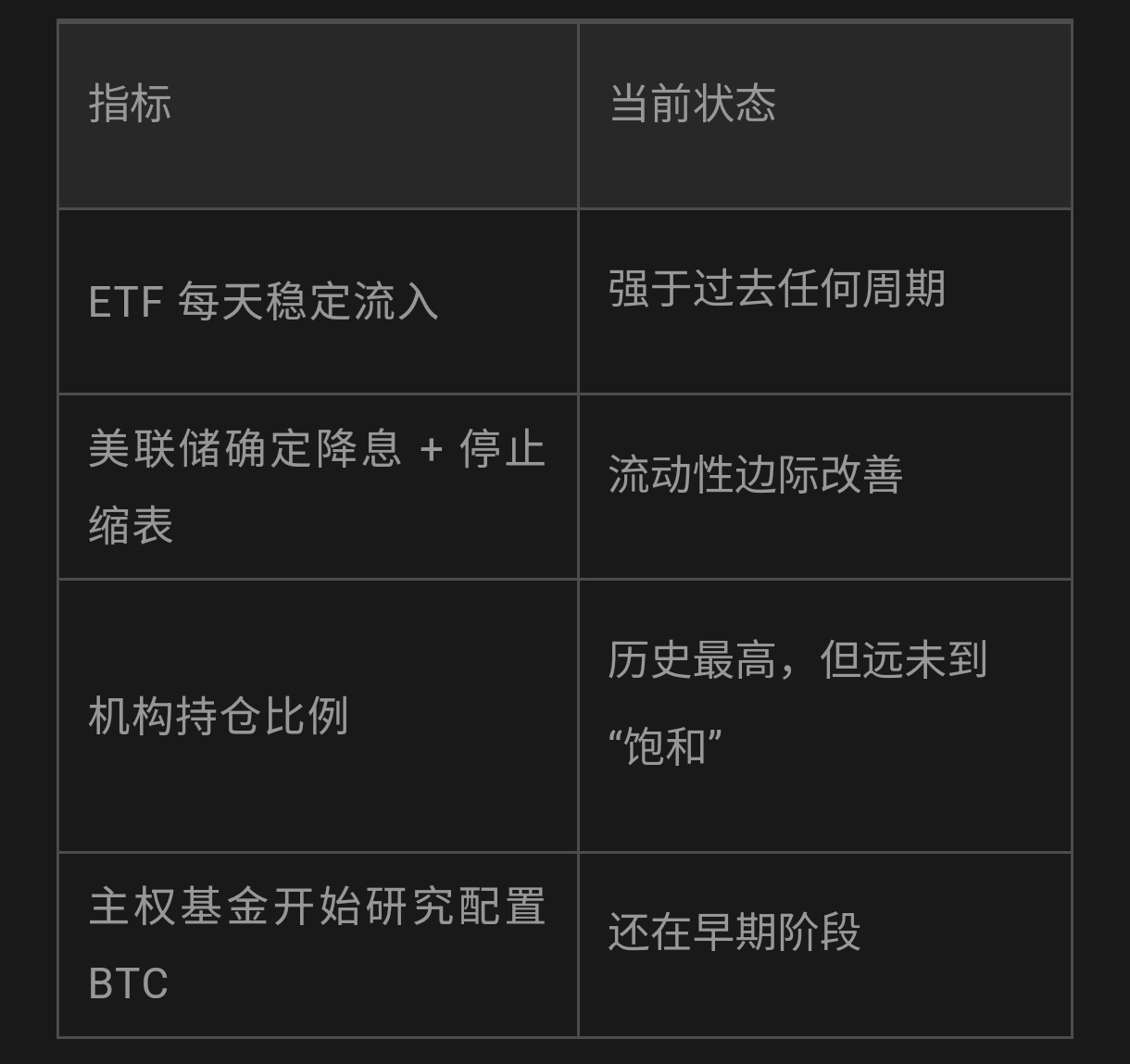
In other words:
The price of 90,000 dollars is the floor price of the 'new funding era', not the ceiling.
② The curve of Bitcoin is not linear but exponential.
We are often misled by a phrase:
"90,000 is three times more expensive than 30,000!"
But what truly determines future returns is the exponential growth curve of BTC:
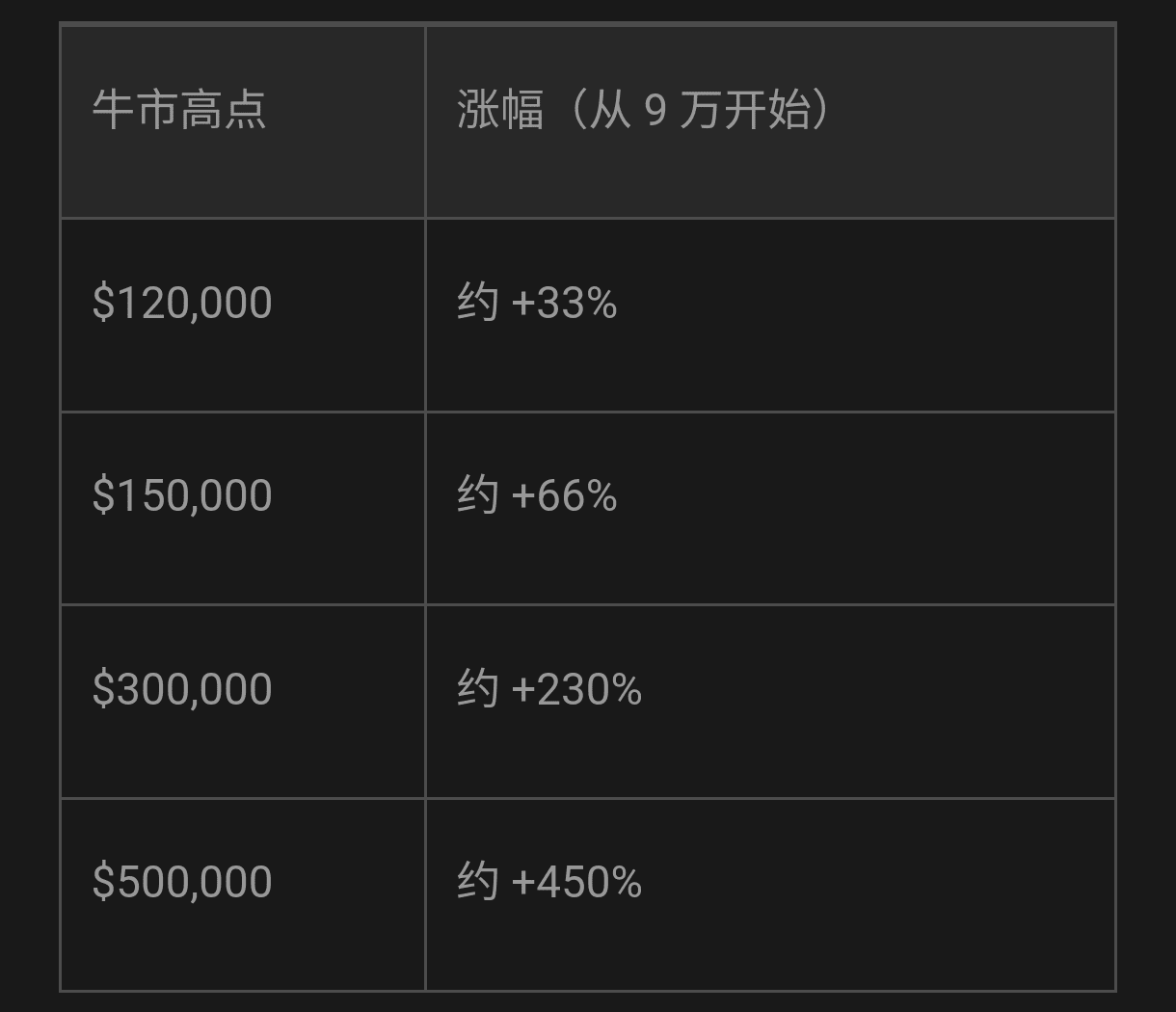
Have you noticed?
As long as BTC can still rise in the future, the increases are all 'multiples', not single digits. Once it breaks through the bottleneck, the rises are all stepwise.
So:
90,000 may seem expensive, but in the future price structure of hundreds of thousands, it is very low.
③ Dollar-cost averaging is not betting on price; it is betting that 'the next cycle will definitely come'.
You are not guessing now:
❌ "Will it rise tomorrow?"
❌ "Will there be a correction?"
You are doing something longer-term and more risk-averse:
✔ Diversify funds into 12 to 48 future purchases
✔ When encountering a correction, it will automatically buy at a lower cost
✔ Spread volatility over time
✔ Wait for the next bull market to automatically yield results
This is why professional institutions do DCA (dollar-cost averaging).
Because it does not require predictions but can automatically seize future market trends.
④ History tells us: If you don't buy when you feel it's a 'high position', you will never be able to buy.
Looking back at the past four times:
In 2013: when it was 1,000 dollars, everyone said it was expensive.
In 2017: when it was 20,000 dollars, everyone said it was expensive.
In 2021: when it was 69,000 dollars, everyone said it was expensive.
In 2025: when it is 90,000 dollars, everyone still says it is expensive.
But every time I look back,
the 'high position' at that time is now the floor.
Do you understand?
Price is absolute, value is relative.
⑤ The supply mechanism of Bitcoin determines: the later you enter, the more expensive it is.
21000000
The output is halved every four years.
Institutional demand is approaching exponential growth.
This means:
As long as BTC is still being halved and institutions are still buying, those who enter late will definitely buy at a higher price.
⑥ The greatest value of dollar-cost averaging in BTC: allowing ordinary people to navigate bull and bear cycles.
The significance of dollar-cost averaging in BTC is not the price, but:
Allowing you not to chase highs or sell lows.
Allowing you to automatically buy at low prices during bear markets.
Allowing you to automatically hold positions and enjoy the explosive growth during bull markets.
Allowing you to have a continuously appreciating asset pool in the future.
Allowing you not to stare at the market, not to predict, not to stay up late.
It's really a simple statement:
Dollar-cost averaging allows you to automatically lie in the trend.
Summary: Why is dollar-cost averaging in BTC not considered a high price right now?
✔ The valuation of BTC has not yet reached the peak of the cycle
✔ The future bull market space is still huge (120,000 → 150,000 → 300,000 → 500,000)
✔ Dollar-cost averaging automatically lowers costs, no need to predict.
✔ Entering late will definitely be more expensive (halving + institutions).
✔ Dollar-cost averaging allows ordinary people to navigate bull and bear markets and ultimately achieve results.
So starting dollar-cost averaging now is 'early', not late; it is 'stable', not aggressive.
—— Now is not the peak;
—— Now is the starting point of the next cycle;
—— Dollar-cost averaging in BTC is the most effective way for ordinary people to navigate cycles and change their destiny.