
How to identify and trade order blocks
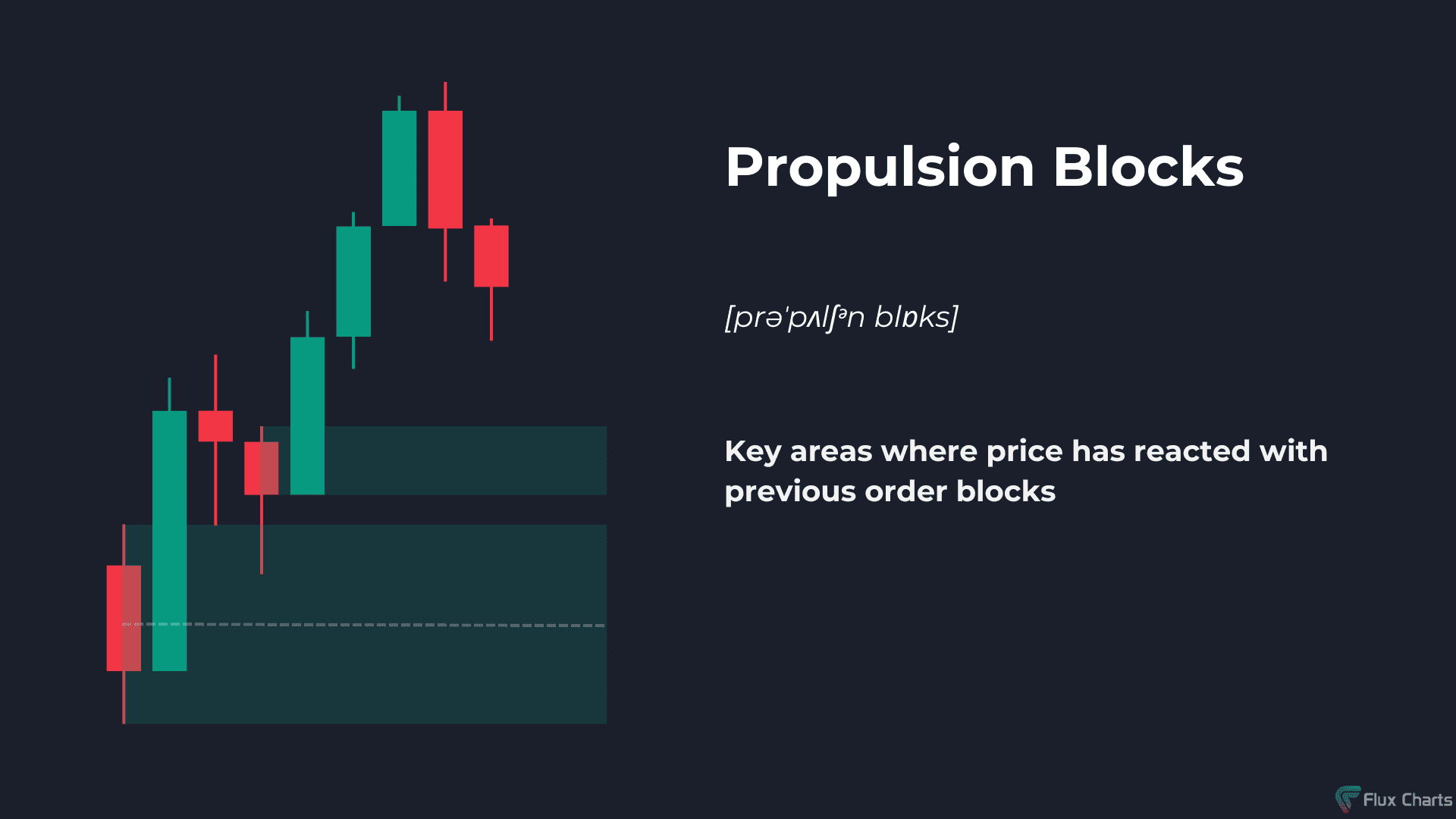
Order blocks are a trading concept used by price action traders (also known as SMC traders or ICT traders). Order blocks are key areas where price interacted with previous order blocks. Traders use these areas to identify potential reversals or areas of interest in the market.
What are order blocks?
Order blocks are special price structures where the price interacted with previous order blocks. These blocks highlight areas where the price previously interacted with large supply or demand levels. Simply put, order blocks are blocks of orders formed from the interaction of another order block. These levels can be used to identify turning points in the market or areas of interest. To identify and understand order blocks, you need to understand the concept of order blocks OB.
How to identify order blocks?
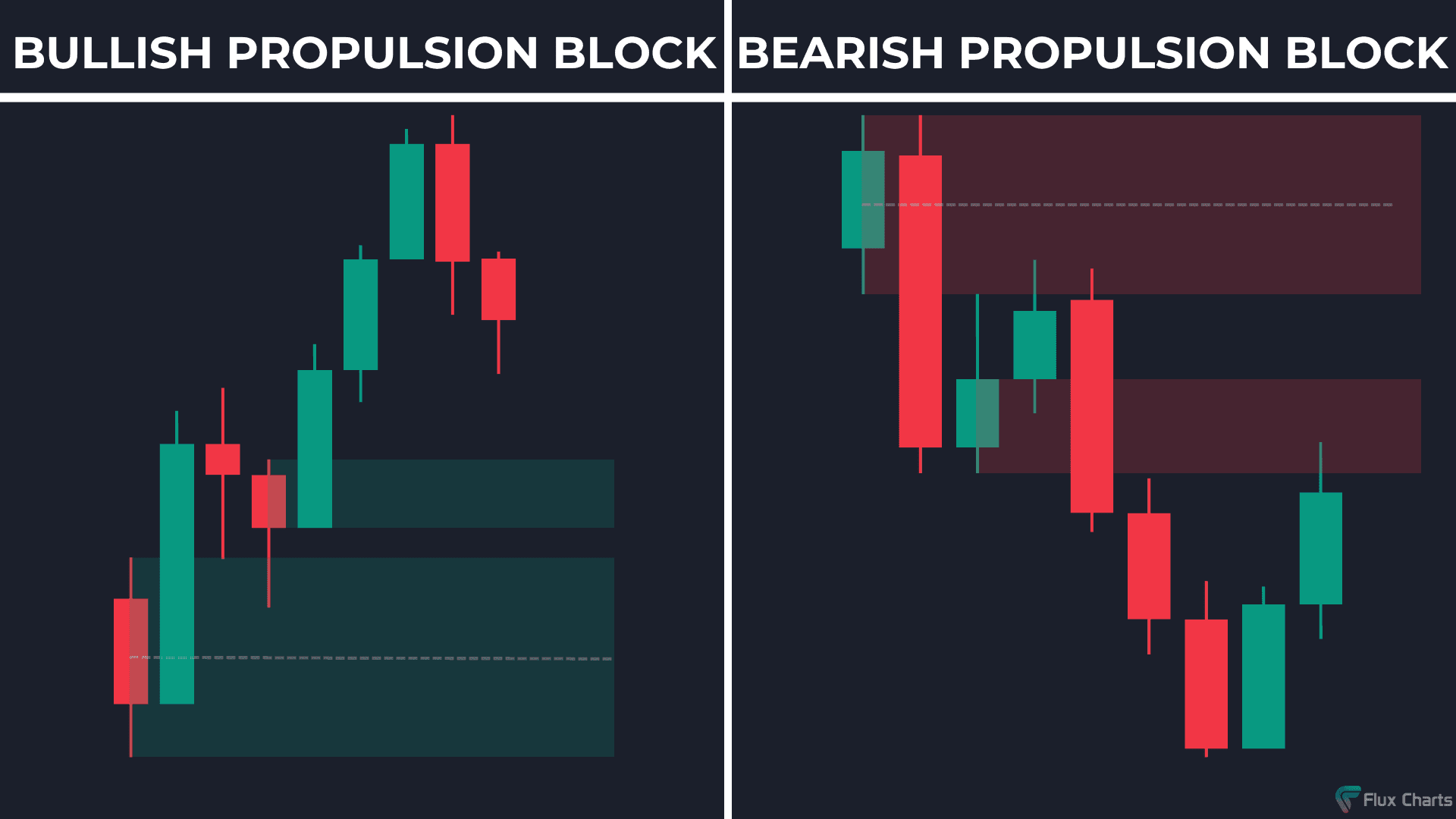
To identify order blocks, you first need to identify the order blocks on your chart. Then, observe these blocks and watch how the price interacts with them. Remember that order blocks are just blocks of orders formed after the price interacts with a previous order block. It is important to note that when the price re-tests an order block, it should not exceed or drop below the 50% threshold, or the midpoint of the area. After the price re-tests the order block without exceeding the 50% threshold or dropping below it, the price should make a significant move, leading to the creation of a second order block. This second block is considered the order block. Refer to the examples below to understand how to identify bullish and bearish order blocks.
How to identify a bullish order block
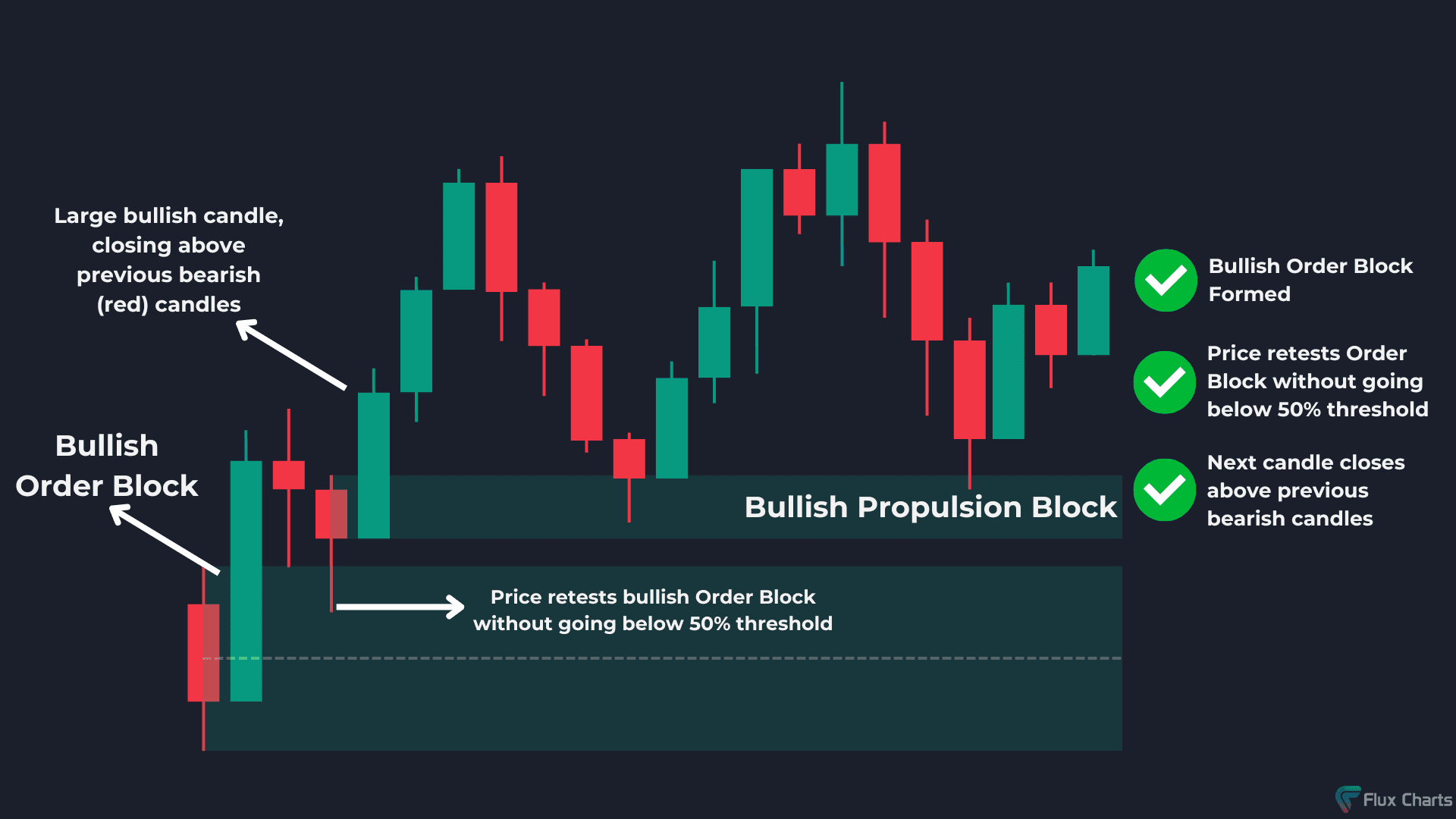
To find a bullish order block, you must first identify a bullish order zone. After finding a bullish order zone, wait for the price to re-test the area. It is important that the price does not drop below the 50% threshold level of the bullish order block upon re-testing. The candle that re-tests the order block should rise quickly, closing above the previous red candles that approached the order block. This will confirm the formation of a new bullish order block, which will now be considered a bullish order block.
How to identify a bearish order block
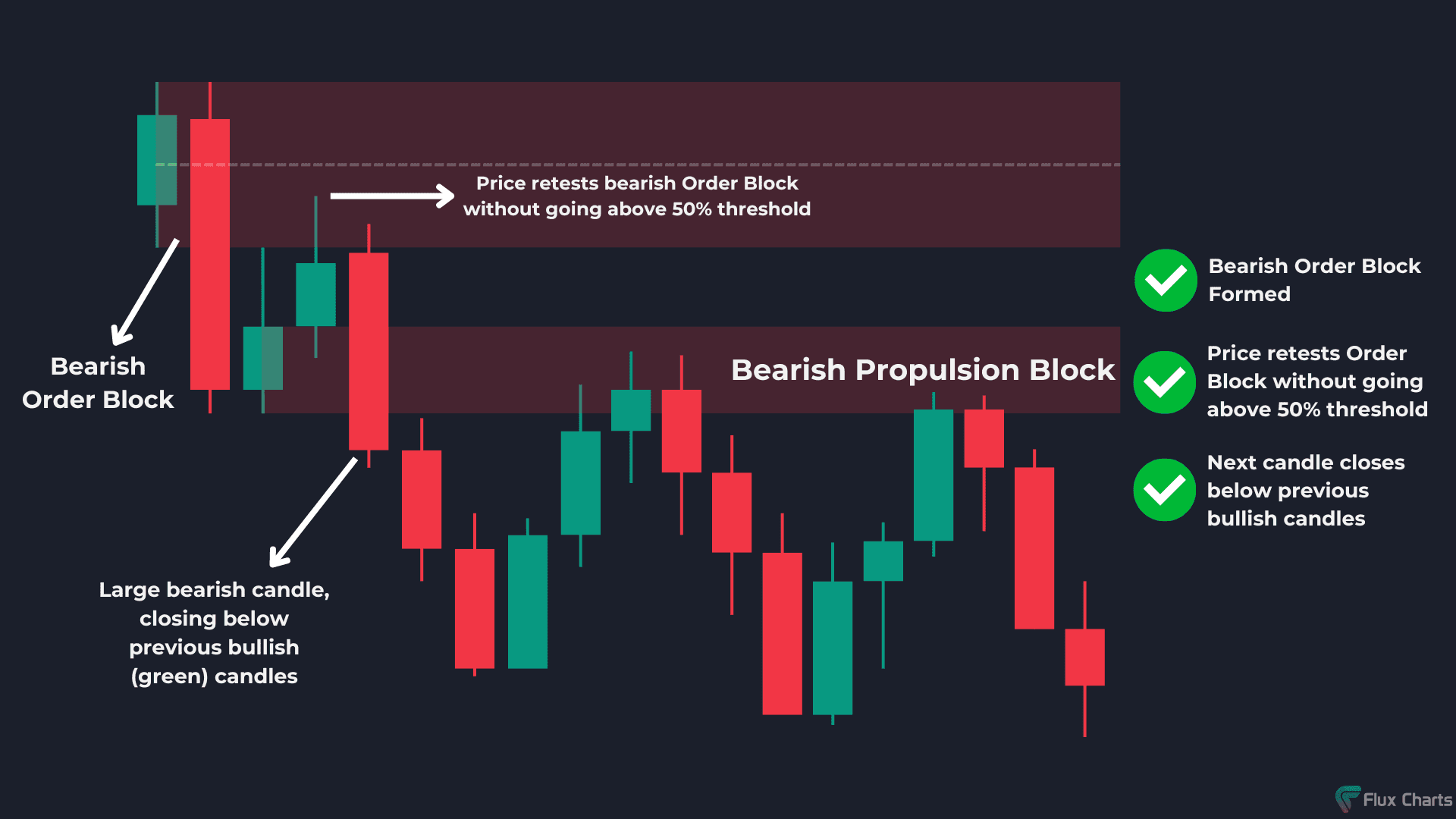
To find a bearish order block, you must first identify a bearish order zone. After finding a bearish order zone, wait for the price to re-test the area. It is important that the price does not exceed the 50% threshold level of the bearish order block upon re-testing. The candle that re-tests the order block should drop quickly, closing below the previous green candles that approached the order block. This will confirm the formation of a new bearish order block, which will now be considered a bearish order block.
How to trade using order blocks
After you understand the basic concept of order blocks, we need to learn how to use them effectively in trading. It is important to relate order blocks to other forms of indicator convergence, such as liquidity pulls, fair value gaps, or technical indicators. If the price approaches a bullish order block, you should look for long-term trading opportunities or buys. However, if the price approaches a bearish order block, you should look for short-term trading opportunities or sells. We have found a simple and effective trading strategy that combines order blocks with the MACD Trail indicator.
Example of a long trade
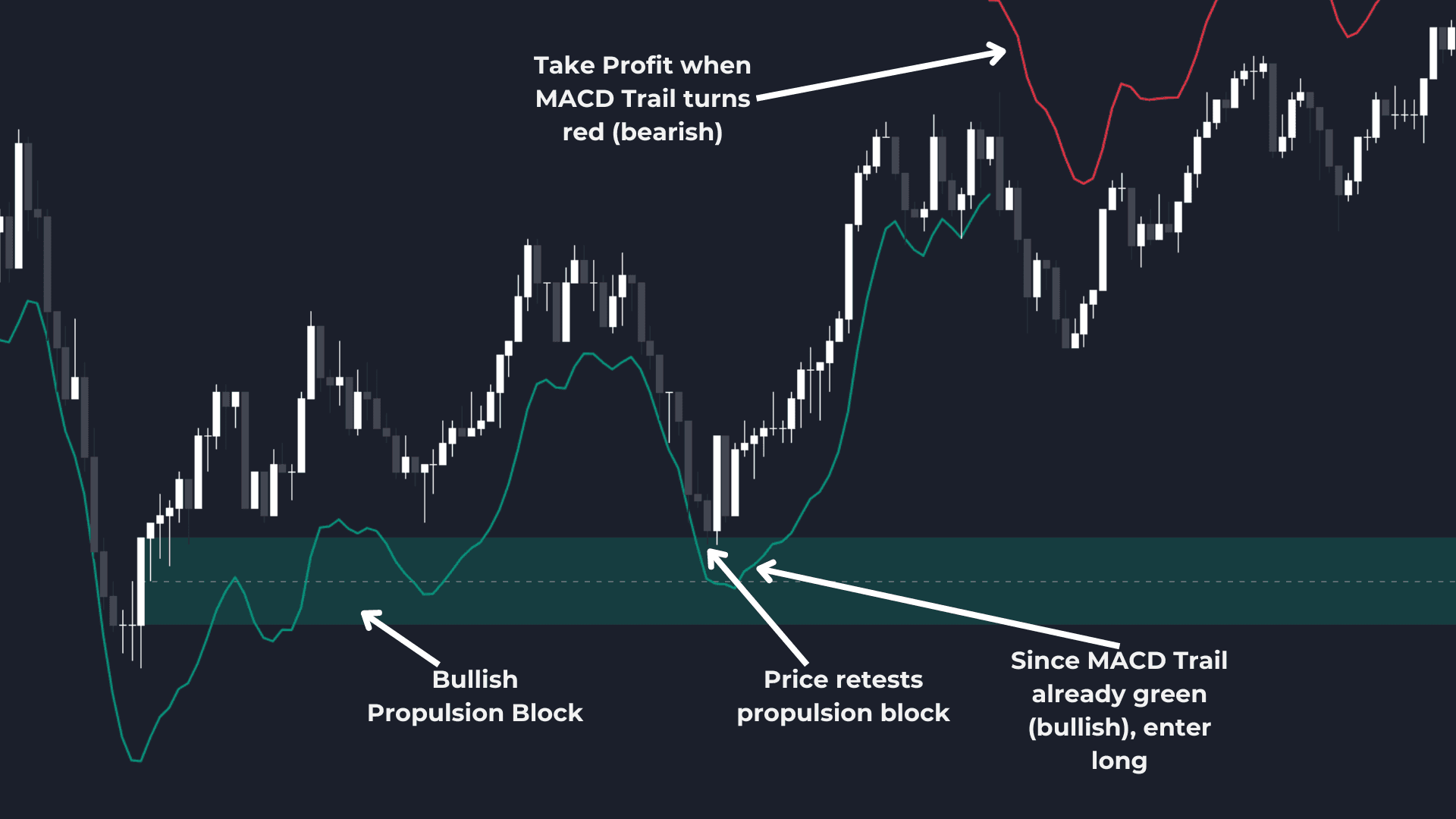
In this trading example, we combined a bullish order block with the MACD Trail indicator to open a profitable buy trade. After the bullish order block formed, wait for the price to drop and re-test it. After the price re-tests the area, wait for the MACD Trail indicator to turn green, or bullish. This is the trigger to open a buy trade. You can place a stop-loss order below the bullish order block, and take profits once the MACD Trail indicator turns red. In this example, we managed to open a trade with a risk-to-reward ratio of 1:4.
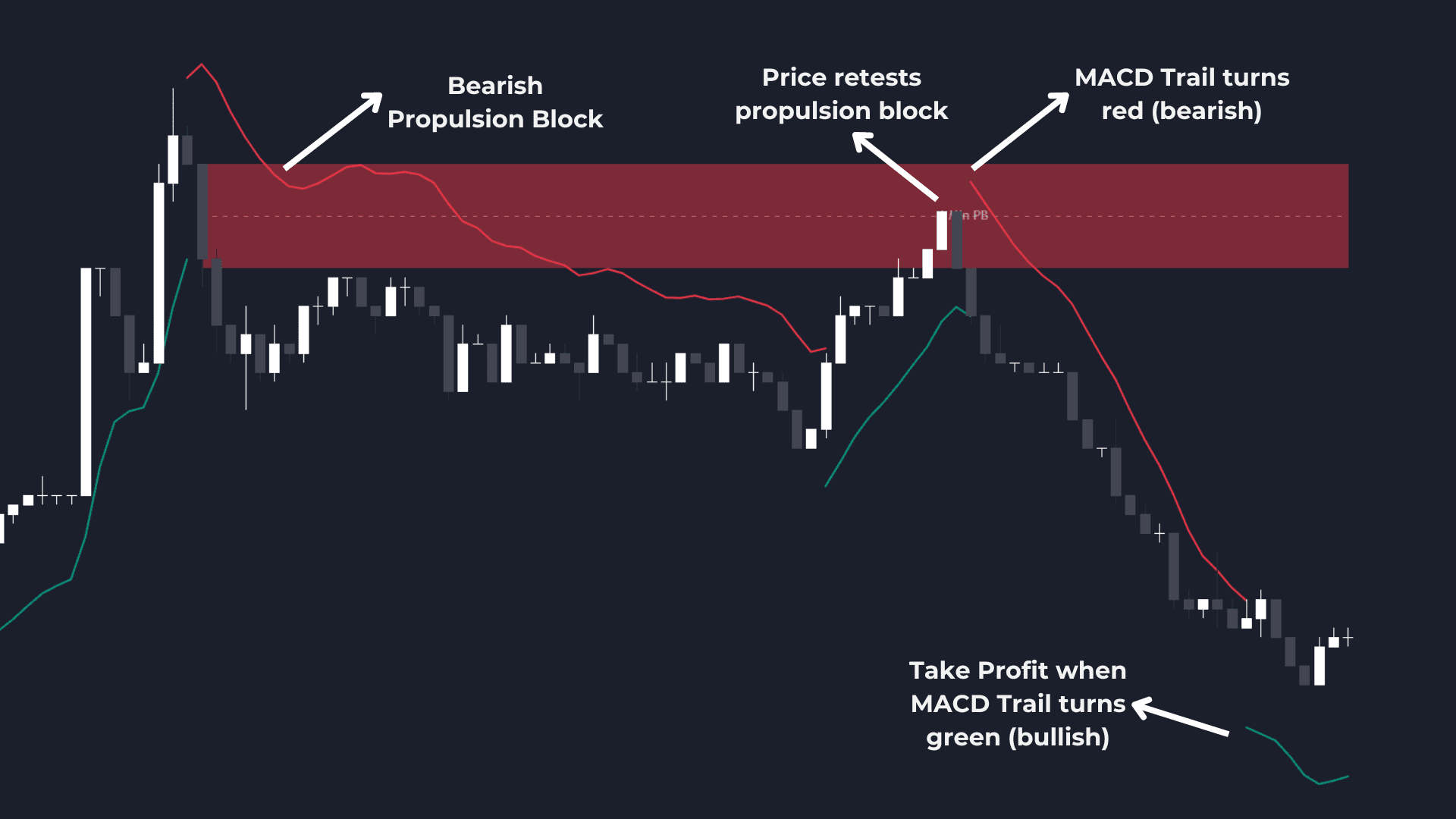
In this trading example, we combined a bearish order block with the MACD Trail indicator to open a profitable sell trade. Once the bearish order block formed, wait for the price to rise and re-test it. Once the price re-tests the area, wait for the MACD Trail indicator to turn red, or bearish. This is the trigger to open a sell trade. You can place a stop-loss order above the bearish order block, and take profits once the MACD Trail indicator turns green. In this example, we managed to open a trade with a risk-to-reward ratio of 1:3.

