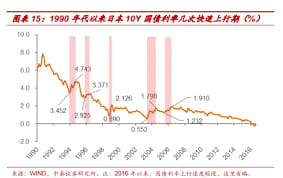
A piece of news about Japan possibly raising interest rates in the early morning scared a lot of people to death:
“The yen's interest rate hike leads to the closing of carry trades, global liquidity is withdrawn, and the stock market, bond market, and cryptocurrency market all crash!”
I looked at this logic, first clarify it, then refute the issue clearly — the conclusion is: this time there will not be a crash, at most it will be a 'moderately managed' fluctuation.
1. Opponent's logic (simplified version)
Japan's long-term ultra-low interest rates → A large amount of borrowing in yen for carry trades.
Once Japan raises interest rates, the arbitrage positions borrowed in yen are squeezed out → A large number of assets are sold back to Japan → Global liquidity suddenly decreases → Asset prices plummet.
Sounds scary, but there are several loopholes.
2. My rebuttal (why it won't be so severe)
This matter is not a unilateral 'autonomous decision' by Japan — the macro intentions of the US Treasury and other major powers have a say behind it. Treating the simple 'Japan's self-interest hike' as the sole trigger for a global crash overly simplifies the reality of international monetary operations.
Both the US dollar and yen are tools for liquidity adjustment — right now the Federal Reserve is 'moderately releasing liquidity', and if the yen simultaneously tightens, it is actually a coordinated management of liquidity expectations among countries, rather than suddenly turning off all the taps.
History has provided samples: from 2022 to 2024, there has not been a systemic crash — during the period of Fed interest rate hikes, the yen provided liquidity, and the US stock market was not completely overturned; if in 2025 the Fed chooses to ease, a slight tightening of the yen is merely part of rhythm management.
Institutions and markets will digest and adjust proactively in steps — 'smart money' will lay out plans, hedge and diversify in advance, and short-term fluctuations do not equate to long-term crashes. After Ueda's remarks, Bitcoin had a brief drop, but the next day it eased, indicating that the market has resilience.
3. My judgment (neutral to optimistic)
Short term: There will be fluctuations and windows for panic selling, but usually it's 'a big noise with little rain'.
Medium term: More like a process of the US and Japan working together to 'manage liquidity expectations' — allowing the market to rise but preventing bubbles from getting out of control.
Long term: Unless an uncontrollable systemic financial event occurs, this rhythmic policy adjustment is more conducive to stabilizing growth rather than total collapse.
4. Three practical suggestions for ordinary investors (not investment advice)
Do not listen to absolute claims: when encountering conclusions like 'Yen interest rate hike leads to global collapse', first calmly ask three questions: Who said it? Based on what data? Has the market digested it in layers?
Manage positions and risk: In the short term, lower positions, prepare stop-loss/hedging tools, but do not blindly liquidate. Gradually build positions and conduct regular reviews for more stability.
Focus on three clues rather than a single piece of news: Fed statements, Bank of Japan details, and institutional fund movements (ETF/ETP/flow in and out of exchanges) — these three combined determine the real direction.
TL;DR
A yen interest rate hike may create short-term fluctuations, but it does not automatically mean a collapse of the global capital market — it is more likely to be 'rhythm management' under coordination of various central banks, with real focus on the Fed's actions, institutional fund flows, and the actual operational details of the Bank of Japan.$ETH $BTC