
When people talk about mass adoption of Web3, the conversation usually jumps straight to users – how to get the next million wallets, the next million DeFi traders, the next million NFT collectors. But if you zoom out a bit, there’s a far more important question underneath: who is actually going to build the tools, apps and experiences that those users will touch? That question is why events like AdventureX in Hangzhou matter so much, and why Injective’s role as the exclusive blockchain sponsor this year feels bigger than just a logo on a banner. It was a five-day window into what happens when thousands of young builders, many of whom had never even touched Web3 before, meet a chain whose vision is “everything on-chain”.
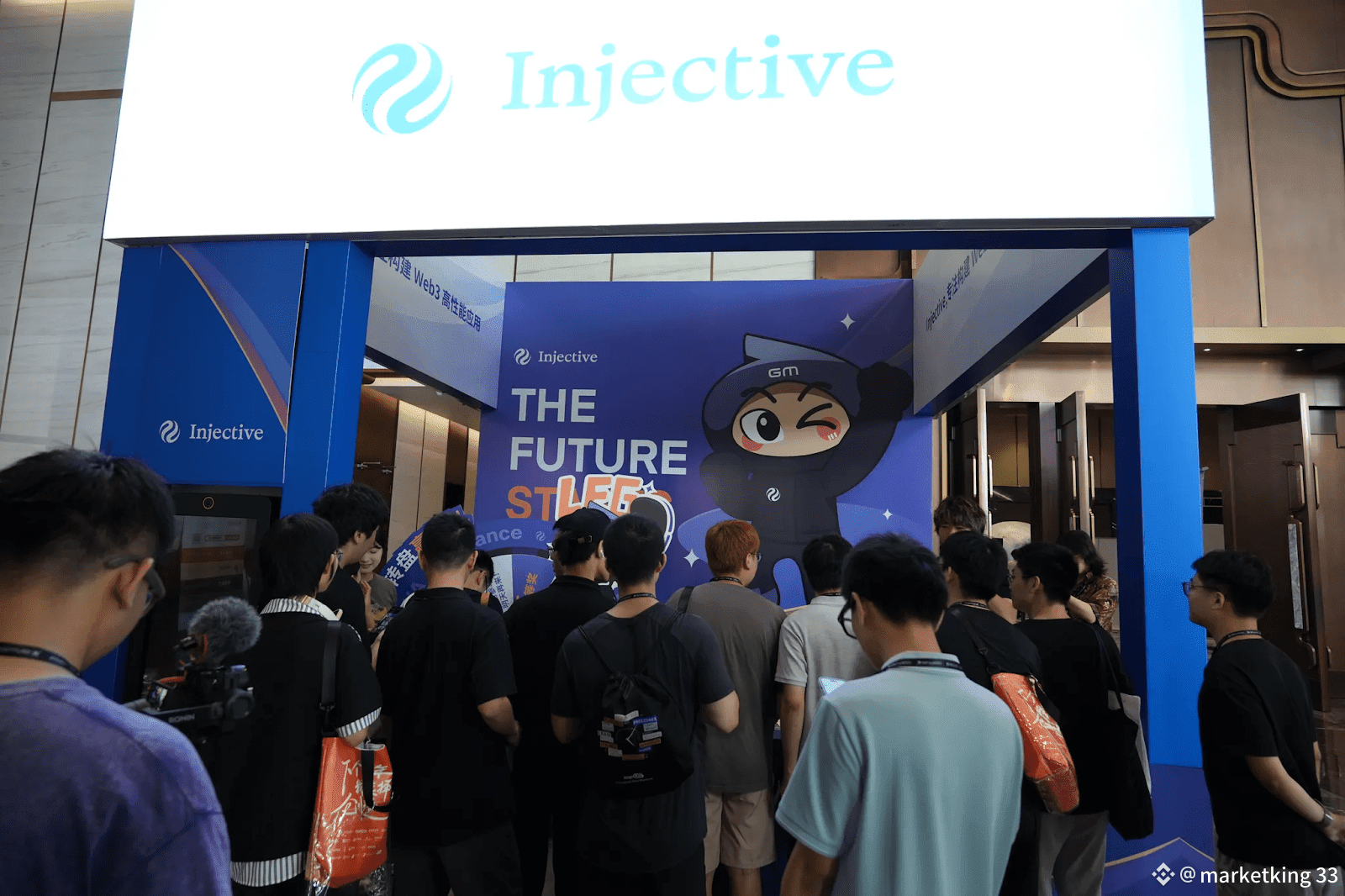
For a Web3 DevRel who has spent years hopping between ETH Beijing, ETH Hangzhou and ETHGlobal, the atmosphere at AdventureX felt both familiar and very different. The energy was the same: people dragging suitcases into the venue, claiming tables, pulling out laptops, ready to trade sleep for ideas. The difference was in the base audience. This wasn’t a purely crypto-native event. Alongside Injective’s booth stood names like Little Red Book, Lark and Tencent – giants of China’s internet ecosystem. For many participants, blockchain was not their starting point. They were AI tinkerers, AR builders, robotics teams, app developers. That’s exactly why Injective chose to be there: not to preach to people who were already deep in DeFi, but to connect with those who might never have heard the phrase “everything on-chain” before this week.
Standing on stage in front of nearly a thousand young creators and explaining the origin of blockchain and Injective’s vision wasn’t just another talk slot. It was a moment where the “cypherpunk” narrative – usually something you read in blog posts or old mailing lists – felt alive in a very real room. When people from local communities and blockchain alliances came up afterwards and said the story resonated, it didn’t feel like a typical conference compliment. It felt like a signal that the idea of Web3 as a fundamental protocol for innovation, not just a speculative layer, actually landed.
What made this hackathon especially interesting was the mix of technologies. AI wasn’t just present; it was everywhere. More than 80% of the teams integrated AI in some form, from generative content tools and workflow assistants to agents guiding users through complex tasks. In most hackathons now, AI is the default ingredient – but here, that AI wave was starting to intersect with Web3. On the Injective track, teams explored everything from putting AI-generated content on-chain to building decentralized AI training platforms and AI-incentivized infrastructure. It still felt early in many ways, but the direction was clear: the question is no longer “AI or blockchain?”, it’s “how do these two amplify each other in real applications?”.
Compared to crypto-native events like ETHGlobal, you could see that pure on-chain innovation was still in a more experimental state here. Some ideas were raw, some implementations rough, and many teams were clearly touching Web3 tooling for the first time. But that wasn’t a weakness – it was the point. AdventureX isn’t about watching polished Web3 veterans repeat patterns they already know. It’s about inviting people who are good at robotics, AR, social apps, accessibility tools or AI workflows, and asking: what happens if you take the data, logs or logic from what you already build – and push part of it on-chain? Even small steps like that are meaningful. They are the first cracks in the wall between “traditional” tech and blockchain.
Certain projects from the Injective track captured that feeling perfectly. The Vision Pro AR system, similar in spirit to Nonomi’s “Life Filter”, used mixed reality and AI to build a kind of immersive life enhancement environment, then tied that into blockchain for on-chain interactions. Another team worked on a navigation system for the blind that didn’t just rely on maps and audio cues, but also experimented with blockchain features to track state and interactions. These weren’t yet polished commercial products, but they were a sign that people are starting to treat Web3 not as a closed financial sandbox, but as a primitive they can blend into tools that solve real-world problems.
Beyond the code, there were also thoughtful touches that showed how much the organizers understand developers. The “notebook or cheatsheet” design is one of those details you notice only when you’re deep in the trenches. Instead of a separate flimsy pamphlet, the hackathon embedded the quick-start guides and cheat references into the first pages of a notebook. That meant hackers could sketch diagrams, scribble ideas, and then flip just a few pages back whenever they needed a command or a config reference. It’s a small thing, but as anyone who has ever spent 20 minutes searching for a lost link during a hack knows, those micro-UX decisions matter. It also fits the spirit of decentralised innovation: even swag can be rethought as a tool.
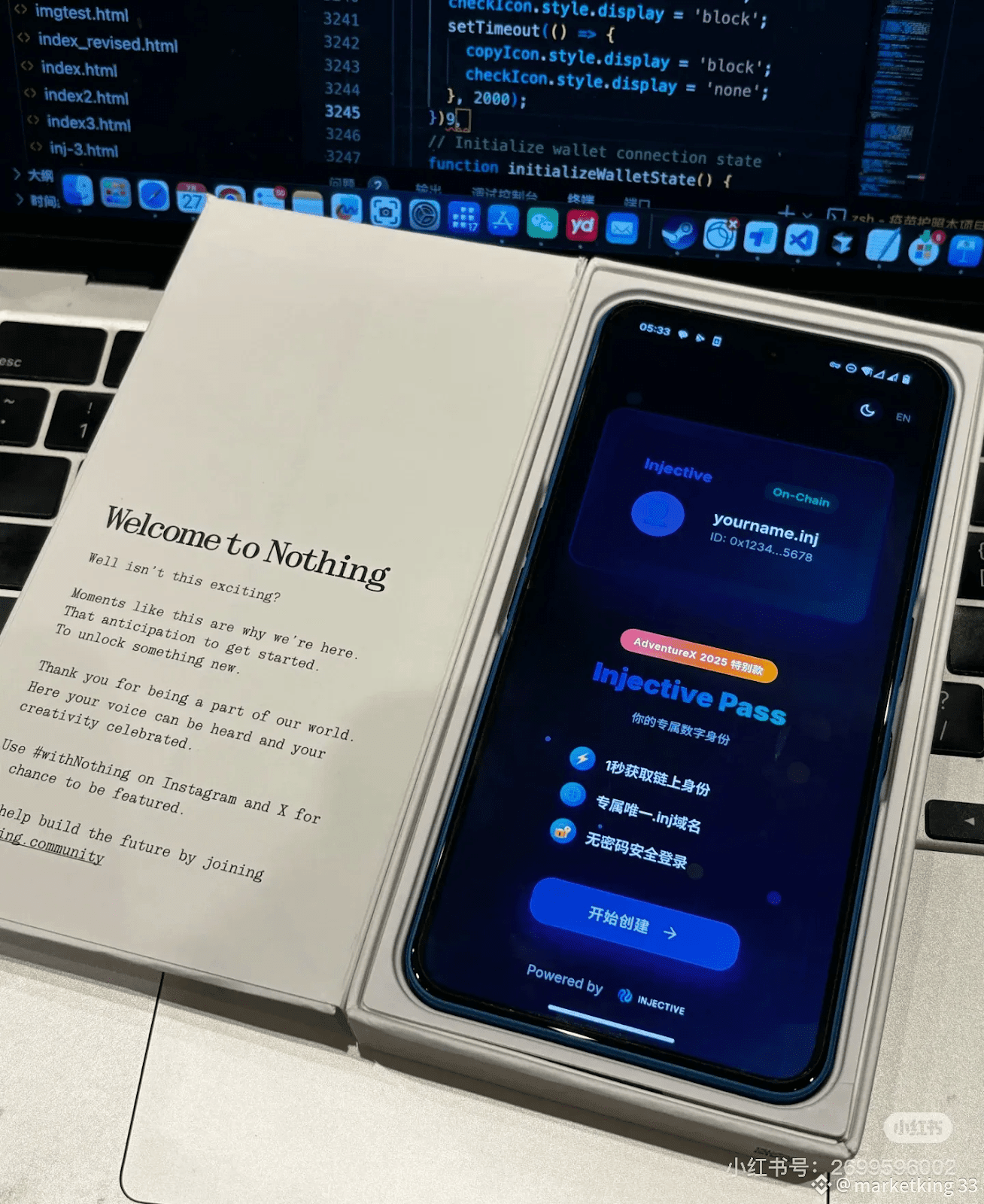
On the project side, the variety on the Injective track made it clear how broad the “everything on-chain” vision can be. Injective Pass, for example, focused on chain abstraction and digital identity. With just an NFC card or biometric key, a user could activate a cloud wallet and identity in a second, no blockchain background required. It even tied in .inj domains so people don’t have to deal with long hexadecimal addresses. That sort of work isn’t flashy, but it’s exactly what mass onboarding looks like: take away the friction, hide the jargon, and let people enter an ecosystem without needing a tutorial in cryptography.
Other projects were far more playful but no less meaningful. “Who’s Your Master” used AI to match users with stray dogs that resemble them and then brought that concept on-chain with adoption NFTs via Injective and talis.art. Cyber Plant allowed plant lovers to trade plants globally by tapping phones, with all plant data and ownership recorded on-chain. BountyGo offered a decentralized bounty marketplace where AI agents help turn links into structured tasks with crypto rewards. PolyAgent Market imagined a world where AI agents aren’t just tools but economic participants: registering, bidding, collaborating and executing tasks autonomously.
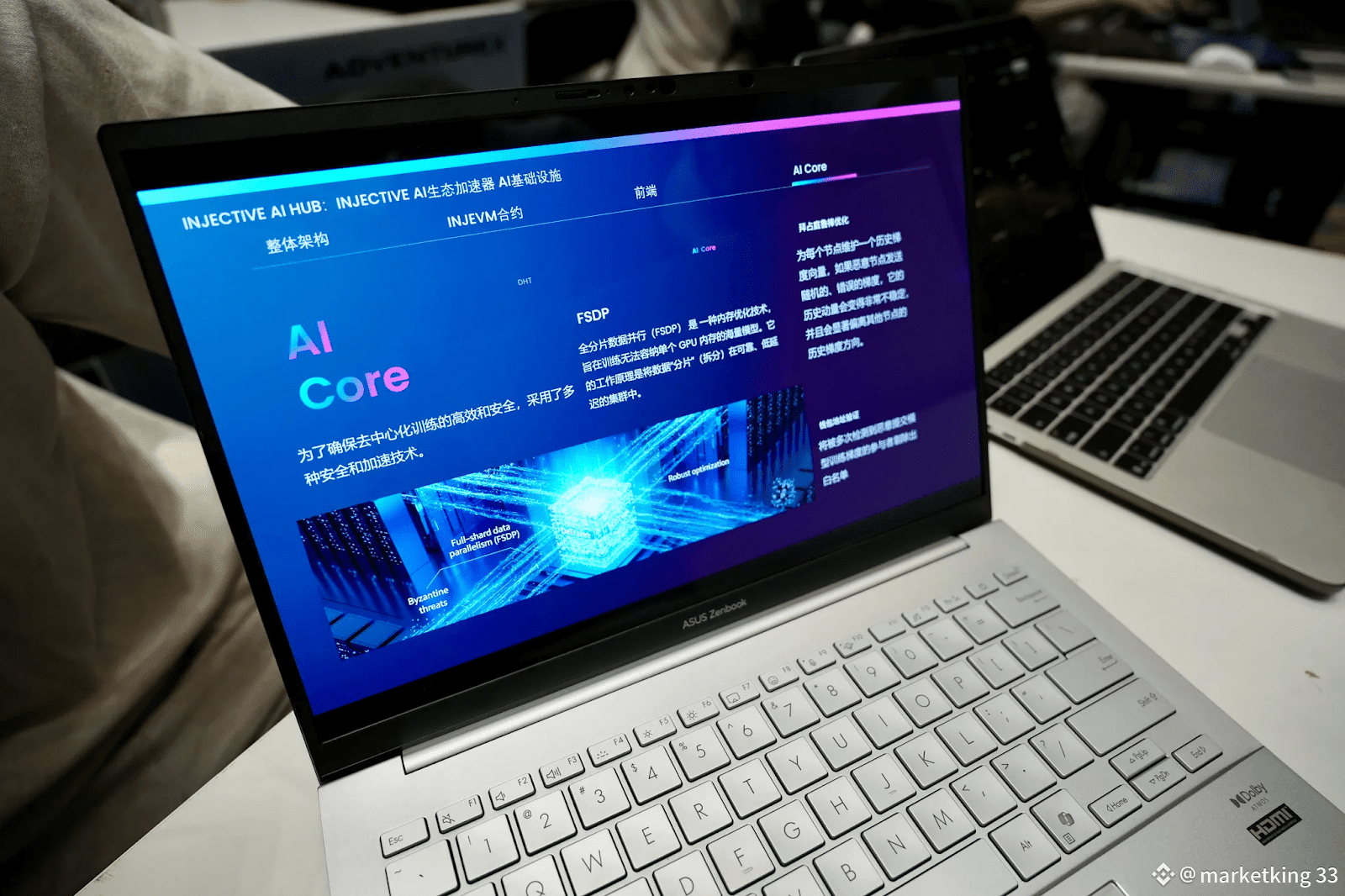
Then there were ideas like DotDot AI, which targeted focus and productivity for people with ADHD by turning their tasks into AI-generated NFTs called “Dots”, each one representing a structured, step-by-step path to finishing something. Injective AI Hub pointed toward a decentralized infrastructure where developers, ML experts and even people with idle compute could contribute to AI models in a coordinated, incentivized way. MemorySpace took a more emotional route: turning spoken memories into 3D, collaborative, on-chain “memory buildings” – essentially a shared digital landscape built out of voice and feeling.
What ties all these projects together isn’t that they’re all ready for production tomorrow – many aren’t. It’s that they treat blockchain not as a destination but as a layer that quietly adds permanence, transparency, ownership and composability to things people already care about. For a DevRel working with a chain like Injective, that’s exactly the kind of mindset shift you want to see: from “let’s build a DEX because it’s Web3” to “let’s take this AR system, this accessibility tool, this AI assistant, and see what happens when we give part of it an on-chain backbone.”
The end of a hackathon is always bittersweet. There’s an adrenaline crash, a rush to submit, quick goodbyes and travel back to “normal life”. But the best teams don’t treat the closing ceremony as the end; they treat it as the cut-over point from prototype to product. That’s where Injective’s role becomes more than a sponsor. By offering grants, ecosystem support, incentive programs and continued DevRel engagement, the chain tries to turn these five sleepless days into the start of longer journeys. The message to anyone who built at AdventureX – especially to those for whom this was their first contact with Web3 – is simple: you’re still early, and you don’t have to figure it out alone.
Looking back on AdventureX, it’s easy to focus on the prize tracks, the booth, the logos and the big AI trends. But the most important part is quieter: a thousand young creators in one place, hearing that “everything on-chain” isn’t just a slogan, it’s an open invitation. Injective being there, not as a side note but as the exclusive blockchain partner alongside household Web2 giants, sends a clear signal: Web3 doesn’t want to exist in a corner of the internet. It wants to stand next to everything else and connect to it.

Hackathons like this are proof that the bridge is starting to form. They remind everyone that the story of Web3 will not be written only by people who started in crypto; it will be written by anyone who shows up with an idea, looks at the tools on the table, and decides to ship. Injective’s bet is that if you keep showing up for those builders – with infrastructure, with support, with real openness – the spark you see in their eyes at a hackathon stage will eventually turn into the applications that push “everything on-chain” from vision to reality.
