The cryptocurrency world obsesses over speed. Layer-1 chains brag about transaction throughput, DEX platforms compete on latency, and traders demand microsecond execution. But there's something far more valuable happening in the shadows that most people overlook: fairness.
When you trade on Injective, something fundamentally different occurs at the protocol level. While other blockchains operate with transparent mempools where bots can observe your pending transactions and exploit them, Injective implements a Frequent Batch Auction model combined with Verifiable Delay Functions (VDFs). This isn't just a technical detail—it's a structural advantage that reshapes the entire game.
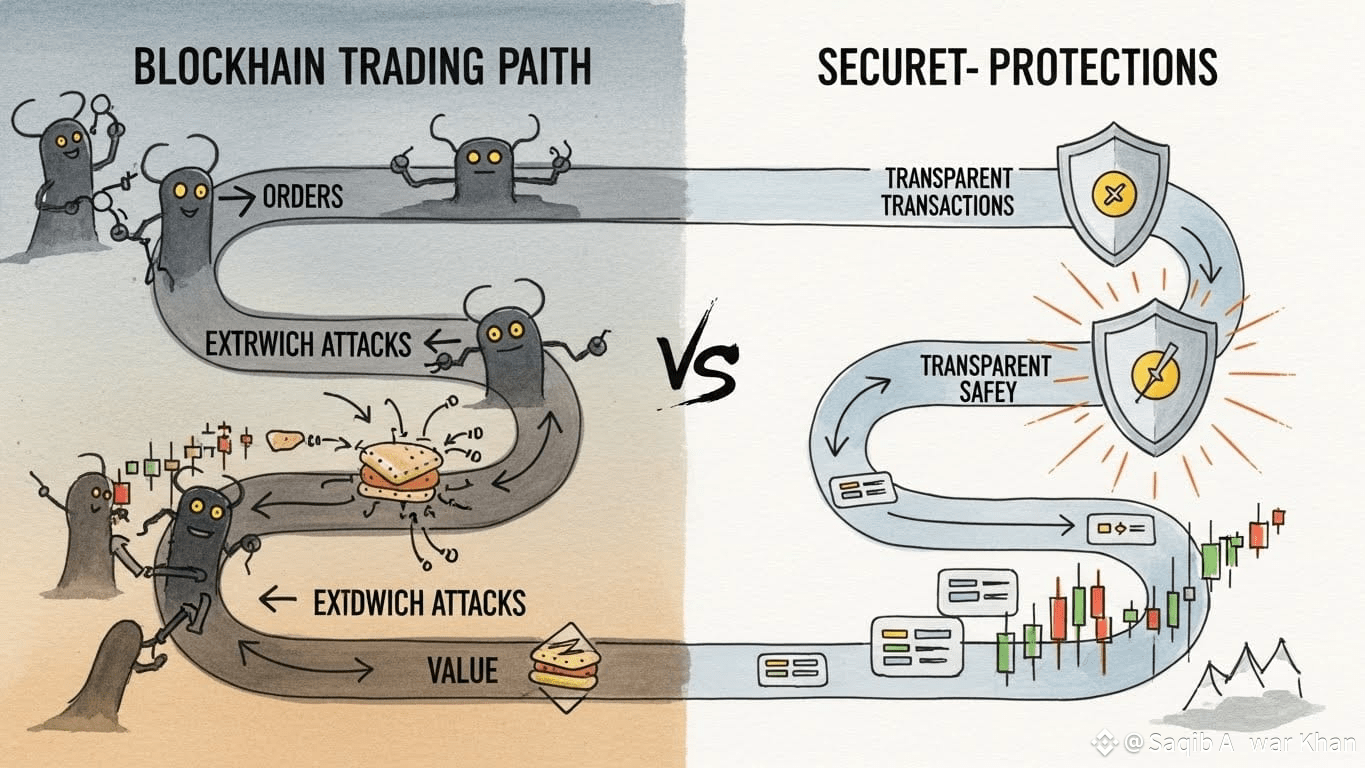
Let me explain why this matters. On traditional chains, a trader submitting a large order faces sandwich attacks almost inevitably. A malicious actor sees your transaction, places their own order before it (raising the price), watches your transaction execute at the inflated price, then exits their position at a profit. Studies show this costs DeFi users billions annually. The victim never sees it coming.
Injective's architecture eliminates this vulnerability by fundamentally changing how transactions are ordered. Instead of a sequential mempool where order positions can be purchased, Injective batches transactions deterministically. Your order doesn't sit exposed in a public mempool waiting to be exploited—it's included in a batch with fair, predetermined ordering. This is what "MEV-resistant" actually means in practice.
But here's what distinguishes Injective: this fair-ordering mechanism isn't bolted onto the system as an afterthought. It's native to the protocol's core architecture. Every application built on Injective benefits from this protection automatically. A new developer launching a trading protocol on Injective inherits MEV resistance without requiring separate infrastructure, additional bridges, or workarounds.
For traders, the practical impact is immediate: tighter spreads, lower slippage on large orders, and the confidence that your execution won't be front-run by sophisticated bots. For market makers, this creates more stable conditions where liquidity provision doesn't require constant vigilance against extraction attacks.
For institutions considering on-chain operations, MEV resistance represents genuine risk reduction. When a bank wants to move significant capital or execute derivative positions, frontrunning protection isn't optional—it's essential. This is why major financial institutions are watching Injective's model carefully.
The deeper point: Injective's MEV resistance demonstrates a philosophical difference in how it approaches Layer-1 design. Rather than accepting fair-execution as a problem to solve, Injective treated it as a first-class design requirement. The entire blockchain was constructed around the premise that transparent, fair execution should be the default state.
This matters for another reason. As markets sophisticate and competition intensifies, execution quality becomes the primary differentiator. Injective's structural fairness creates a competitive moat that's far harder to replicate than simple speed claims. You cannot copy fair ordering by adding more validators or burning more transactions—it requires fundamental architectural rethinking.
Looking ahead, as institutional capital enters DeFi, MEV resistance will transition from a niche technical concern to a mainstream requirement. Injective's native approach positions it perfectly for this shift.