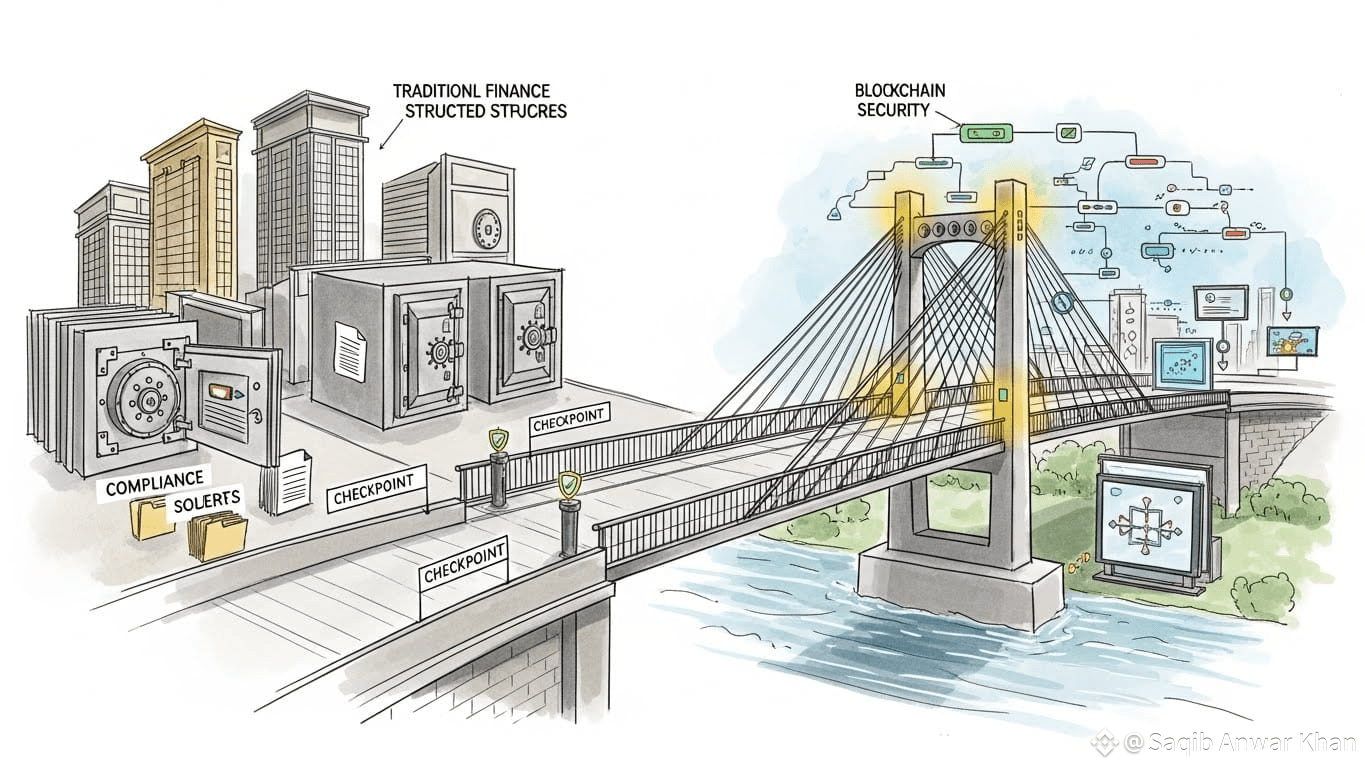
There's a conversation happening in institutional finance circles that rarely reaches retail crypto communities. It's about Real-World Assets, not as a speculative blockchain narrative, but as an urgent infrastructure problem: How do you efficiently tokenize $150+ trillion in traditional assets and make them work on decentralized networks?
The answer, it turns out, partially lives on Injective.
Most conversations about RWAs focus on prominent projects or high-profile integrations. But Injective's approach is different—it's foundational. The platform built something that few recognize for what it actually is: a permissioned asset infrastructure layer designed specifically for institutions.
Injective's RWA module, introduced during the Volan mainnet upgrade, does something most other blockchains cannot: it embeds compliance directly into the asset's code, not as an afterthought or via external smart contracts. This is technically crucial but philosophically important.
When a bank considers tokenizing assets on blockchain, their primary concern isn't efficiency—they already have efficient systems. Their concern is regulatory alignment. They need to enforce whitelists, implement KYC/AML controls, restrict transfers based on jurisdiction, and maintain audit trails that satisfy regulators. Injective's RWA module handles all of this at the protocol level.
Consider how this changes the calculus for asset issuance. A traditional institution moving assets on-chain must layer compliance infrastructure on top of generic blockchain infrastructure. This creates friction, delays, and risks. Injective inverts this problem: the blockchain itself is compliance-aware.
Helix, Injective's flagship DEX, exemplifies what this enables. It's not just a spot-and-futures exchange (though it is that, too). Helix unified something previously impossible: crypto trading, perpetual derivatives, and real-world equities in a single interface. Within the same account, you can trade Bitcoin, short oil, long Tesla stock, and manage stablecoin collateral. This unified trading environment is only possible because the underlying infrastructure treats all these asset types with the same native capability.
The tokenized assets now available on Injective provide concrete evidence of the infrastructure's institutional readiness:
Agora's AUSD (fully collateralized digital dollar), Ondo Finance's USDY (Treasury-backed yield coin), and BlackRock's BUIDL index all chose Injective as a deployment platform. These aren't small projects. USDY represents hundreds of millions in tokenized Treasury exposure. BUIDL is BlackRock's experimental on-chain fund infrastructure.
Why did these major financial entities choose Injective specifically? Because the compliance controls, settlement finality, and operational guarantees matched what institutional risk committees require.
Here's what makes this particularly significant right now: the RWA market is in its early innings. Tokenized Treasuries, bonds, corporate debt, and private credit will eventually constitute trillions in on-chain value. The infrastructure that wins this market won't be the one with the highest theoretical throughput or the best marketing narrative. It will be the one that institutions actually choose when they integrate their real asset operations.
Injective has already started accumulating that institutional adoption. Quietly. Without the hype that surrounds other RWA platforms.
The broader narrative: while the crypto industry debates Layer-2 solutions and rollup optimizations, Injective has already solved the specific problem that matters most for RWA adoption—creating a blockchain that institutions can actually use for their asset operations without building parallel compliance infrastructure.
This isn't revolutionary in terms of headline features. But it's exactly the kind of foundational infrastructure advantage that compounds over time. When CBOT (Chicago Board of Trade) or CME Group considers bringing tokenized derivatives on-chain, the platforms they evaluate will include those with proven institutional integration patterns.
Injective already has those patterns embedded in its protocol.