
🚀 Scalability & Network Performance
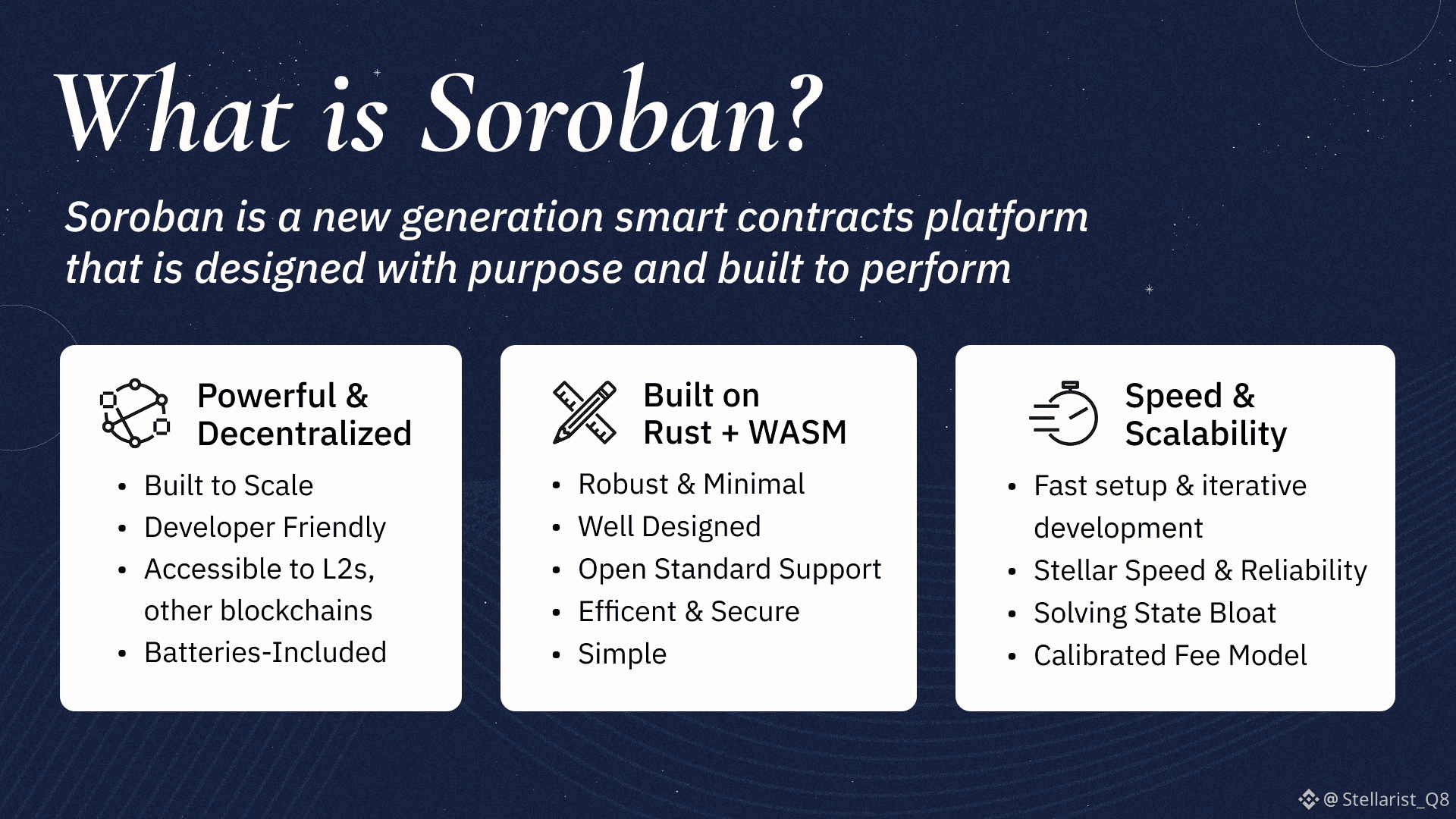
$XLM Soroban was designed with massive scale in mind to avoid the bottlenecks common on other blockchains. Its architecture directly supports Stellar's ambitious performance roadmap.
· High Throughput for Smart Contracts: The primary 2025 goal is to scale the network to a theoretical 5,000 transactions per second (TPS), ensuring it can handle growth as smart contract adoption increases.
· Parallel Execution: A major upgrade (Protocol 23) introduces multi-threaded execution of smart contracts, allowing the network to process many contracts simultaneously instead of one-by-one.
· Optimized Design: Soroban uses a "parallel-friendly" design and architectural changes like decoupling consensus from execution. This allows the network to prepare the next block while finalizing the current one, eliminating idle time and paving the way for a target block time of just 2.5 seconds.
⚙️ Technical Architecture & Developer Experience
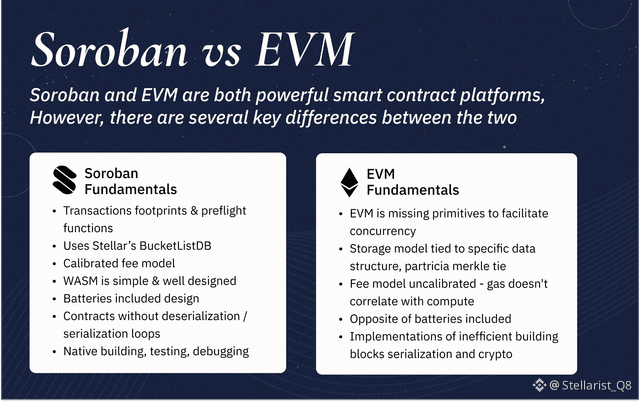
Soroban uses a modern tech stack and developer tools designed for safety, efficiency, and a smooth building experience.
· Programming Language: Contracts are written in Rust and compiled to WebAssembly (WASM). This combination offers high performance, strong security guarantees (like memory safety), and access to a robust ecosystem of development tools.
· Smart Resource Management: The platform features fine-grained resource metering to ensure fair and predictable transaction fees. It also tackles the industry-wide "state bloat" problem with a novel state archival solution to keep the live network lean.
· Comprehensive Tooling: Developers are supported by "batteries-included" tools like a dedicated CLI, an RPC server, a local sandbox for testing, and AI-assisted tools (like "Contract Copilot") to help write and audit code.
🏦 Use Cases & Ecosystem Growth
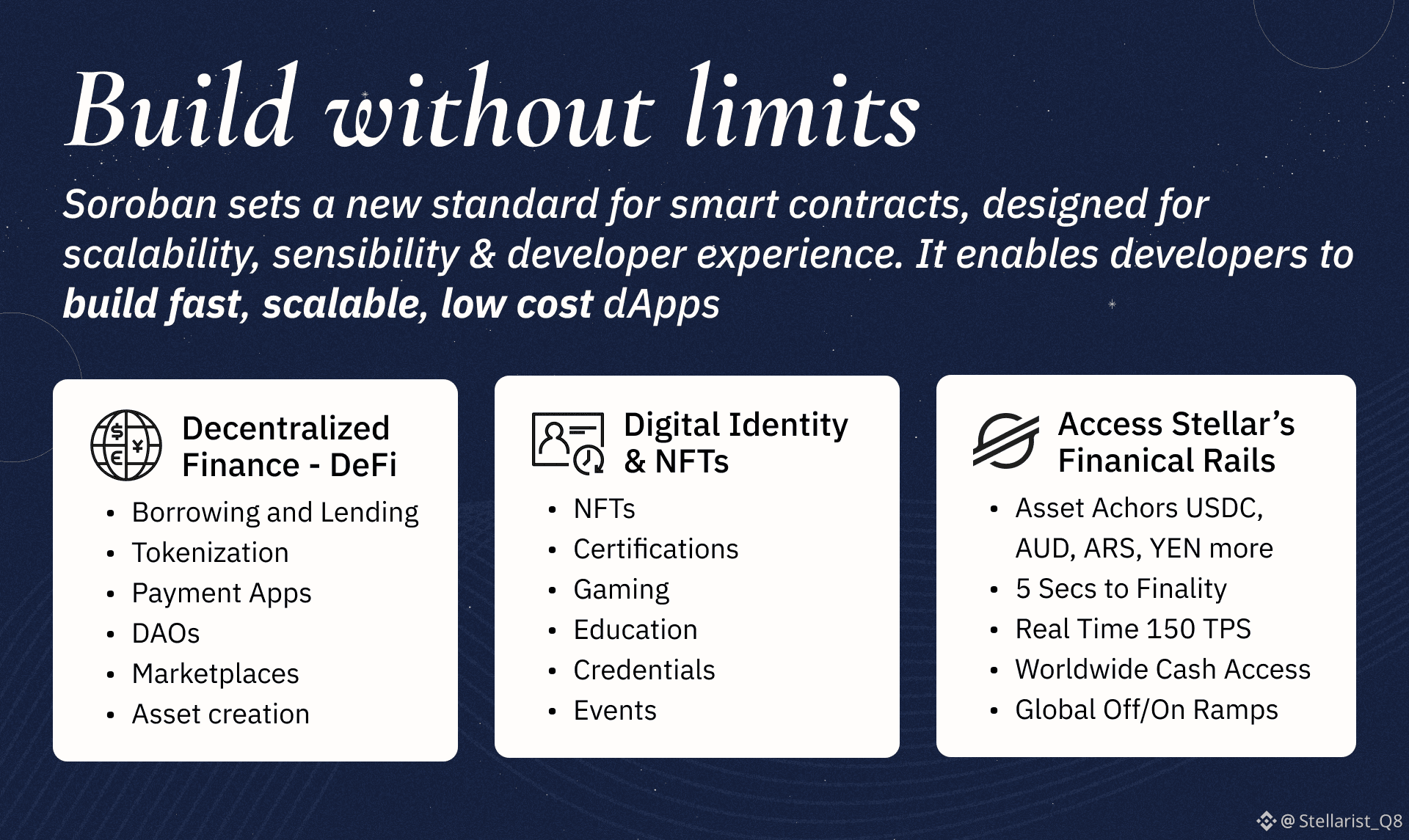
The ultimate goal of Soroban is to enable sophisticated financial applications that connect to real-world economies.
· Real-World Assets & Enterprise Finance: A core focus is on tokenizing real-world assets (RWAs) like stablecoins, bonds, and treasury products. Soroban aims to be the infrastructure for regulated, compliant financial instruments. Major examples include:
· The MiCA-compliant EUR CoinVertible (EURCV) stablecoin from Societe Generale.
· The USDY yield-bearing stablecoin from Ondo Finance.
· PYUSD, PayPal's stablecoin.
· Seamless Backward Compatibility: A unique strength is the Stellar Asset Contract (SAC) framework. It allows classic, non-smart contract assets on Stellar (like its native USDC) to be "wrapped" for use in Soroban dApps with over 95% less CPU/RAM usage and significantly lower fees than newly minted smart contract tokens.
· Ecosystem Support: The Stellar Development Foundation backs growth with a $100 million Soroban Adoption Fund and initiatives like the Soroban Audit Bank, which connects developers with pre-vetted security auditors.
🔐 Security & Privacy
Soroban incorporates features essential for institutional and personal use.
· Built-In Security: The Rust/WASM foundation reduces common vulnerabilities. The ecosystem also promotes formal audits through partnerships with firms like OpenZeppelin, which is creating secure, standardized contract libraries for Soroban.
· Enhanced Privacy Features: The platform supports advanced cryptographic functions using BLS12-381 curves, enabling applications with features like zero-knowledge proofs and confidential transactions.


💡 Key Takeaway
Soroban is not designed to compete for the most speculative DeFi applications. Instead, its goal is to become the most scalable, predictable, and cost-effective smart contract platform for regulated, real-world financial use cases, built on top of Stellar's existing global payment network.
