

In 2021, games that paid players were a huge thing. People didn’t know if it was good or bad. @Yield Guild Games was right in the middle of all of it.. At the time, it felt like a small miracle: a community-run guild that helped ordinary players access assets in blockchain games they couldn’t otherwise afford. For many people in emerging markets, it wasn’t just a game; it was a temporary form of income at a moment when the world felt unstable and employment uncertain. But even then, beneath the novelty, you could sense the model had an expiration date. As game economies cooled and token prices slipped, the idea of “playing to earn” started to feel stretched thin.
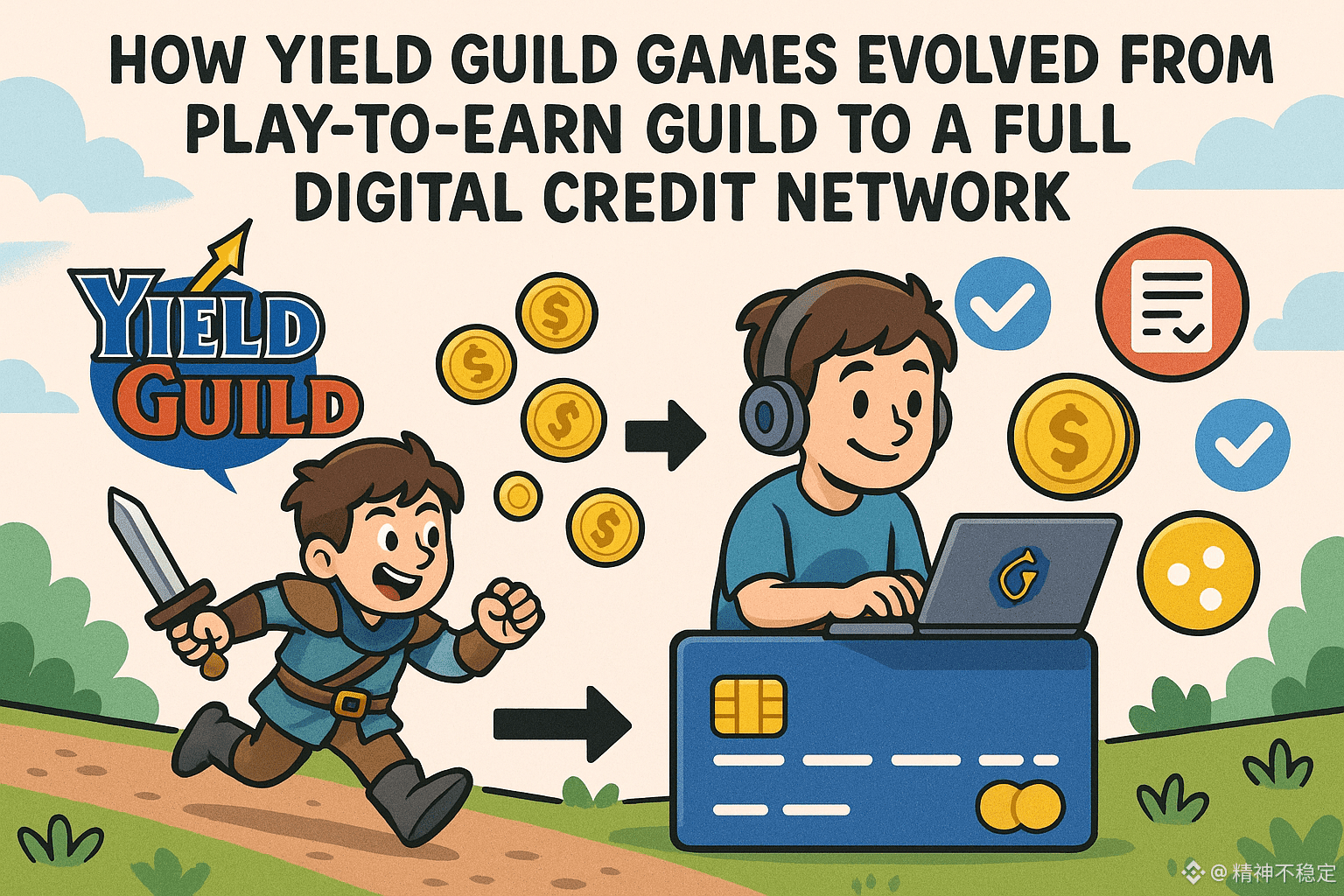
YGG didn’t disappear when the trend changed. It adjusted itself, almost like a creature learning to live in new weather. Now it acts more like a digital money-lending system that grew because people needed help, not because it wanted to be big.. I’ve always found that kind of evolution—rooted in survival and community feedback—far more compelling than any glossy whitepaper narrative. It suggests a group willing to listen, recalibrate, and accept that early assumptions might not hold.
The turning point came when the economic realities of blockchain gaming revealed themselves. Games weren’t designed to support thousands of players withdrawing value every day, and YGG could no longer rely on the original scholarship model as its primary engine. What emerged instead was a system focused on reputation, identity, and on-chain history. In a way, YGG began solving a problem it stumbled into: how do you build trust and credit in a digital world where people may never meet, and where their contributions aren’t always easy to measure?
The answer took shape in small steps, not sweeping announcements. First came ways for players to earn soulbound badges for verifiable participation—things like attending events, completing quests, or sticking with certain community programs. These weren’t flashy collectibles. They were receipts, almost mundane, showing that someone showed up consistently. Over time, these markers formed something resembling a digital credit profile. Not a score, but a story. And stories turn out to be surprisingly powerful in decentralized communities, where a person’s past actions matter more than their wallet size.
As more people built these on-chain histories, YGG started leaning into the idea that communities might be the best source of credit in the digital world. Members who proved reliable, helpful, or committed could access micro-advances, seasonal opportunities, or funded participation in new game economies without needing collateral. At first, I wasn’t sure this model could scale. But then again, traditional finance also began with small circles of trust long before banks existed. The difference now is that everything lives publicly on-chain, creating a kind of transparency that makes misuse harder and reputation more durable.
The shift also reflects a broader trend in Web3 today: a move away from speculation and a turn toward systems that behave like real tools. After years of projects chasing token-driven growth, we’re finally seeing builders ask tougher questions about utility and sustainability. YGG’s evolution fits neatly into this moment. It’s not glamorous to rebuild your core offering, especially when people still remember your original hype cycle. But this kind of reorientation tends to age better. It’s the difference between designing for a flash of attention and designing for a decade of use.
Blockchain gaming is rising again, not wildly like before but more thoughtfully. New games aim for quality, and people want setups that let players take part without borrowing money or chasing rewards. A digital credit layer, tied to real participation instead of speculation, feels strangely timely. It answers questions the industry didn’t know to ask three years ago. And that’s probably why YGG’s model resonates more today than during the heyday of play-to-earn.
I’ve talked with players who say the most valuable thing YGG offers now isn’t money or assets but belonging—something closer to professional development inside a digital ecosystem. A good reputation leads to new opportunities. Helpful behavior leads to more trust. And the rewards, while sometimes financial, often come in the form of access: early game tests, community leadership roles, collaborative work, and emerging pathways that look surprisingly similar to digital careers. The fact that these opportunities flow through on-chain identity adds a kind of permanence that traditional gaming communities rarely offer.
The system isn’t flawless. Digital credit is experimental, and there’s a risk of giving support to some people while making it harder for others But I think YGG is aware of this tension. Their approach feels iterative rather than absolute, more like a long conversation than a finished blueprint. And maybe that’s why I find it compelling. So many Web3 projects claim to have everything figured out. YGG seems comfortable admitting that it doesn’t—and that it’s learning as fast as the space shifts around it.
In the end, the story of Yield Guild Games is really a story about adaptation. It began as a bridge into expensive NFT games and became a network that helps people build economic identity online. That path wasn’t obvious at the start, but looking at the landscape now, it makes sense. The future of digital participation will need credit systems, not in the traditional financial sense, but in the community sense—systems that remember who you are, what you’ve done, and why others might trust you. YGG just happened to get there first, not by chasing a trend but by following the people who gave the guild meaning in the first place.
@Yield Guild Games #YGGPlay $YGG
