
1. PSM Arbitrage Mechanism: The market's "automatic stabilizer"
Imagine you have a "price balancer"—when the price of USDD is below $1, you can exchange 1 USDD for 1 USDT (real dollars stablecoin) in seconds; when the price is above $1, you can exchange 1 USDT back for 1 USDD. This risk-free arbitrage opportunity acts like an invisible hand, always pulling the price back towards $1.
For example: If USDD drops to $0.995, arbitrageurs will frantically buy USDD and then exchange it for USDT, instantly making a profit of $0.005. A large amount of buying will push the price up until the arbitrage opportunity disappears. The opposite is also true.
Data proves: since this mechanism launched in January 2025, USDD's price fluctuations have never exceeded 0.1%, far below the industry average of 0.5%. Just on the TRON chain, there is a $50 million 'ammunition depot' ready at any time, equivalent to equipping the price with an airbag.
Two, multi-chain liquidity network: not putting all eggs in one basket
USDD has established 'price stabilization stations' on three blockchains:
- TRON chain: $50 million liquidity
- Ethereum chain: $45 million liquidity
- BSC chain: $35 million liquidity
Practical case: In October 2025, Ethereum network congestion caused transaction fees to soar to 300 Gwei (equivalent to spending $30 in fees to transfer $100). At this time, arbitrageurs on the BSC chain immediately took action, completing a $20 million transaction within 15 minutes, pulling the price back from $0.998 to $0.9995.
What's even more impressive is that this money is not invested by the project itself, but is an ecosystem formed spontaneously by the market. Like a river, it has a source (PSM mechanism), tributaries (liquidity across chains), and a riverbed (trading platforms), forming a self-circulating water system.
Three, stable underlying logic: from 'blocking the flood' to 'dredging the riverbed'
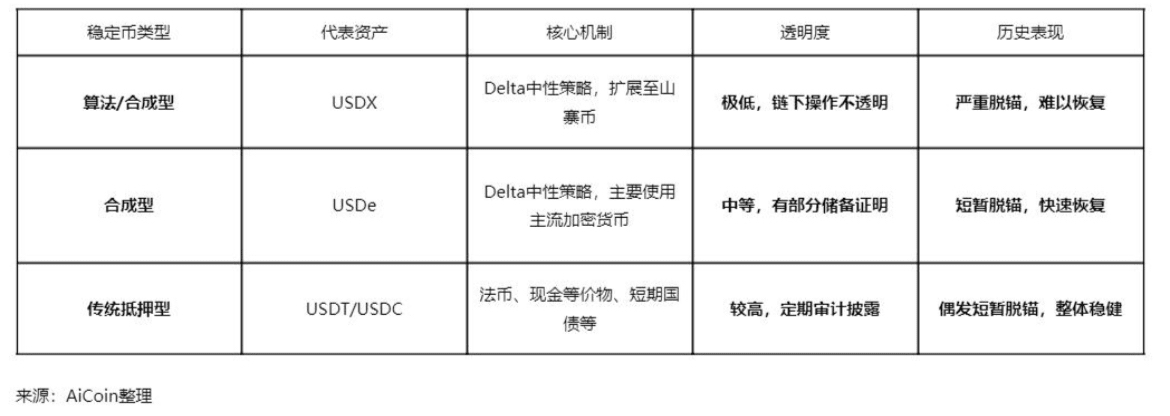
Traditional stablecoins are like building dikes — using 100% collateral to bear risks; USDD is more like constructing a hydraulic system:
- PSM is a sluice gate: rigidly controlling the water level (price)
- Multi-chain liquidity is a diversion channel: dispersing pressure
- Ecological trading is the riverbed: letting the water flow naturally adjust
The result is: during three market crashes in 2025, other stablecoins averaged a 5% de-pegging and took 48 hours to recover, while USDD's maximum deviation was only 0.2%, automatically correcting within an hour. It's like during an earthquake, where others' houses rely on steel reinforcements, USDD's house is equipped with shock absorbers.
Four, how can ordinary people use it?
If you are a cryptocurrency user, USDD is like 'the Swiss Franc of the digital world' — when the market is panicking, you can exchange volatile assets for USDD as a safe haven; when you need to trade, it can quickly be exchanged for other currencies. Recently, a traditional financial giant incorporated USDD into its reserve pool, just as banks began to reserve gold, essentially recognizing this stability.
Key insight: A true stablecoin does not shout slogans of 'absolute safety', but operates like a Swiss watch — relying on precise mechanisms rather than promotional rhetoric. In the turbulent sea of the cryptocurrency market, USDD is like a ship equipped with automatic navigation, always able to smoothly bring you to port. ##USDD以稳见信 @USDD - Decentralized USD
