
Europe’s Top Fintech Opens a New Chapter for Injective and Global Digital Asset Use

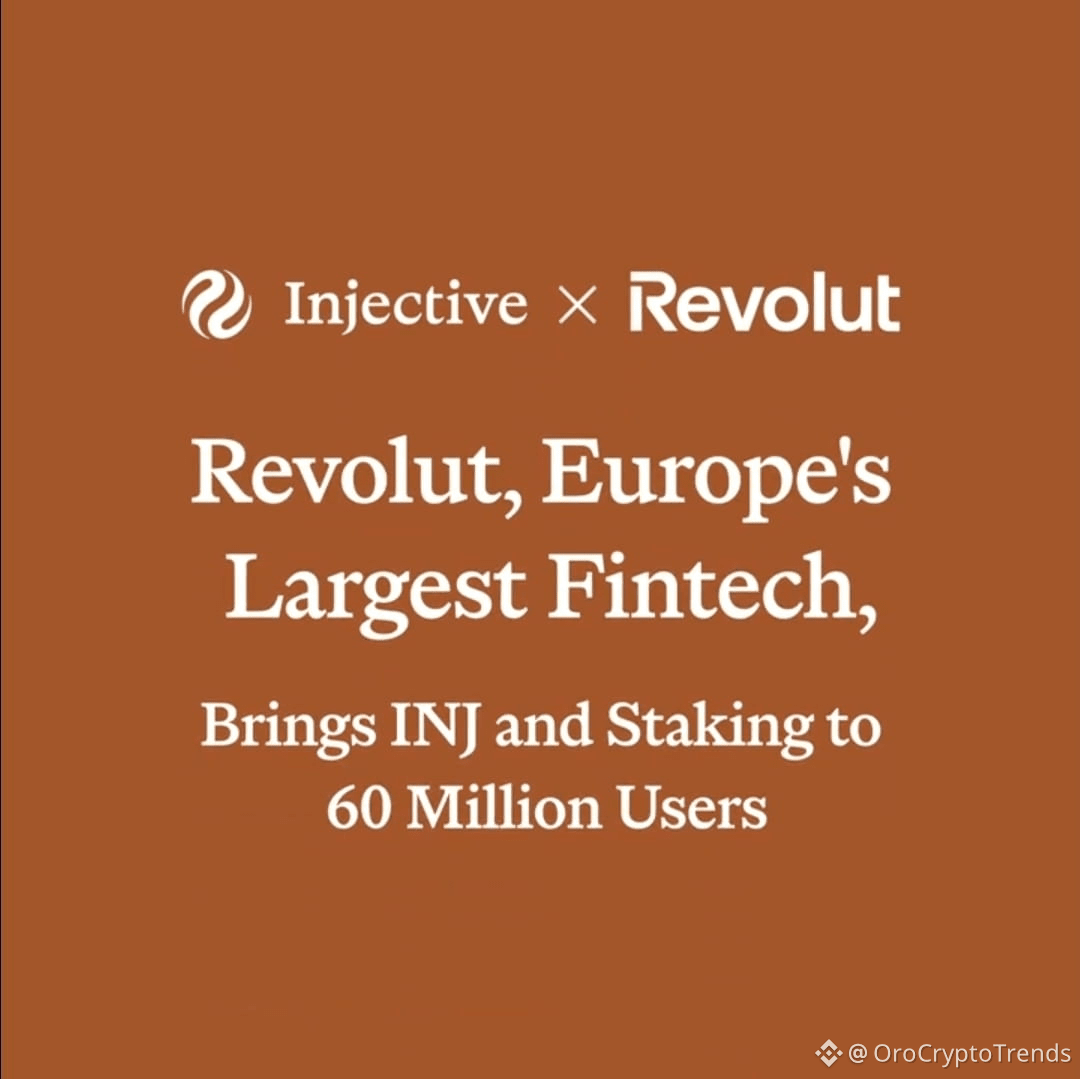
Revolut’s addition of INJ trading and free staking is a move toward blending fintech and decentralized finance.
Introduction
The financial world is changing because of digital assets, driven by infrastructure. When a platform with over sixty million users and billions of dollars in assets decides to back a new on-chain system, it has a big impact. Revolut's support for INJ and zero-fee staking shows a strategy where traditional finance and blockchain work together. This puts Injective at the center of fintech and decentralized finance, showing how institutional reach and on-chain design can support each other.
Revolut wants to create a global banking standard that meets the speed and needs of digital users. Injective aims to build an open, connected network for derivatives, liquidity, and decentralized exchange. These goals seem different, but they share a common aim: to build systems that work on a global scale and reduce barriers to financial access.
Listing INJ on Revolut puts this alignment in the spotlight. Revolut isn't just adding another digital asset; it's providing a way to buy, store, and stake the token. Zero-fee staking is key because it encourages users to participate actively. Traditional platforms often charge for staking, but Revolut makes it a standard feature. This suggests staking is becoming a regular part of finance.
For Injective, being on Revolut helps the network grow. Developers in the Injective system often struggle with distribution, not innovation. Revolut's integration simplifies the path from awareness to use. Now, users can find Injective, buy INJ, and start staking within a familiar interface. This is different from earlier crypto adoption, where each step needed special tools and knowledge.
This listing matters for institutional adoption too. Revolut's users include both retail customers and professionals. Having INJ available shows that decentralized infrastructure is becoming more accepted as part of financial portfolios. Institutions are usually careful but tend to follow platforms that lower risk. Revolut's processes act as a signal that the asset is ready for regulated fintech operations.
This mix of traditional and decentralized finance isn't just about access. It balances centralized convenience with decentralized control. Revolut's system offers simplicity and protection. Injective's on-chain design offers openness. When these systems connect, users get the best of both worlds: convenience without losing decentralization, or a way to start using on-chain tech.
The impact of these integrations will depend on whether platforms like Revolut stay as gateways or become hubs for more complex interactions. If staking is the first step, future steps could include access to on-chain apps or ways to move assets into decentralized systems. Each step changes how people see digital assets, from investments to useful parts of finance.
Market activity may also change as liquidity grows. Revolut brings in new buyers and users who hold for longer, reducing aggressive trading. This influences volatility and staking rates, affecting the token's role in the Injective system. As staking increases, the network gets more secure and supports more advanced apps. Revolut is expanding access and strengthening the network.
This development also tells a bigger story. For years, the idea of traditional and decentralized finance merging was just that—an idea. Revolut's listing of INJ and zero-fee staking indicate this is starting to happen. The infrastructure of Web2 fintech can improve Web3 system usability without changing its core features. Both sides keep their identities but create a new financial design.
Still, people must be both excited and cautious. Using centralized platforms involves some compromise. Users who stake through a custodian don't directly secure the network and might not experience all aspects of on-chain participation. Relying on big platforms can also create risks if there are outages. Also, quickly adding new users might increase exposure to market swings. These risks aren't reasons to avoid adoption but reminders to be careful.
The big question is whether these integrations can reshape trust in financial systems. Trust has relied on institutions, but blockchain suggests trust can come from code. Fintech platforms like Revolut operate between these ideas, offering reliability while adding decentralized tech. Injective designs a world where financial systems are open. The collaboration between these worlds questions whether trust will be based on companies, protocols, or both.
As Revolut and Injective continue their goals, their connection shows a wider change. The old lines between banking, fintech, and decentralized networks are fading, creating a version of finance where users interact with both centralized and decentralized systems without noticing. This won't happen at once, but each integration moves the industry closer to that future.
Conclusion
Revolut’s listing of INJ and zero-fee staking are more than just app features; they are steps toward a financial system where traditional and on-chain systems support each other. By making participation easier, Revolut expands Injective’s reach and shows that decentralized infrastructure is ready for mainstream finance. Trust in finance may come from this combination, where reliability and openness create a new standard for global participation.
To see how fintech and on-chain finance are merging, explore Injective’s system, examine Revolut’s staking, and think about how these changes show a new financial design. Engaging with platforms that connect these worlds gives insights into the next phase of global markets.
FAQs
What does Revolut’s listing of INJ mean for users?
It lets users buy, sell, hold, and stake the asset in a familiar place, making it easier to enter the system.
Why is zero-fee staking important?
It makes it easier for users to participate by letting them keep their full staking yield without deductions.
How does this integration help the Injective system?
More visibility, easier access, and growth in staking help with network security and ecosystem growth.
Is staking through Revolut different from staking on-chain?
Yes, staking through a custodian offers convenience but less direct control than on-chain staking.
Will this increase institutional interest?
Revolut’s standards make it simpler for institutions to get exposure to INJ within a trusted setup.
Disclaimer: Not Financial Advice
