
Injective is much more than a blockchain protocol built for finance—when you really understand it, it feels like a bridge between what we thought was possible and what now feels inevitable. Instead of trying to be a general‑purpose network that does everything for everyone, Injective has a clear, focused purpose: to make decentralized finance fast, accessible, interoperable, and truly usable in the real world. And over time, that intention has touched countless developers, traders, and crypto enthusiasts who believe that financial freedom should be fast, open, and fair for all.Injective started as a vision in 2018, where founders asked a powerful question: What if finance worked differently—what if it worked for everyone, not just a few? This spark didn’t come from chasing trends or hype; it came from a desire to rebuild the foundations of financial systems in a decentralized way, and that’s something deeply human. It’s about possibility as much as it’s about technology. Injective began its journey supported by Binance Labs and slowly turned that dream into a full‑blown mainnet launch by late 2021, giving birth to an ecosystem where anything from trading to complex financial instruments could exist in a permissionless world.
At its core, Injective is a Layer‑1 blockchain designed specifically to support decentralized finance (DeFi) without compromise. That means the network is fast, secure, and highly interoperable with other blockchains. Unlike many other chains that adapt to DeFi after the fact, Injective was born with finance at its heart. It isn’t asking users to sacrifice speed for decentralization or giving up accessibility to gain performanceit offers both together in one place. What makes Injective so remarkable is not just the technical specifications, but the feel of it. When developers build here, they don’t feel like they’re hacking around limitations—they feel empowered to create. When traders interact with markets, they don’t feel handicapped by slow confirmations and high fees—they feel free. And when communities come together to govern the network, they feel connected to the future they’re building.
Injective was built using the Cosmos SDK, a framework that allows developers to create customized application‑specific blockchains. This gives Injective the ability to tailor its features directly toward financial use cases while still supporting strong decentralization and interoperability. At its consensus layer, Injective uses a Tendermint‑based Proof‑of‑Stake system that enables validators to confirm transactions quickly and securely, offering near‑instant finality and high throughput. This architecture supports thousands of transactions per second while maintaining a high level of security and reliability. One of the most powerful aspects of Injective is its interoperability. Instead of being isolated, the network connects to other blockchains through the Inter‑Blockchain Communication (IBC) protocol and various bridging technologies. That means assets and data can move from chains like Ethereum, Solana, and other connected ecosystems into Injective and back, expanding liquidity and giving users the freedom to interact across ecosystems rather than being locked into one silo. Injective’s decentralized bridges allow Ethereum assets, for instance, to come onto the network without centralized authority, enhancing the network’s openness and permissionless nature.
Moreover, Injective includes a set of plug‑and‑play financial modules that act like building blocks for developers. Instead of reinventing the wheel, developers can build decentralized exchanges, markets for derivatives, lending protocols, and more using these pre‑integrated components. This simplifies development and accelerates innovation, meaning that creators spend more time building impactful applications and less time wrestling with infrastructure. This modular design reflects a thoughtful approach to development that places human creativity and utility at the center. The heart of the Injective ecosystem is its native token, INJ. This token isn’t just a speculative asset, it’s deeply woven into how the network functions. INJ serves multiple roles: it is used to pay transaction and trading fees throughout the ecosystem, it’s staked by validators and delegators to secure the network, and it enables holders to take part in governance decisions. Governance here means that INJ holders can propose and vote on changes to the protocol, from core upgrades to economic parameters. This creates a sense of shared ownership and collective purpose; everyone holding INJ has a voice in shaping the future of the network.
One of the most innovative aspects of INJ’s tokenomics is the deflationary mechanism. A portion of fees collected across the network, including trading fees from applications built on Injective, is periodically bought back and burned. This means those tokens are permanently removed from circulation, potentially increasing scarcity over time. This system encourages long‑term value capture and aligns the incentives of users, developers, and token holders toward supporting a vibrant and thriving ecosystem. Beyond the core protocol lies an ecosystem that is evolving and expanding. Injective supports decentralized exchanges where users can trade assets without custodial risk, thanks to its decentralized on‑chain order book. This model offers traders control over their own funds and transparent markets without relying on centralized intermediaries, reflecting a deep commitment to decentralization and user empowerment. The same order book model also opens the door to spot trading, derivatives, futures, options, and other complex financial instruments that traders once only found on traditional finance platforms.
What makes this truly meaningful is not just the range of financial tools, but how they connect. DEXs built on Injective can share liquidity thanks to the network’s design, so new applications don’t struggle for volume and depth—they benefit from a shared economic environment that supports robust activity. This interconnected liquidity helps reduce barriers to entry for new creators and fosters a sense of shared community success rather than competition between isolated platforms. At a deeper level, Injective’s design tackles some of the practical challenges that many DeFi platforms face. For example, systems like frequent batch auctions help protect users from front‑running—a situation where malicious actors exploit transaction ordering to gain financial advantage. This sort of innovation reflects a sincere effort to make markets fairer and protect ordinary users from drawbacks that have plagued decentralized exchanges in the past.
Injective also understands the importance of smart contract flexibility and developer choice. The network supports CosmWasm, a smart contract platform for the Cosmos ecosystem, and is compatible with EVM environments, meaning developers familiar with Ethereum tooling can deploy Solidity‑based applications or interact with Cosmos‑centred projects. This dual compatibility creates a welcoming environment for developers from different backgrounds, helping to enrich the ecosystem with diverse ideas and use cases. From a user’s perspective, interacting with Injective can feel fluid and empowering. Transactions settle quickly, fees are low, and there’s a sense of participation in a world where financial operations can be transparent and decentralized. You don’t have to trust a central intermediary with your funds—you’re interacting with a network secured by a decentralized set of validators, where every action you take is under your control. This experience resonates with the original promise of blockchain technology—where ownership, access, and opportunity are extended to everyone, not just a select few.
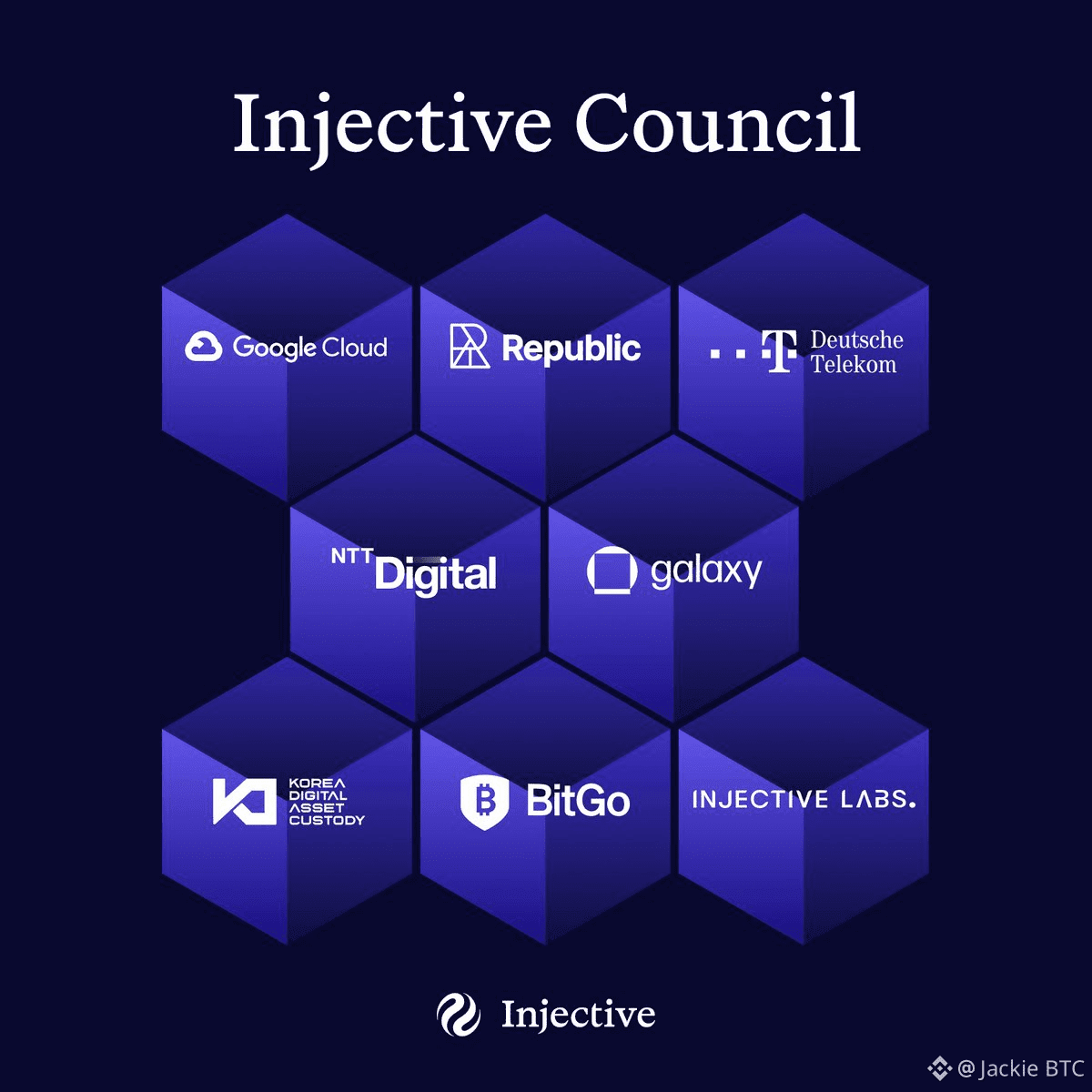
Underlying all of this is a community‑driven governance structure. Decisions about how Injective evolves aren’t made by a single entity sitting behind closed doors. They’re made by the people who hold and stake INJ tokens, through on‑chain voting. Whether it’s adjusting inflation, changing parameters, or introducing new features, this community governance model ensures that the protocol evolves in a way that reflects the needs and values of its participants, not the interests of a centralized group. The human impact of Injective goes beyond just financial tools. It represents a shift in how we think about financial systems—toward ones that are permissionless, accessible, and interconnected. People all over the world, regardless of geography or background, can participate in financial markets with the same tools that once were available only to big institutions. That’s a profound change, one that injects hope and possibility into the hearts of users and creators alike.
As the Injective ecosystem continues to grow, new upgrades, innovative applications, and deeper cross‑chain connections are being developed. These ongoing improvements reflect a living project that isn’t static, but responsive—it evolves with the needs of its users, the vision of its community, and the broader progress of decentralized finance.In many ways, Injective feels like more than a blockchain. It feels like a movement toward a more open financial future, where financial barriers are softened, creativity is unleashed, and users are given tools to build and grow with confidence. Whether someone is building the next generation of DeFi applications or simply trading assets in a decentralized way, Injective provides an environment that feels alive, intuitive, and welcoming.And at the heart of that is a simple, powerful idea: finance shouldn’t feel restrictive—finance should feel free, fair, and accessible to all. Injective doesn’t just build technology to support that idea—it lives it every day.


