APRO Oracle is one of those projects that appears at a moment when blockchains are finally starting to grow beyond simple finance and moving toward more complex interactions with the real world. Many people in crypto talk about real world assets, automated contracts, and AI agents, but all of these things depend on one requirement that is very easy to ignore. The requirement is reliable facts. Without real facts, smart contracts cannot act with confidence. Without reliable facts, tokenized assets cannot settle correctly. And without verified information about events, AI agents built on Web3 cannot take safe actions. APRO tries to step into this space with a mix of simple goals and strong technical depth. The goal is to bring real usable information to blockchains in a way that is trustworthy and easy for developers to work with.
The interesting thing about APRO is that it tries to handle information that is messy. Most oracle systems focus mostly on numbers and simple price data. These numbers are useful for trading markets, lending markets, stablecoins and liquidity pools. But the world outside blockchain is not built only on numbers. It is built on reports, documents, news, events, claims, and statements. A court ruling is not a number. A government announcement is not a number. A company posting earnings is not a number. Even a partnership statement between two projects is not a number. These things require reading, interpreting, understanding, and verifying. APRO tries to pull information from these sources and turn them into clear facts that a contract can understand.
The challenge is that information on the internet is noisy. Articles may be misleading. Content may be unclear. Sources may conflict. APRO tries to extract information from unstructured sources and then pass that information through a process where multiple nodes in the network check the same thing. Instead of trusting a single data provider, APRO requires several independent participants to reach an agreement about what the correct information is. The final result is written to a blockchain in a format that is easy to verify.
Another quality of APRO is that it wants to attach more context to each data point. Not just a simple truth statement but also the source of the information, how confident the network is, and how the information was processed. This approach is important because in the world outside crypto, information is rarely absolute. There are often varying levels of certainty. A smart contract may not always need full certainty to move forward. It may only need enough confidence to make a decision or trigger the next step. By including context and source information, APRO helps developers build better risk controls around how information is used.
The AT token is part of the system. It is used to pay for data requests and to encourage node operators to behave correctly. Staking is required for nodes so that they have something to lose if they behave dishonestly. Demand for facts creates demand for the token because people need AT to use the network. This is a simple system but it works well when the network is actually used. The long term value of AT depends on whether enough projects decide to rely on APRO for real work. If projects only speculate on the token but do not use the feeds, then the token stays mostly as a trading asset. The main thing to watch is the number of real integrations that use APRO data.
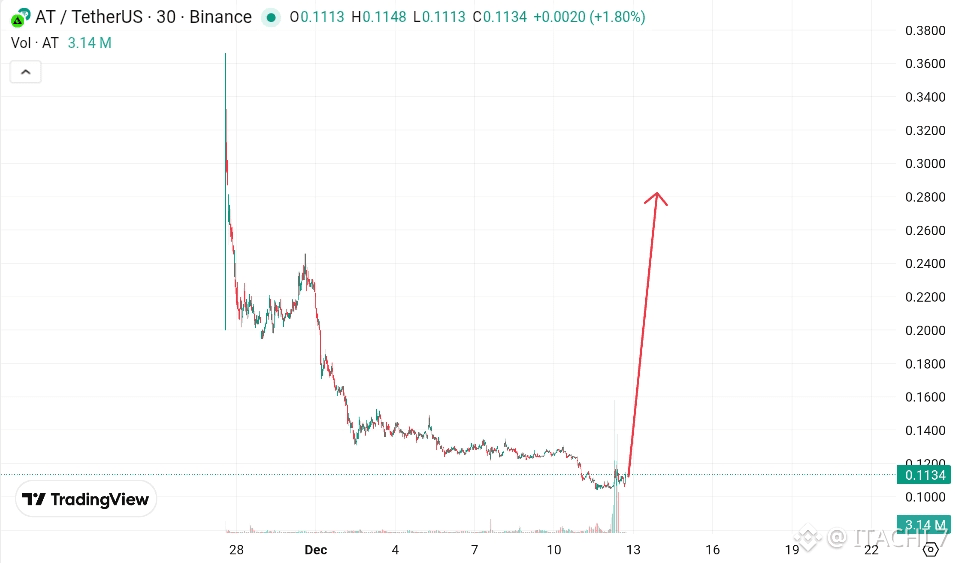
Another major point is the environment in which APRO is growing. By late 2025 there is strong interest from exchanges in promoting new projects, especially ones that fit large trends like real world assets and cross chain systems. APRO has been featured in several promotional campaigns which increased attention and liquidity. These campaigns help introduce the token to new users but they do not guarantee real usage. They serve as an amplifier rather than proof of adoption. What matters is whether APRO becomes a tool that developers actually use to power their apps.
A project like APRO must also think about security. Getting facts wrong can cause major losses. Imagine a prediction market that settles incorrectly or an asset payment triggered on a wrong event. APRO tries to protect itself by using several independent nodes. The idea is that a single node might be wrong sometimes but many nodes agreeing on the same answer is harder to trick. Also, it becomes important to have transparency in how information is collected and processed. If the steps are unclear, then trust is harder to build. Developers will want to verify the process before relying on it for anything important.
Another challenge comes from the idea of model errors. Extracting information from text in the real world can be tricky. Words can be vague. Articles can be intentionally misleading. Bad actors can publish false content. APRO needs to make sure that it does not accept information blindly and that it can defend itself from attempts to feed false data into the system. The more important the network becomes, the more people will try to attack it. Keeping high quality results requires constant monitoring, updating, and auditability.
When comparing APRO to other oracles, the difference becomes clear. Most oracles focus on simple numbers. Some oracles focus on specialized information like sports events or weather. APRO is trying to be something closer to a general truth system that can read the world and return structured statements to a blockchain. If it delivers on that idea, it could become a core part of many newer blockchain applications, especially those that interact closely with the real world.
The market risk is also easy to understand. A new token with a lot of exchange promotion often moves quickly up and down as speculative traders enter and exit. This does not reflect the long term value. The long term value depends on the steady use of AT by real users who lock the token for staking or buy it to request data. Tracking exchange flows helps but on chain activity tells the real story. Watching the number of requests, the number of active nodes, and the number of partner integrations can help people understand whether the adoption is real.
For builders, APRO seems promising but must still prove itself. Developers need an easy way to test the data, confirm its reliability, and understand the limits of the system. APRO has publicly shared documentation and sample code which helps adoption. But developers will still judge it based on performance, clarity, stability and uptime.
For enterprises and institutions the requirements are higher. They want to see external audits, uptime guarantees, clear legal structures and reliable dispute resolution methods. If APRO can meet these needs, it can access markets that traditional crypto oracles have struggled to enter. Real world institutions want strong evidence and clear accountability. If APRO produces that, it can become a preferred data partner.
From a general perspective, the overall idea behind APRO matches a larger trend in technology. There is a push to bring more forms of real world activity onto blockchain systems. This includes tokenized bonds, property documents, supply chain records and more. All of these need accurate verification of events that happen outside the chain. APRO offers a way to translate those events into something a contract can understand.
A long term view suggests that if blockchains grow into infrastructure for finance and industries, then projects like APRO will sit at the core. The world is full of unstructured information and turning that information into reliable facts is difficult. A network that can do this correctly can become very valuable.
In conclusion APRO stands as an ambitious project that wants to solve a real problem. It is still early but the demand for what it offers is very real. The next steps will determine everything. Adoption, transparency and reliability will decide whether APRO becomes essential or fades among competition. For now it remains one of the more interesting oracle projects because it addresses a gap that has existed for a long time in the blockchain world.