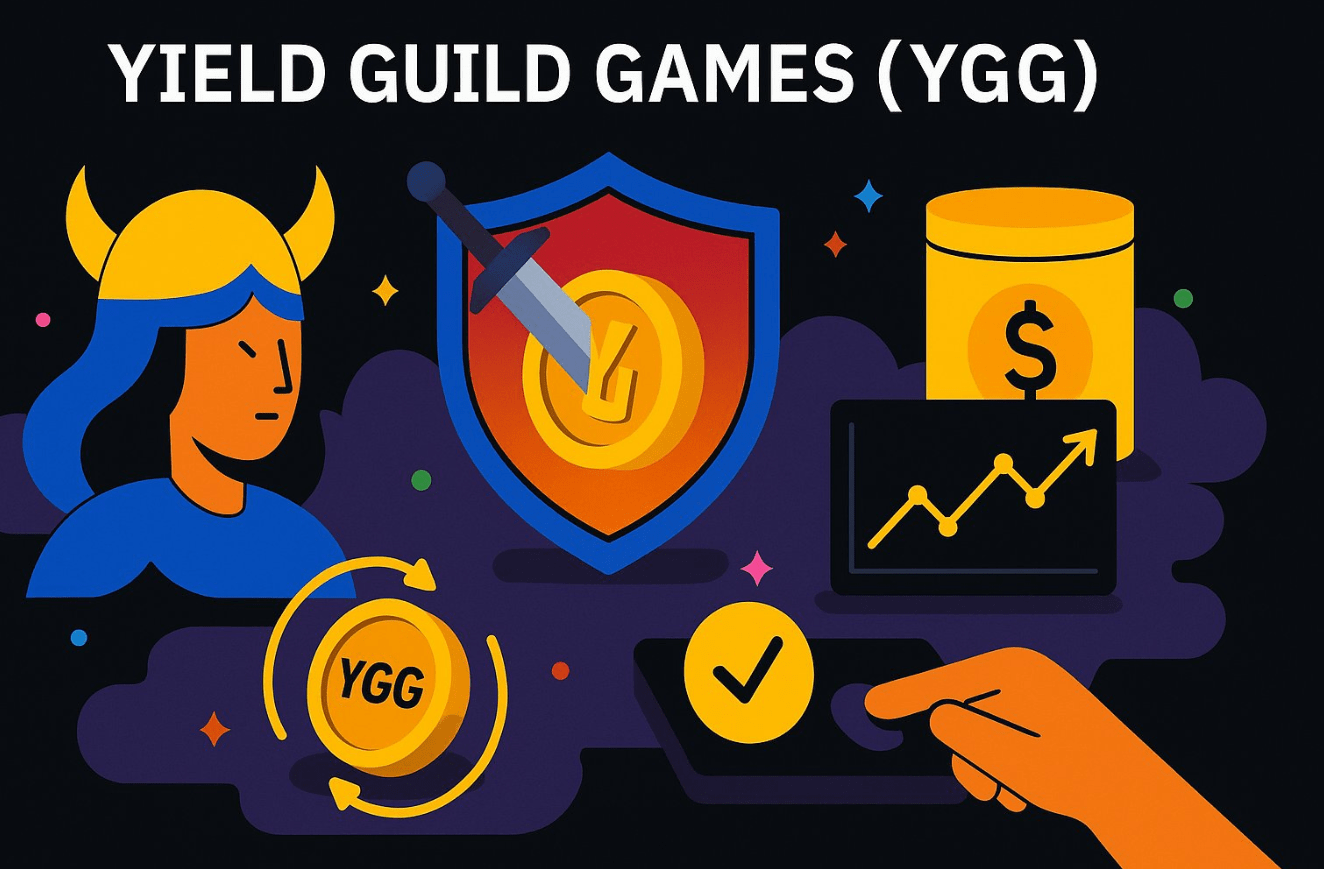
Do you remember when YGG became popular in the blockchain gaming circle with the 'NFT rental-gold sharing' model? Back then, the story was simple: the guild provided equipment, players provided time, and everyone shared the earnings. But this model was too fragile—when the game fails, the entire cycle collapses.
YGG is no longer the guild that relied on 'scholarships' to survive. It is quietly building a new four-layer ecosystem that transforms Web3 games from 'gold farming factories' into 'digital entrepreneurship training camps.'
1. It's not just about playing games, but about building an ecosystem
YGG's four pillars are very interesting now:
Layer one: Issuing and discovery platform
YGG Play now resembles a curated store for Web3 games, specifically selecting those that have genuine playability and clear on-chain economic models. They no longer chase after AAA titles that promise big, but focus on 'lightweight decentralization' - short, fast, replayable games with clear revenue cycles.
Layer two: Player promotion system
In the past, player value = online duration; now YGG has initiated a 'guild upgrade plan'. Completing tasks, improving skills, and progressing through seasons - all of these will be recorded on-chain, forming your digital resume. You are no longer a gold farming machine but a digital worker accumulating verifiable credentials.
Layer three: Local sub-DAO network
YGG supports local communities to operate like startups in various regions. The Philippines, India, Latin America... these sub-DAOs understand the local market, can operate flexibly, and share YGG's brand and infrastructure. This is like a 'franchise' model for Web3 games.
Layer four: Token economy supported by real income
The most tangible change is here: The repurchase funds for $YGG now come directly from the real income of games. For example, a seemingly simple mini-game like (LOL Land) has already generated millions of dollars in revenue, a portion of which automatically enters the YGG treasury for token repurchases. The economic model is finally no longer entirely reliant on inflationary subsidies.
2. YGG Play: Proving that 'fun' and 'profit' can coexist
Just look at a few of the games they promote and you'll understand:
(LOL Land) is a fast-paced board game that plays like an accelerated version of Monopoly. Simple, addictive, but cleverly designed - it proves that even a 'mini-game', as long as the economic model is well-designed, can generate sustainable income.
(GIGACHADBAT) is backed by Delabs Games, a Korean team with a solid Web2 gaming background. They know how to make games fun and naturally integrate on-chain economics.
(Waifu Sweeper) (Minesweeper, but with Waifus) is even more interesting - it is genuinely a strategy game that requires thought, and your decisions directly impact earnings. This is what 'skill earning' is about, rather than mindless clicking.
For players: You no longer have to endure poor gaming experiences just to earn that little bit of tokens. You can first enjoy the fun of the game, while the on-chain aspect simply makes your progress and assets more transparent and transferable.
For YGG: Every successful game has become a small economic engine - capable of supporting creators, feeding back into the entire ecosystem, and strengthening the value support for $YGG.
3. Turning players into entrepreneurs and creators into businesses
The most disruptive aspect of YGG is that it redefines the identity of participants.
Players are no longer 'users', but 'early entrepreneurs'. Your gaming time, completion records, and community contributions have all become verifiable assets. Through the guild promotion system, you can gradually evolve from a novice to a senior player, and then to a community leader - this path is clear, like a career advancement channel.
Creators are no longer 'promoters tweeting'. At the YGG Play summit (now one of the largest Web3 gaming events globally), they hold workshops for creators: teaching how to design economic models, how to find collaborations, and how to build personal brands. This is genuinely training digital entrepreneurs.
The entire process is designed very clearly:
Play a game → Complete a task → Accumulate on-chain records → Gain attention → Connect with project parties/brands
This is not 'play-to-earn'; this is a complete closed loop of 'play-learn-build-earn'.
4. The infrastructure beneath the surface: The 'operating system' of on-chain guilds
Don't be fooled by YGG's surface-level focus on games and events; underneath, they are building a solid infrastructure:
Guild protocols - allowing any community to manage members, allocate tasks, and distribute rewards using smart contracts, eliminating the need for cumbersome Excel sheets and Discord bots.
On-chain guild tools - equivalent to providing guild organizers with a complete SaaS system: governance module, fund management, task publishing... all standardized.
Ecosystem funding pool - YGG systematically invests funds into game development, creator support, and liquidity provision, then regularly repurchases $YGG with the revenue generated.
What does this mean?
If you are a game community that wants to do things seriously, you don't have to start from scratch. By integrating into the YGG system, you can focus on what you do best - planning events, cultivating players, and producing content, while logistics and infrastructure are handled by the protocol layer.
5. Why this feels like 'entrepreneurship' rather than 'side jobs'
The longer I observe YGG, the more I feel it is cultivating an entrepreneurial mindset:
Players begin to think: How can my gaming time turn into sustainable assets? How can I monetize my skills?
Content creators begin to think like media companies: How to plan a content calendar? How to collaborate with multiple games? How to design revenue sharing?
Regional leaders in sub-DAOs make decisions like founders: How to expand into local markets? How to manage communities? How to allocate resources?
Narrowing it down, YGG is no longer just a 'gaming guild'. It is a multi-tiered digital entrepreneurship network - thousands of small digital businesses (players, creators, communities) are connected through the same token economy, the same set of tools, and the same brand.
6. What I believe YGG truly wants to become
My judgment is: YGG's ultimate goal is not to be the 'largest gaming guild', but to be the coordination layer and infrastructure provider for Web3 games.
YGG Play is responsible for game publishing, discovery, and initial economic activation.
Guild protocols are responsible for the infrastructure of organization and incentivizing people.
Summits and educational content are responsible for industry narratives, talent development, and resource connections.
The token economy is responsible for connecting all these activities to the same value loop.
YGG is transforming from a 'star project of the play-to-earn era' to a 'builder of the infrastructure for Web3 games'. It may not be the one trending every day, but it is quietly building in the areas where the industry needs structure the most.
If the future of Web3 games is indeed a transition 'from players to digital entrepreneurs', then what YGG is doing is providing training camps, toolkits, and launching platforms for this new batch of entrepreneurs - one task at a time, advancing through collaborations with creators.
This is no longer a story about games, but a story about the transformation of work, organization, and value creation methods in the digital age. And YGG is building the stage at the center of this story.
@Yield Guild Games #YGGPlay $YGG