
I have been trading cryptocurrencies for over ten years, from liquidation to achieving financial freedom now, supporting my family through trading. In 2024, my capital increased by 50 times.
If it weren't for withdrawing funds twice to buy a house in between, it should have been 85 times.
Today, I will share my trading strategies and insights with friends in the cryptocurrency circle.
There is a saying: standing on the shoulders of giants allows you to achieve ten years less struggle.
At the end of the article, I will also talk about the most important position management.
For those who are destined to see and want to improve their cryptocurrency trading skills, make sure to read carefully and study thoroughly. It's recommended to bookmark!
Are there any friends like me, who relied heavily on moving averages when starting trading? Seeing the price test the moving average multiple times and bounce back made me feel that it would definitely be the same this time, so I rushed to enter the market, but the result often turned out to be contrary, with the price going directly towards loss, and then I had to stop-loss and exit.
Today, I will reveal the four truths behind moving averages, all based on real practical experiences that have been summarized from pitfalls. Understanding these will increase your winning rate when trading with moving averages.
01
There is no 'universal moving average parameter.'
Choose 20, 50, and 200 moving averages based on trends.
As long as you have studied technical analysis, you have probably heard of the 'myth' of the 200 moving average—many people regard it as a standard, thinking it is the most effective moving average. As long as the price retraces to the 200 moving average, it will definitely rebound immediately.
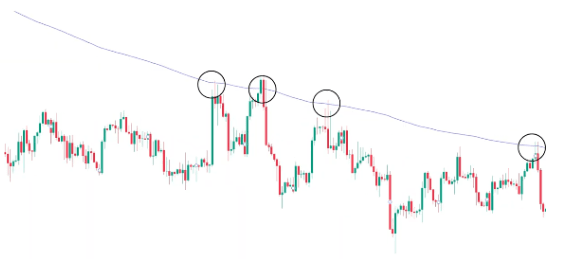
But I want to tell you, this is a misconception!
The moving average parameters do not have a 'best' version; the key is to adjust according to market trends. Different trend strengths require different moving averages, and I have organized the most practical combinations for you in real trading:
1. For strong upward/downward trends: use the 20 moving average. For example, if the price is in a strong upward trend, you will notice that every time the price touches the 20 moving average, it continues to rise. The 20 moving average can accurately keep up with the rhythm of strong trends, helping you catch the main upward wave;
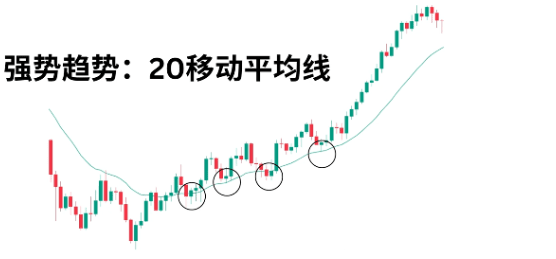
2. Healthy upward trend (deep retracement): Use the 50 moving average. If the trend is healthy but the retracement is large, using the 20 moving average will not be effective—price will oscillate around the 20 moving average and will not 'respect' it at all.
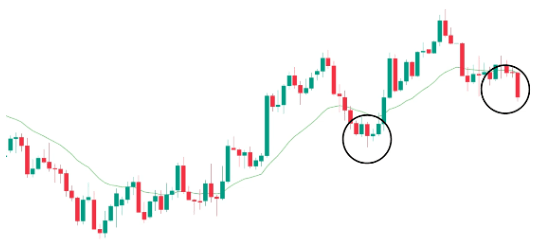
At this time, switching to the 50 moving average is appropriate, as it can better determine trends and find entry points;
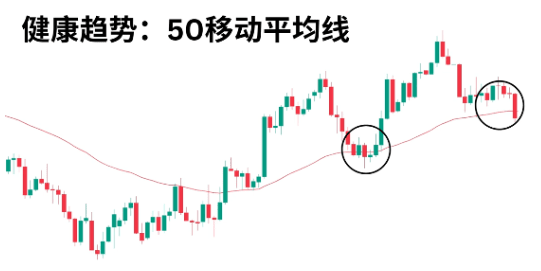
3. Weak trend (gentle rise or fall): Use the 200 moving average. If the price movement is relatively gentle, whether it is a slow rise or slow fall, the reference significance of the 200 moving average is very high. Moreover, the core function of the 200 moving average is to judge the overall trend: if the price is above the 200 moving average, it indicates an overall upward trend; if it falls below the 200 moving average, it is highly likely that the trend will reverse to downward.
To summarize: don't stubbornly cling to one moving average parameter. Use 20 for strong trends, 50 for healthy trends, and 200 for weak trends; choose based on the trend to maximize the function of the moving average.
02
Moving average crossovers are not 'guaranteed signals for price rise or fall.'
It is important to filter with the larger trend.
Many beginners have a misconception: as long as they see a moving average crossover, such as the 50 moving average crossing above the 200 moving average, they believe the price will strongly rise.
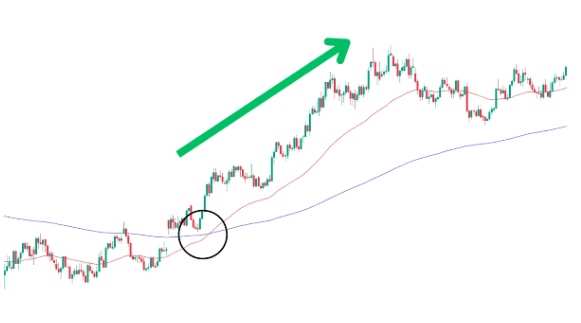
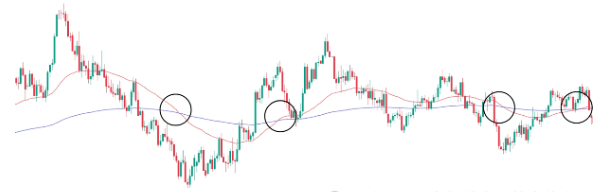
But in practice, you will find that moving average crossovers occur very frequently. Most of the time, they are invalid signals, and entering blindly will only lead to repeated stop losses.
To improve the winning rate of moving average crossovers, the key is to use longer-term moving averages to judge the overall trend and then use shorter-term moving average crossovers to find entry points.
For example, we use the crossover of the 20 and 50 moving averages to find opportunities.
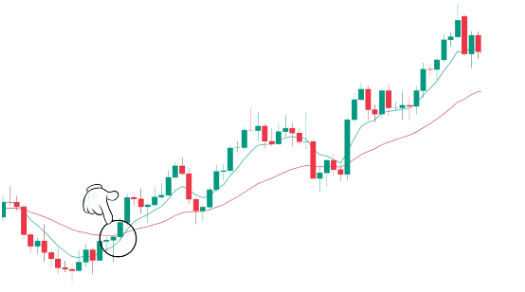
When the 20 moving average crosses above the 50 moving average and a bullish signal appears, do not rush to enter; first check the 200 moving average.
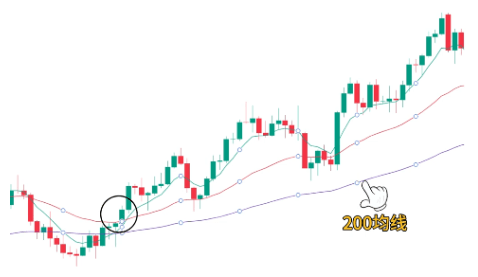
If the price is above the 200 moving average, it indicates an overall upward trend; at this time, going long will significantly increase both the winning rate and profit quality. If the price is below the 200 moving average, even if there is a signal of the 20 crossing above the 50, it is likely a rebound trap.
Moreover, moving average crossovers can also help us determine the trading direction. For example, on the larger time frame chart, the 50 moving average crosses below the 200 moving average.
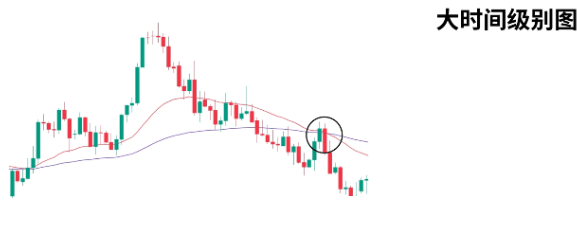
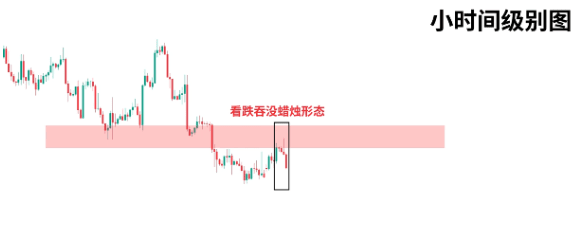
This indicates an overall downward trend, so we only look for short opportunities. Next, go to smaller time frames and see if the price forms a 'higher high, lower low' downward structure. Wait for the price to retrace to the resistance level and combine it with bearish candlestick patterns; at this time, going short will be very prudent.
03
Prices do not 'precisely touch the moving average to rebound.'
The moving average should be viewed as a 'zone.'
In a healthy upward trend, the price runs above the moving average. Many people think, 'The price will rebound as soon as it reaches the 50 moving average,' and thus wait for the price to touch the line precisely before entering. But the reality is that the market does not operate this precisely!
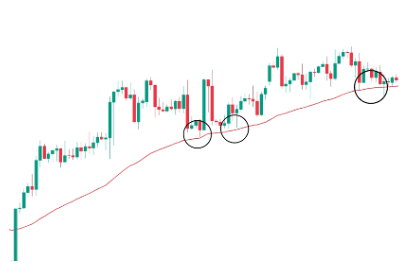
The price movement when it touches the moving average is mostly one of two situations: either it slightly breaks below the moving average and then rises or it almost reaches the moving average and then directly rises. If you insist on waiting for a precise touch, you will miss many profit opportunities, or even because of being too strict with entry points, causing trades to become deformed.
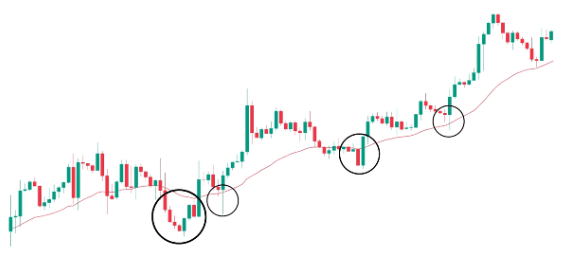
The correct approach is to treat the moving average as a 'zone,' not just a line. As long as the price approaches this zone, whether it slightly breaks below or does not reach it, there is a possibility of rebound. Accordingly, when setting stop losses with moving averages, you must also leave a reasonable distance and not be too close.
For example, if you want to wait for the price to reach the 50 moving average zone and see a bullish engulfing pattern before going long, you must consider that the price might break below the moving average before rising.
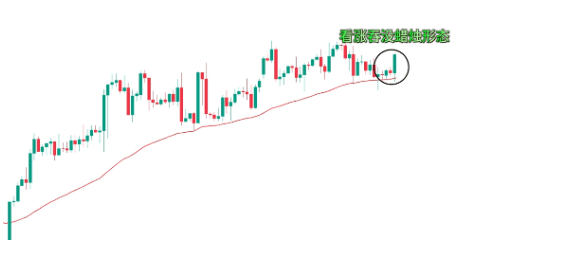
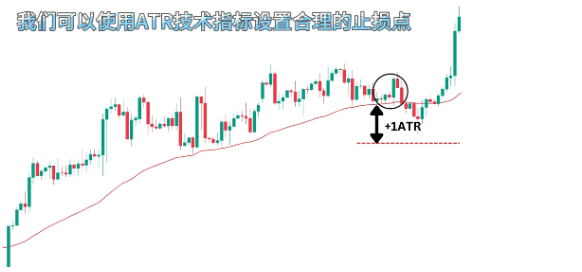
At this time, do not set the stop loss at the 50 moving average; it should be placed a certain distance below the moving average. As for how far is appropriate, it is recommended to use the ATR indicator—it can calculate a reasonable stop-loss distance based on actual price fluctuations, avoiding being stopped out by slight fluctuations.
04
Do not overestimate the winning rate of moving averages.
Trading with a single moving average is bound to incur losses; multiple tools must resonate.
This last truth must be remembered: never rely solely on one indicator, the moving average, for trading! I have seen too many beginners, who have learned some moving average knowledge, insist on entering based solely on moving averages. For instance, in a downward trend, they see the price at the 50 moving average and go short. But this kind of single analysis has a very low winning rate, and over time, it is impossible to achieve stable profits.
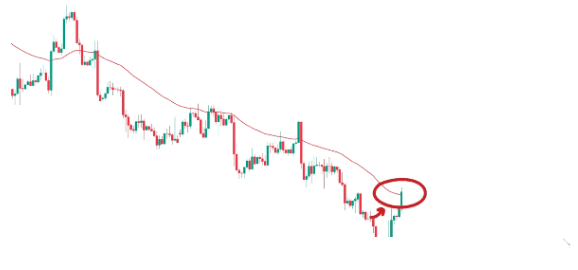
The core function of the moving average is to 'assist in judging the trend,' not as a 'standalone decision-making tool.' To improve your winning rate, you must pair it with other technical tools to form a multi-dimensional resonance. I will share a commonly used combination in practice: trend structure + moving average + Fibonacci + candlestick patterns, and I will break it down step by step for you to see:
1. Determine the trend first: Look at the price structure; is it forming a 'higher high, lower low' downward pattern while the price is below the 50 moving average? Only when both factors are met can you confirm it is a downward trend, and at this point, only short positions should be taken;
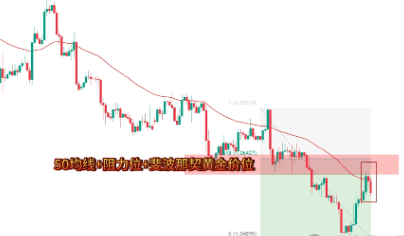
2. Find key price levels: When the price retraces to the 50 moving average, find that this position coincides with the golden Fibonacci retracement level and is also a previous resistance level. With three tools overlapping, the validity of this key price level will be very high;
3. Wait for entry signals: When the price reaches this key level and shows a bearish engulfing pattern—where the bearish candle completely covers the previous bullish candle—it indicates strong bearish momentum, and the key level is valid;
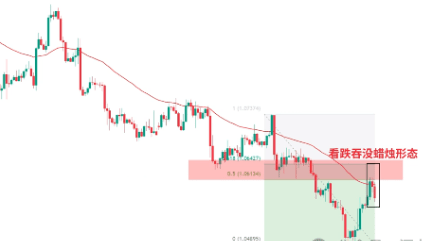
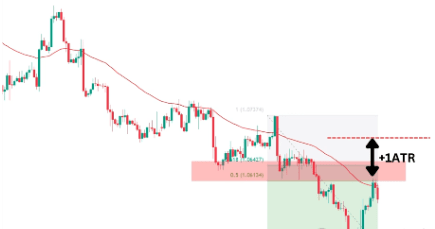
4. Set stop-loss: Place the stop-loss above the key level, plus 1 ATR value. The logic is simple: if the price breaks through this key level, it indicates that our judgment of the downward trend was wrong, so quickly stop-loss and exit to preserve capital.
Final summary.
In fact, there is nothing wrong with the moving average itself; many people do not use it well because they are trapped by misconceptions like 'universal parameters,' 'precise touches,' and 'single signals.' Remember these four cores:
1. Choose moving average parameters based on trends: strong 20, healthy 50, weak 200;
2. Moving average crossovers must be filtered with the larger trend; do not enter blindly;
3. Treat moving averages as zones, leaving enough room for volatility when setting stop losses;
4. Use multiple tools in resonance, do not rely solely on moving averages.
Trading is not about rigidly memorizing indicators, but about flexibly applying the understanding of market rules. If you apply these truths in practice and gradually adjust and optimize, you will find that trading with moving averages can also be very stable.
Trading cryptocurrencies means repeatedly doing simple things. By consistently using one method over a long period, you can master it to perfection. Trading cryptocurrencies can be like any other industry; practice makes perfect, and you can make decisions effortlessly.
This year marks my seventh year of trading cryptocurrencies; I entered the market with 10,000, and now I support my family through trading! I can say that I have used 80% of the methods and techniques in the market. If you want to treat trading as a second profession to make a living, sometimes listening and observing more will help you discover things outside your understanding, at least saving you five years of detours!
Follow me@慢慢赢_实盘带单 There are many souls lost on the path of cryptocurrency, only the fated can cross.