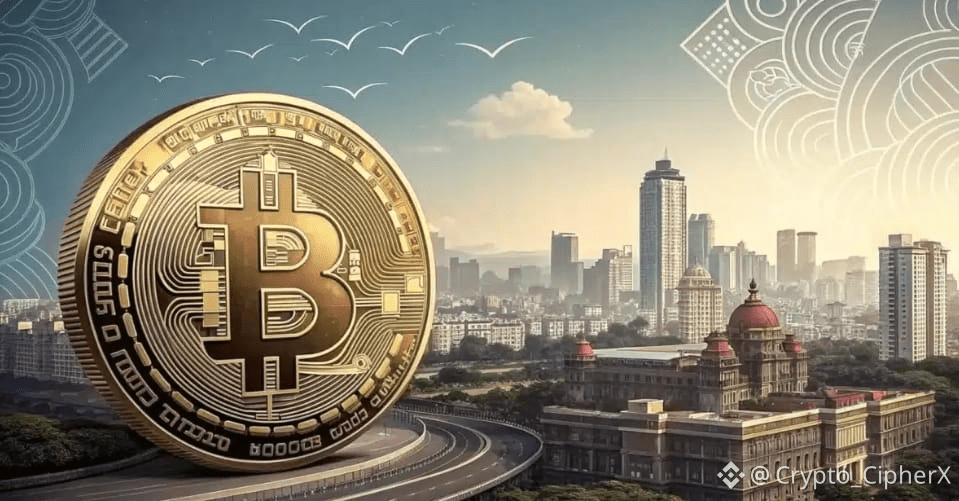
Bitcoin is once again part of public discussion in India. This time it started after comments from a senior central bank official. His remarks questioned whether Bitcoin or stablecoins have any real value. This quickly triggered strong reactions online and reopened an old debate about what Bitcoin really means.
At a public event in Mumbai the official said that stablecoins do not fit the basic idea of money. He explained that real money must come with a clear promise to pay. In his view stablecoins do not offer this promise and therefore cannot be trusted like government backed currency. He also said that the benefits often mentioned by supporters are overstated while the risks are serious.
He raised concerns about price swings loss of control over money policy and pressure on the banking system. He also warned that these digital assets could be used to move money across borders in ways that are hard to track. According to him this could weaken financial stability and create long term problems.
When he spoke about Bitcoin his tone was similar. He described Bitcoin as a technology test rather than real money. He said it has no intrinsic value and that its price depends mostly on speculation. From this angle Bitcoin looks more like a risky asset than something useful for everyday economic activity. The central bank continues to support state issued money and works with global institutions that share this thinking.
These comments upset many people online. Crypto users said Bitcoin and stablecoins do not threaten the rupee. Some said the central bank does not fully see how these tools are already used in daily life. Others pointed out that many Indians rely on stablecoins to send money across borders faster and at lower cost than traditional systems.
Some users warned that delaying clear rules for a rupee based stablecoin could create future issues. They worry that foreign currency tokens could fill the gap and become more popular. Others said blockchain based payments could work alongside existing systems especially for global transfers where current options are slow or expensive.
What adds another layer to this debate is what the data shows. Even while rejecting Bitcoin the central bank liquidity cycle seems to move in line with Bitcoin price trends. When liquidity increases Bitcoin often rises. When liquidity tightens Bitcoin usually falls.
This does not mean the central bank controls Bitcoin. But it does show that Bitcoin reacts to the same money forces that affect other markets. When money is easy people move toward risk assets. When money is tight they pull back. Bitcoin appears to follow this pattern much like stocks or other global assets.
This creates a clear tension. If Bitcoin has no value then why does it respond so closely to changes in liquidity. Why does it move when financial conditions change. The likely answer is that markets treat Bitcoin as part of the wider system even if policymakers do not.
In the end there is a growing gap between official statements and market behavior. Bitcoin may not be accepted as money by authorities but it clearly reacts to the same forces shaping the financial world. That reality is becoming harder to ignore.
#BTC #CryptoNewss #WriteToEarnUpgrade #cryptooinsigts