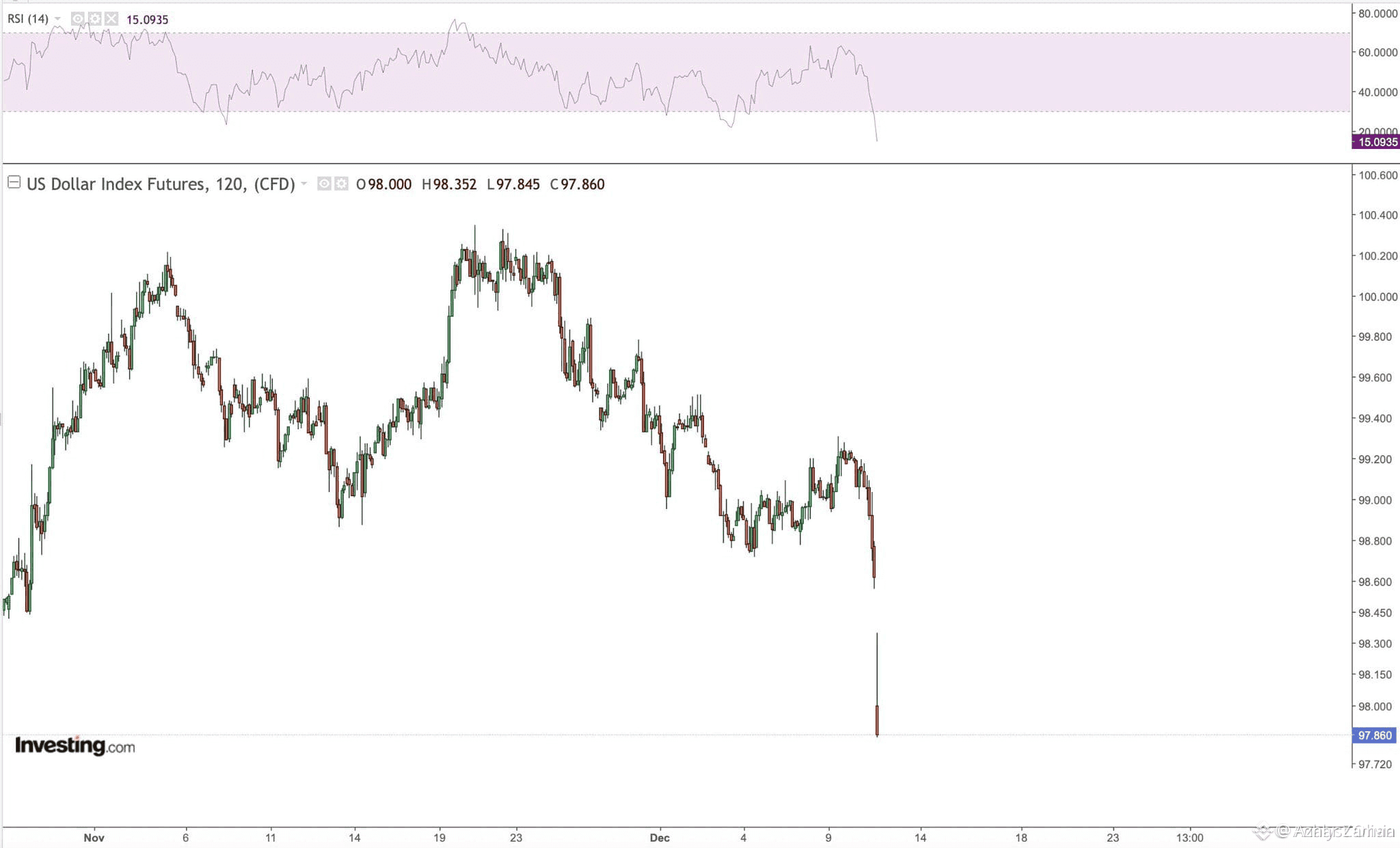
Read carefully.
Moves like this don’t happen by accident.
When major currencies slide, it usually signals pressure building beneath the surface. And in the U.S., that pressure is obvious:
$34 trillion in national debt.
At this scale, the options are limited.
Raising taxes won’t solve it
Cutting spending won’t solve it
Outgrowing it won’t solve it
So governments turn to the oldest solution in history:
currency devaluation.
A weaker dollar makes debt easier to manage — cheaper in real terms and less politically painful.
But that cost doesn’t disappear.
It gets passed on.
From the government → to the public.
Cash holders
Fixed-income earners
Anyone letting savings sit idle
If the dollar continues a slow, controlled decline, the next phase is historically predictable:
Hard assets outperform
Risk assets reprice higher
Dollar-denominated assets rise
Savers lose purchasing power
Borrowers benefit
This isn’t conspiracy.
It’s arithmetic.
A heavily indebted government will always choose inflation over default. Every time.
When debt reaches this size, there are only two outcomes:
Repay it honestly
Or erode it quietly through inflation
This is where many miss the opportunity.
Bitcoin tends to perform well in this environment.
BTC is priced in dollars. As the dollar weakens, the price rises — not because Bitcoin changes, but because the measuring unit does.
While people debate narratives, capital already moves.
Sitting in cash feels safe — until purchasing power quietly fades.
I called Bitcoin’s bottom near $16,000 when fear was extreme.
I warned near the $126,000 top last October when optimism peaked.
And I’ll continue to speak when structure and data align.
Some will dismiss this.
Others will remember it later.
The choice is yours.
#USJobsData #CPIWatch #WriteToEarnUpgrade