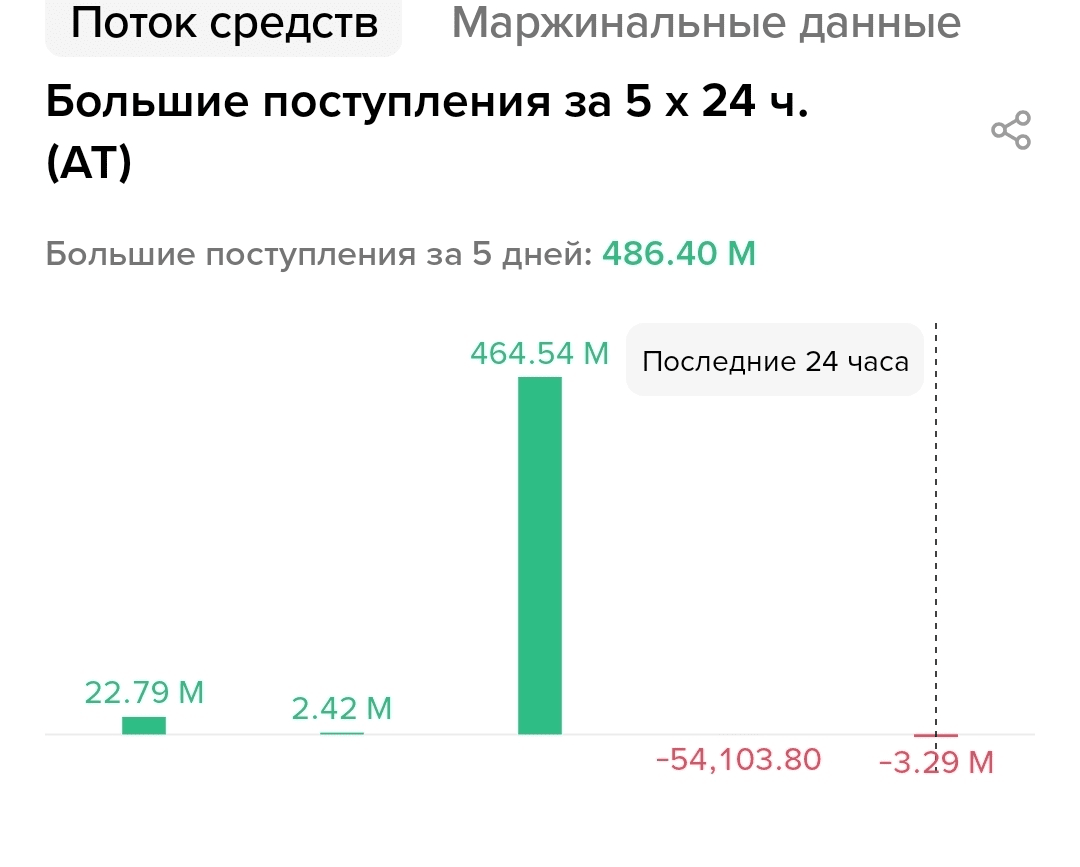
Do you know what has always amazed me about the internet? We all generate data. Every second. Every click, every search, every purchase — it's data. Google makes billions off our data. Facebook makes billions off our data. Amazon, Netflix, all the tech giants build empires on the information we provide them for free. And what do we get? Free search and the ability to watch memes. Fair? I don't think so.
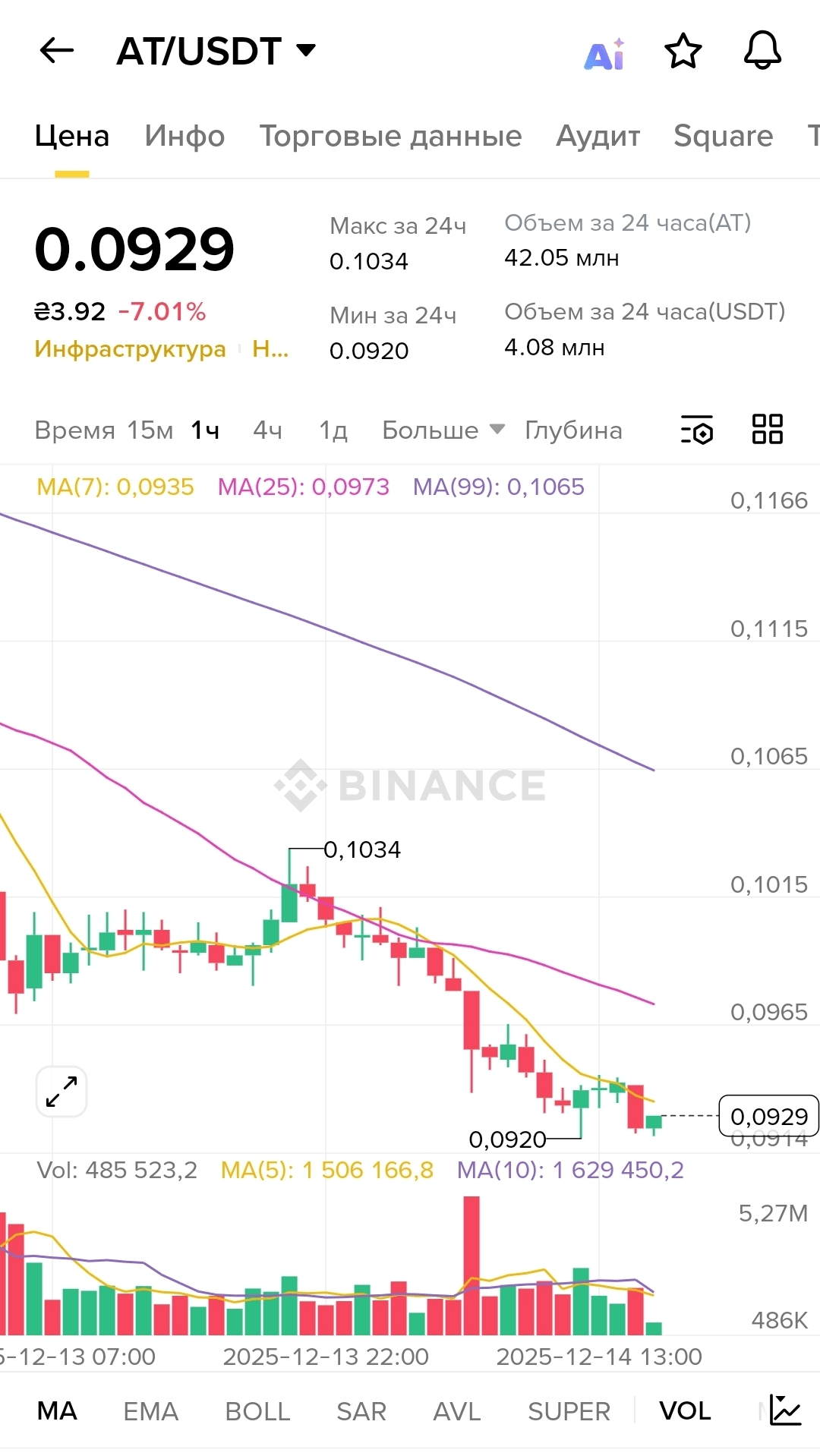
I look at the $AT chart, which has dropped to 0.0929 with a 7.01% decline, and I think: the market is bloody, all assets are falling. But you know what? Data doesn't lose value just because crypto is falling. On the contrary, in a world where everything is digitized, data only becomes more valuable. And @APRO-Oracle offers something revolutionary: the ability for ordinary people and companies to monetize their data. Not giving it away for free to corporations, but selling it directly to those who need it. And making real money from it.
Let me explain how this works and why it can change the entire data economy.
I'll start with a basic question: what does it mean to "be a data provider"? It means you have some information that someone needs, and you provide that information for a reward. Sounds simple, but in the traditional economy, this only worked for large players. Reuters sells financial data. Bloomberg sells market analytics. Meteorological services sell weather data. But an ordinary person or small company? Zero opportunities.
#APRO is changing the game. Because blockchain and decentralized oracles create a data market without intermediaries. You don't need to negotiate with Reuters or Bloomberg. No need to sign contracts with lawyers. Just connect to the APRO network, provide your data, and if someone uses it — you get paid. Automatically. Through smart contracts.
What data can you sell? Literally anything. Do you have a weather station on your roof? Sell temperature, humidity, and pressure data. Do you have a store? Sell aggregated sales data (not personal customer data, of course). Are you a developer monitoring the availability of various APIs? Sell status data. Do you have a farm and track yield? This is also data that can be useful to agri-tech companies or insurers.
The trading volume $AT at 4.08 million USDT shows that even on a red day, trading is active. Because people understand: data is the new oil, as they like to say. Only unlike oil, data doesn't run out. They can be sold endlessly, the same data can be used by multiple buyers simultaneously.
Here's a concrete example of how this can work. Imagine: you live near a large shopping center and track traffic in the parking lot through a simple camera with AI recognition (legally, public space). This traffic data can be useful to investors analyzing the success of retailers. They want to know if the shopping center's foot traffic is increasing or decreasing because it affects the stock price of the owning company.
Previously, such data was only available to large hedge funds that could hire a company to collect this information. Expensive, complicated, time-consuming. With @APRO-Oracle, you connect your camera to the oracle, the data automatically goes to the blockchain, and everyone who is subscribed to this feed pays you for access. Every day. Automatically. Passive income from a parking camera. Sounds like science fiction, but the technology already exists.
Or another example: you are a freelance analyst monitoring the real estate market in your city. You collect data on prices, sales speed, new projects. Previously, you could sell reports to several clients manually. With #APRO, you publish this data in the oracle, and any DeFi protocol working with tokenized real estate can subscribe to your feed. You set a price — say, $50 a month for access. Ten protocols subscribe — you earn $500 a month. A hundred subscribe — $5,000. It scales easily.
The chart shows a daily minimum of 0.0920, and I understand: yes, the price has dropped by 7%, which is unpleasant for holders. But if you are a data provider, the token price in the short term is not that important. What matters is how many people use your data and how much you earn in dollars or stablecoins. This is a stable income that does not depend on the volatility of the crypto market.
The coolest thing about this model is the passivity of income. You set up the system once, and it works. Of course, you need to maintain data quality, monitor to ensure the source is not down, and update if necessary. But it's not a 9-to-5 job. It can be an additional source of income alongside your main activity.
I spoke with a guy who runs several nodes for different blockchains. He said: "You know, I've already invested in hardware and internet for the nodes. Why not use that same infrastructure to collect and sell data? Marginal costs are almost zero, and the potential income is real." And he is right. If you already have the technical infrastructure, becoming a data provider is a logical step.
But let's also talk about risks because I don't like when everything is presented as rainbows and unicorns. The first risk is data quality. If you provide bad data, you'll be quickly disconnected, and your reputation will be ruined. In a decentralized network, reputation is everything. If you lie or mess up once — trust is lost forever.
@APRO-Oracle has a rating system for providers. The more stable and accurate your data, the higher the rating. The higher the rating, the more buyers trust you and are willing to pay. It's like on eBay or Amazon Marketplace — sellers with 5 stars get more orders. It's the same here, only with data.
The second risk is competition. If your data is easy to obtain or replicate, why would anyone pay you? Uniqueness is needed. Either you have an exclusive source (let's say, sensors in a unique location), or you provide data with better quality or update frequency than your competitors.
The third risk is regulatory. Not all data can be legally collected and sold. Personal data? Forget it, it's a GDPR nightmare. Insider information? That's already a criminal case. You need to be very careful and understand the laws of your jurisdiction. #APRO is not responsible for what you publish — the responsibility lies with you as the provider.
The maximum in 24 hours was 0.1034, now we are at 0.0929 — almost a 10% drop. But you know what? If I were earning as a data provider, I would be much less concerned about this than if I were just holding tokens hoping for growth. Because income from data is more predictable and stable. Of course, it won't skyrocket x10 in a week like a token can. But it also won't go to zero overnight.
Let's talk about practical steps to become a provider. First: determine what data you have or what you can collect. It should be something valuable to someone. Not necessarily unique, but useful. Second: assess the technical side. Do you need special software? API? Sensors? Server? @APRO-Oracle should have documentation for providers (I hope) that explains the technical requirements.
Third: determine pricing. How much do you want for your data? You need to balance this. Too expensive — no one will buy. Too cheap — you won't cover your costs. Look at competitors, if there are any. Look at demand. Start with a low price to attract your first customers and build a reputation, then you can gradually increase it.
Fourth: connect to the #APRO network and start publishing data. You will likely need to stake some amount in $AT tokens as a quality guarantee. This is normal — the system should be protected from spammers and fraudsters. If you are a serious provider, the stake is not a problem. It will return if you do not violate the rules.
Fifth: monitor and optimize. See what data is in demand, what is not. Maybe you should add new types of data or improve existing ones. This is an iterative process. The first months may not be very profitable while you learn and set up. But if you do everything right, the income will grow.
A volume of 42.05 million $AT per day means liquidity. And liquidity is important because if you earn in $AT, you need the ability to convert those tokens to fiat or stablecoins without significant slippage. The higher the volume, the better for all participants in the ecosystem.
There is another aspect that is rarely discussed: social impact. When data is controlled by a few corporations, that is power. They decide who gets access, at what price, and under what conditions. Decentralizing data through projects like @APRO-Oracle is democratization. Small businesses get the same data as corporations. A developer from a developing country can compete with Silicon Valley startups. This levels the playing field.
I believe that in a few years we will see a whole class of people earning a living as independent data providers. This will be a legitimate profession, just like being a freelancer or content creator today. Only instead of creating videos or texts, you create and curate streams of data. And earn a stable income from it.
Of course, not everyone will become rich. As in any market, there will be those who earn a lot and those who earn little. But the mere existence of the opportunity is important. It didn't exist at all before. Now it does. And that is already progress.
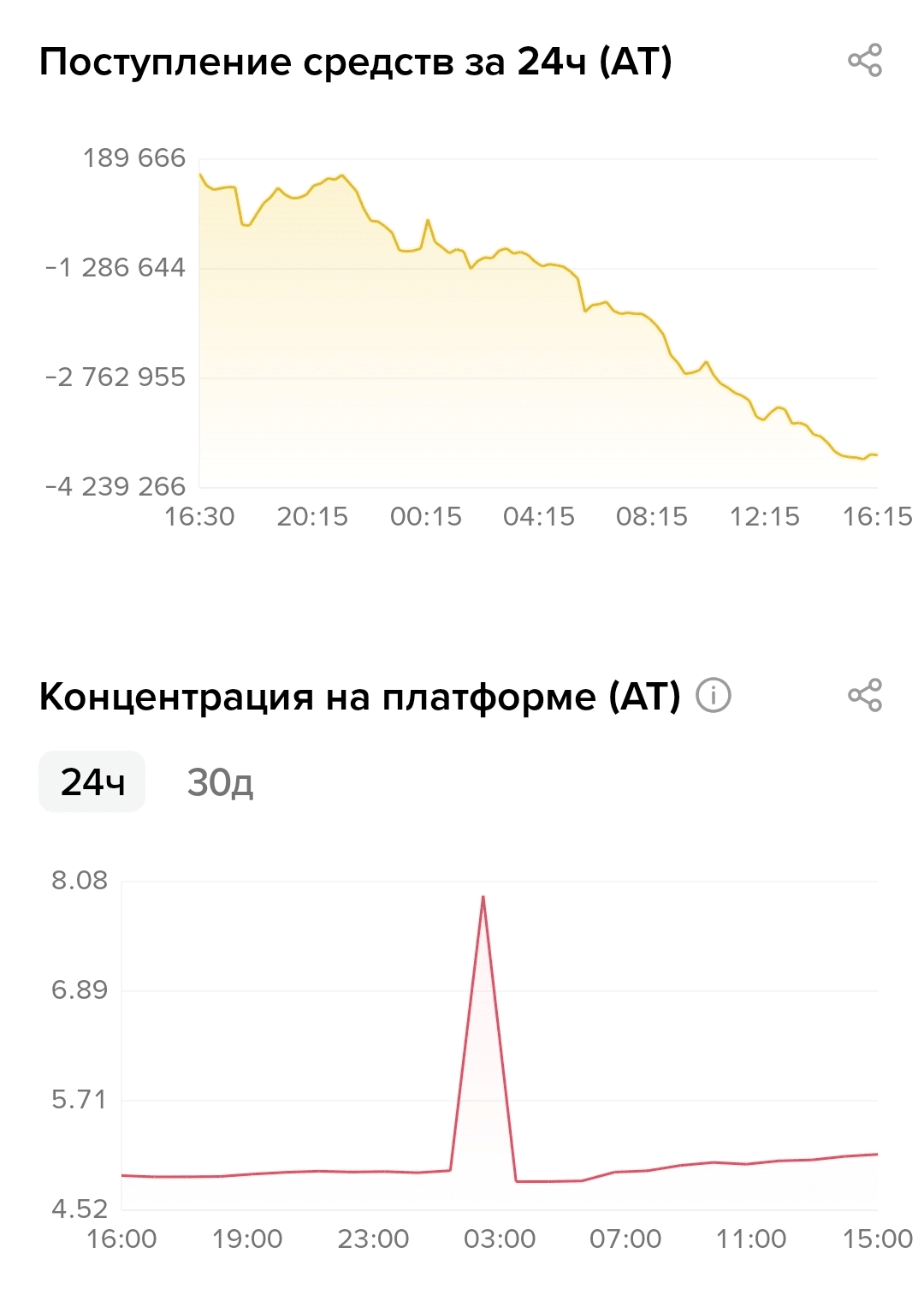
The chart is falling, $AT is down 7%, and I realize: many are panicking and selling now. But if we look at the project from the perspective of creating a real economy of data, and not just speculating on tokens, then drops are just noise. What matters is whether the infrastructure is being built. Are there data providers emerging? Is the number of consumers of this data growing? If yes — the project is alive and developing. If not — it's just another dead token.
I'm not saying everyone should rush to become a data provider through #APRO. It's not for everyone. Certain skills, resources, and market understanding are needed. But if you have access to valuable data, if you are technically savvy, if you want to diversify your income — this is a real opportunity. Not hype, not a promise of millions from scratch, but a real business case.
And you know what's the coolest? This model scales globally. A provider from Nigeria can sell data to a consumer in the USA. No banks, no currency conversions, no intermediaries. Just data through the blockchain and payment in cryptocurrency. This is the real global economy that everyone talks about, but few are actually building.
@APRO-Oracle is one of those projects that is really building this infrastructure. Not just talking about a data revolution, but creating tools for that revolution to happen. And if you are a person with data you can share, perhaps it’s time to think about monetization. Not giving it away for free to Google and Facebook, but selling it directly to those who are willing to pay.
The market is red, the token is falling, everyone is in a panic. But this is temporary. The data won't go anywhere. The demand for data is only growing. And those who understand this before others and start building a business around data monetization will be ahead when the market turns. Because they will earn not from the price increase of the token, but from real economic activity. And this, as history shows, is a much more sustainable model.