@APRO Oracle :The Data Spine of Web3: How APRO Is Teaching Blockchains to Understand the Real World
For much of its short life, Web3 has been self-referential. Blockchains have been excellent at accounting for what happens inside their own walls: balances, transfers, smart contract logic, governance votes. They are precise, verifiable, and deterministic—but also largely blind. The moment an application needs to understand something external—prices, weather, identities, supply chains, events in the physical economy—it runs into a fundamental limitation. Blockchains cannot see the world. They can only be told about it.
This is where the story of APRO begins, not as a product announcement or a performance claim, but as an attempt to confront that limitation honestly. APRO does not treat real-world data as a bolt-on feature or a simple feed to be plugged into smart contracts. Instead, it treats data as infrastructure—something closer to a nervous system than a utility wire. In that framing, APRO becomes less an oracle and more a data spine for Web3.
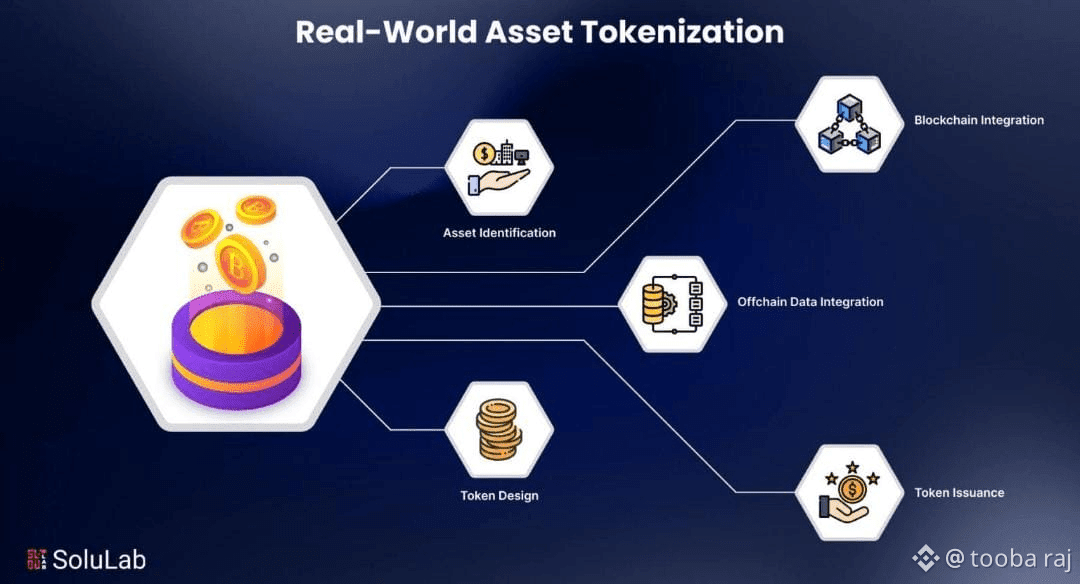
Traditional oracle systems solved an early and narrow problem: getting off-chain values on-chain. Price feeds for assets, basic randomness, or simple event confirmations were enough when DeFi was young. But as blockchains began to host more complex economic relationships—tokenized real-world assets, automated credit, AI-driven agents, cross-chain protocols—the weaknesses of that model became apparent. Static feeds cannot represent dynamic realities. Single-source data cannot reflect uncertainty. Human-managed updates do not scale to machine-native economies.
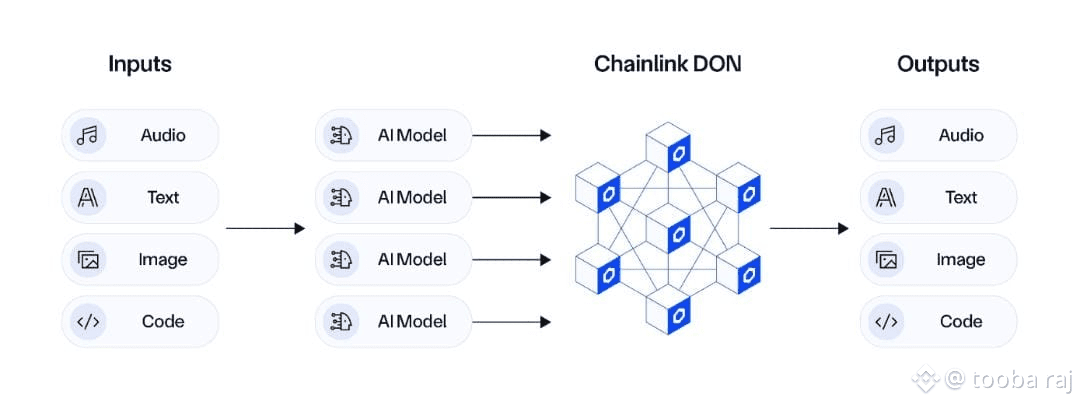
APRO approaches this tension by starting from a different assumption: that the real world is messy, probabilistic, and context-dependent, and that blockchains must learn to reason about it rather than merely receive snapshots of it. This is why AI sits at the center of APRO’s architecture—not as a marketing flourish, but as a necessity. Machine learning models can aggregate multiple sources, evaluate confidence, detect anomalies, and adapt over time. In doing so, they turn raw data into something closer to understanding.
What makes this especially important is the direction Web3 itself is taking. On-chain systems are no longer just passive ledgers; they are increasingly autonomous. Smart contracts rebalance treasuries, liquidate positions, issue loans, and coordinate governance without human intervention. AI agents are beginning to operate wallets, execute strategies, and interact with protocols continuously. In such an environment, bad data is not just inconvenient—it is dangerous. Errors propagate instantly. Misinterpretations compound. The cost of misunderstanding reality becomes systemic.
APRO’s role, then, is not simply to deliver data but to contextualize it. By combining AI-driven analysis with decentralized verification, it attempts to bridge two worlds that operate by different rules. The real world is noisy and subjective; blockchains are rigid and objective. APRO functions in the narrow but critical space between them, translating uncertainty into structured signals that smart contracts can safely consume.
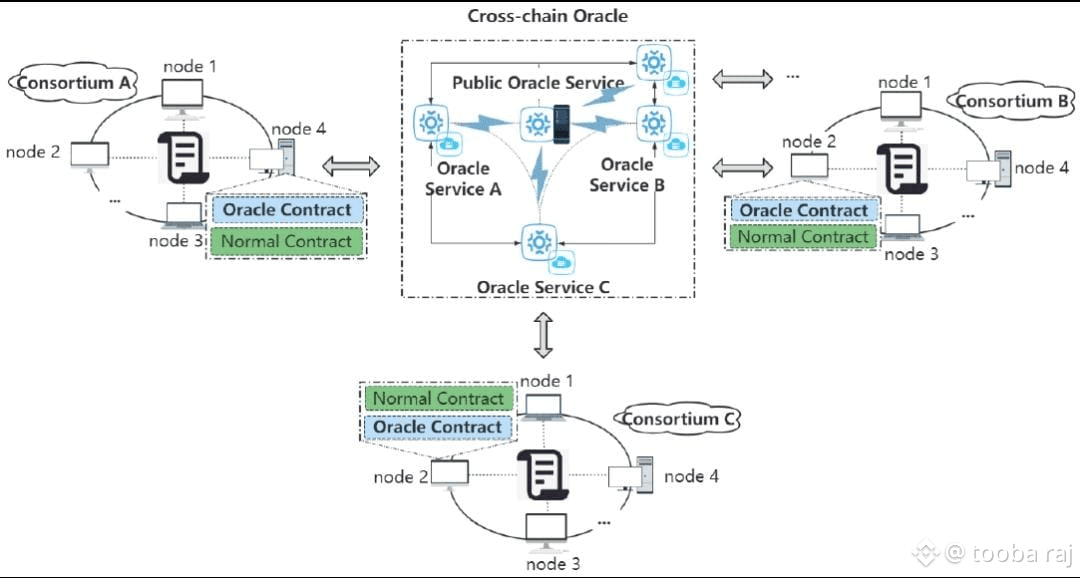
Another defining element of APRO’s design is its multi-chain orientation. As Web3 fragments across ecosystems—each with its own standards, security models, and economic incentives—the need for a shared data layer grows. Data that is valid on one chain but inaccessible on another creates silos that undermine composability. APRO treats data as chain-agnostic. Its oracle outputs are designed to move across networks, maintaining consistency while respecting each chain’s execution environment.
This cross-chain perspective is subtle but significant. It suggests a future in which applications are no longer bound to a single blockchain’s view of reality. Instead, they operate on a shared understanding of external events, even as execution happens in parallel across different systems. In this sense, APRO is less about feeding data into contracts and more about synchronizing perception across Web3.
Governance also plays a quiet but essential role in this architecture. Decisions about which data sources to trust, how AI models are updated, and how disputes are resolved cannot be left entirely to code. APRO embeds these choices into an on-chain governance framework, allowing stakeholders to shape how reality is interpreted over time. This does not eliminate subjectivity, but it makes it explicit and accountable—a crucial step for systems that aspire to manage real economic value.
The deeper implication of APRO’s approach is philosophical as much as technical. For years, blockchain culture emphasized isolation: trustless systems, minimal reliance on external inputs, code as law. APRO acknowledges that complete isolation is neither possible nor desirable if blockchains are to matter beyond their own ecosystems. Understanding the real world requires engagement with it, including its ambiguities and imperfections.
In teaching blockchains to understand the real world, APRO is effectively redefining what decentralization means in a data-rich age. It is not about pretending that external reality can be reduced to a single number or feed. It is about building systems that can absorb complexity without collapsing under it. The data spine metaphor is apt here: invisible most of the time, but essential for coordination, movement, and growth.
As Web3 evolves from experimentation to infrastructure, the question will no longer be whether blockchains can execute code securely. That problem is largely solved. The question will be whether they can make decisions that reflect reality accurately enough to be trusted with real assets, real livelihoods, and real-world consequences. APRO’s work sits directly at that frontier—not loudly, not theatrically, but persistently—trying to give decentralized systems a clearer sense of the world they are increasingly meant to serve.