
I have systematically written a collection of articles on this knowledge, you can check it out (Contract Systematic Basic Learning - Directory (Article Collection))
Trading Mode: Cross vs. Isolated
This is the primary distinction that must be understood before opening a position, as it determines the level of risk.
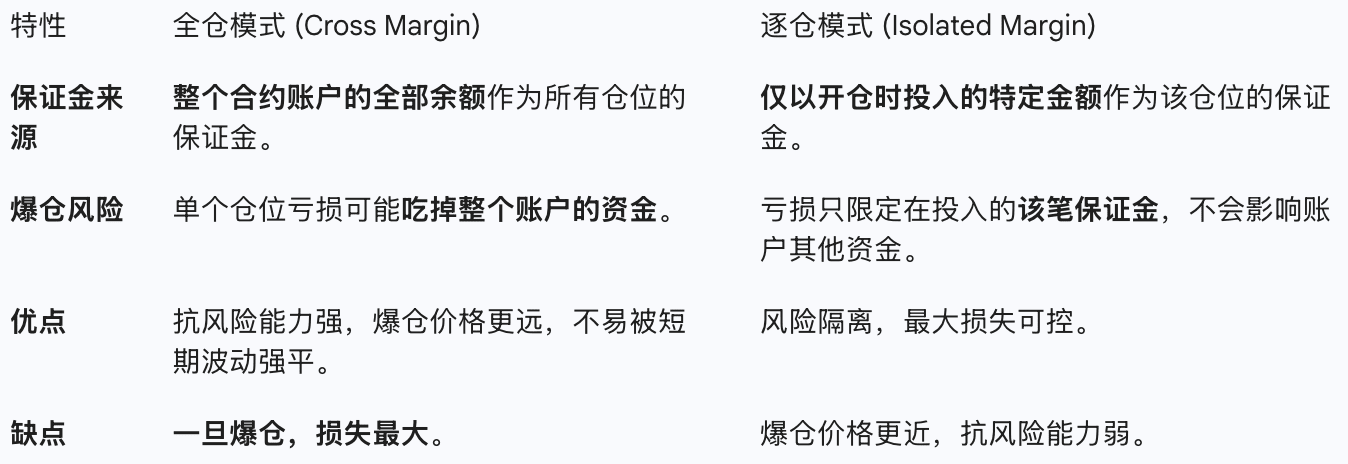
Recommendation: Beginners should start with isolated positions and strictly control single-instance risk.
Order Type: Limit vs. Market
This determines how the order will be executed.
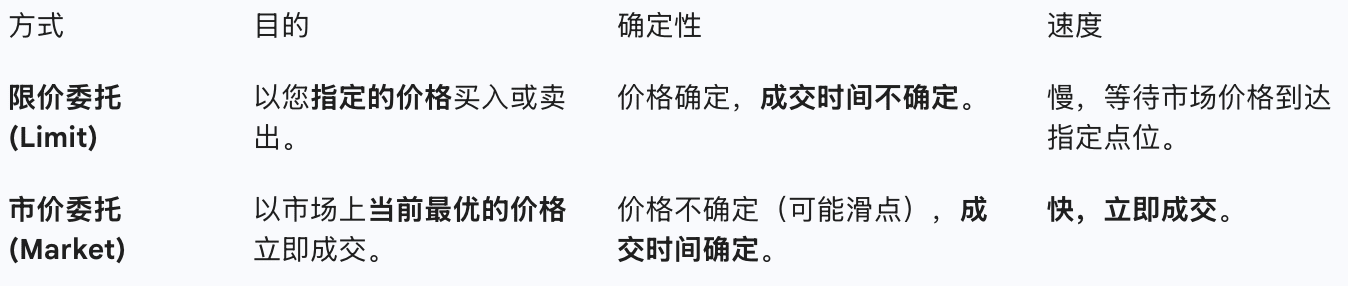
Risk Reminder: Market orders may execute at worse prices than expected due to slippage in low liquidity or highly volatile conditions.
Price indicators: Mark price vs. Last price
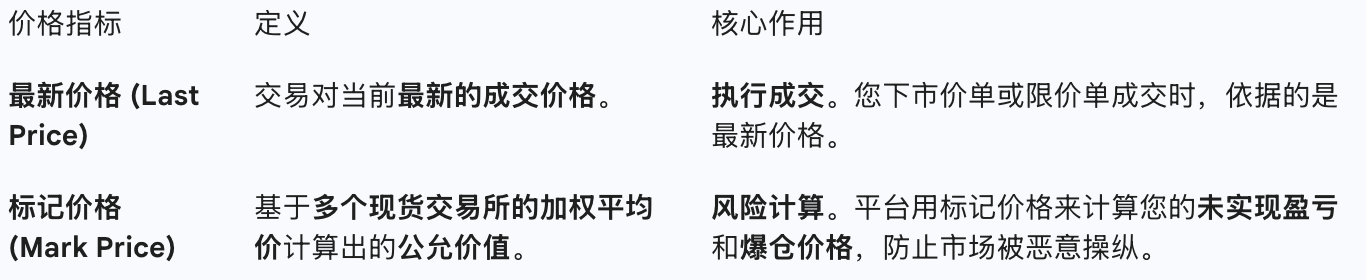
Key: Liquidation is triggered based on the mark price, but the actual closing transaction is executed at the latest price.
Risk control: Take Profit and Stop Loss
These are two key risk management tools that traders must master.
Stop Loss (SL): Set a price that, when the market reaches, the system automatically closes the position to lock in the maximum loss. This is the most effective means to prevent liquidation.
Take Profit (TP): Set a price that, when the market reaches, the system automatically closes the position to lock in the profit gained. This is an effective method to prevent profit reversal.
Leverage ratio: actual leverage vs. nominal leverage
Understanding these two concepts will help you see the real risks.
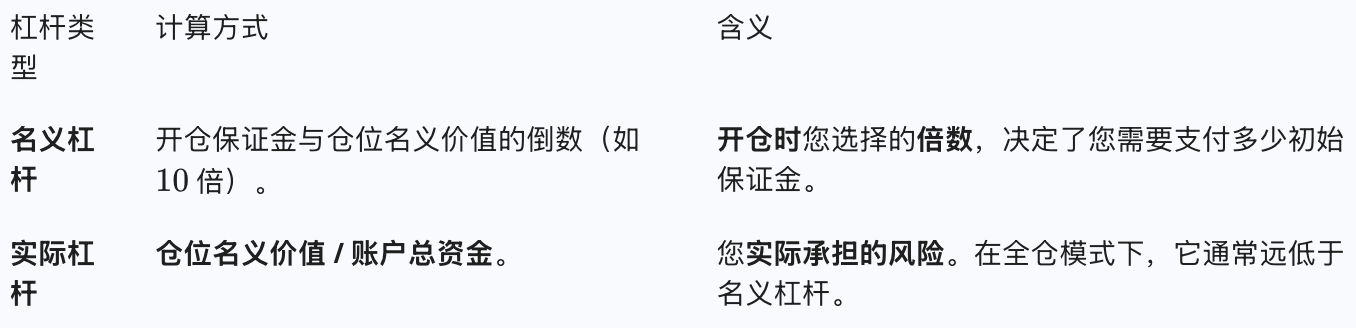
For example: Full position, the contract account has $1000, using $100 to open with 10x nominal leverage (position $1000). The actual leverage is 1000/1000 = 1x.
Contract size: Opening unit
There are three situations in U-based contracts
In terms of tokens, for example, how many ETH to open; the ETH amount entered when placing the order is the order amount, and the position opened is divided by leverage, which gives your margin.
In terms of USDT, the order amount is how much U you input, and the position is the same amount, divided by leverage for the margin.
In terms of USDT, the initial margin is how much U you input, multiplied by leverage gives your position.
Order settings: Conditions for triggering the order (conditional order)
This is a type of advanced order, commonly referred to as a conditional order or trigger order.
Purpose: The system will submit your actual order (limit or market) to the market only when the market price reaches the trigger price you set.
Application: Commonly used to set breakout trading strategies (entering the market only when breaking resistance or support) or as hidden stop-loss/take-profit orders.
Funding Rate
The funding rate is a mechanism unique to perpetual contracts, used to anchor the contract price to the spot price.
Settlement time: Usually settled every 8 hours.
Payer: When the rate is positive (contract price is higher than spot), longs pay fees to shorts. When the rate is negative (contract price is lower than spot), shorts pay to longs.
Impact: The payment or receipt of the funding rate directly affects your account equity and is a common reason for the liquidation line to move up.
Contract fee
The main cost of contract trading is the fee, which is divided into two categories:
Taker fee: The fee you pay when you use a market order to execute immediately, as you 'eat' the market's liquidity, resulting in a higher fee.
Maker fee: The fee you pay when you use a limit order and wait for execution, as you provide liquidity to the market, resulting in a lower fee (some platforms may even offer rewards).
Best practice: Use limit orders (Maker) as much as possible to reduce trading costs. (You can also ask me to open a rebate for you, stable long-term, with a 50% assessment ratio passing every period, and I'm also a knowledge-based KOL, won't blow up!)
