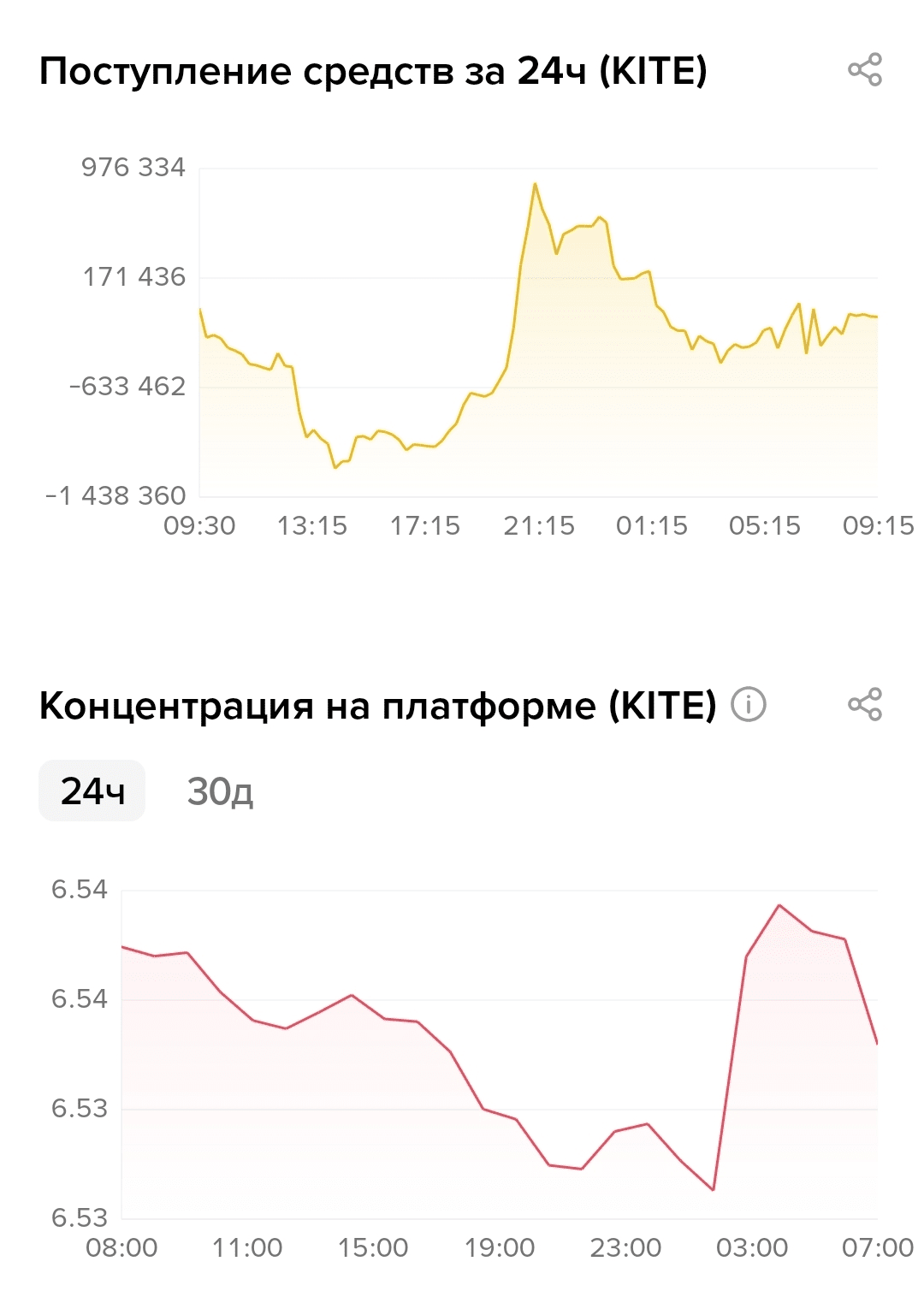
You know, one of the things that always fascinates me about the crypto industry is watching how projects compete with each other, how they seek their niche, how they try to stand out in a sea of similar solutions. And when I started studying @GoKiteA and their positioning in the blockchain solutions market for AI, I became curious: who are their competitors? Who else is building infrastructure for autonomous transactions between AI agents? And what makes KITE unique among other players? Because understanding the competitive landscape is key to assessing the long-term potential of any project.
Honestly, when I started digging, it turned out that KITE has not that many direct competitors. Most blockchain projects that work with AI in one way or another focus on completely different things. There are projects like Fetch.ai, which are building a decentralized network for autonomous economic agents. Sounds similar, right? But if you dig deeper, their approach is fundamentally different. Fetch is more about creating a marketplace where agents find each other and interact, while KITE is precisely the infrastructure layer, an L1 blockchain optimized for real-time transactions. It's like comparing Amazon (a trading platform) and Visa (payment infrastructure). Both are important but solve different tasks.
There is also SingularityNET, which is working on a decentralized AI marketplace. Again, their focus is not on transactions between agents, but on monetizing AI services. They enable AI developers to sell their models, but the infrastructure for fast, autonomous payments between agents is not a priority there. It's more about creating an AI-as-a-Service ecosystem than a technical solution for coordinating agents.
Then I looked at Ocean Protocol, which is building a decentralized ecosystem for data exchange. Data is critical for training AI, and Ocean addresses an important problem — how to safely monetize data while maintaining privacy. But again, this is a different niche. They are not focused on enabling AI agents to instantly pay each other for services or to coordinate complex multi-step processes. Their task is to create a data marketplace, not a payment infrastructure for agents.
And here I began to understand what makes KITE unique. Most projects in the AI and blockchain space solve problems at the application level — marketplaces, services, tools. KITE goes one level lower and says: let's first build the right infrastructure on which all these applications can work effectively. It's like if everyone was trying to build houses while KITE builds roads and plumbing. Not as sexy as a beautiful mansion, but without infrastructure, a mansion is useless.
Of course, one might argue: why not use existing L1 blockchains? Ethereum, Solana, Avalanche — they also support smart contracts, fast transactions, and have developer ecosystems. Why do we even need a separate blockchain for AI agents? And this is where it gets interesting, because KITE is not just a fork of Ethereum with a different name. It is a specialized network where every element of the architecture is tailored to the specifics of AI agents.
Take, for example, the three-tier identification system User → Agent → Session that I have already mentioned. This is not just a feature; it is a fundamental part of the protocol. On Ethereum, you could try to implement something like this through smart contracts, but it would be difficult, expensive, and inefficient. Each level would require separate transactions, each transaction would cost gas, and the entire system would be slow and cumbersome. KITE embeds this logic at the protocol level, making it native, fast, and cheap.
Or take real-time transactions. Ethereum, even considering all the improvements after the switch to PoS, still cannot handle thousands of transactions per second with minimal fees. Solana can, but Solana has its own problems — regular outages, complexity for developers, lack of specialization for AI agents. KITE, on the other hand, builds a network where high throughput and low fees are not a bonus, but a basic requirement, because without this the entire concept of an autonomous economy for AI agents does not work.
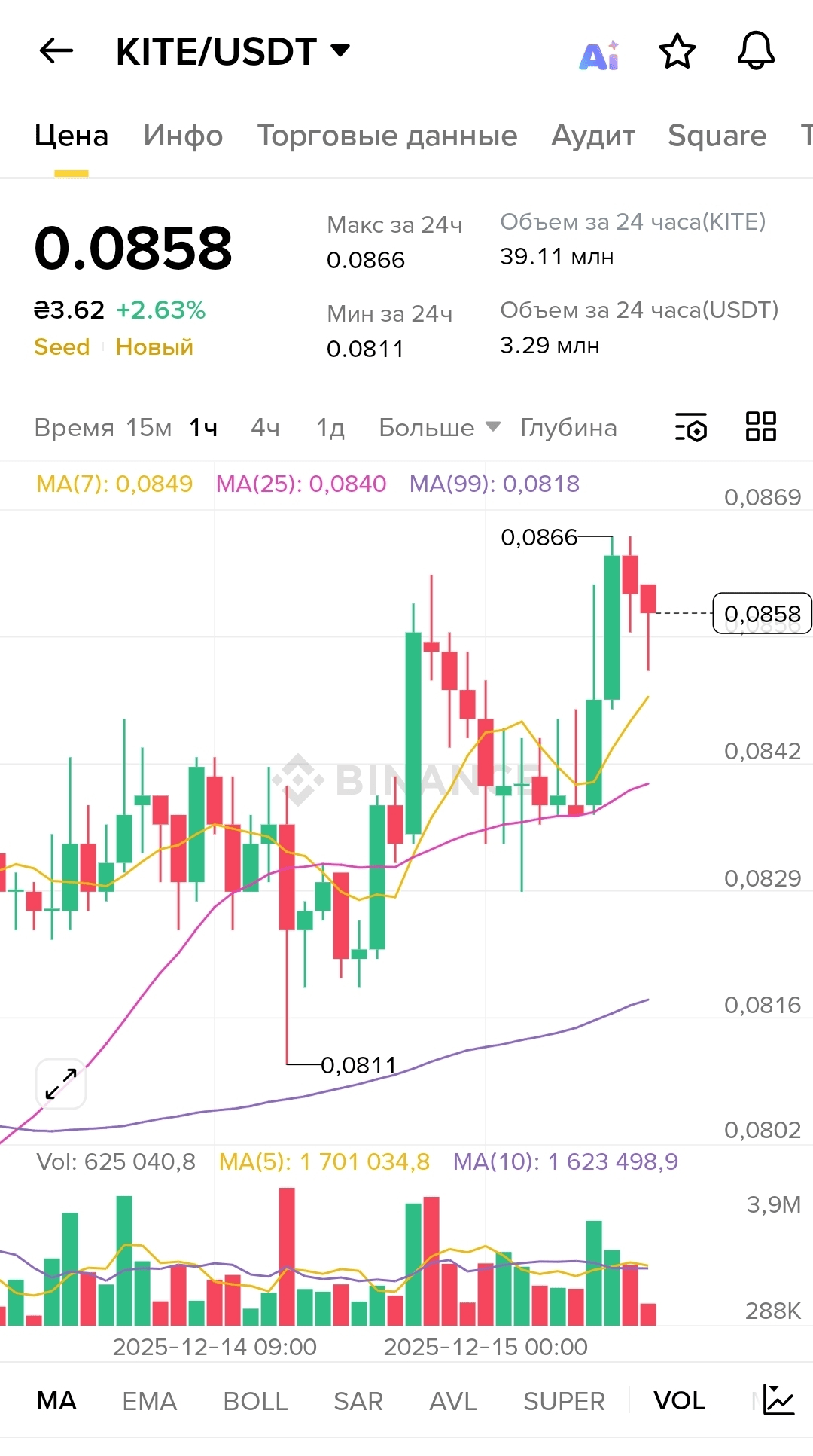
I'm looking at the chart $KITE at the level of 0.0858, and I understand — the market is currently evaluating the project as one of many altcoins. But if you look at the competitive landscape, it becomes clear: KITE occupies a rather unique position. They do not compete directly with giants like Ethereum or Solana on their turf because they are not trying to be a universal blockchain for everything. They do not compete with AI marketplaces like SingularityNET because they are not building a marketplace. They are creating specialized infrastructure for a very specific use case — autonomous transactions between AI agents. And in this niche, they have virtually no direct competitors.
Of course, this niche needs to grow for KITE to become truly valuable. If the autonomous economy of AI agents does not become a mass phenomenon, even the best infrastructure will be useless. But all trends indicate that we are moving in that direction. AI is developing exponentially, agents are becoming smarter and more autonomous, and the need for safe, fast, decentralized transactions between them will only grow.
I also think about potential competitors who may emerge in the future. Major players like Google, Microsoft, and Amazon have the resources to build their proprietary solutions for AI agents. But these will be centralized systems, closed ecosystems, vendor lock-in. KITE offers an open, decentralized alternative. It's like Linux versus Windows — not necessarily better in all respects, but much more preferable for certain use cases and certain audiences.
Another point is the possibility of integration with existing projects. KITE is EVM compatible, which means that developers familiar with Ethereum can easily start building on KITE. Tools, libraries, best practices — all of this can be transferred. This is a huge competitive advantage because it lowers the entry barrier for developers. New L1s often suffer from a lack of ecosystem — no tools, no documentation, everything has to be learned from scratch. KITE avoids this problem through EVM compatibility.
When I compare the tokenomics of KITE with its competitors, I also see interesting differences. Many AI projects have inflated supply, aggressive inflation, and unclear token distribution. KITE takes a more conservative approach — a two-stage launch, first focusing on adoption, then adding staking and governance. This indicates that the team is thinking long-term and is not trying to create short-term hype.
I also noticed how @GoKiteA positions itself in communication. They do not promise to replace Ethereum or become the next Bitcoin. They say: we are building infrastructure for a very specific but critically important task. This is an honest, realistic approach that inspires trust. Too many projects promise the moon and then fail to deliver basic functions. KITE chooses a narrow focus and deep expertise in its niche.
If we think about the long-term perspective, the main question is not who KITE's competitors are now, but who might become a competitor in 2-3 years when the niche grows. If KITE successfully captures the market first, they will have a network effect — the more developers build on the platform, the more agents, the more transactions, the more valuable the network. It will be difficult for new players to compete, even if they have better technology, because the ecosystem has already formed around KITE.
On the other hand, if KITE develops slowly, someone else may capture this niche. A better-funded project from a large company may emerge. Ethereum might solve the same problems well enough through some Layer 2 that a separate L1 becomes unnecessary. There are risks, and I see them. But so far, the trajectory looks promising.
Another aspect of competition is the battle for developers. Ultimately, the success of any platform is determined by how many people build on it. KITE needs to create an attractive environment for developers — good documentation, convenient tools, an active community, grants, and support for projects. Fetch.ai, SingularityNET, and other projects in the AI space already have their developer communities. KITE must either attract a new audience or convince existing developers of the advantages of its platform.
Competition for the liquidity of the $KITE token is also important. The more liquidity, the easier it is for agents to use the token for transactions, the less slippage, the more attractive the ecosystem. Currently, the trading volume is about 39 million KITE in 24 hours — not bad for a young project, but it needs to grow further. Competitors with greater liquidity will have an advantage in attracting users.
When I sum all this up, I see the following picture: KITE occupies a unique niche at the intersection of blockchain and AI, where there are few direct competitors. Their main competitive advantage is specialization and focus on a specific problem. The risks are slow niche development or the emergence of stronger players. But if the @GoKiteA team continues execution at the current level, if the ecosystem of AI agents grows as everyone predicts, KITE has every chance of becoming the dominant infrastructure in this area. This means that the current price $KITE at 0.0858 could be a very attractive entry point for those thinking over a horizon of a few years rather than a few months.