

Technically, staying above 74000 is very important for maintaining a positive wave structure.
Breaking 94400 is a key factor in regaining the path to reach 100000 again.
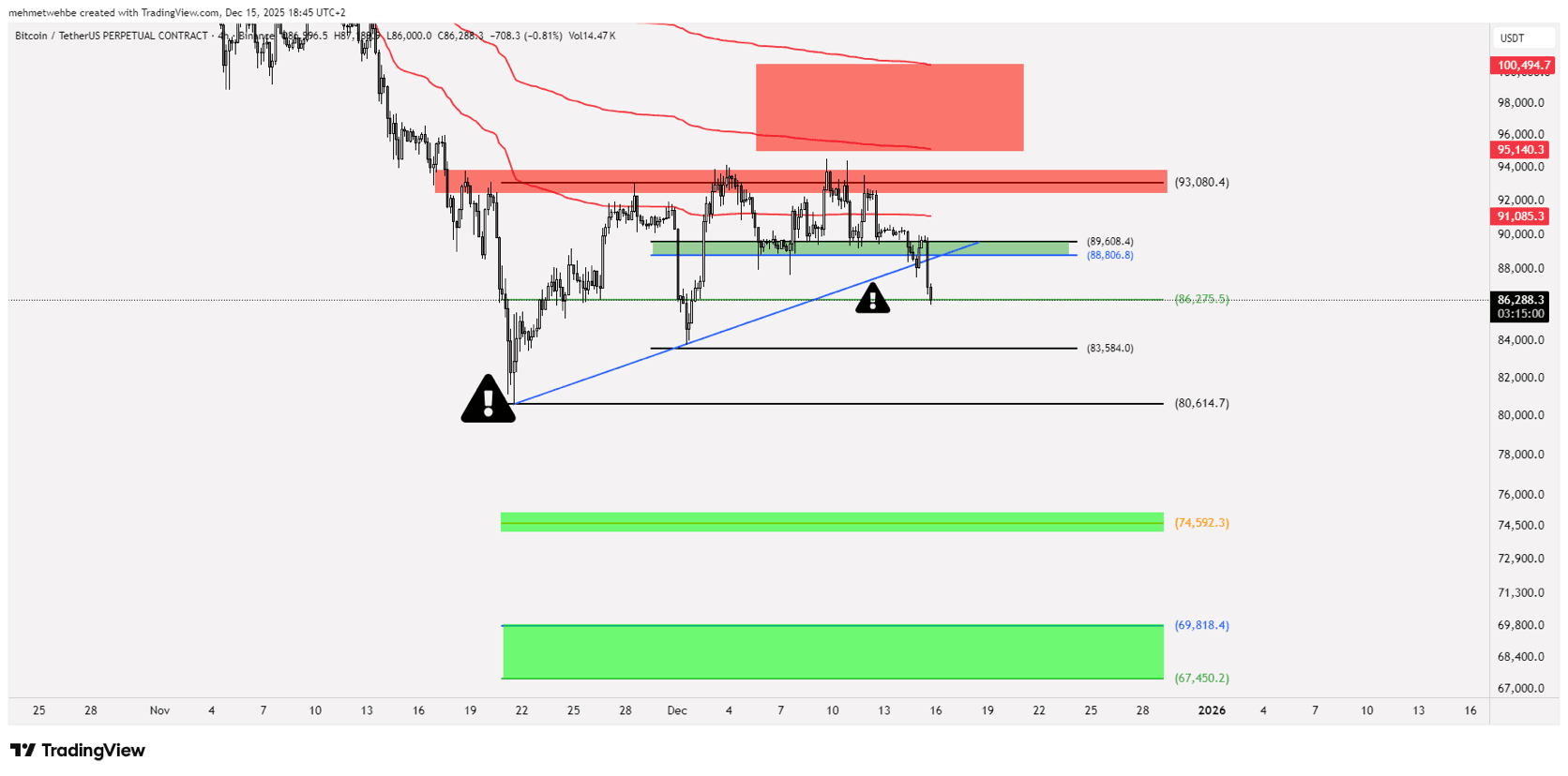
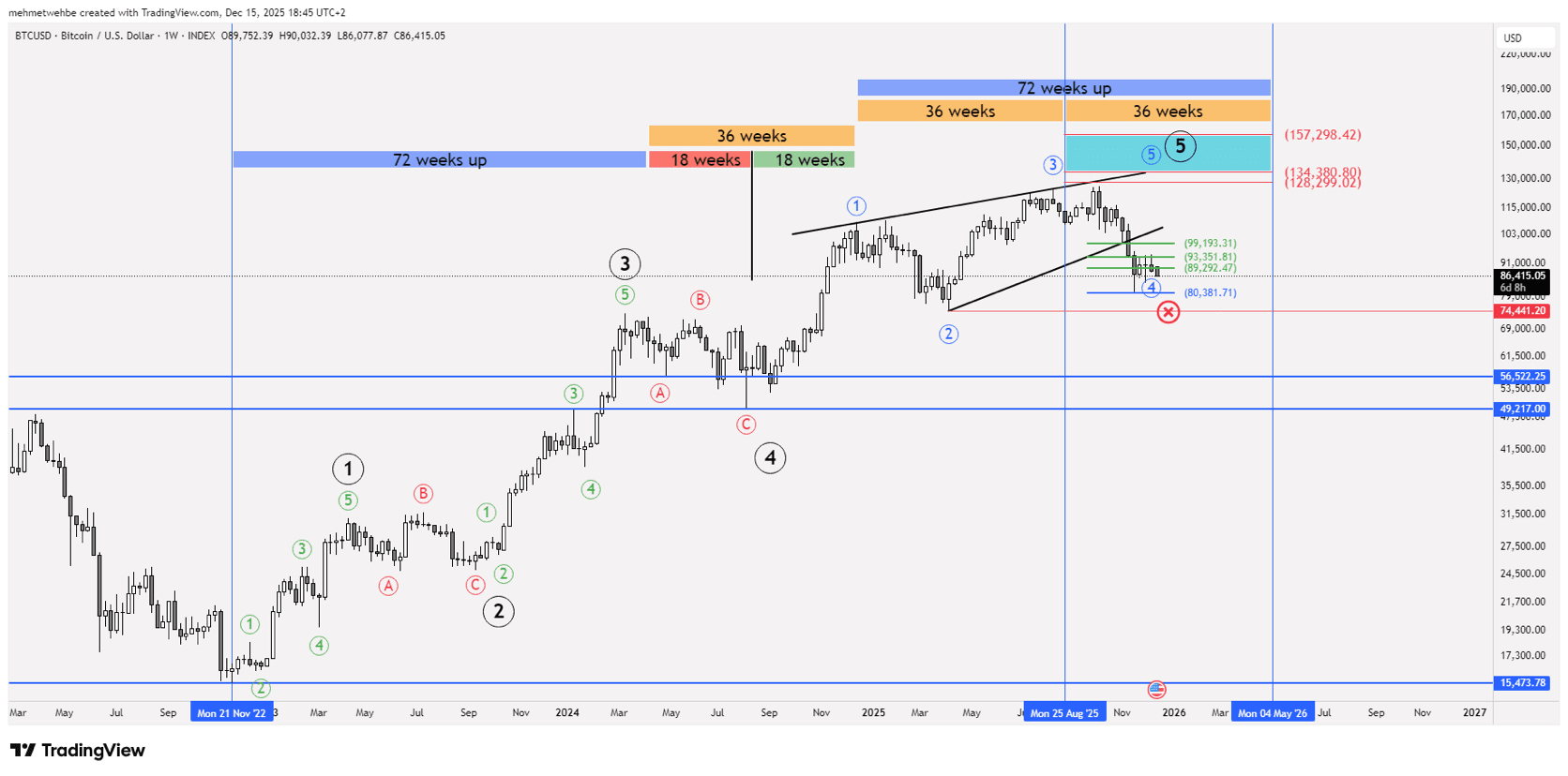
Can Bitcoin break the $100,000 barrier before 2026?
The question of Bitcoin (BTC) reaching $100,000 is no longer just speculation on social media, but has become a serious topic priced by prediction markets, studied by financial institutions, and directly influenced by global economic changes.
To understand the picture more deeply, one must look at three main axes:
1. What do prediction markets price?
2. What are the impactful macroeconomic indicators?
3. What should crypto investors monitor?
Firstly: What do prediction markets say?
Prediction Markets, like those built on blockchain or decentralized financial platforms, reflect probabilities based on real money put in by traders.
What do we observe?
Probabilities are divided:
Some markets price Bitcoin reaching $100,000 before 2026 as a possible but not guaranteed scenario.
The split reflects uncertainty about U.S. monetary policy and the timing of economic shifts.
Optimism usually rises when:
Improvement in inflation data
Increased institutional money flows
And decreases when:
Tightening of monetary policy
Geopolitical disruptions or liquidity crises
📌 Summary: Markets do not rule out the scenario, but do not consider it certain.
Secondly: Macro economic factors (Macro Trends)
1. Inflation
Bitcoin is seen by many as a store of value similar to gold.
If inflation remains above the target levels of central banks:
Interest in Bitcoin as a hedge may increase.
However, if inflation is strongly curbed:
The risk appetite for digital assets may decrease.
2. Federal Reserve policies (Fed Policy)
U.S. Federal policy is the most influential factor on Bitcoin:
Lowering interest rates:
Increases liquidity in markets
Supports high-risk assets like Bitcoin
Continued high interest rates:
Pressures crypto
Drives investors towards bonds and the dollar
📉 Historically, major bull cycles for Bitcoin came after the Fed shifted from tightening to easing.
3. Bitcoin ETFs
The entry of spot Bitcoin ETFs changed the game:
Facilitated the entry of institutional investors
Increased Bitcoin's legitimacy as an investment asset
Continuous positive money flows into these funds:
Means real demand for Bitcoin
Reduces supply in the market
📊 The more flows increase, the greater the chances of upward pressure on the price.
4. Supply and demand (Halving Effect)
The halving event reduces mining rewards, thus: the new supply of Bitcoin decreases
Historically:
The years following the halving have seen strong increases, but: the effect is not immediate and depends on general economic conditions
Thirdly: What should crypto investors monitor?
If you are following the $100,000 scenario, focus on:
🔍 Key indicators:
U.S. inflation data (CPI)
Federal decisions on interest rates
The volume of flows into Bitcoin ETFs
Strength of the U.S. dollar (DXY)
📈 Market indicators:
Trading volume and liquidity
Whale behavior (On-chain data)
Keeping the price above important psychological support levels
Final summary
🔹 Is a breakthrough of $100,000 before 2026 possible?
Yes, it's possible — but it's not guaranteed.
🔹 What supports the positive scenario?
Monetary easing
Strong institutional flows
Ongoing inflation
Reduced supply post-halving
🔹 What could hinder it?
High interest rates for a long time
Severe economic recession
Unexpected regulatory tightening
👉 Bitcoin today is no longer just a speculative asset; it has become a bet on the future financial system. The path to $100,000 depends on the convergence of macroeconomics with institutional demand and long-term trust.
