

 When BANK first arrived on-chain it didn’t shout—its value showed up in the quiet plumbing of the protocol: vote-escrowed power, priority access to products, and a token design built to align long-term contributors with the platform’s growth. From the get-go Lorenzo framed BANK not as a fad ticker but as the ledger of influence for an institutional-grade Bitcoin liquidity layer: a fixed maximum supply (2.1 billion) and a circulating base in the hundreds of millions give it identity and scarcity that matter when teams, funds, and retail users argue about who decides product economics.
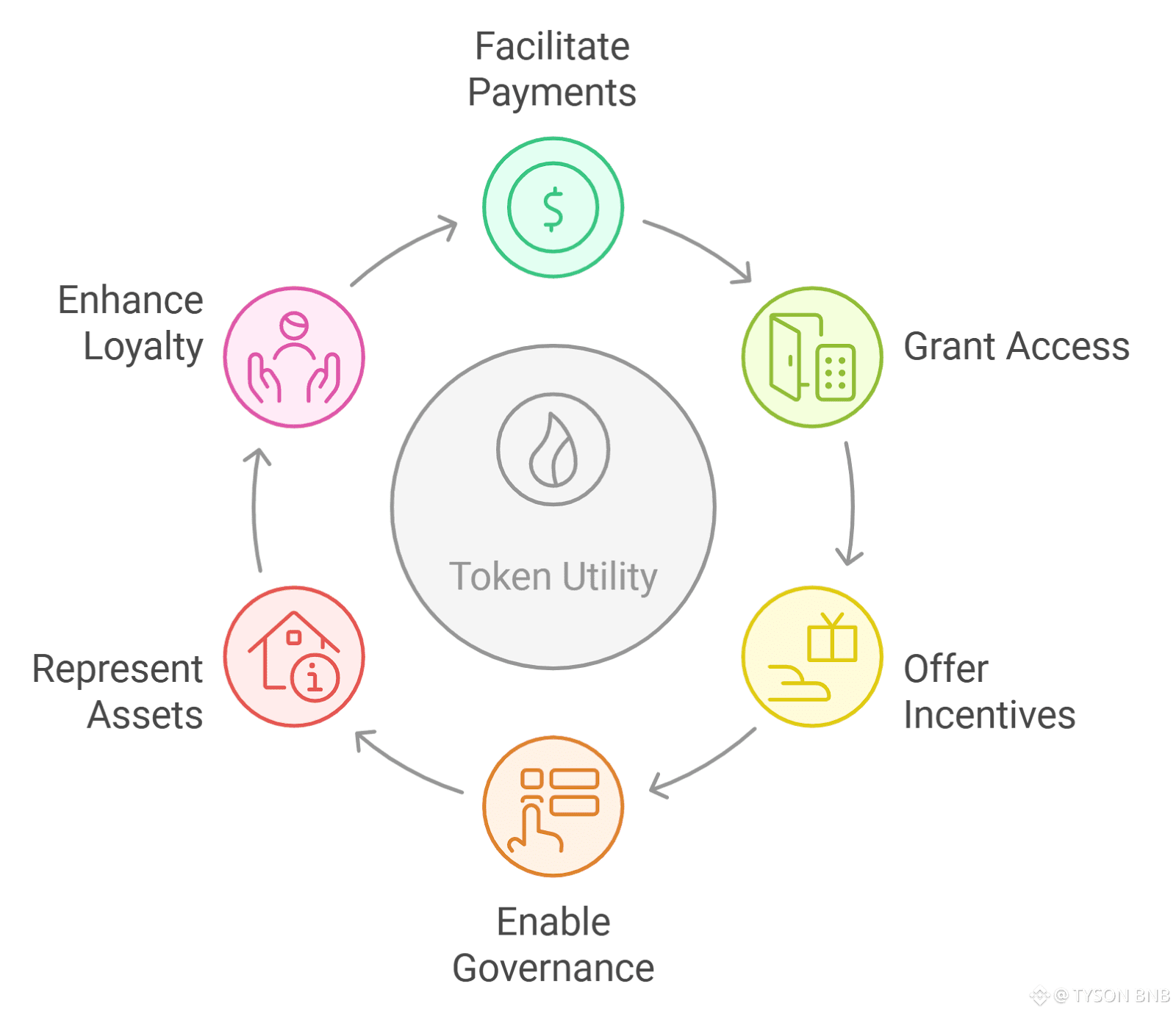
You can feel the design thinking when you step past the price chart and read the utility map: BANK is governance first — holders can influence upgrades, fee flows, and incentive gauges — but Lorenzo made sure that governance isn’t just talk. By locking BANK into veBANK, users exchange liquid tokens for concentrated voice and access: more veBANK means more voting weight, deeper reward shares, and a sort of backstage pass to vaults and premium yield strategies. That vote-escrow model is a social contract: those willing to commit long-term capital are given the ability to steer economics, while short-term holders still trade and provide liquidity.
Underneath that governance layer sits a practical stacking of features that turn abstract utility into everyday incentives. Staking BANK grants fee discounts and gateway rights to new products; it is the ticket into premium yield buckets and experimental vaults where early liquidity meets higher priority allocation. This is not just marketing — it’s a working mechanism to align user behavior with the protocol’s roadmap: people who want access and influence lock tokens, which reduces circulating supply pressure and ties rewards to the protocol’s health. The token contract and on-chain traces show a BEP-20 implementation and concrete flows that let developers instrument incentives precisely.
BANK converts belief into agency. For an institutional allocator considering whether to route sizable BTC exposure through Lorenzo’s pools, the existence of a native token that confers governance and priority feels like a bridge between opaque centralized counterparts and the transparent, auditable rules of DeFi. That sense of agency — the ability to vote, to earn higher-tier access, to be visible in the allocation queue — creates loyalty. Users don’t merely hold a balancing sheet asset; they hold a voice and a queue position for future yield products, which in human terms translates into trust, patience, and willingness to stake capital for the long arc.
Tokenomics reinforce that psychology. Public data aggregators and exchanges record a finite emission schedule and highlight circulating numbers: those figures become the shared facts that markets and users reference when building expectations. Lorenzo’s approach to splitting product risk and reward (through things like principal tokens and yield-accruing instruments) means BANK is not the only lever but a central coordination point — it is the clock in the room that sets rhythms for incentives, distributions, and voting windows. The careful interplay of token supply, staking mechanics, and product access makes BANK both a governance token and a functional key to Lorenzo’s financial primitives.
There are pragmatic trade-offs baked into the model. Locking for veBANK increases governance power but reduces immediate liquidity, which can dampen speculative flows; conversely, a large circulating supply enables tradability and market depth. Lorenzo appears to balance those forces by making locked positions materially valuable — not only in votes but in tangible yield and product access — so the decision to lock is an economic one, not just ideological. Design choices like these determine whether the token becomes an instrument for community stewardship or a simple trading asset.
If you read the protocol announcements and on-chain traces together, you see an ambition: Lorenzo wants BANK to be the connective tissue between institutional liquidity providers and the DeFi primitives that turn idle Bitcoin into yield-bearing financial products. That ambition shapes how BANK’s incentives are structured: governance to guide product development, staking to secure priority access, and an emission and distribution plan that aims to seed both deep liquidity and long-term stakeholder alignment. It’s less about capturing short-term hype and more about building an economy where token holders participate in the protocol’s evolution.
BANK’s story is not a chart or a headline — it’s a social and economic experiment in coordination. Lorenzo has given the token a clear role: shape the protocol, reward the committed, and make product access a function of contribution. For anyone watching token design, BANK is an interesting case of combining vote-escrow mechanics with institutional product goals: it shows how a native token can be engineered to do heavy lifting — governance, economic alignment, and access control — while the underlying Bitcoin-focused products do the market-facing work of generating yield and liquidity.


