Sometimes the most powerful moments in trading are quiet ones.
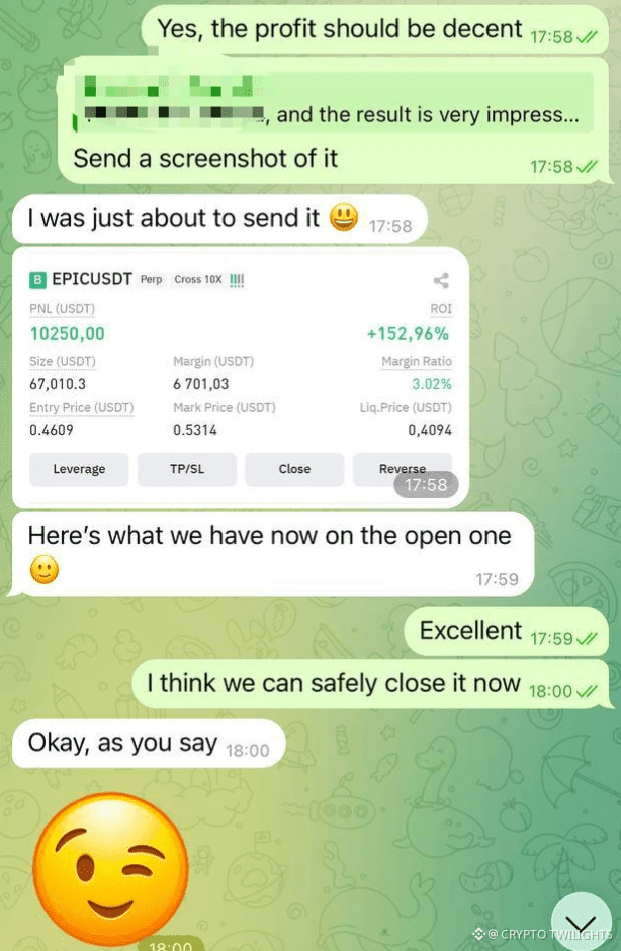
No hype. No noise. Just a calm conversation, a clear screenshot, and a simple decision made at the right time. What looks like an ordinary chat actually reflects many of the core principles that separate emotional trading from professional execution.
At first glance, people focus on the profit number. A strong PNL always attracts attention, and understandably so. But experienced traders know that profit is only the outcome, not the achievement. The real achievement lies in everything that happened before that screenshot was taken: the patience to wait for a clean setup, the confidence to enter without hesitation, and the discipline to manage the trade while emotions are constantly trying to interfere.
One important detail here is timing. The discussion wasn’t rushed. There was no panic to close early, and no greed pushing to hold endlessly. Instead, the tone stayed neutral and composed. This mindset is critical. Markets reward those who respect structure and punish those who chase excitement. Staying emotionally flat during a winning trade is often harder than staying calm during a losing one.
Another lesson hidden in this moment is trust in the process. When someone says, “The profit should be decent,” it shows realistic expectations. Not every trade needs to be a home run. Consistent base hits build accounts, while constant attempts at perfection usually destroy them. Accepting what the market offers, instead of demanding more, is a sign of maturity.
Risk awareness also plays a huge role. Even when a position is deeply in profit, risk never disappears. Price can reverse, volatility can spike, and sentiment can change in seconds. That’s why the decision to close is just as strategic as the decision to open. Saying, “I think we can safely close it now,” is not fear—it’s respect for uncertainty.
Many traders struggle at this exact point. They see green numbers and start imagining what could happen if price keeps going. That imagination is dangerous. The market doesn’t care about hopes or screenshots. It only reacts to order flow and liquidity. Locking in profit is not missing out; it’s completing the job.
The screenshot also highlights clarity. Everything is visible: entry, size, margin, ROI. Transparency like this forces accountability. When traders know exactly why they are in a trade and where they stand, decision-making becomes simpler. Confusion creates hesitation, and hesitation is expensive.
Another overlooked aspect is communication. Calm, direct messages without emotional language reduce mistakes. There’s no excitement overload, no pressure. Just information and agreement. Trading, whether solo or with others, benefits greatly from clear communication. It keeps everyone aligned with the plan rather than reacting to the market minute by minute.
What truly matters is repeatability. One good trade means nothing if it can’t be repeated under different conditions. The habits shown here—planning, patience, confirmation, and timely exit—are repeatable skills. They don’t rely on luck or news. They rely on discipline.
It’s also important to normalize closing trades. Too many people glorify holding forever or catching exact tops. In reality, professional trading is boring. Enter, manage, exit, move on. No attachment. No drama. Once the trade is closed, the mind is free for the next opportunity.
In the long run, this mindset protects capital, protects confidence, and protects mental health. Trading is not a sprint for dopamine; it’s a long process of decision-making under uncertainty. The goal is not to feel smart, but to stay consistent.
So when you look at a screenshot like this, don’t just see profit. See patience. See structure. See emotional control. See a trader choosing certainty over greed. Those are the decisions that quietly build longevity in the market, one calm conversation at a time.