As shown in the figure, the market situation is very clear now: it rose for two weeks before the interest rate cut and then fell after the cut. The movements before and after the previous interest rate cuts have all been like this, and this time it seems to be no exception. Let's take a look at the specific details.
After the previous interest rate cuts, the favorable factors have all been exhausted, and the pullback usually lasts about 10 days. Now there are about 3-5 days left for the pullback. Generally, the pullback will almost completely offset most of the gains made before the interest rate cut.
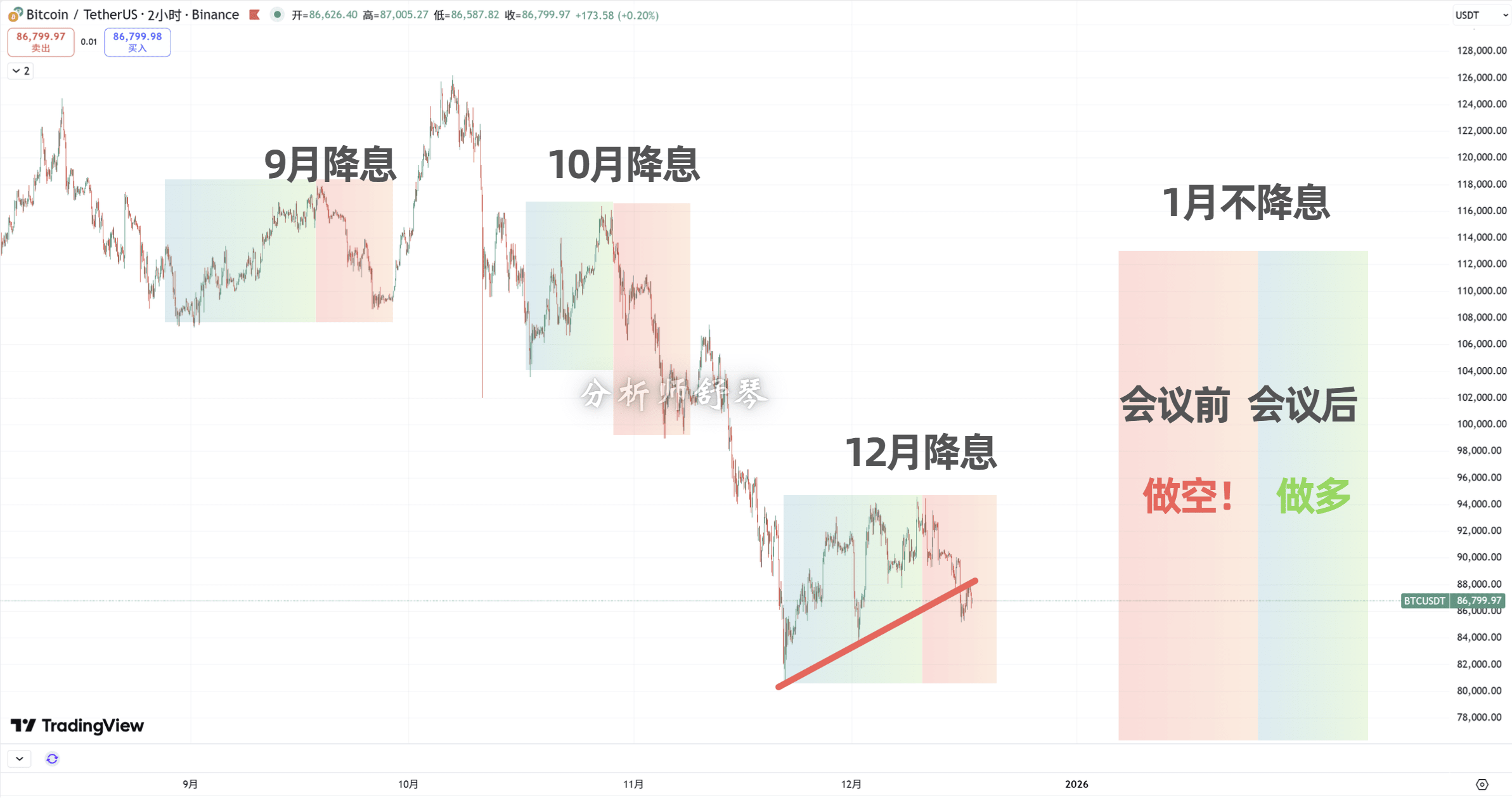
So this time it rose from around 81,000, and in the following week, Bitcoin may drop back to between 81,000 and 83,000. However, in the short term, the CPI inflation data on Thursday has some uncertainty and will be the focus of short-term fluctuations.
Then when Bitcoin tests the bottom for the second time, there will be a good rebound, and the probability of this is quite high. Everyone can try to place orders near the two previous lows to take advantage of the rebound. After that, the market will re-enter normal trading conditions, and we will adjust based on market signals for price fluctuations.
Then the next clear trading opportunity is that interest rates will not be cut in January, so the cryptocurrency price is likely to start falling two weeks before the monetary policy meeting, and then rebound after the meeting as the bearish sentiment is fully priced in. This probability is quite good and is an important trading opportunity for the future.
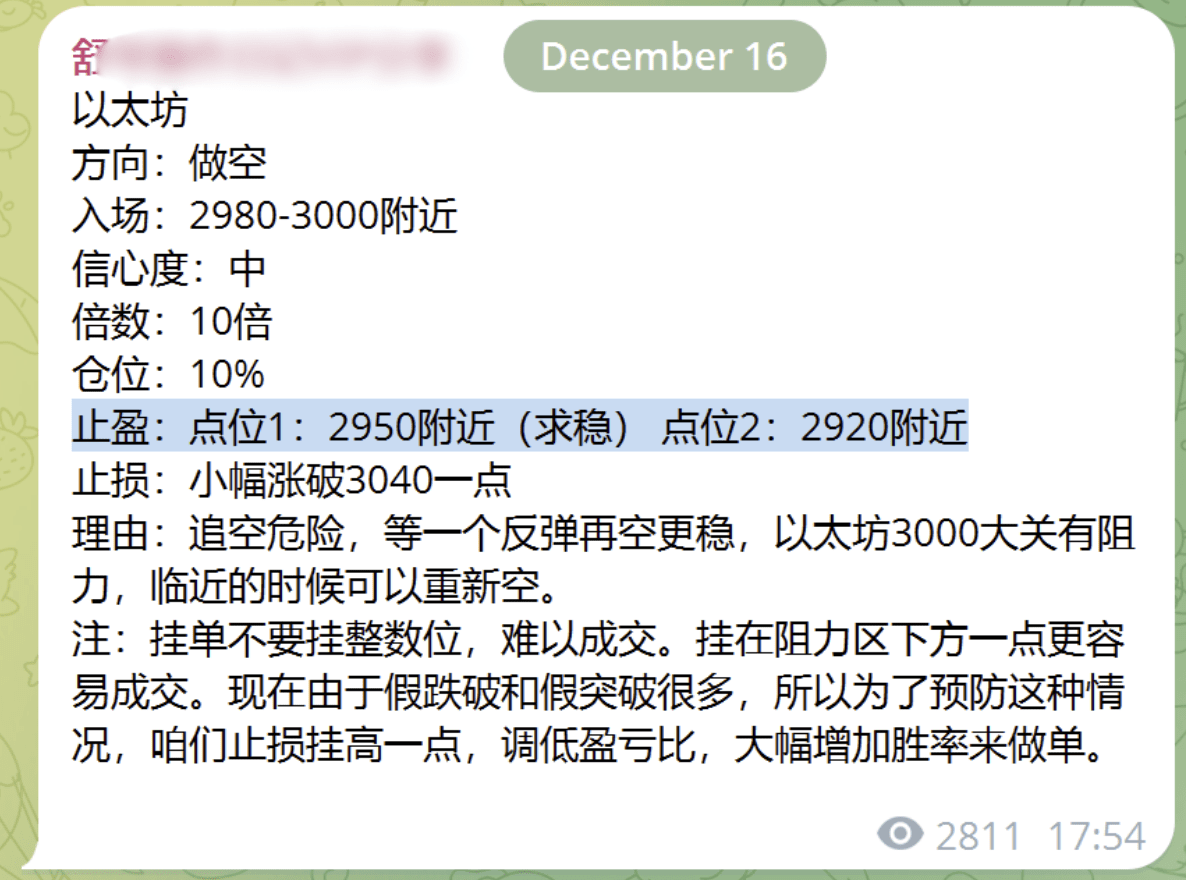
So besides trend trading, we also open positions every day for short-term trades. When the cryptocurrency price rebounds near resistance levels, it's a good opportunity to short. For example, ETH has resistance around 3000, so Shuqin let everyone short at 2980, which is very precise entry. That night it dropped to 2900. If ETH rebounds again, I will try to short once more, but the effect might not be as good the second time. We maintain operations every day.