
Gold strengthens, Bitcoin lags behind
Recently, gold prices have been rising steadily, and silver has also followed suit, but Bitcoin has struggled to keep up with the pace. This disparity is reflected not only in prices but also on-chain — investors prefer tokenized gold over Bitcoin when the market is under pressure.
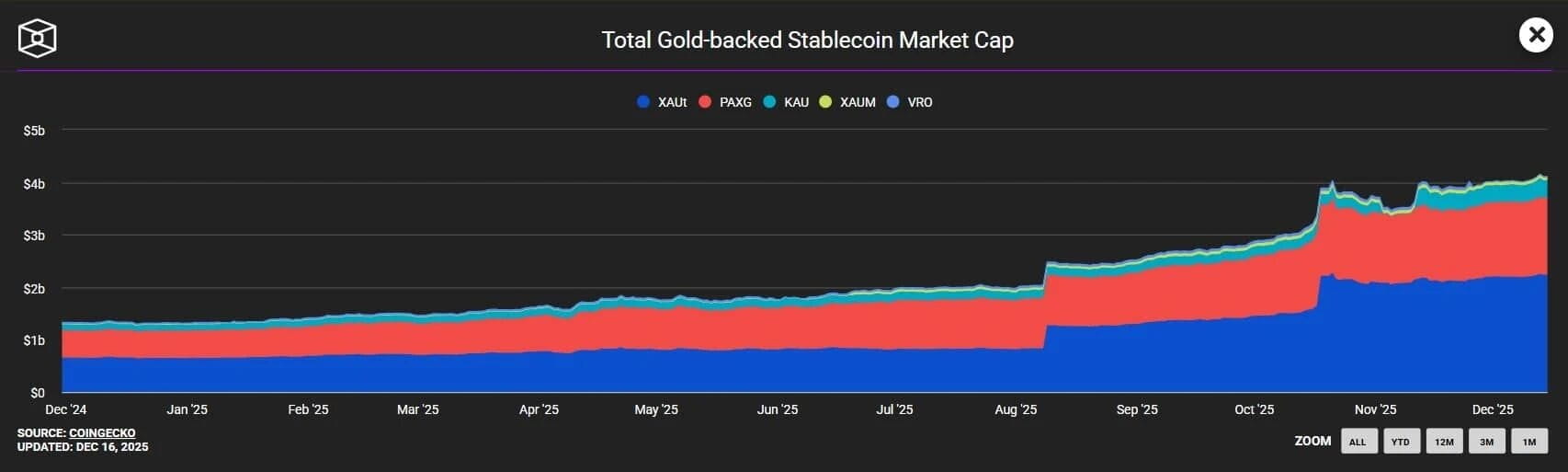
The total market capitalization of gold-backed stablecoins has surpassed $4 billion, higher than expectations at the beginning of the year. This is primarily because investors are seeking more stable safe-haven assets in a highly volatile market. Tether Gold and Paxos Gold dominate the entire tokenized gold market, and supply has been accelerating in recent months. #BTC
The new favorite among on-chain assets
Tokenization of gold is becoming the star of the new generation of on-chain assets. As prices rise, more funds are flowing into tokens that track gold prices and remain on-chain. Market data shows that investor interest in this asset is continuously increasing, which also makes Bitcoin's short-term performance weak and difficult to attract safe-haven funds.
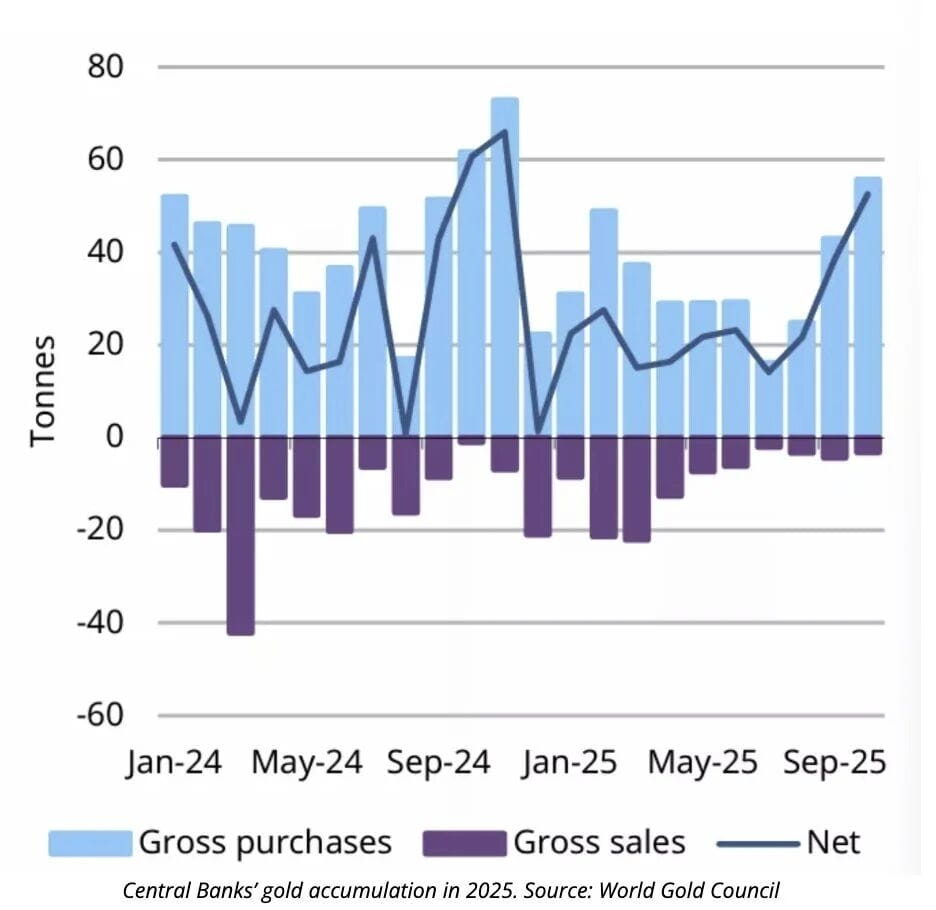
Central banks around the world also prefer gold. Between 2024 and 2025, central banks will continue to purchase gold, adding tens of tons each month. Data from the World Gold Council shows that the net purchase volume peak at the end of 2024 is expected to exceed 70 tons, with purchasing intensity likely to increase in the second half of 2025.
The macro impact of gold on Bitcoin
As gold prices hit new highs, the ratio of Bitcoin to gold is expected to decline by nearly 50% by 2025. Investors are rethinking their allocation of safe-haven assets, with the rise of gold becoming a negative factor for cryptocurrencies in the macro economy. NoOnes CEO Ray Youssef pointed out that the rise in gold prices drives investors towards stable assets, which puts downward pressure on Bitcoin.
Even with Bitcoin ETF outflows and long-term holders reducing their Bitcoin positions, the inflows into gold ETFs remain strong, indicating that investors recognize the hedging value of gold over Bitcoin.
Price trends are diverging
Currently, gold prices are close to $4,300 per ounce, silver has surpassed $60, while Bitcoin has slipped from earlier highs of 110,000 to around 88,000, making it difficult to regain upward momentum in the short term. This price divergence clearly shows the preference of capital in an uncertain market environment—investors tend to favor predictable, stable assets.
Youssef believes that the rise in gold is not speculation, but rather the result of structural factors supporting it. The global debt surge, declining yields, and central banks increasing their gold holdings have made it a key tool for hedging against policy uncertainty. Traders are responding to long-term macro risks by increasing their gold allocation, while the crypto market is still waiting for liquidity clarity.
Conclusion: The definition of safe-haven assets is changing
On-chain tokenized gold trading volume has exceeded $4 billion, showing investor recognition of stability. The ratio of Bitcoin to gold prices has decreased by 50%, indicating a shift in the definition of cryptocurrencies as safe-haven assets. In the short term, stable on-chain gold may become the new favorite among investors, while Bitcoin needs to wait for a clearer market environment to seize rebound opportunities.


