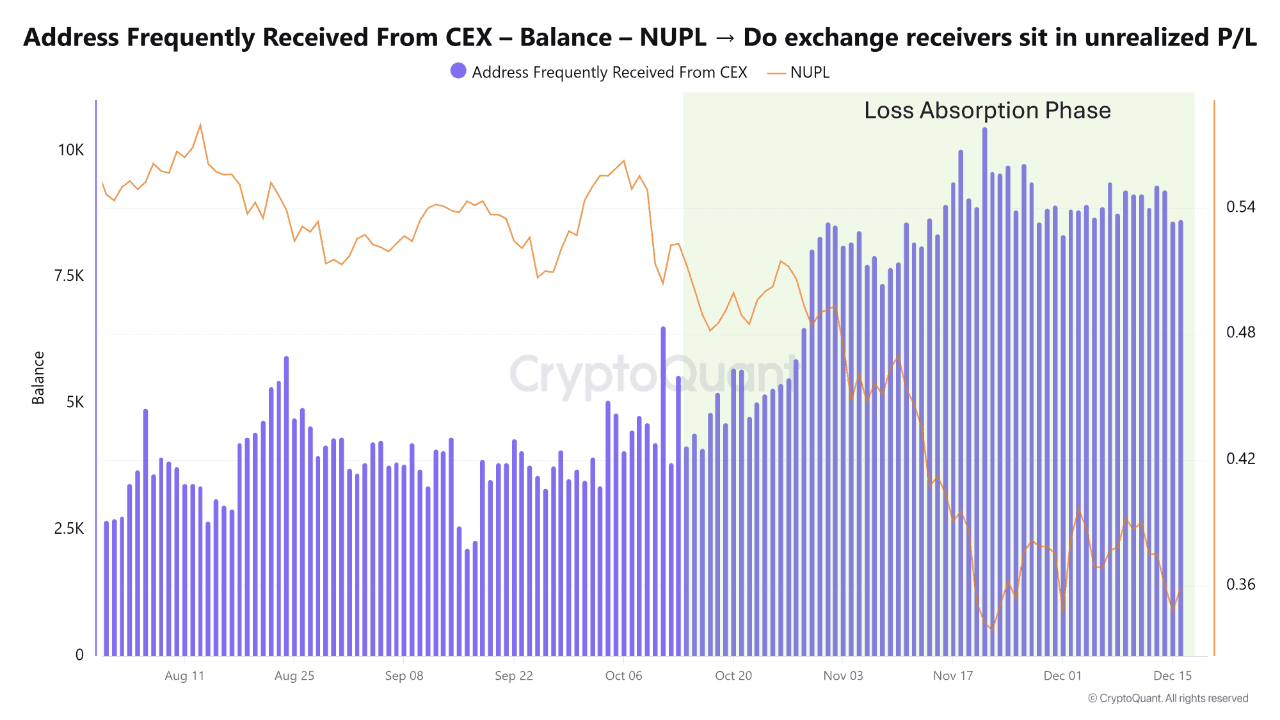
Since the sale of Bitcoin in October, exchange data on the blockchain indicates that the market has shifted from active distribution to a phase of loss absorption. Instead of sustained selling pressure, exchange-related flows now reflect reactive behavior triggered by events, which aligns with consolidation rather than a continuation of the trend.
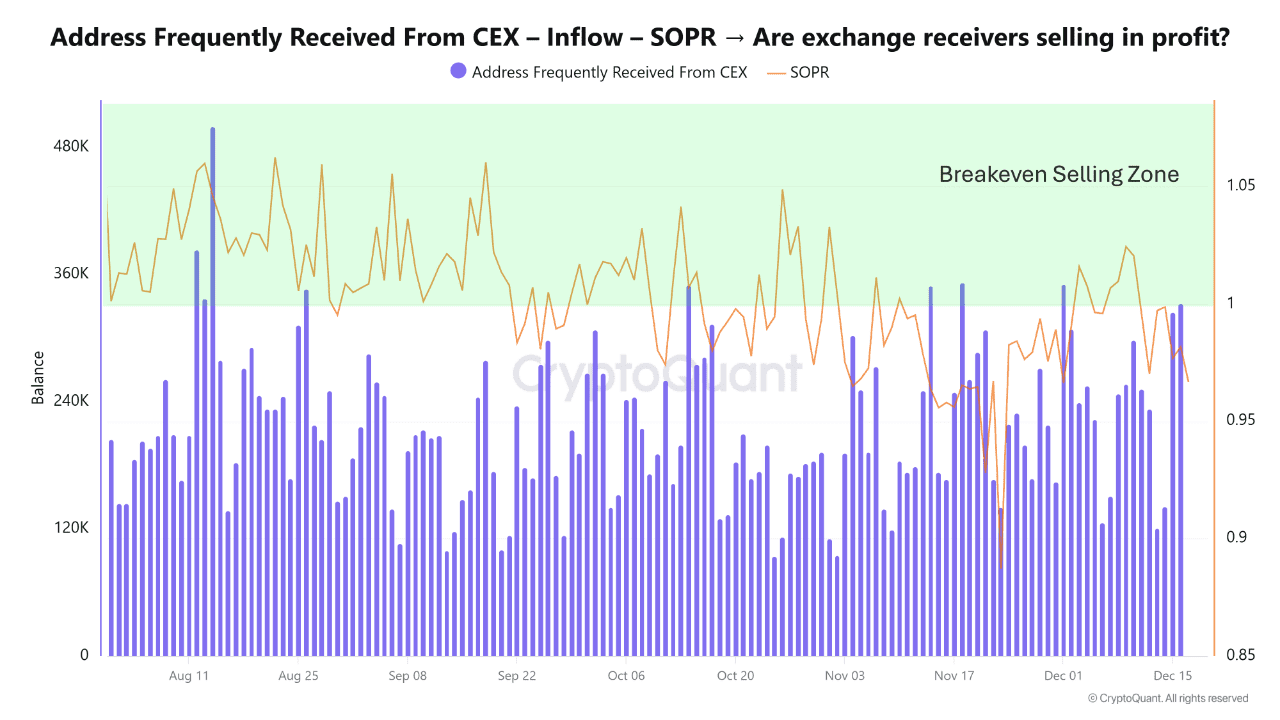
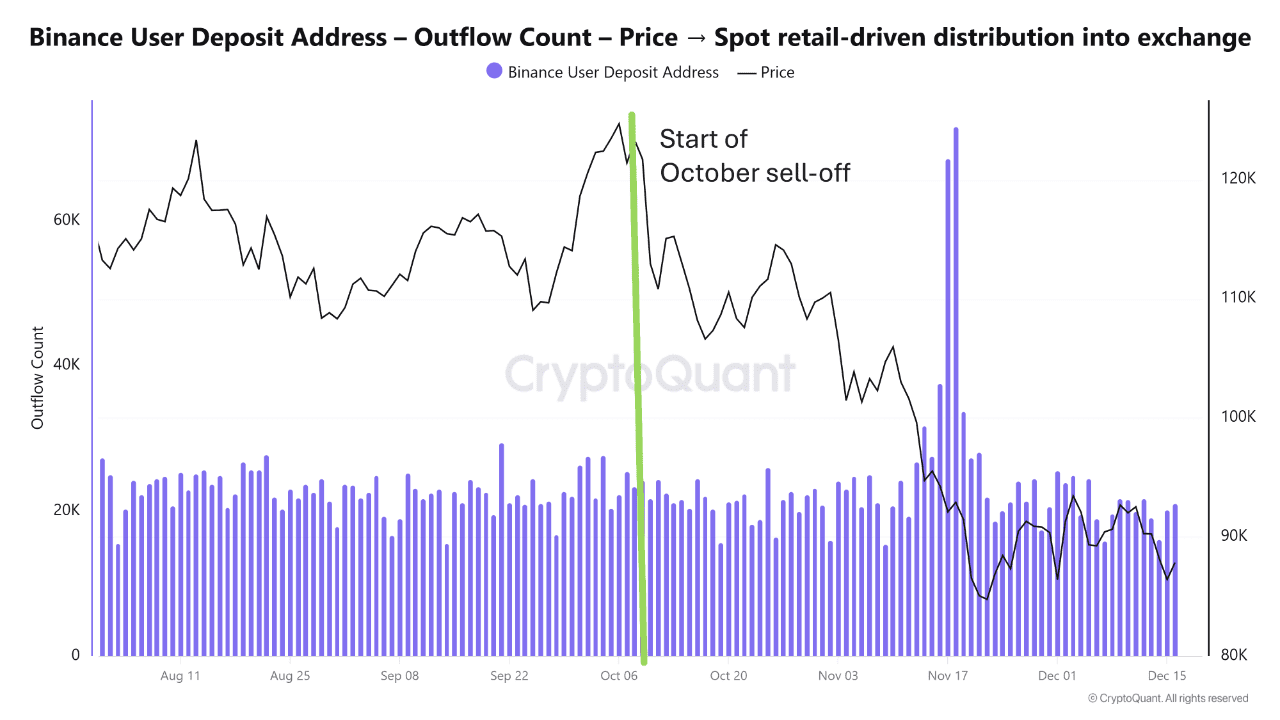
This analysis is based on three charts: Frequent receiving addresses from CEX, Balance & NUPL, Frequent receiving addresses from CEX, Inflows & SOPR, and Binance user deposit address, Number of withdrawals against price. Together, they capture the profitability and intentions of coins moving to exchanges.
NUPL for addresses receiving coins from exchanges remains compressed near cycle lows, confirming that these participants are still operating with limited unrealized profits. The absence of further deterioration is notable, indicating that most forced or panic selling likely occurred during the decline in October. This behavior can be associated with loss aversion, where investors are more motivated by the fear of losses than by potential profits.
The balance of exchange recipients remains stable, while unrealized losses are no longer expanding aggressively. Recognizing this phenomenon, known in prospect theory, helps explain why the compressed NUPL signals a psychological shift from panic selling to cautious holding.
SOPR supports this viewpoint. Over the past month, it has fluctuated around the breakeven level, indicating that coins entering exchanges are being sold close to their cost price, rather than with significant profits or losses. This behavior is typical for a market that is digesting a prior decline rather than initiating a new phase of decrease.
Binance deposit data adds important context. Spikes in deposits closely correlate with local price weakness and quickly disappear once the price stabilizes. There is no evidence of sustained inflows indicating a systematic distribution.