

In a landmark shift for West Africa’s digital economy, Ghana has officially legalized cryptocurrency trading. The announcement follows the successful passage of the Virtual Asset Service Providers (VASP) Bill, 2025, into law, providing the first comprehensive legal framework for digital assets in the country.
Ghana’s parliament approved the legalization of cryptocurrency, a move to address central bank concerns about the widening and unregulated use of the alternative asset in the West African country.
Speaking at the Bank of Ghana’s annual thanksgiving service on December 19 2025, the Governor, Dr. Johnson Pandit Asiama, confirmed that the new legislation effectively ends years of regulatory ambiguity.
The Governor said:
“This year also saw the passage of the Virtual Asset Service Providers Bill, a significant step in preparing the regulatory framework for digital asset activities. The Bill establishes the basis for licensing and supervising participants in this space, ensuring that emerging activity is brought within clear, accountable, and well-governed boundaries.”
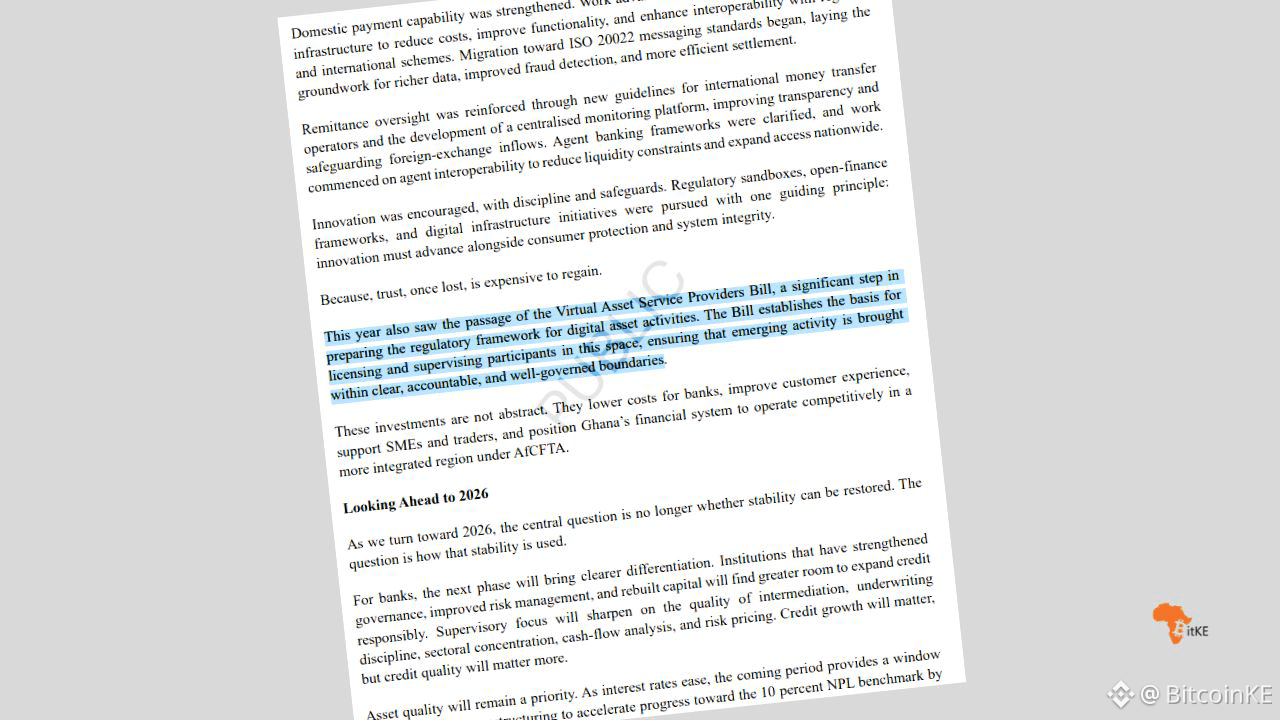
The law will ensure that “emerging activity is brought within clear, accountable, and well-governed boundaries,” Asiama said. Regulatory oversight will “lower costs for banks, improve customer experience, support small and medium-sized enterprises and traders.”
Under the new law, crypto trading is no longer a “grey area,” and individuals can engage in digital asset activities without the fear of legal repercussions or arrest.
REGULATION | Bank of Ghana Publishes Policy Position for Virtual Assets
Key Highlights of the New Crypto Law
The Virtual Asset Service Providers Bill is designed to move Ghana from a “wait-and-see” approach to a proactive regulatory environment.
Major pillars of the law include:
Mandatory Licensing: All entities operating in the crypto space – including exchanges, wallet providers, and custody services – must now be licensed and supervised by the Bank of Ghana (BoG) and the Securities and Exchange Commission (SEC).
Consumer Protection: The law empowers local authorities to safeguard consumers against fraud and ensure that platforms maintain strict internal controls and solvency.
AML/CFT Compliance: In line with global FATF standards, the legislation mandates strict Anti-Money Laundering (AML) and Counter-Terrorist Financing (CFT) protocols, including the “Travel Rule” for digital transactions.
A “No-Arrest” Policy: Governor Asiama specifically noted that the law provides safety for the millions of Ghanaians already using Bitcoin and other tokens, assuring the public that legitimate trading is now a protected economic activity.
REGULATION | Why the Bank of Ghana Targeted Yellow Card with a Public Warning
For years, the Bank of Ghana had warned the public against the use of “unregulated” digital currencies. However, with over 3 million Ghanaians (roughly 9% of the population or 17% of the adult population) trading over $3 billion in crypto between 2023 and 2024, the central bank acknowledged that the digital train had left the station.
By legalizing and regulating the sector, Ghana joins the likes of South Africa and Nigeria in creating a structured environment that aims to attract fintech investment while reining in the risks of an underground market.
EXPERT OPINION | ‘Ghana Has a Choice – Lead or Be Disrupted,’ Says Stanbic Bank Ghana on Crypto Regulation
Stay tuned to BitKE for latest crypto regulatory updates in Ghana and Africa.
Join our WhatsApp channel here.
Follow us on X for the latest posts and updates
Join and interact with our Telegram community
_________________________________________
