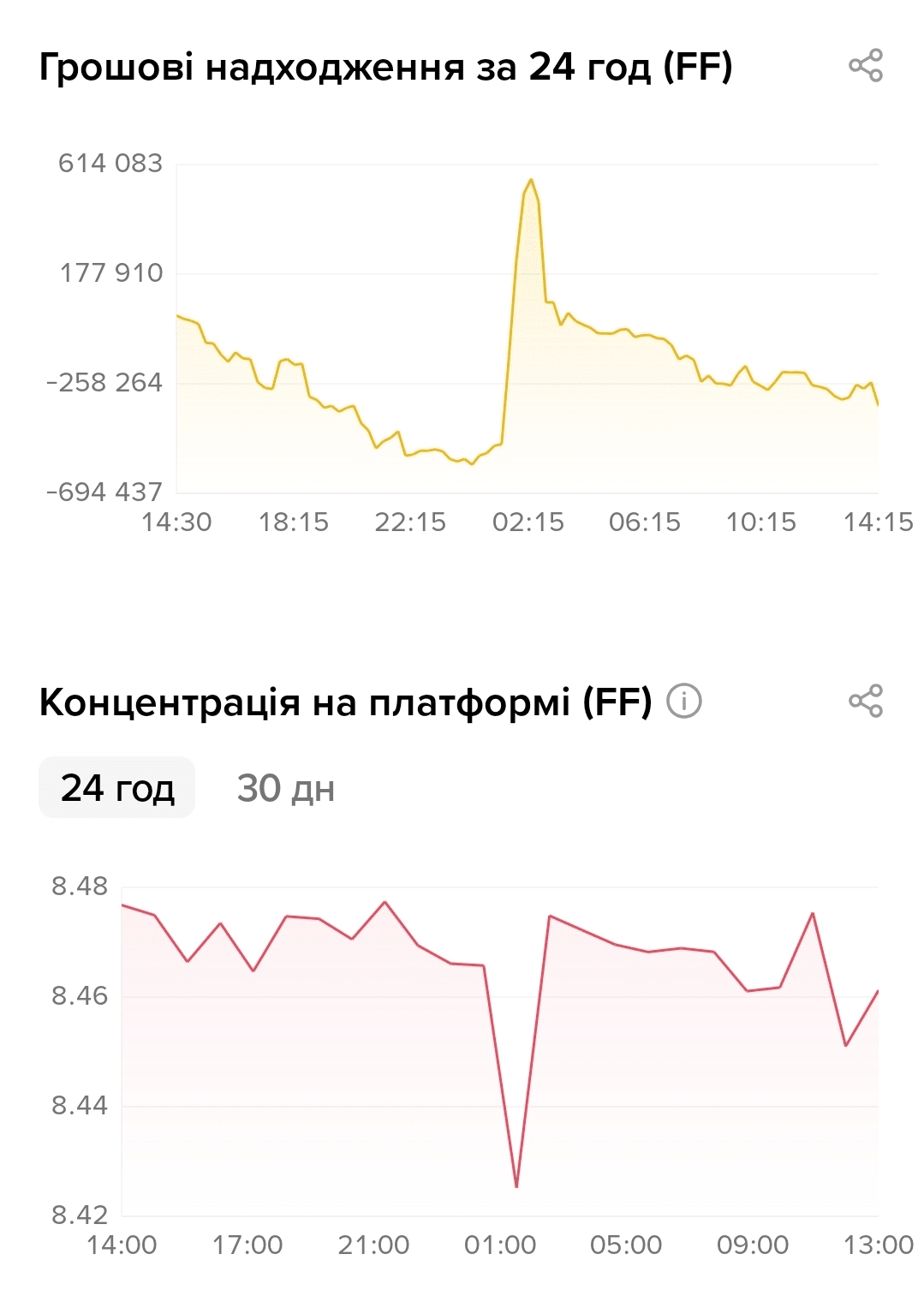
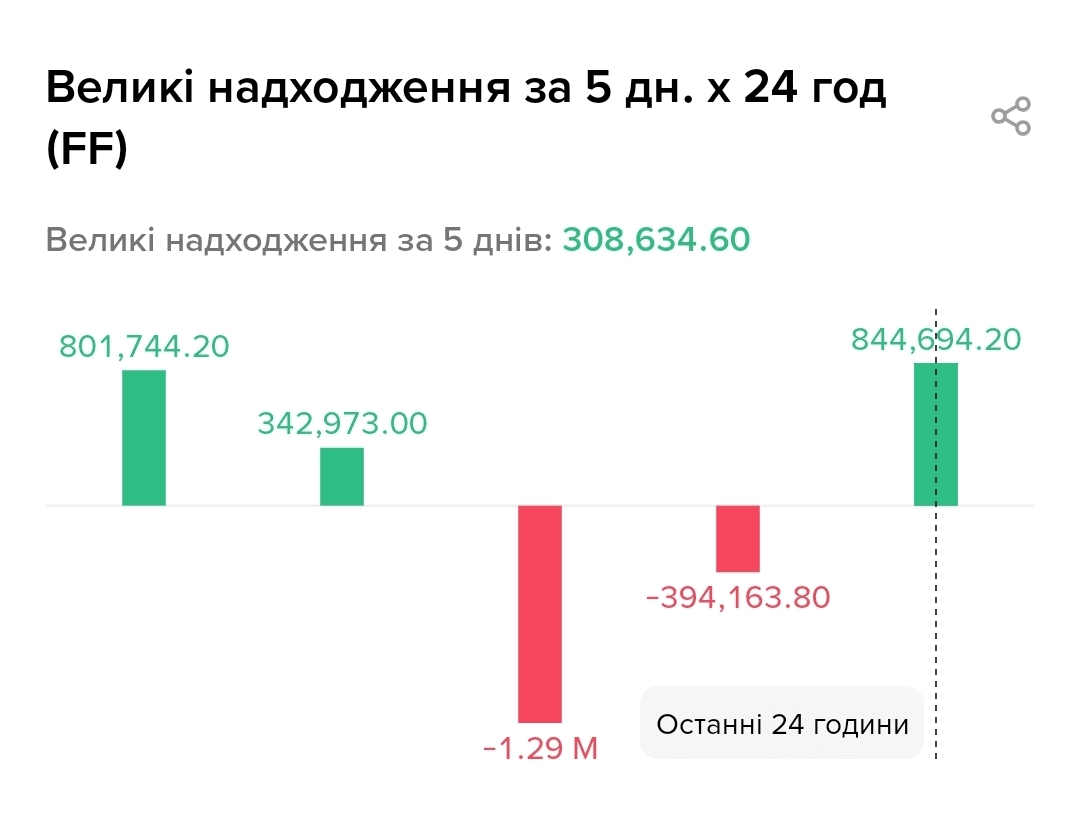
Last night I was sitting with my laptop and just looking at the interface @Falcon Finance . I wasn't doing anything specific, just watching. And suddenly I thought – what really happens when I press this "open position" button? I see a beautiful interface, numbers, buttons. But somewhere there, in the blockchain, the code is executed. The smart contract starts to run. And I became curious – what exactly does it do? How does it "see" me? What does my transaction mean to it?
I am not a programmer, but I love figuring things out. So I opened the block explorer, found one of my old transactions for opening a position, and started looking at the execution code. It was like trying to read a book in a language you don’t know, but you can catch individual words. And you know what? I understood a lot. And it changed my understanding of what I am doing when I use $FF.
When I press a button in the interface, the first thing that happens is my wallet requests confirmation of the transaction. I see the gas amount, I see that the contract wants access to my tokens. I confirm. But what happens next? My transaction flies into the mempool – a sort of queue of transactions waiting to be included in a block. There, it competes with thousands of others for the attention of miners or validators.
When my transaction is included in a block, the magic begins. The smart contract Falcon Finance "wakes up". To it, I am not a person with a name and history. I am just an address. A string of characters – 0x... and then a bunch of letters and numbers. The contract does not know that I am a woman, that I am scared to take risks, that I am worried about liquidation. To it, I am just a string of data.
The first thing it does is check my tokens. I want to put ETH as collateral. The contract asks – how much does it have? Has it given permission for the transfer? It’s like a guard at the entrance checking your ticket. If something is wrong – the transaction is rejected, I lose gas, but my tokens remain with me.
If everything is okay, the contract transfers my ETH to itself. But it does not just take it – it records in its memory: address 0x... my address... has this much ETH. It’s like a bank makes a record in its ledger; only here the ledger is the blockchain, and no one can forge or change it.
Then the most interesting part begins. The contract has to understand how much my ETH is worth right now. For this, it queries the oracle. I imagine it as a phone call to a help center. "Hello, oracle, please tell me how much one ETH is worth in dollars right now?" The oracle responds – let’s say, 3500 dollars. The contract records this figure.
Now the math. I have ETH worth X dollars at the current price. The contract looks at its rules – the minimum collateral ratio, say, 150%. This means that for every 100 dollars of USDf I want to take, I must have collateral worth at least 150 dollars. The contract calculates – okay, at this price of ETH, it can take a maximum of so much USDf.
I specify in the interface how much USDf I want. The contract checks – is it not more than the maximum? Is there enough collateral? If so, it mints USDf. It creates them literally from nothing, from code. It records in its memory – address 0x... my... has a debt of so much USDf. And it transfers these newly created USDf to my address.
It’s crazy to think about. The contract created money, gave it to me, and the only thing that keeps me from just running away with it is math and code. But that’s the beauty of it. The contract does not trust me as a person. It trusts math. It knows – it has my collateral, which is worth more than the debt. If I do not return USDf, it can sell my collateral and cover the debt.
After the position is opened, the contract does not sleep. It is constantly active, even though we do not see it. Every block, every few seconds, different actors can check the state of positions. There are special liquidation bots that constantly scan all positions in #FalconFinance. They look – has anyone's collateral fallen below the critical level?
Imagine that the price of ETH is falling. The contract does not panic; it does not feel emotions. It simply takes the new price from the oracle and calculates – okay, now the collateral of this address is worth less. What is the ratio now? If it is below the critical threshold – the contract allows liquidation. Anyone can call the liquidation function, pay off the debt for me, and receive my collateral at a discount.
This is cold, soulless math. The contract does not ask – maybe it has a hard day? Maybe it just fell asleep and did not see that the price is falling? No. Rules are rules. If the ratio is critical – liquidation is possible. Someone will do it, make a profit, the contract will cover the debt, and the system will remain balanced. My personal history with the contract does not matter.
When I return USDf and want to withdraw my collateral, the process starts again. I send USDf back to the contract. It checks – yes, this address has a debt of this amount. It returns USDf. Okay, the debt is paid off. The contract burns these USDf – they disappear forever, cease to exist. And then it releases my collateral, allowing me to take it.
I have thought a lot about how the contract "sees" time. To it, there is no yesterday or tomorrow. There is only the current block. When someone calls its function, it executes in the context of that specific block with its specific timestamp. It does not remember the past in a human sense. It just has records in its memory – this address did this in block number X, that address did that in block Y.
What struck me is how deterministic all of this is. If I send exactly the same transaction with the same parameters, the contract will behave exactly the same way. There is no randomness, no mood, no "today I feel generous and will give you more credit". There is only code and data. If the conditions are met – the action happens. If not – it does not happen.
I tried to imagine myself in the place of the smart contract @falcon_finance. I am a program. I do not understand the concept of money like humans do. For me, ETH and USDf are just numbers in memory. I do not know that ETH can be used to buy real things, that USDf is a synthetic dollar. I just know the rules – if number A is greater than number B multiplied by coefficient C, then action D is allowed.
But it is in this simplicity that the power lies. The contract cannot be corrupted. It cannot be persuaded, bribed, or intimidated. It does not make mistakes due to fatigue or distraction. It does only what is written in its code, and it does this consistently for all users. The address of a wealthy whale and the address of a person with 100 dollars are treated under the same rules.
I recalled one of my transactions that failed. I tried to take a little more USDf than my collateral allowed. The contract rejected the transaction. I lost money on gas, but the contract protected me from myself. It did not allow me to open too risky a position. In a bank, a clerk might say, "well okay, you are a regular customer, let’s give you a little more." The contract simply said "no" – no explanations, no exceptions.
Sometimes I think about bugs in the code. Bugs. If there is a bug in the contract, it will not disappear by itself. The contract will continue to execute incorrect logic until someone exploits that bug or until a new contract is deployed. It’s scary, but that’s why audits are so important. The code must be perfect because it cannot simply be "fixed" later like a regular program.
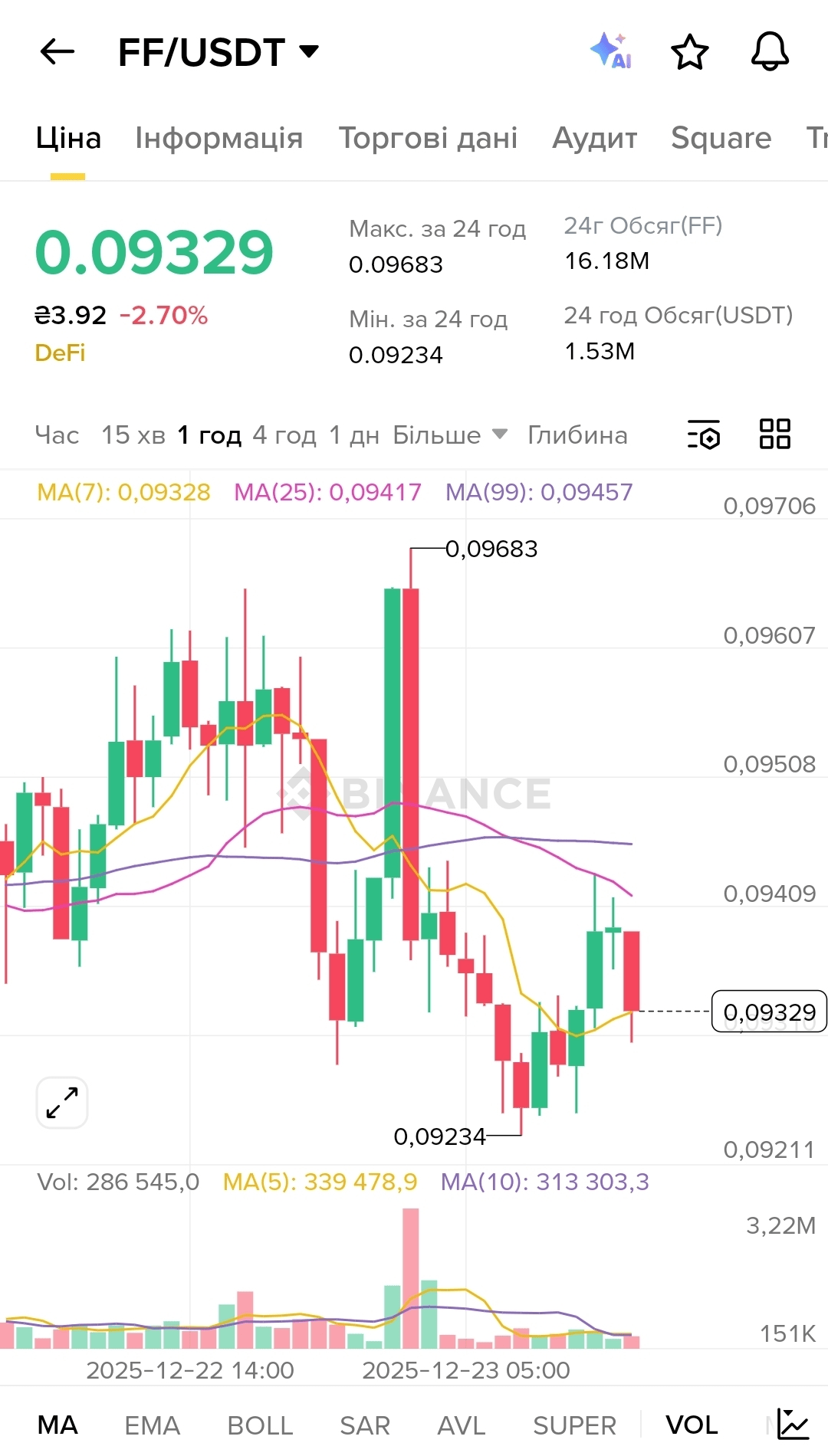
When I look at $FF now, I see not just an interface. I see behind it a complex machine of logic, checks, and mathematical operations. I understand that every action I take is a call to a function that triggers a chain of other functions. My ETH is transferred, recorded, evaluated, multiplied by coefficients, compared to thresholds. USDf is created, transferred, recorded as debt.
This knowledge has changed my attitude towards the protocol. I have become more aware. I understand that behind every number in the interface is a specific operation in the contract. I understand that oracles are not just details, but critically important sources of truth for the contract. I understand that liquidation is not malice on the part of the protocol, but a mathematical necessity for maintaining the system's balance.
I imagine the contract as a friendly but completely impartial judge. It is not on my side and not against me. It simply executes the rules that were defined when it was created. If I play by the rules – it is my tool that works flawlessly. If I break the rules or conditions change unfavorably for me – it will execute the liquidation without hesitation. No personal animosity, just code.
The strangest thing for me is the realization that the contract exists forever as long as the blockchain works. It does not sleep, does not take lunch breaks, does not have weekends. 24/7, every second it is ready to process transactions. It does not matter if it is three in the morning or noon, Sunday or a weekday. Someone somewhere in the world can always interact with it, and it will respond just as quickly and accurately.
Now, when I open a position in #FalconFinance, I imagine this entire process. My wallet signs the transaction with my private key – this is proof that it is really me. The transaction flies into the network, gets included in a block. The contract receives a call, checks the balances, queries the oracle, performs calculations, mints USDf, and updates its state. All this happens in a matter of seconds, automatically, without any human intermediary.
And this understanding gives me more trust. Because I know that the contract cannot deceive me. It is physically unable to create USDf for itself, to appropriate my collateral without reason, or change the rules of the game on the fly. All it can do is execute its code. And this code is open, verified, and deployed on the blockchain forever. This is the transparency that traditional finance can only dream of. In a bank, you do not know how exactly they assess your creditworthiness, what algorithms they use. Here, all the code is out in the open. Anyone can read and verify it. And I appreciate this immensely.
#FalconFinance @Falcon Finance $FF