This morning I was reading about how the first Neuralink implantation surgery was conducted in the UK on a patient named Paul. He was literally able to control a computer with the power of thought just a few hours after the surgery. And you know what amazed me? Not the technology itself - it has been operational since the beginning of 2024. What amazed me was another question: what if this technology meets blockchain? What if @APRO Oracle starts reading data directly from the human brain?
Sounds like science fiction, but let’s think. Neuralink in 2025 raised $600 million at a valuation of $9.6 billion. They already have five patients with implants who play video games, draw, write texts - all by thought. Bred, a patient with ALS who cannot speak, uses an implant to communicate on the street. Alex controls a Tesla Optimus robotic arm through his implant. This is no longer the future - this is the present. Now imagine what will happen when this technology meets blockchain and oracles like $AT.
Currently, the biggest problem in blockchain is the verification of intentions and consent. When you sign a smart contract, how does the system know it’s really you? That you haven’t been forced? That you understand what you are consenting to? We use private keys, biometrics, multi-factor authentication. But all of this can be bypassed, forged, stolen. Now imagine a system where an oracle like #APRO can verify your intentions directly through a neurointerface.
Neuralink records signals from over a thousand electrodes simultaneously. They can recognize not just what movements you want to make - they can recognize patterns of your thinking. And what if @APRO-Oracle could read these patterns and verify: yes, this is indeed this person, yes, they truly understand what they are consenting to, yes, they are not being coerced, yes, they are of sound mind? This would change the entire concept of consent in decentralized systems.
Think about prediction markets - the same niche where APRO is currently trying to establish itself. Right now, when you place a bet, the system does not know if you are truly confident in your choice or just pressing buttons blindly. But what if an oracle could read your level of confidence directly from your brain? Could it verify that your decision is based on analysis rather than emotional impulse? This would create an entirely new level of trust in prediction markets.
Or take autonomous AI agents - this is a huge topic right now. Research from November 2025 showed that the biggest challenge is how to verify that an AI agent acts according to the user's intent. Currently, cryptographic proofs, smart contracts, and decentralized identifiers are used. But what if an oracle could verify intentions directly through a neurointerface? You think about an action, your brain generates a unique pattern, the oracle verifies this pattern and gives permission for the AI agent to act. This would solve the trust issue at a fundamental level.
There’s another aspect that strikes me. Blockchain consent management - managing consent for data usage through blockchain. Right now, this is done through signatures, tokens, smart contracts. But the real problem is that people often do not understand what they are consenting to. They just press the "I agree" button without reading. But what if the system could verify that you truly understand the terms? That your brain shows patterns that correspond to understanding, rather than just automatic button pressing?
Of course, I understand all the risks. This is a privacy issue on a whole different level. If an oracle can read data from your brain - what guarantees are there that this data will not be misused? How do we protect neurodata from hackers? How can we ensure that the system does not manipulate your intentions instead of verifying them? And do we even want to live in a world where blockchain has access to our thoughts?
But looking at how quickly Neuralink is developing - they are already planning an implantation procedure that will take 10 minutes and cost 1-2 thousand dollars - I understand that it’s not a question of whether it will happen, but when. By 2026, they may have dozens of patients. By 2030 - possibly thousands. And Elon Musk talks about a future where millions of people will have implants.
And here @APRO Oracle can occupy a unique position. They are already working on verifying complex events, on AI-driven verification, on computational integrity. They support 40+ blockchains and 1400+ data feeds. What if they became the first oracle to integrate with neurointerfaces? That would create a protocol for verifying intentions through direct connections to the brain?
This sounds crazy right now in December 2025. But remember how in 2020 the idea of brain implants seemed like science fiction? And now Paul in London is controlling a computer just hours after surgery. Technologies are developing exponentially. And whoever starts thinking about integrating neurointerfaces with oracles now - will have a huge advantage when this technology becomes mainstream.
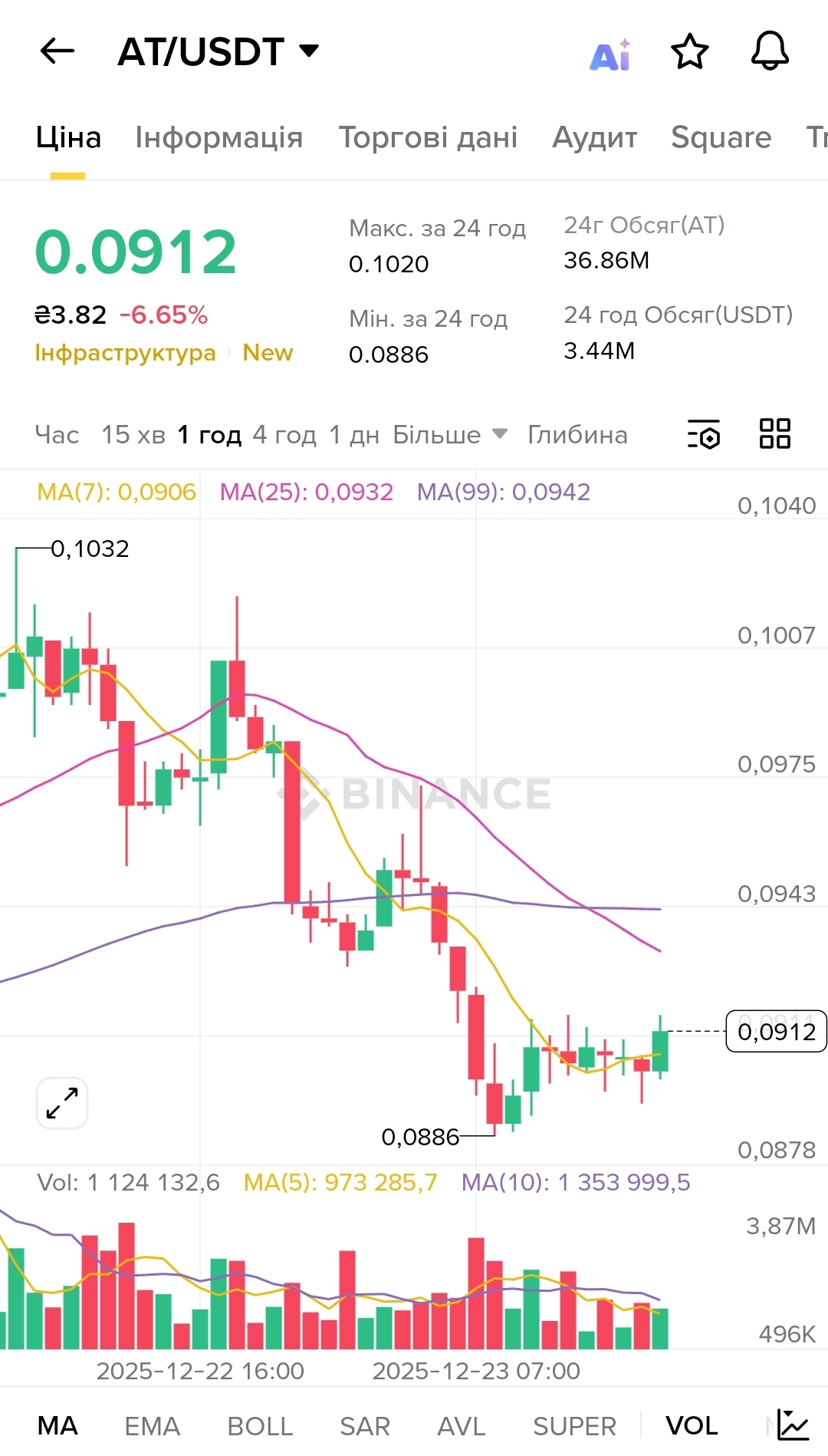
Perhaps $AT is currently trading at $0.13 and looks like a regular oracle project. But what if #APRO becomes a bridge between the human brain and blockchain? What if they create a standard for verifying intentions through a neurointerface? This would not just be an oracle for price feeds or prediction markets. It would be fundamental infrastructure for a new era where people with implants interact with decentralized systems directly through thoughts.
I know this is a provocative topic. That many will say it’s ethically unacceptable, that it violates privacy, that it’s dangerous. And they may be right. But technology does not wait for us to resolve all ethical issues. Neuralink is already here. Blockchain is already here. Oracles are already here. The question is not whether they will converge - the question is who will be the first to create a safe and ethical way to do so. And I think @APRO-Oracle has every chance to be the one who does it. Or at least tries. Time will tell if this is the future we want, but it is certainly a future that is coming faster than we think.