
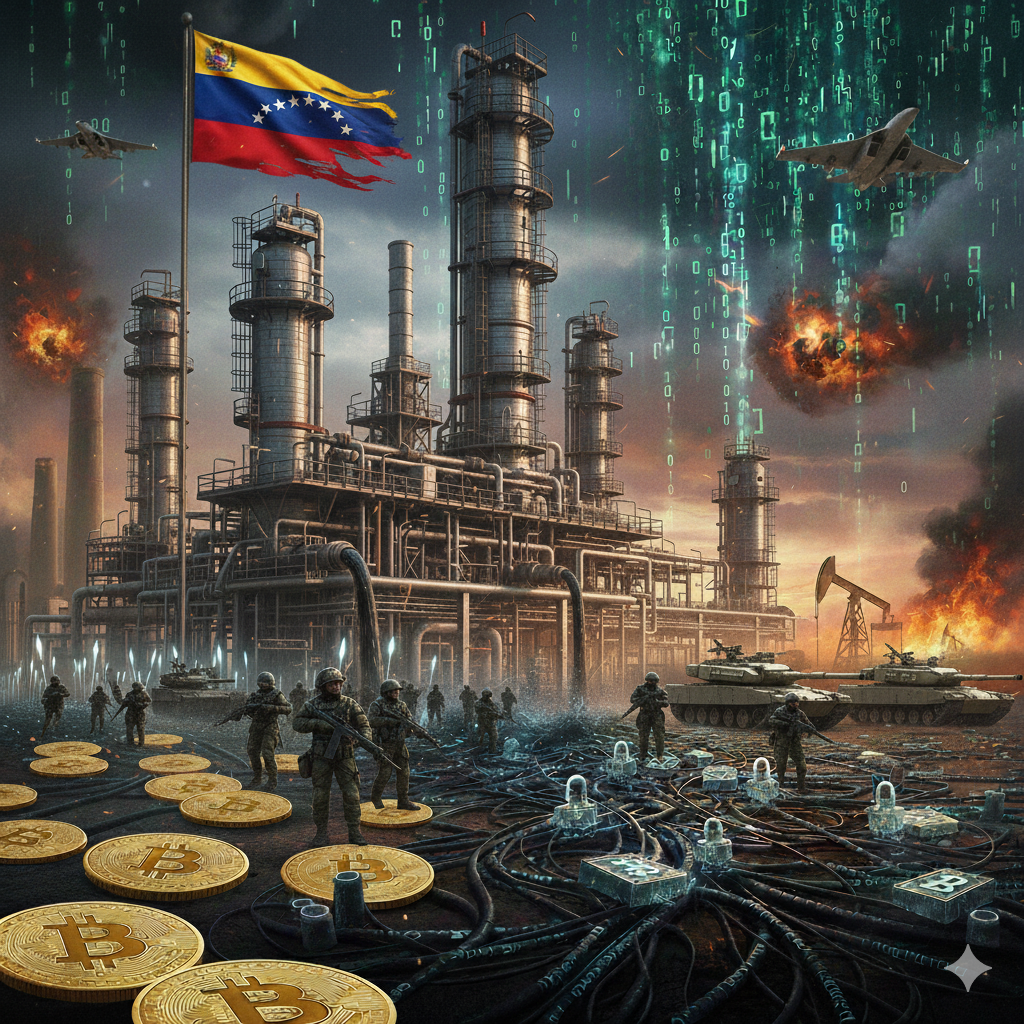
 $btc I have two important observations about this:
1. Who will give the keys? 👀
The possession of cryptocurrencies is intrinsically linked to the control of private keys. If a government intends to "confiscate" digital assets from another country, it will face a crucial technical obstacle: without access to the keys, the crypto assets remain inaccessible, even if publicly identified. This raises the practical question of how such a transfer would be enforced – cooperation, extraction by technical means, or extreme pressure on specific individuals would be necessary. Unless the keys are voluntarily handed over or discovered, confiscation becomes both a digital and political battle.
2. In the future, will cryptocurrencies be the first target in conflicts between nations?
The idea of nations confiscating cryptocurrencies from other nations sets a dangerous geopolitical precedent. If this becomes reality, we may enter an era in which digital reserves are seen as war spoils or instruments of sanction, even before physical assets or natural resources. The decentralized and global nature of cryptocurrencies could paradoxically make them prime targets: they are portable, valuable, and theoretically easier to transfer internationally than gold or real estate. In the long term, this could push countries to rethink how they safeguard their digital assets – perhaps migrating to even more decentralized or distributed custody solutions.
Bitcoin is finite – and that changes everything.
The absolute scarcity of Bitcoin (only 21 million units) gives it a strategic value similar to rare natural resources. If governments begin to view BTC as a national store of value, its seizure could become a goal in conflict or economic pressure scenarios. This would not only elevate the geopolitical status of cryptocurrencies but also test the limits of financial sovereignty in the digital age. Self-custody and decentralization would emerge not just as ideals of individual freedom, but as mechanisms of national defense against expropriation.
Therefore, gentlemen, keep this in mind:
The future of sovereignty may depend not only on armies and diplomacy, but on who controls private keys. Bitcoin, being finite and digital, is not just an asset – it is a new battlefield. Countries holding reserves in cryptocurrencies will need, beyond technological protection, to consider the strategic implications of having them in a world where digital borders are as fluid as they are vulnerable.