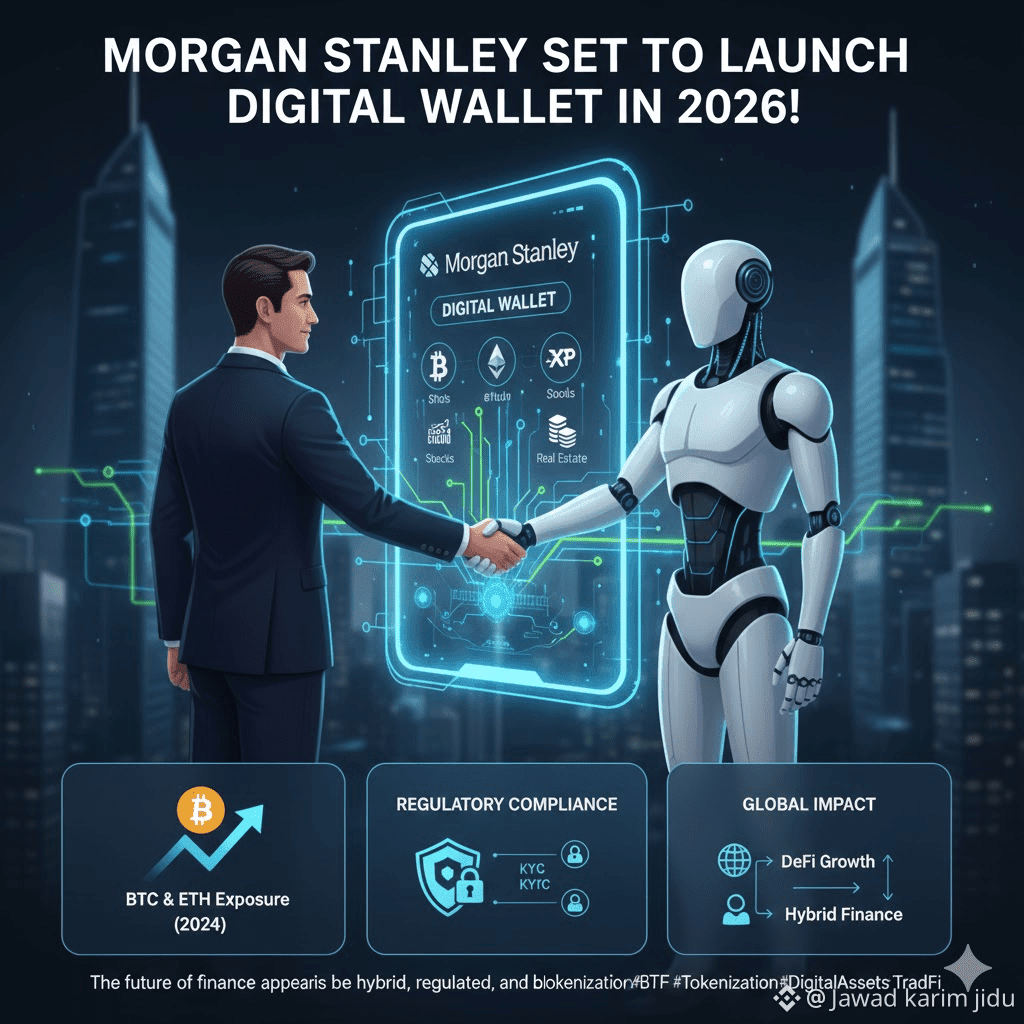
Morgan Stanley, one of the world’s leading financial institutions, is reportedly planning to launch its own digital wallet in the second half of 2026. The platform is expected to support not only cryptocurrencies, but also tokenized real-world assets (RWAs) such as stocks, bonds, and real estate—marking a major step toward deeper integration of traditional finance and blockchain technology.
🔗 A MAJOR STEP TOWARD DIGITAL FINANCE INTEGRATION
The move highlights a growing trend in global finance: bridging digital assets with traditional investment products. Morgan Stanley aims to offer a single, unified platform where investors can access a wide range of assets while remaining fully compliant with regulatory frameworks.
“Investors are increasingly seeking seamless ways to diversify across both traditional and digital assets,” noted an industry analyst. “A proprietary wallet from a trusted institution like Morgan Stanley could accelerate mainstream adoption of crypto and tokenized assets.”
This initiative builds on Morgan Stanley’s earlier steps, including providing Bitcoin and Ethereum exposure to clients in 2024, signaling a broader shift toward blockchain adoption within legacy finance.
🛡️ REGULATORY COMPLIANCE AT THE CORE
Unlike many existing crypto wallets, Morgan Stanley’s solution is expected to place regulatory compliance and investor protection at the center. Industry experts believe this could address one of crypto’s biggest challenges: regulatory uncertainty.
A bank-backed, compliant digital wallet could reassure institutional and retail investors alike, encouraging greater participation in digital asset markets.
🌍 IMPLICATIONS FOR THE FINANCIAL INDUSTRY
Morgan Stanley’s move may trigger a ripple effect across the banking sector, pushing other major institutions to accelerate their own crypto and tokenization strategies—whether through custody services, digital wallets, or asset-tokenization platforms.
At the same time, this development could fuel growth in DeFi and tokenization ecosystems, blending innovation with traditional financial infrastructure to create a more hybrid financial system.
According to Boston Consulting Group, tokenized real-world assets could unlock up to $16 trillion in market value by 2030, underscoring the scale of this transformation.
📈 WHAT THIS MEANS FOR INVESTORS
Although the wallet still awaits testing and regulatory approval, the announcement signals a clear trend: traditional finance is embracing digital assets more openly than ever before. For investors, this could mean easier access to diversified portfolios and participation in an increasingly tokenized global financial system.
The future of finance appears to be hybrid, regulated, and blockchain-powered—and Morgan Stanley is positioning itself at the center of that shift.
#USTradeDeficitShrink #crypto #Tokenization #DigitalAssets #TradFi