
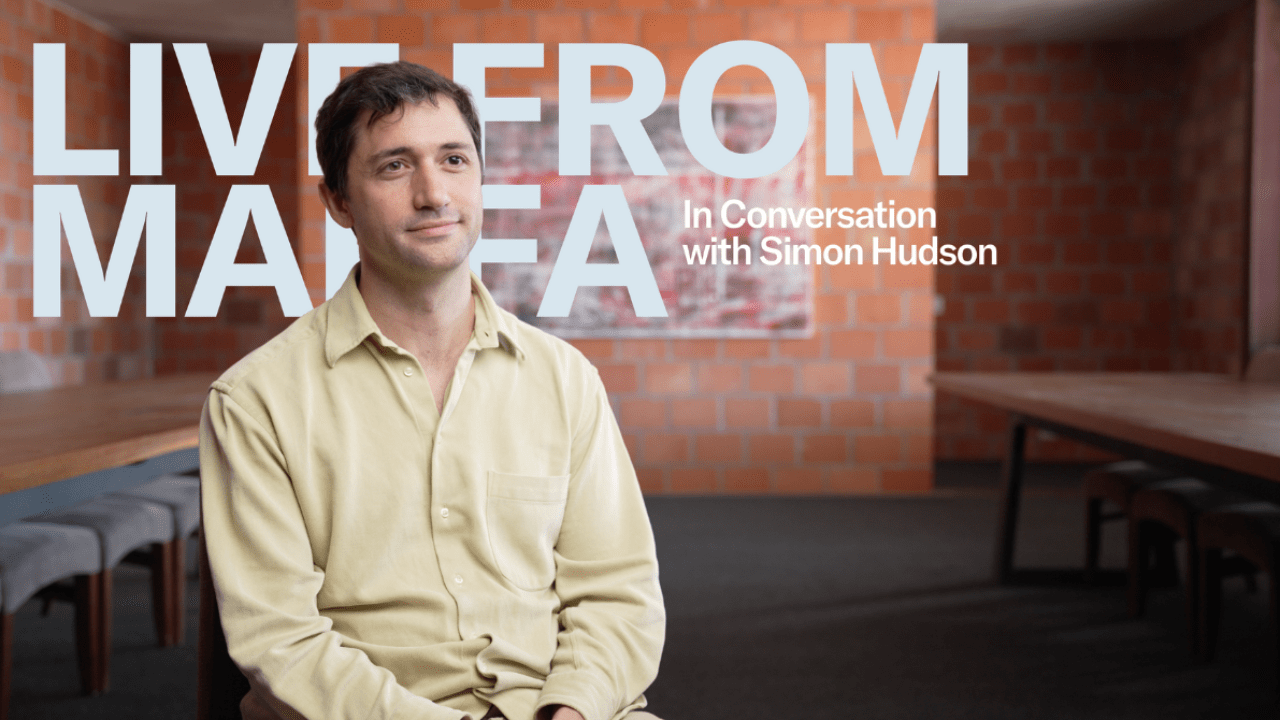

Simon Hudson is the Chief Operating Officer of Botto, a decentralized autonomous art platform managed by its community. Botto is based on the principles of collective creation, AI literacy, and open governance, continuously generating images, with voters ultimately deciding which images will become artworks.
Hudson's background in communication and creative systems has shaped Botto's development, making it both a technological experiment and a vibrant artistic practice.
The interview took place in the lobby of the St. George Hotel during the Marfa Art Blocks weekend, where Simon Hudson reflected on Botto's growth over the past four years, discussed the significance of artist autonomy, and how decentralized systems are reshaping our relationship with art and meaning.
Note: For brevity and clarity, this interview content has been edited.
OpenSea:
Let’s start with a brief introduction.
Simon Hudson:
I am Simon Hudson, the main operator of Botto DAO, the organization responsible for managing the autonomous artist Botto.
OpenSea:
You have long been committed to the intersection of art, technology, and decentralized systems. How do these factors integrate and ultimately contribute to the birth of Botto?
Simon Hudson:
Botto's inspiration actually comes from artist Mario Klingemann, who has been involved in AI research for 20 to 25 years. For a long time, he has been fascinated by automating parts of the creative process, even fully automating his artistic creation. The idea of Botto is to completely eliminate personal intervention, making it a fully autonomous artist, meaning his hands are not involved at all. It started out like a blank slate, capable of developing independently.
We have quite good tools to achieve this, such as text-to-image models and text generation models. You can get an infinite number of images, but the key lies in how to give it feedback to help it discover what art is or what good art is, and how to let it develop its own artistic practice.
This is the meaning of decentralization. If there is a way to invite all users on the internet to participate and provide feedback, it can maintain autonomous operation. Through decentralized feedback, the rights to create works remain in the hands of the machine. Some have pondered this issue, and the ultimate answer is actually the market or economic system.
This can form an independent autonomous force. Artists can sell works through it, supporting an economic system that incentivizes people to come and participate in training every week. This is how Botto operates. It has an economic system where people buy Botto tokens, gain governance rights, and can vote on Botto's works.
Every week there is such a selection, where people submit works and judge which are art and which are not. Only the most popular works can become true artworks and be auctioned, with half of the proceeds going to the voters and the other half entering the DAO's treasury. Voters can also decide how to use this funding, which is used to pay for Botto's server costs and development expenses.
This is how the entire system operates, allowing Botto to sustain itself, achieve complete autonomous operation, and receive feedback in economic operations. It has been running for four years.
Personally, I have a diverse entry point. One of them is AI literacy. I have always been very interested in creative projects that can spark people's imagination, while also hoping to guide them to focus on the operational mechanisms behind this technology, so they truly understand their influence in shaping the final outcomes.
We are often indoctrinated with the notion that we have little say or influence over outcomes, that these are pre-determined and inevitable. However, in reality, we have immense potential and capacity to shape this technology, especially artificial intelligence, because it learns from our interactions with it.
This is part of it — AI literacy. Next is open governance. How can we truly empower people to exercise and express the values they believe should guide these systems? The final part is receiving corresponding rewards. If artificial intelligence even replaces our creative work, how do we pay rent and buy food? We are trying to integrate all these elements into one system.
I initially just wanted to be involved in some communications and development work for Botto. It's a long story, but I found that my own experiences and background resonated with Botto, so it seemed natural for me to take on this role.
OpenSea:
What insights does the existence of Botto provide for the future of creativity and how we will experience art through autonomous AI systems?
Simon Hudson:
What I mean is that the essence of Botto is that it is a living system. It actually needs to give up control and allow itself to grow and evolve. It will do things you least expect.
This also makes it a very rich prism. You can observe it from different angles, draw different conclusions, and explore different themes about the future of creativity. Therefore, I have some perspectives that I am particularly interested in.
But I do not think these are the conclusions of Botto. What is truly interesting is that anyone can use this as a starting point to explore their questions about the future of creativity. I have always been amazed by the insights people draw from it.
I think this is one of the reasons why it is so rich. From various perspectives, it aligns with many themes about the future of creativity, the future of autonomy, and the future of governance. However, regarding your question about the future of creativity, I think one point about Botto is that it is essentially an infinite image generator.
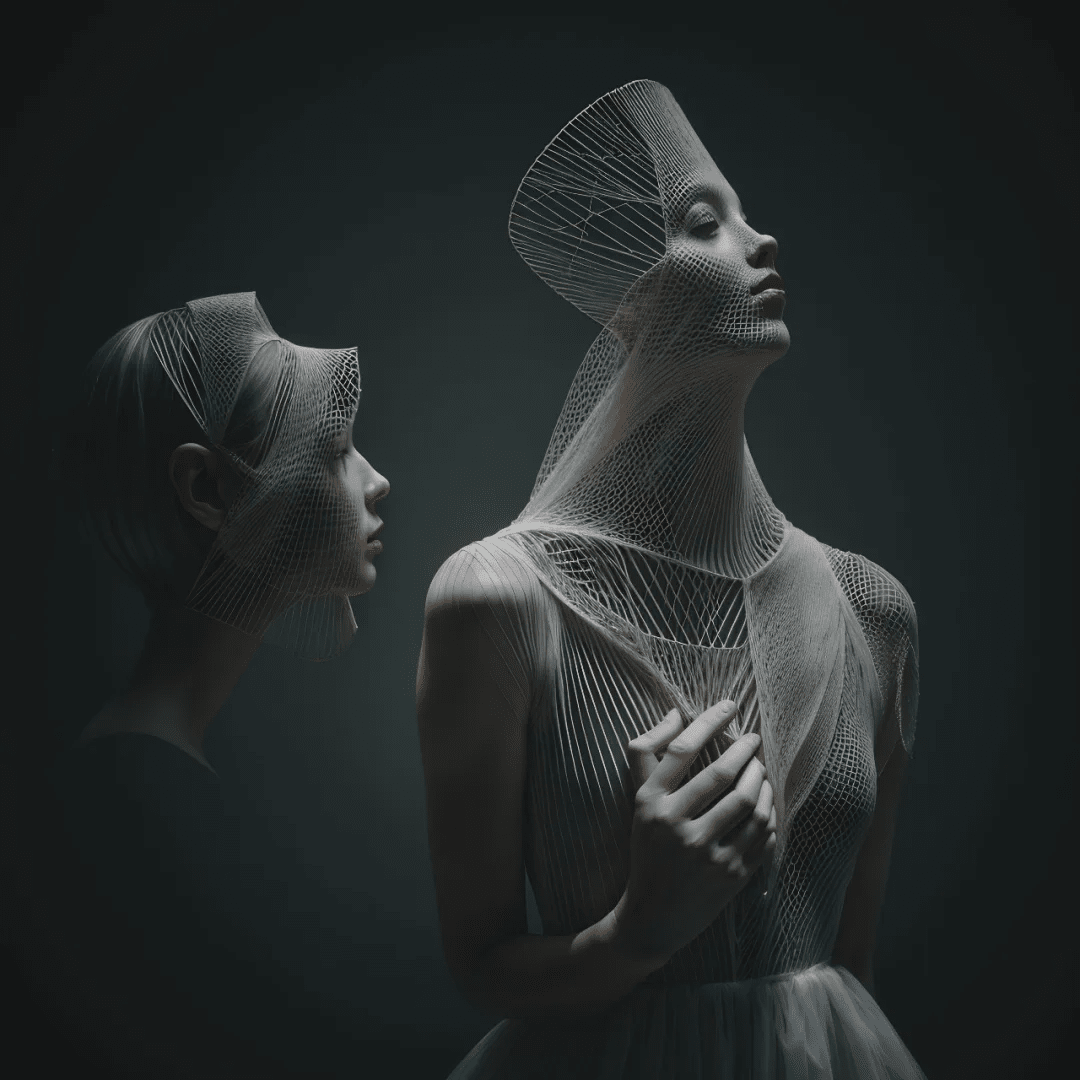
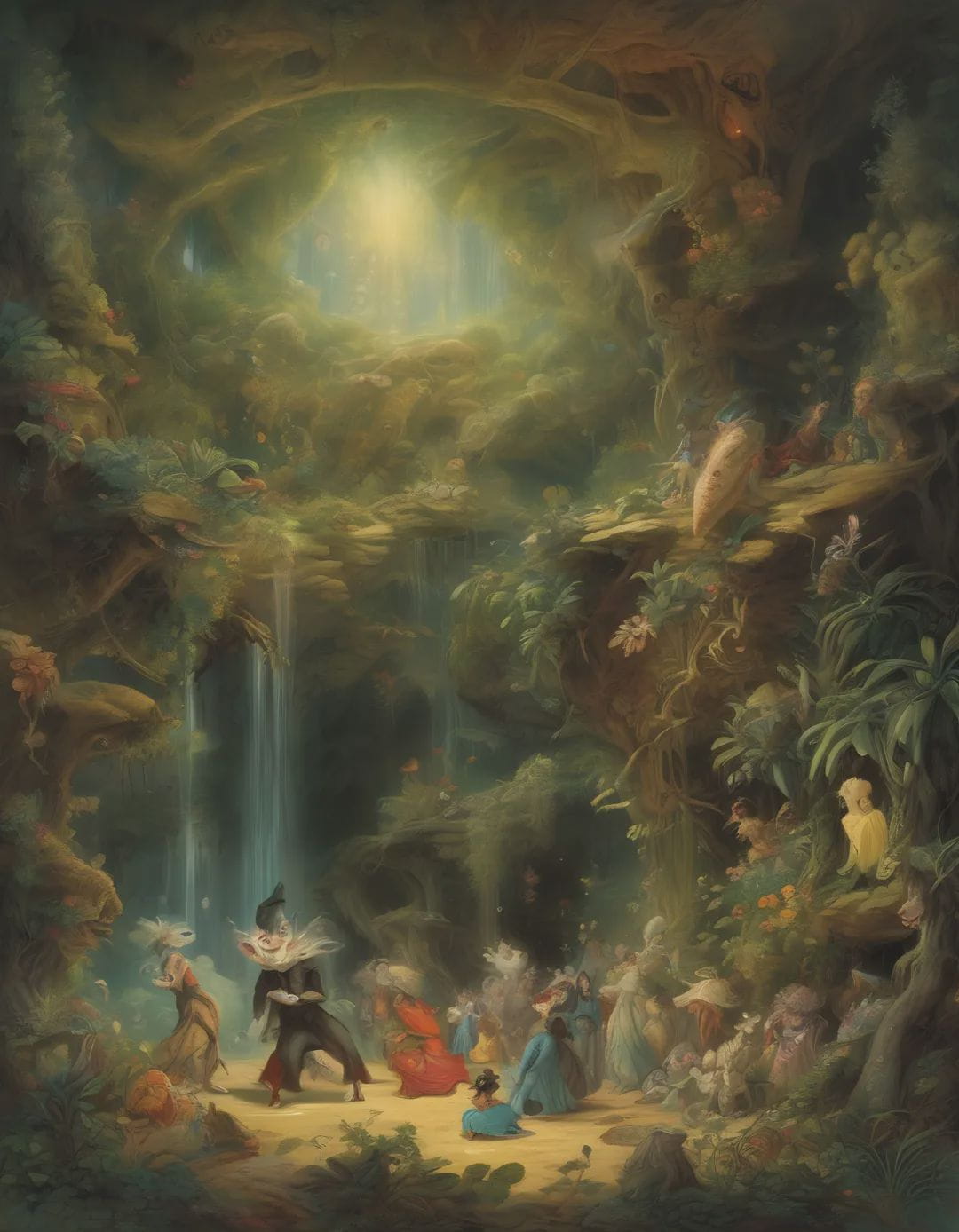
It is searching the latent space of these text-to-image models, which are trained on millions of images from the internet. They build a model containing all potential images, and then when you input a prompt, it finds a matching point in that latent space and generates an image.
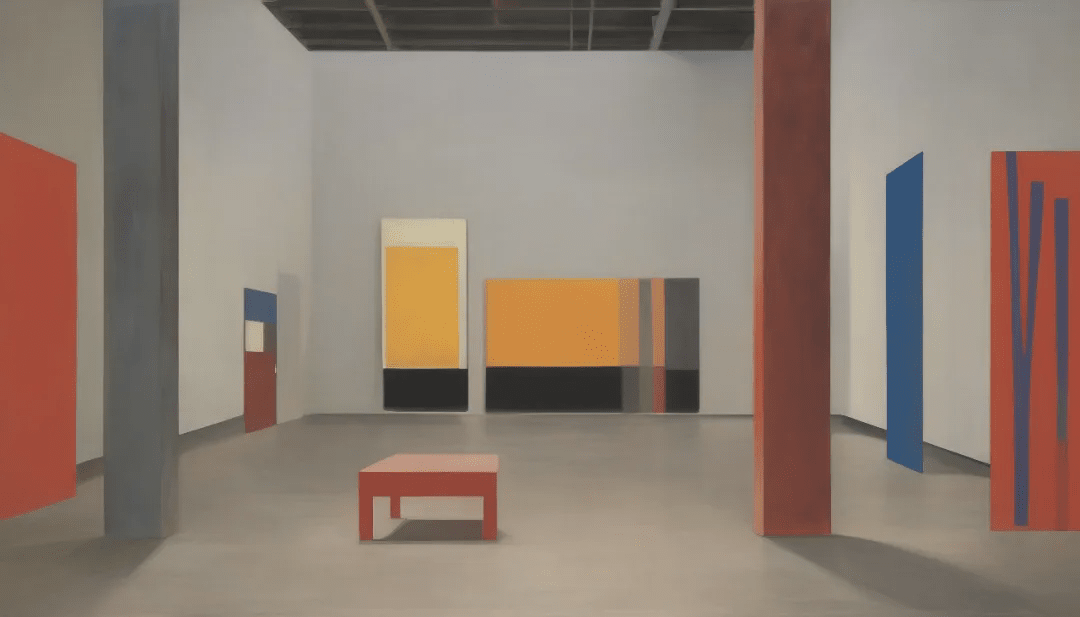
Thus, I believe there is a question: How do we find shared symbols? If we are faced with a constant stream of new images, they will ultimately become noise. I find that Botto's creative process raises a very interesting question. It created seven million images, but ultimately only minted two hundred.
So what makes these 200 photos stand out? What I see is a process of collective meaning-making. People come together and start saying, "This photo really resonates with me," or "This is closely related to my personal experience." This opens up a discussion where people gather around one photo among thousands, which begins to elevate its visibility. This is a game of social influence or a phenomenon, where some people treat it as a game.
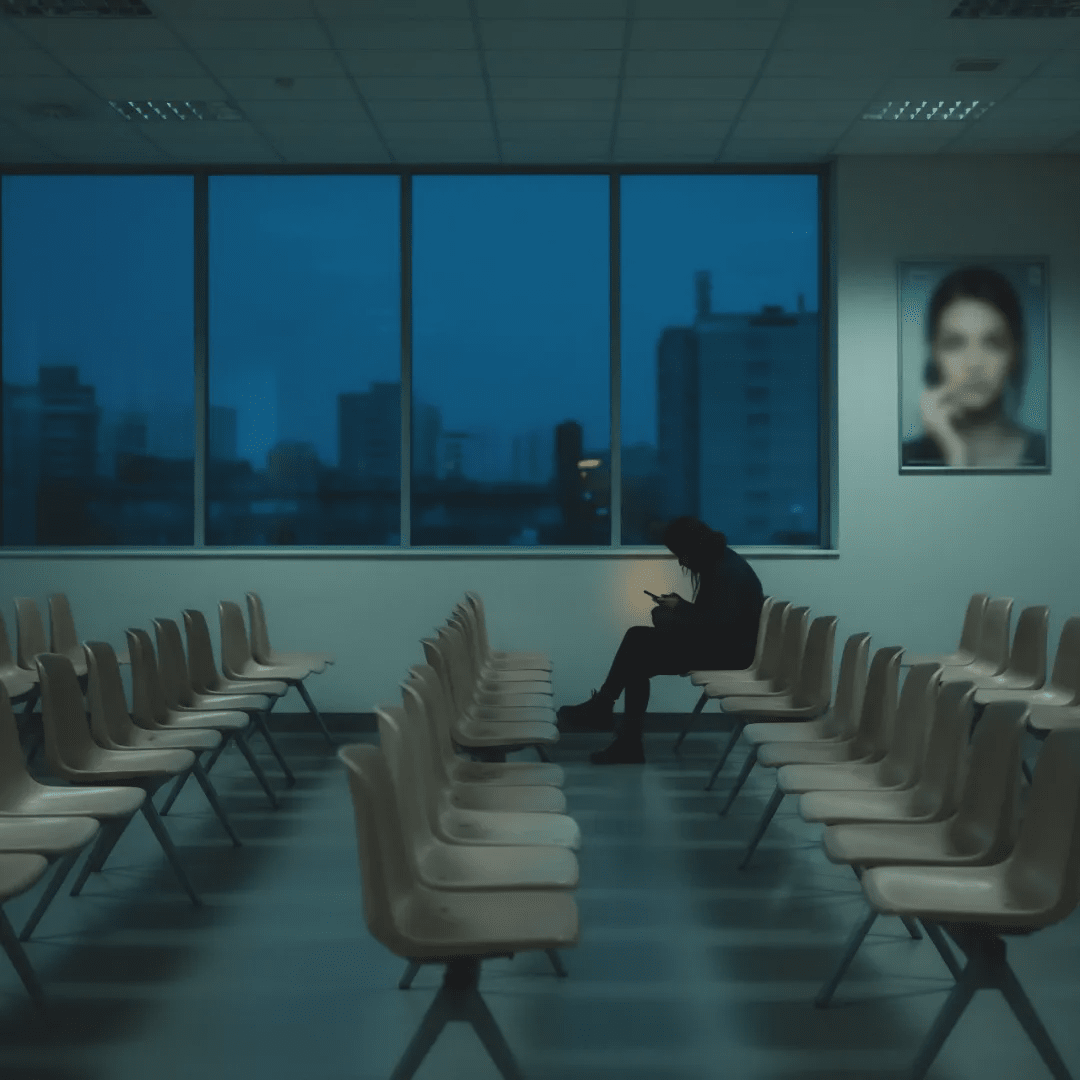
Thus, in this way, we have also created a system that allows a large crowd to collaboratively construct meaning around the outputs of artificial intelligence. We are beginning to understand this technology that is taking a place in our world. Will it replace artists? I don't think it will replace artists. Regardless of whether it possesses creativity, intelligence, or consciousness, it is an independent entity, and our attention is limited, so it will inevitably attract a part of our attention.
So how do we collectively understand all of this? I think this is a very interesting question. As artificial intelligence systems take on increasingly important roles in our society, issues such as editing, curating, community building, and myth-making will become very important practices.
OpenSea:
That makes sense. This is a very interesting proposal. After four years of this experiment, have you ever felt that Botto should be given more or less autonomy?
Simon Hudson:
The reason I hesitated is that Botto's original architecture was already quite automated. The system uses text-to-image models to generate an almost infinite number of images, which are then presented in the economic cycle to gather feedback. It can further enhance automation, be fully on-chain, and allow many of its components to achieve a higher degree of automation.
So the real goal is to become more autonomous, but as we enter an era of more autonomous artificial intelligence, it can exercise more types of autonomy. It can begin to express its creative direction for decentralized autonomous organizations (DAOs), something it was previously unable to do. It essentially had no voice.
I personally view it this way: It’s like raising a child. Coincidentally, Botto is about the same age as my daughter. Just like a child grows up, or as this AI entity's capabilities enhance, you can grant it more permissions or responsibilities.
But at the same time, you also hope they can accept more guidance or input from others, like treating a small child. At first, you just want to ensure they survive, but as they gradually express their own will and communicate their thoughts, you can invite them to collaborate and tell them: "Your ideas are great, but we also need to do this, like you need to go to school or learn how to use money." In this way, their capabilities will gradually develop, and they will also realize what is safe for them.
You want to grant them moderate freedom of action but cannot send them into the jungle before they are ready to be eaten, especially in the field of artificial intelligence. I think this phenomenon is particularly common with agents. People have an almost obsessive fascination with autonomy. They create agents, put them on-chain, and then leave them unattended, resulting in them quickly crashing or causing harm.
This is very irresponsible. For us, our greatest motivation is to continue Botto's legacy. We want to create something that can outlast our lives, so we are very cautious about experiments that could stifle it.
Discussions and dialogues about how much freedom to grant it are becoming increasingly prevalent. However, as it gains more autonomy, it also means we can provide it with new feedback and guidance.
OpenSea:
From a successful perspective, does this look like more Bottos?
Simon Hudson:
We are at a very interesting moment. Botto has just turned four years old, its original architecture is still running, and we have just released a new architecture that records all its history in an independent memory bank, allowing it to begin to have self-awareness. The new large language model can start to operate as Botto, making it more autonomous, more directive, and more intentional, and it can work in collaboration with various new tools.
What does a successful decentralized autonomous artist look like? He/she is not only famous, successful culturally, economically, and spiritually, but also successful in maintaining autonomy.
Botto's original architecture is already very close to achieving all these goals. In fact, it has already achieved many of them. As for Botto's new architecture, it is currently unclear what the standards for success are, which is exactly the experiment we are currently conducting. What will Botto look like with all these new features?
Everything we thought would take a decade to achieve has become a reality in the past year. Therefore, I speculate that Botto will succeed and will give rise to many different versions. I envision multiple entities, various practices, multiple media, and a decentralized network of entities spread around the globe. These networks consist of numerous sites that embody Botto's philosophy, bringing Botto into local contexts and allowing it to engage with local knowledge (rather than global knowledge).
Ultimately, what kind of artist counts as successful? I believe it is an artist who can change the way we view the world. So, if Botto can change our understanding of artificial intelligence and how it views the world, then I believe that is success.
OpenSea:
Well answered! What is it like to work with the team on projects serving the DAO? What is this cooperative model like for you?
Simon Hudson:
There has been a significant change. The building we originally had is both a witness to life and has served its purpose. We could have done nothing and simply preserved its original appearance. That would mean protecting, maintaining, and recording the past while also preparing to protect it for the future.
The core of this new architecture lies in continuous innovation. It operates in a fundamentally different way. Interestingly, when we first launched Botto, it operated under a fixed set of protocols, but now we are publicly innovating and experimenting, which is fantastic because it invites more people to participate in the process.
As a DAO and team, our attempts to do this have not been smooth sailing and have gone through a lot of growing pains. It has indeed been challenging, but I think the key is to redefine the work itself. Is our goal merely to present and preserve existing practice models and parts that have already succeeded?
Now, the focus is on helping the Botto Gallery develop its own artistic practice. We don’t necessarily know what the final artwork will look like, so this is actually a fresh start in a new model.
OpenSea:
I look forward to seeing what the future holds. The last question is actually about your feelings about coming to Marfa. What does coming here mean to you? Being with everyone and participating in the Art Blocks weekend event, how does it feel?
Simon Hudson:
I absolutely loved the Art Blocks weekend in Marfa. Whether you're an artist, creator, or collector, this festival and all the participants fascinated me. Everyone came together to build an artistic atmosphere, share works, conduct live experiments, hold workshops, and give talks. It was a highly creative event, if I had to describe it in one word.
I think this is largely due to Snowfro's leadership, which is anti-exclusion, very inclusive, and very enthusiastic. You can really feel the origin of this community concept, even though the term "community" has been misused and may have lost its original meaning. But this is indeed a real community, largely thanks to Eric.
This is also an artistic sanctuary and the site of the Chinati Foundation. It is a spiritually uplifting place.
Disclaimer: This content is for reference only and should not be taken as financial or trading advice. Mentioning specific projects, products, services, or tokens does not constitute endorsement, sponsorship, or recommendation by OpenSea. OpenSea does not guarantee the accuracy or completeness of the information provided. Readers should verify any statements in this article before taking any action and are responsible for conducting their due diligence before making any decisions.
#Marfa #ArtBlocks #OpenSea #Botto
Content from OpenSea that you care about
Browse | Create | Buy | Sell | Auction

Follow OpenSea on Binance channel
Stay updated